Warhammer 40K Phoenix Lords: how do they return after death?
Asurmen, Jain Zar, Baharroth, Fuegan, Lhykhis, Maugan Ra and Karandras, plus the prophecy that says they will all die at the Rhana Dandra

The Phoenix Lords are among the most mysterious, ancient and almost mythical figures in the whole Warhammer 40,000 setting. They are the original Exarchs of the Aspect Warriors, the founding masters who created the fighting traditions and Aspect Shrines the Aeldari still follow. This piece covers who they are, why they never truly die, the prophecy that will end them, and the seven Lords and their Aspects one by one.
To understand them, start with the Aeldari, who are having a rough time, to put it mildly. They are a dying race. Long ago they ruled a vast galactic empire, a civilization so advanced it makes the Imperium look like it's still trying to install Windows XP. They had power, technology and psychic ability. Think elves with a space twist and slightly frightening energy. And because this is Warhammer, where good decisions go to die, it all fell apart.
The Phoenix Lords invented the Path of the Warrior's fighting styles
If Aspect Warriors are a character class and Exarchs are the elite veterans who teach it, the Phoenix Lords are the legendary players who invented that style in the first place and have dominated the game ever since. They are demigods of battle and the living embodiment of the Path of the Warrior, dating back to when the Aeldari empire was collapsing, largely because the whole civilization spent a long time making catastrophic choices.
Each Aspect was built on the fighting style, skills and philosophy of its founder. So when you see a shrine full of Howling Banshees, Striking Scorpions or Fire Dragons, the whole tradition traces back to the Phoenix Lord who first defined it. As the surviving Aeldari fled on the huge craftworlds, the Phoenix Lords founded shrines across those wandering worlds, ensuring Asuryani traditions continued as their people began an eternity of exile. When your civilization collapses and most of your gods die, it helps to have a few ancient warrior legends who know how to handle hostile situations.
Why a Phoenix Lord's armor brings them back
Like Exarchs, the Phoenix Lords are immortal, but in an unusual way. When one inevitably falls in battle, which in this galaxy is an occupational hazard, the story doesn't end. Their ancient armor stays where it is and waits for another Aeldari to claim it, usually an Exarch. Whoever puts it on inherits not only the powerful gear but the entire identity, overwhelmed by the personality of the original Phoenix Lord. The new wearer isn't a successor. They become the Phoenix Lord, reborn.
It's like equipping a legendary item in an RPG that boosts your stats but replaces your character with the original max level player who owned it. Less convenient if you were attached to your character. Unlike Exarchs, who are bound to their shrines, the Phoenix Lords roam the galaxy freely, turning up wherever war breaks out to lead their warriors or appear at the worst possible moment for the Aeldari's enemies. Given the state of the galaxy, they stay very busy.
They were once revered like gods in the shrines they founded. Over the millennia many of those shrines and homeworlds were destroyed, lost or swallowed by disaster, but the legends never vanished. Aspect Warriors still tell their stories, because the Phoenix Lords live in that hazy space between myth and reality. With most of their gods gone, the Aeldari often look to them when war threatens what remains of their civilization.
The Rhana Dandra prophecy says every Phoenix Lord will die
The Aeldari have an epic poem telling the story of the Phoenix Lords, and it isn't something recited over dinner. It is performed once a generation by mysterious seers, so when it happens it is a huge cultural event, an ancient legendary performance everyone treats as seriously as the Jedi prophecies. It is a series of allegorical tales about the Lords' virtues, their legendary deeds and, most importantly, the mistakes that led the ancient Aeldari to catastrophe. It is part heroic myth, part cautionary tale, and part reminder that recklessly summoning a Chaos god wasn't the smartest move.
It builds to the Rhana Dandra, the prophesied final battle between the Aeldari and the dark gods of Chaos. If all of 40K is one long campaign, this is the brutal final mission with the difficulty cranked up to unfair. When it begins, the Phoenix Lords will gather again, rallied by Fuegan, the Burning Lance, founder of the Fire Dragons. The prophecy says each of them will die a final death: no rebirth, no armor, no return. They fall one by one until only Fuegan remains, and when he finally falls, realspace and the immaterium, the physical universe and the Warp itself, will both be destroyed.
What happens to the Aeldari after that is widely debated. Some Harlequins believe their trickster god Cegorach has one last plan to fool Slaanesh into spending her final strength, saving the Aeldari rather than ending them. It's the cosmic equivalent of winning a boss fight by convincing the boss to delete itself. The Ynnari believe the key lies with Ynnead, the Aeldari god of the dead, and that if Ynnead fully awakens the Aeldari might escape extinction. Most Asuryani have a far simpler plan: they would very much prefer the Rhana Dandra not happen any time soon, so they delay it as long as possible. Given the state of the galaxy, that seems the most sensible plan anyone has come up with so far.
Asurmen, the first Phoenix Lord, and the Dire Avengers
Asurmen is the first of the Phoenix Lords, less a legendary warrior than the founder of the whole system. If the Phoenix Lords were a D&D party, he'd be the ancient level 20 character who wrote the rules everyone still follows. He survived the Fall, and after watching his civilization collapse and Slaanesh devour most of the Aeldari gods, he decided the next generation needed a more disciplined approach to war. So he created the Path of the Warrior, letting the Aeldari channel their violent instincts into structured traditions instead of accidentally summoning another Chaos god. He personally trained the first Aspect Warriors and founded the first shrine on a world later named Asur in his honor.
He went on to found more shrines than any other Phoenix Lord, which is why his Dire Avengers are the most common Aspect Warriors in most Aeldari armies. He carries a pair of wrist mounted shuriken catapults called the Bloody Twins, and the Sword of Asur, the first diresword ever made. Its spirit stone holds the soul of his brother, who has been helping him fight Chaos for thousands of years. Family bonds, Aeldari style.
The Dire Avengers represent Khaine's thirst for vengeance, the disciplined anger of a warrior who never forgets a wrong. They are versatile, able to hold a defensive line or launch a devastating assault, so it's rare for an Aeldari army to fight without them. In one tale from a fungal forest world, they held off waves of Poxwalkers and their Death Guard masters long enough to recover the spirit stones of fallen warriors. Their Avenger shuriken catapult fires faster and further than a Guardian's weapon. A psychic pulse slices monomolecular slivers from a block of crystalline plastic and fires them at supersonic speed, and a volley is said to sound like a thousand blades cutting the air. Even in ordinary robes they often carry hidden shuriken discs, because if the Aeldari learned one thing from the Fall, it's that things can go catastrophically wrong very fast.
Their Exarchs seem almost able to predict the flow of battle. Some think that comes from centuries of training; others suspect it comes from the many warrior souls in the spirit stones in their armor. Exarchs can carry two catapults at once, a diresword holding a bound warrior spirit that harms body and soul, or a power glaive with a shimmershield that projects a bright energy barrier.
Jain Zar, the Storm of Silence, weaponized the scream
Jain Zar's title is funny if you think about it for more than five seconds, because her fighting style depends on screaming so loud it melts people's brains. She is the Phoenix Lord of the Howling Banshees and Asurmen's first student. If the Phoenix Lords were the Jedi Order, Asurmen would be the slightly mysterious founder and Jain Zar the terrifying apprentice who instantly mastered a technique that makes everyone nervous. The Banshees' signature ability, the scream that steals, uses masks that amplify psychosonic waves attacking the enemy's nervous system: confusion, paralysis, and a sudden overwhelming sense that today may not be your day. Her ancient Banshee mask makes her version strong enough to melt the brains of anyone unlucky enough to be nearby.
Despite being an immortal demigod picking fights with Chaos, she has kept a mother's role for the Banshees, regularly visiting their shrines to guide them, checking on the family dojo. She is also one of the most active Lords against Chaos, often leading Banshee strike forces herself. For a time she even allied with the Ynnari, hoping their plan to awaken Ynnead would save the Aeldari from their slow march to extinction. It got complicated. The attempts repeatedly stalled, pushing the Ynnari toward increasingly desperate methods, like sacrificing more and more Aeldari souls in the hope something would eventually work. Even an ancient brain melting warrior has to step back at some point. She has since distanced herself, continuing her personal war against Chaos in the hope that some other way exists to prevent the Rhana Dandra. Given the state of the galaxy that's a long shot, but when you're an immortal space war demigod with a scream that can turn brains to juice, you might as well keep trying.
Baharroth, Cry of the Wind, and the Swooping Hawks
Baharroth's title sounds like something you'd give a hero in The Lord of the Rings, and to be fair he looks the part. He was the first Phoenix Lord to master aerial combat and founded the Swooping Hawks shrines. Unlike some of his grimmer peers, he is described as almost the liveliest and most cheerful of them, which makes sense when his whole style is flying on mechanical wings like an ancient space elf fighter pilot. To the Asuryani, his appearance over a battlefield is a very good omen. To everyone else it isn't: he dives through gunfire and smoke unleashing his Hawk's Talon, Fury of the Tempest. Up close he carries the Shining Blade, which legend says Vaul, the Aeldari smith god, forged in the last moments of a dying star, explaining its incredible glow. His final death is prophesied for the Rhana Dandra, and many Aeldari suspect that end may come sooner rather than later.
The Swooping Hawks represent Khaine's vengeful side. Their name comes from an old legend that the souls of the slain return as hawks circling their killers. Their light armor keeps them mobile, and their wings carry grav lifts. A typical attack means soaring up, vanishing into cloud or smoke, then dropping to unleash laser fire before taking off again, harassment perfected over millennia. The enemy faces an unpleasant choice: focus on the Hawks and ignore the advancing Aeldari, or ignore the Hawks and suffer repeated air ambushes like hyperaggressive Star Wars fighters. They also carry grenade packs to drop anti personnel and anti armor bombs. Their rune represents rising again after darkness, the hope of reclaiming lost greatness, and a Hawk formation overhead lifts the morale of nearby Aeldari. Their Exarchs teach everything up to the skyleap, and some carry power swords in case anyone drags them into melee, which rarely happens.
Fuegan, the Burning Lance, and the Fire Dragons
Where other Lords are master duelists or pilots, Fuegan looked at the galaxy and decided the answer to most problems is a lot of fire. His philosophy is simple: precise, devastating force against the right target can bring peace, a bit like the classic Star Wars logic of blowing up the right superweapon. His people depict him holding the cosmic serpents of wisdom and annihilation. That's wonderfully mythic, but I think in practice it translates to a huge warrior carrying huge burning weapons.
For thousands of years he wandered the Webway, the ancient tunnel network that lets the Aeldari cross the galaxy without entering the Warp, emerging from hidden gates only when it was time for fiery justice. Something has recently forced him into realspace more often. In his left hand is Searsong, a legendary fire lance that burns hotter and brighter than any weapon of its kind; in his right, a Fire Axe forged during the Fall, whose forge heart legend says never left the blade. He will be the last Phoenix Lord to fall at the Rhana Dandra, presumably on a heap of burning wreckage, because discretion was never a Fire Dragon trait.
The Fire Dragons represent Khaine's most destructive side, inspired by the fire breathing dragon of Aeldari myth. They hunt tanks, war machines and huge creatures and turn them into molten scrap. Candidates undergo intense trials to stay calm in front of walking tanks, and legend says their Exarchs can glance at an unfamiliar war machine and know exactly where to aim. Their fusion guns have short range but vibrate a target's molecules until armor melts and vaporizes, and their disc shaped fusion charges are detonated remotely with a mental trigger.
Lhykhis, the Whispering Web, and the Warp Spiders
Lhykhis looked at the Warp, a nightmare dimension full of daemons, and thought she'd pop in briefly, which the Aeldari consider either supreme bravery or mild madness. Her Warp Spiders represent the side of Khaine willing to risk everything to defeat the enemy. Most Aeldari avoid the Warp the way sane people avoid haunted houses full of chainsaw killers, yet she dives in regularly, and even veteran Exarchs struggle to match her jumps. Legend says her sword was blessed by the spider goddess who measured the threads of life, so it hums with barely contained energy and can cut reality itself. She also carries monofilament weapons, including the Brood Twins and spider fangs, that turn enemies into very unfortunate spaghetti. She is one of the most active Lords, appearing unannounced whenever her people are threatened.
Warp Spiders specialize in offensive defense: they teleport straight into the problem with backpack warp jump generators, cause chaos for a few seconds, then vanish dozens of meters away. Their name comes from small crystalline creatures on the craftworlds that guard the Infinity Circuit, the psychic network holding dead Aeldari souls, by merging into the wraithbone and reappearing elsewhere. The spider goddess is obscure and rarely worshipped outside these shrines. Some myths call her a daughter of Vaul; others say she was an early form of Morai-Heg, the old goddess of fate.
Maugan Ra and the Dark Reapers
While other students of Asurmen perfected elegant swordplay, Maugan Ra decided the best way to fight was to stand very far away and turn enemies into red mist with long range weapons, favoring dark armor and weapons that look like they belong to the Grim Reaper. He came from the craftworld Altansar, dragged into the Eye of Terror shortly after the Fall. He escaped; his people didn't. Later he went back into the Eye to rescue them and, against all logic, succeeded. Watching his people suffer for thousands of years left him with a particularly fierce hatred of Chaos.
The Dark Reapers are the grim snipers of the Aeldari, with skull like helmets in black, gray, deep blue or purple. They represent Khaine the Destroyer and act as heavy fire support with large missile weapons, braced armor and big helmet sensors. Their training is deliberately absurd, like firing while clinging to the hull of a moving spacecraft, and it never stops. A Reaper who misses often returns to the shrine for long ritual penance.
Karandras, the Shadow Hunter, and the Striking Scorpions
At the time of writing, Karandras was the only Phoenix Lord model that hadn't been updated and had been removed from the datasheets, so whether he'd be updated or dropped in 11th edition, who knows. He is an odd case. The Striking Scorpions were originally led by Arhra, the Father of Scorpions, who betrayed the Aeldari and became the Fallen Phoenix. Karandras took his place, and the story goes that the two fought for weeks through a ruined city. Arhra's fate is unclear: some believe he died, others claim he still lurks in the Webway teaching his deadly ways. Arhra left the Aspect its raw brutality; its hunter's patience comes from Karandras, who strikes from the shadows with his Scorpion's Bite mandiblaster, a chainsword and a scorpion claw before vanishing again.
The Striking Scorpions channel the anger and bloodlust the Aeldari usually suppress into stealth and ambush. Their rune stands for patient stalking and the sudden kill, and their armor is dark green with yellow, black or orange. It is noticeably heavier than most Aspects wear, so the warriors who choose this path tend to be physically stronger.
Watch the original
@ajm_nerdcore · YouTube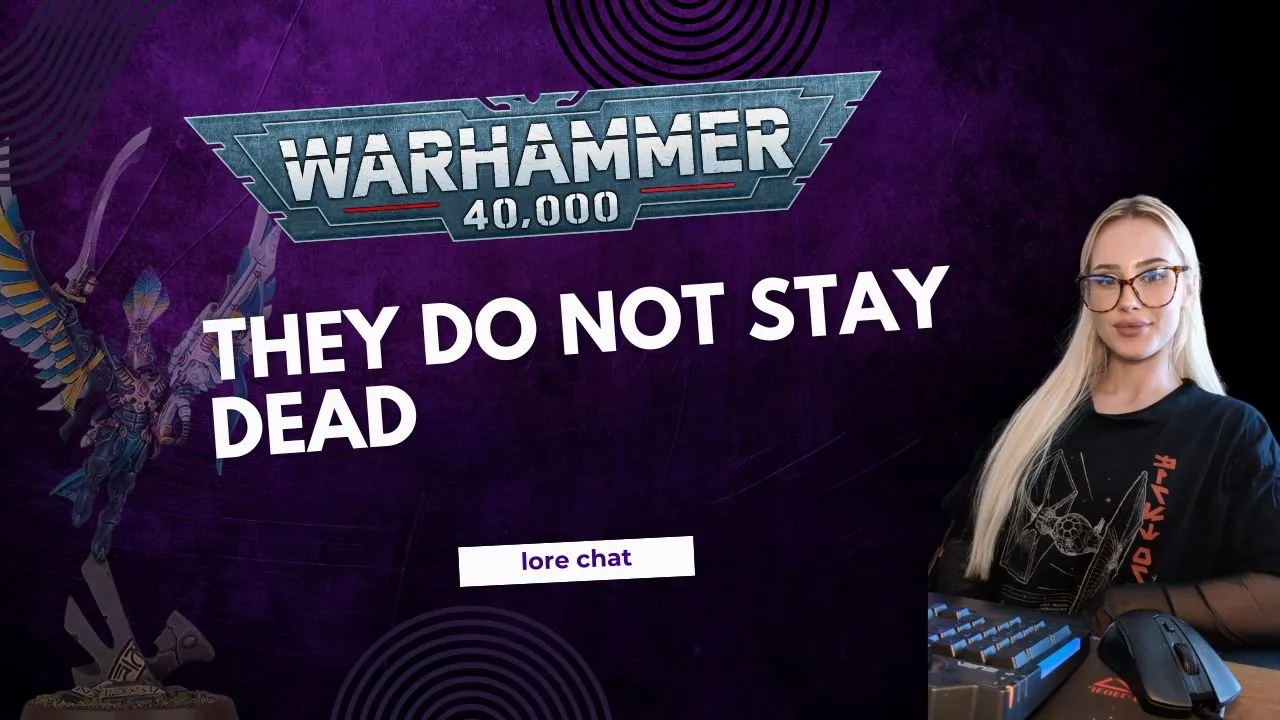
Adapted with AI from Alex's video of 17 March 2026 and checked against the video before publication. Editorial standards · Corrections
More from @ajm_nerdcore
All →


Make videos? Your next one could be an article here.
We turn your videos into articles under your name, linked back to the original. You keep 60% of what they earn, non-exclusive, and you can leave whenever you like.
Become a SubPlotter →