Best hidden gem deck builders of 2026 you may have missed
From a demon haunted village to poker played with dice, these lesser known card games each try something different, and half have under 300 Steam reviews.
 Gaming In The Wild (AI-assisted)19 November 2026Editor: Digital Fox Talent Editorial TeamOn YouTube since 2020 · more than 15,000 subscribers

Here are six lesser known deck builders from 2026 that I think are worth your time, and they might just have slipped under your radar. Half of them have under 300 Steam reviews, and only one has over a thousand. The list is Bloodletter, Forbidden Solitaire, Hillthorn, Moonsigil Atlas, Shards of Order and Grim Keep, and I hope one of them becomes your next deck builder obsession.
Deck builder games have been popping off for years. Slay the Spire lit the fuse in 2019, and Balatro blew the doors off in 2024, going as far as getting a game of the year nomination at the usually AAA oriented Game Awards. The gold rush that followed has left the genre at risk of saturation. Since then, though, deck builders have been evolving, embracing new ideas and working harder than ever to stand out from the crowd. Every year brings new systems, aesthetics and ideas. There were a couple of big releases this year that were hard to ignore, including Slay the Spire 2, but there were also plenty of smaller games that might have slipped past you.
Bloodletter is a grim occult deck builder about simply not losing
If many games are power fantasies where the player gets stronger and stronger over time, Bloodletter has an altogether different dynamic. It's a tarot style occult deck builder that is "a challenging exercise in just not losing." It's set in a gothic village haunted by a parasitic demon that lurks in the villagers' nightmares by night, draining them of their health and spirit. By day, you visit the villagers one by one and play your cards to try to heal them. At the end of each day, you get a readout of how you did.
Villagers who are still in good spirits and good health can offer services like duplicating your cards, buffing them or giving you new cards entirely. But villagers can also get sick, stop trusting you or even die, and then you won't get to use their services for the rest of that run. That makes choosing who to prioritize a juggling act from day to day. You feel the demon leeching away their morale and health every night, and you feel like you're trying to wrestle the whole village back from the brink, villager by villager.
It's a fairly grueling tug of war against the demon in a relentlessly dark world, and that makes it quite a dour and grim game to play. "There really is no respite here, even when you win." I can't see myself playing scores or hundreds of hours of it. I think it could have used a cheerful, knowing shopkeeper or the tiniest moment of levity, like seeing your villagers doing okay on a successful run. Even so, I've played several runs, I will play more, and I find it a very intriguing game.
Forbidden Solitaire twists classic solitaire with a cursed fake OS story
Forbidden Solitaire is another cursed deck builder, this time with a fake OS twist. It begins when you find a dusty old CD ROM of a banned game from your childhood. You launch it into a Windows style desktop menu screen, then straight into the game itself, which seems innocent at first. It has old school, 80s rendered passageways and chambers, plus monster encounters where you face slimes, skeletons, demons and the like. To deal damage and win, you clear solitaire spreads.
While you are playing cool looking solitaire, there are many twists on the formula. As well as clearing cards in the traditional way with runs of ace, two, three and so on, you can unleash powerful special moves. There's a lightning bolt that blows a bunch of cards off the table, an eye that reveals every card, and the ability to remove a single suit entirely. There are also puzzle spreads, where you might need to unlock a door by uncovering a key somewhere in the spread, or find shears to cut through vines.
My favorite part was the meta layer. Your sister sometimes texts you mid round, which snapped me out of my solitaire trance while she filled me in on what her research into Forbidden Solitaire had uncovered, like protests from concerned parents back in the day, or the fact that various people involved in making the game mysteriously disappeared. That might make it sound like a successor to Inscryption, the granddaddy of metafictional gothic card games, but this is a much simpler game.
Forbidden Solitaire isn't out to stretch you as a card player or as a narrative detective, and you can finish it in about five hours. It's an enjoyable, breezy play that keeps you engaged without ever pushing back too hard. I had a good time with it, and I enjoyed it enough that I'm planning to play its new DLC, The Discarded.
Hillthorn turns a time loop detective story into a card game
There's a trend emerging here for horror adjacent deck builders, but Hillthorn is a completely different kind of card game. It's a narrative deck builder that swaps the usual card combat for something more unique. It's a time loop detective game in which you play a private investigator on the trail of a missing person. You have one day to solve the case or it loops back to the beginning, but you start the next day with the knowledge you've acquired, which can speed things along. The ultimate aim is to execute the perfect order of operations to solve the case in the time you have, a bit like a card based Outer Wilds in principle.
There are a great many cards in this game. Everything is a card, from the investigator to the client to the desk in your office. Examine the desk card and you'll find the desk drawer. Interact with the desk drawer card and inside you'll find your business card, which is, yes, a playable card. This card heavy interface takes a minute to get used to, but once you do, you enter a flow state. You use direction cards to find your way through a maze of mountain pathways to the village of Hillthorn, break into an abandoned cabin and use the items you find there to squeeze information out of the nervous residents.
I found a genuinely creative array of card based puzzles to get your head around. The best had me scratching my head for a while, but the worst had me almost tearing my hair out, especially because the case file system is a little simple. I wish the developers had taken a cue from the more elegant loose ends system of Outer Wilds. Overall, though, I found Hillthorn a clever, thrilling mystery, and I'm glad I played it. For anyone who likes creative deck builders or mystery games, it's a must play in 2026.
Moonsigil Atlas makes every card a jigsaw piece
In Moonsigil Atlas, your cards are jigsaw pieces that you have to slot together. It's a starcrossed card combat game in which you war against heavenly monsters. Every card is a different jagged shape, and you have to fit them onto the board as efficiently as you can. That's quite a puzzle, because the most powerful cards can take up most of the board, but you can find smaller ones to plug the gaps around them. Support cards affect every card touching their border. You can also trim cards to change their shape, although I wish there were a few more opportunities to do that in each run.
Between rounds, you pick more cards to add to your deck. So you have to think about the cards you pick up in terms of their effects, their synergies, and also their physical shape and whether you can get them onto the board at all.
I spent 10 or so hours with Moonsigil Atlas and had a good time, but I did start to feel the odds were being stacked against the player, perhaps a little too harshly. I also got the sense that perhaps I hadn't fully grappled with what the game wanted from me. That could be an issue with how it surfaces information to the player, or it could be me playing late at night with no brain power left, which is quite probable too. Either way, I think it points to the nature of the game: it's a systems puzzle as much as a jigsaw puzzle, with a lovely starlit aesthetic.
Shards of Order is a dark fantasy deck building RPG that isn't a roguelike
Shards of Order is a fairly even mix of card combat and narrative deck building. It's a dark fantasy deck building RPG in which you explore a dying world, and for once it's not a roguelike, which I find quite refreshing. If you die, you aren't kicked back to the start of a run, only to the last checkpoint, so you can examine where your combat strategy went wrong and try again.
The game begins when you awaken after being thrown into a pit to die. You're wearing the armor of a hated faction and have no memory of who you are, so it is yet another amnesiac protagonist story. As you try to survive and escape, you meet a waif and a stray who form a party of three with you. Together you explore this underworld, finding new sections of the map, talking to NPCs, opening chests and gateways, and trying to get your bearings and press forward. There's plenty of lore to uncover.
The combat system is interesting too. Each of your characters has their own deck, but all the cards are shuffled together. Rather than energy or mana, cards are governed by time mechanics and cooldowns. If you have an archer, for example, you'll play many cards that fill their quiver. You can use another character to cast a weakening spell, then draw the barrage card and unleash a flurry of arrows. That's one of many tactics and synergies, and you're largely left to your own devices to figure them out.
The game expects quite a high level of deck building literacy from the player, to a fault sometimes. I'm not exactly a newcomer to deck builders, but I did feel a bit lost in the weeds at times. Still, if you've made it this far into a piece about deck builders, I think you might be the kind of deck builder seeker who would get a kick out of this one.
Grim Keep mixes dice, poker and Balatro style builds ahead of its November 30 release
The last pick hasn't come out yet. Grim Keep doesn't release until November 30, but I played it at Steam Next Fest and I was obsessed. It is a "roguelike dice builder set in a nightmare fairy tale," and that term dice builder explains why a dice game belongs on a deck builder list. It mixes some of the gameplay innovations of Balatro and Slay the Spire with a polished dark aesthetic reminiscent of Darkest Dungeon and FromSoftware's greatest hits.
The goal is to survive a run through the keep and beat the boss. A familiar three pronged map lets you plan your route through the dungeon, which means surviving a sequence of monster encounters. At the start of each one you roll your dice, but the game is a weird mix of dice and poker, because rather than simply rolling high, you're trying to build poker hands from your dice faces. A pair of threes and a pair of fours gives you two pair, and you can freeze those dice and reroll the last one to try for a full house.
After your rolls, you deal damage to the enemy based on how successful you were. If you win, you return to the map and hopefully find a shopkeeper or a random encounter to power up your hands. You can tweak your dice, your deck and your relics in all kinds of ways, to make a straight the most powerful hand or to make a pair the most powerful. If you've played Balatro, you'll feel right at home.
I played the demo during a very busy Next Fest when I was trying to play as many games as possible, but I kept coming back to it night after night. It took me three hours to win my first run, and I would have played more if the demo hadn't been taken down ahead of release. "I've been jonesing for more ever since," and I'm looking forward to the 1.0 on November 30. It's an awkward release date, right between GTA and game of the year season, but I'm hoping Grim Keep finds the audience it deserves. It's a very promising game.
Watch the original
@gaminginthewild · YouTube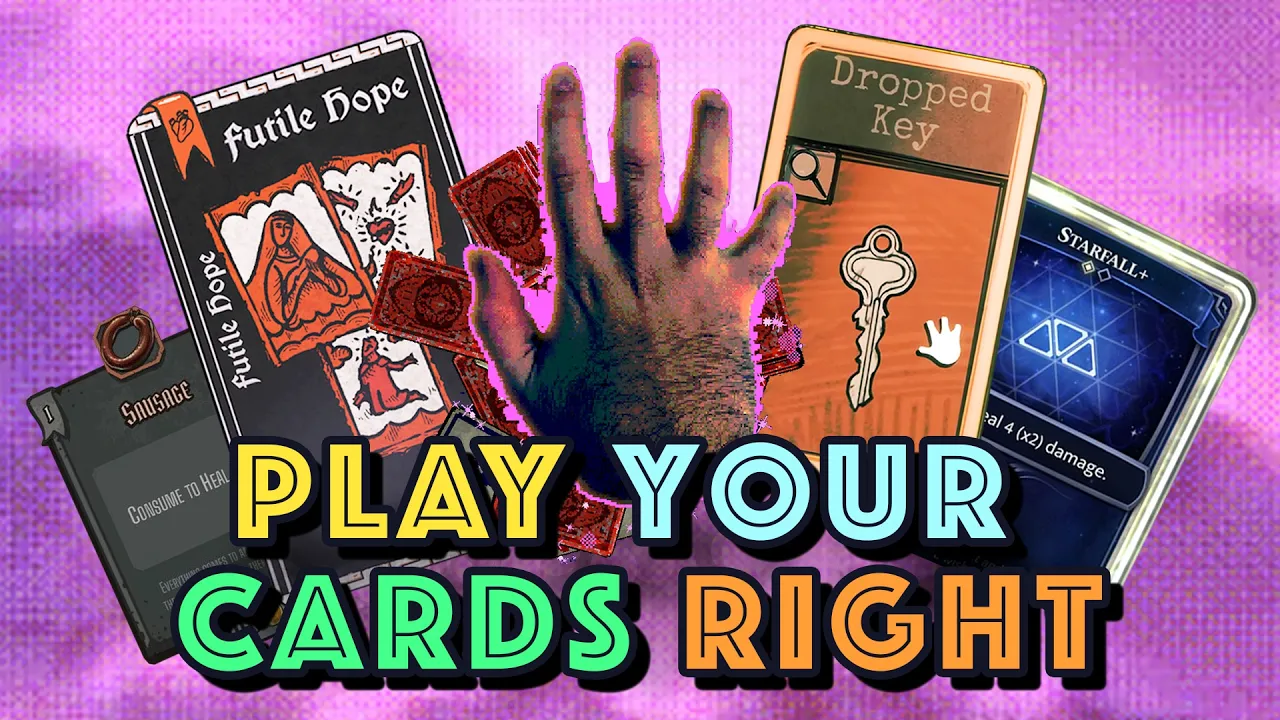
Adapted with AI from Gaming In The Wild's video of 18 November 2026 and checked against the video before publication. Editorial standards · Corrections
More from @gaminginthewild
All →


Make videos? Your next one could be an article here.
We turn your videos into articles under your name, linked back to the original. You keep 60% of what they earn, non-exclusive, and you can leave whenever you like.
Become a SubPlotter →