Dragon Ball volume 8: is Goku's Tao Pai Pai rematch better?
From the Power Pole breaking a sword to Commander Red's petty wish, these chapters show Goku fighting for others, and that choice has consequences years later.

Dragon Ball volume 8 is where Goku settles his score with Tao Pai Pai and then tears through the Red Ribbon Army. The rematch beats the first fight, the art is dynamic from start to finish, and Toriyama keeps showing that Goku is not doing any of this for himself.
These chapters also plant seeds for much later in the series. Destroying the Red Ribbon Army was the right thing to do, but in a way it's like Goku created his own enemy.
Chapter 90: Goku saves Upa and Toriyama uses the Nimbus to show a pure heart
Chapter 90, "Son Goku's Counterattack," opens with Tao Pai Pai trying to finish off Upa and take the final Dragon Ball. He has a new outfit because Goku destroyed his previous one in the last volume. Then Goku comes lunging down. Looking at that angle, with his hands forward, it's like he's diving off a diving board.
The art in this volume is incredible, including the colors. As it was described in our discussion, "the poses everything's so unbelievably dynamic," and nothing feels stale. It feels fluid. It was also pointed out that Goku's smile in this panel is adorable but also determined, and that Upa's reaction to being rescued is great.
Something easy to glance past: at the very beginning of this scene Upa is trying to avenge his father, and right afterward Toriyama makes sure to put Upa on the Nimbus. That shows that despite wanting revenge, he is still pure of heart. He's not like Tao Pai Pai, he's not a coldblooded killer, he's trying to do right by his dad. I love how Toriyama uses the Nimbus as a storytelling device without ever putting it into words. It was also pointed out that Krillin fell through the Nimbus and couldn't ride it, while Upa could.
When Tao Pai Pai goes for the first attack, Goku drops to the ground, double kicks him up and flips back to his feet. Maybe because I've watched the anime more than I've read the manga, I picture the anime sound effects when I see Goku kicking Tao up.
Why the Goku vs Tao Pai Pai rematch is better than the first fight
A fan named Justin Sullivan asked which fight between Goku and Tao Pai Pai is better: the first one from the previous volume or this rematch. I like this fight more because Goku is more on his game, and there is a moment in it I love, which I'll come to.
The other point made in the discussion was that the first fight is often a warm up or a primer for the second. Toriyama holds back, as writers of other manga do, and then delivers big with the rematch. It's a big kung fu film idea too: the heroes fight an evil martial artist who is far stronger, go away and train, and come back to win.
Chapter 91: Goku blocks the Dodonpa and the Power Pole breaks Tao Pai Pai's sword
Chapter 91, "Battle in the Sanctuary," again has Tao as the aggressor, and the shots are phenomenal. Without going too far into the paneling, you can see how smoothly your eyes read through each beat. It all feels natural. All of this was well adapted in the anime, which, as it tends to with fights, adds a little more.
Goku counterattacks, Tao's clothes get destroyed once again, and he goes for the sure kill with the Dodonpa. The first time, he hit Goku in the chest and the Dragon Ball saved him. The Dragon Ball isn't there anymore, so Goku blocks with his bare hands. That's a very dangerous move, because the Dodonpa is meant to injure or kill you depending on where it hits. Goku is "on a different level now than he was the first time," and this is classic Dragon Ball, with the villain realizing the hero wasn't this strong before.
Then Tao pulls a sword. Villains are cheap, and it was compared in the discussion to a Terry Silver move. Out comes the Power Pole. It isn't some random stick, it's a magical artifact, and a sword can't cut it in half. Tao Pai Pai breaks his sword on it. I love when Toriyama does these short weapon versus weapon fights; they're rare. It was also pointed out that Yamcha broke his sword on the staff as well.
Asked whether there's lore behind the staff in Journey to the West, the answer was yes, plenty. It sat in the Dragon Emperor's kingdom as a giant pillar under the ocean, used to level off the water for a very long time. Wukong goes into the Dragon Emperor's palace demanding a weapon worthy of him, which is where he gets his iconic armor and the staff, and he can control it immediately, as if it were destined for him. It's essentially an allegory for the ability to grant your own wishes through force, and both Journey to the West and Dragon Ball treat it well as a magical artifact.
Chapter 92: Goku studies Tao Pai Pai's moves, a prototype for the Saiyan ability to adapt
In chapter 92, "Tao Pai Pai at the Brink," Tao is getting desperate, and Toriyama uses bigger panels for more detail and focus on the combat. At the top of one page, Goku tells Tao Pai Pai he's going to avenge Upa's father no matter what. That's very important, because it shows Goku isn't doing this for himself. Toriyama repeats that over and over, in this fight, in the Red Ribbon Army material and in the tournament that follows.
Tao goes on the offensive, pounding on Goku with a double chop and a flying knee to the gut. It's there to make the fight tense, but Goku is in pain and still okay. Then comes the part I love: Goku lets Tao beat on him, then says he's been studying his moves. It's like the prototype for zenkai and the Saiyan ability to adapt in battle. Here it's treated as Goku being a good martial artist, but Toriyama later made it biological for Goku, and I think that's cool. In the Tournament of Power, Goku tells an opponent he fights that he was studying her moves, word for word as he does here with Tao Pai Pai. It was added in the discussion that at the end of that fight he says her fighting style was worth studying, then wrecks her.
Goku hits back with his own double chop, which the anime shoots with the camera going up then down, and it's phenomenal. Tao can't keep up. He pretends to give up, tries to fire a grenade, Goku kicks it back and it blows up. Tao Pai Pai was his own doom. When Tao begs, Goku looks at Upa and asks what he wants to do. That's another way Toriyama points out that Goku isn't trying to feel good about taking him down. He's doing it for Upa and his father. Tao Pai Pai exists as a coldblooded killer to contrast Goku. Goku is a killer, he kills many people in this chapter, but he's not coldblooded. He's doing it for the right reasons.
Chapter 93: Goku's charge, the anime montage and Violet's looting filler
In chapter 93, "Goku's Charge," Goku decides he has to finish this. The anime has a beautiful montage borrowed from Rocky IV, with Goku on the Nimbus thinking back through the arc while a song about destroying the Red Ribbon with a burning heart plays.
One anime addition I'm a fan of has Violet looting the giant safe full of the army's money while Goku destroys the place. In the discussion it was wondered whose idea that was, since it seems like something Toriyama would want. I don't think he was involved in the anime on that type of thing, but I've noticed that the filler in the original Dragon Ball anime and the early part of Z is relatively good. Not all of it is great, but there's also great filler, and this fits Violet as a rebel.
Justin Sullivan also noted that Goku doesn't usually get to one up someone who beats him, so getting back at the first villain to beat him makes it more satisfying. It's case by case, but this is a very satisfying win. It happens again in the Piccolo arc, and it's classic storytelling: in The Empire Strikes Back the hero loses to Vader, then beats him in Return of the Jedi. It was also pointed out that Frieza beats Goku up most of their fight before Goku transforms and turns it around, so it's rare but not super rare.
As Goku races toward the Red Ribbon Army, his expression is so funny it's almost sadistic. Something many people don't think about: if Goku existed, he would be unbelievably dangerous, because he was taught by Roshi that when someone is doing an injustice you stop it immediately, without letting it make you want revenge. A character running around wiping out wrongdoers without a second thought would be scary, and you can understand why the Red Ribbon Army is terrified. As my co-host put it, if he could defeat the most dangerous assassin in the world, they'd be afraid too.
Chapter 94: Goku's assault on Red Ribbon headquarters mirrors Sun Wukong invading Heaven
Chapter 94, "Goku's Assault," is complete destruction. Goku shows up, there's a bunch of soldiers dressed like movie characters such as Rambo, and guns do nothing. He isn't killing all of them; in some cases he's knocking them out, but in others they're dying. The point of the burning heart idea is that he's running on adrenaline. Much of it is self defense too: even though he's an intruder, they fire at him first. It was noted that in the anime there's a soldier about to fire who runs away instead, and Goku lets him go.
This is a reference to Sun Wukong invading Heaven's army. He did the same thing, went in and wrecked everybody, and everyone was terrified of him. It's a role reversal, because there Wukong is the bad guy invading Heaven, with his own army that's more like the Red Ribbon Army, and he wants world domination too. Here Toriyama makes the Wukong character the good guy.
Chapter 95: Commander Red's wish to be taller and Staff Officer Black's betrayal
Chapter 95 names Commander Red's death right in the title. There isn't much to analyze in places; we're admiring the art. When Goku lets fleeing soldiers leave, Toriyama is again making sure you don't think Goku is like Tao Pai Pai. These are not innocent people.
This part always came off to me as the most James Bond thing they've done, especially since Commander Red is inspired by Blofeld, Emilio Largo and other Bond villains. The joke, which Toriyama would reuse, is that Red wants the Dragon Balls to be taller, and Black asks how many men they've sacrificed for that. It's another Toriyama gag about petty, insecure villains wanting the Dragon Balls for egotistical reasons. Even Bulma's wish is selfish. She isn't evil, and she's keeping the Dragon Balls safe in a weird way, but at the end of the day she isn't pure of heart. She's like Krillin: a good person with flaws.
Black shoots Red and becomes Commander Black, effectively the final boss. His design has some controversy because of the way Toriyama draws African American people. I don't think Toriyama is a malicious racist. I think at the time he probably saw it as a caricature and didn't think it would offend anybody. "I don't see the man as being somebody who's trying to hurt somebody else's feelings," but it's a design many people would say is dated.
I understand why Black did it. So many resources and men were lost, and Black thought it was for conquering the world or something the whole army would benefit from, and it was all to make Red taller. Loyalty goes out the window with greed. A bullet to the head is the most realistic death in Dragon Ball. Black also has empathy for the dead soldiers, which makes him less selfish than Red, though he still wants world domination. It also differs from Frieza wanting to be taller: Red is a regular human with no powers, so a betrayal from someone he trusted makes sense, while nobody would question Frieza because he'd kill them.
Asked why Vegeta never beats a main villain, I'd say it may need to happen in the Super era, but in the original manga Vegeta was never the main character. His purpose is to be an example of how not to behave, while Goku is the example of how to behave.
Chapter 96: Goku vs Black's Red Ribbon battle jacket
Black climbs into the Red Ribbon battle jacket, one of my favorite pieces of equipment. It makes a cameo in Super Hero, and Pilaf even has one. It's a giant mech that looks very goofy, very Dr. Slump. Before this, Goku tells Black to give up and go to jail. Black hesitates, then tries to kill him anyway, which shows there's a part of him that's better than Red, but he still chooses to try to wipe Goku out.
I love the jacket's weapons: lasers, missiles, all kinds of stuff. Goku leaps on top and makes a face at Black, which Dragon Ball Super: Broly clearly references when Broly scares two aliens on a ship. Black ends up punching himself and breaking the glass dome. I once saw a statue of that moment and thought about buying it, because I love moments like that which don't get the love they deserve in the West.
Black fires a giant missile, and Goku kicks it toward the mountain. Then Goku uses the antenna of the building to springboard into a double punch straight through the battle jacket. It's very Superman, and similar to how Piccolo loses, with a punch through the gut. It's odd, because you'd think Black's body would be where Goku punched, but clearly it isn't. The jacket blows up, and when Black dies, the army is finished.
How destroying the Red Ribbon Army created Dr. Gero, the Androids and Cell
Most of the Red Ribbon Army disappears and moves on with their lives, but Magenta and Dr. Gero are plotting against Goku from this moment. Had Goku not done the right thing, the Androids and Cell would never have been created, so in a sense it's like an enemy Goku created himself. I've always been a fan of causality in Dragon Ball, which is why I got excited when I heard Daima would involve a battle for the throne of the demon realm. One change in a character's decision changes the whole story, and that's why Dragon Ball what ifs are so popular.
It was argued in the discussion that these situations are the perfect test of whether Goku will keep being himself under pressure, and every time he does, things work out. What's interesting to me is that more often than not Goku does the right thing and it backfires way down the road, while Vegeta does the wrong thing and it backfires right away. When Vegeta lets Cell become perfect, Cell obliterates him immediately; we don't wait for the Cell Games. Another way it was put: Vegeta is rewarded short term and punished long term, and Goku is the reverse.
Goku's problems do get bigger. The Red Ribbon Army wanted world domination, but as the future timeline showed, the Androids and Cell meant the enslavement of mankind. My co-host suggested that's why Goku falls into the habit of using the Dragon Balls. They're a conduit for his pure heart, a plot device to show he gets them because of who he is. Goku causes a lot of chaos, but like a deity, he always restores everything, and it ends up better than before.
What other creators are saying
More on Goku →Doom Slayer has killed god-tier beings in his own lore, but Goku's Ultra Instinct speed and scaling put him ahead in this matchup.
Working through the reasoning behind Super Saiyan God, Super Saiyan Blue and the returning red haired form during the Tournament of Power arc.
Dragon Ball Super: why Goku keeps switching Super Saiyan forms →
Watch the original
@geekdom101 · YouTube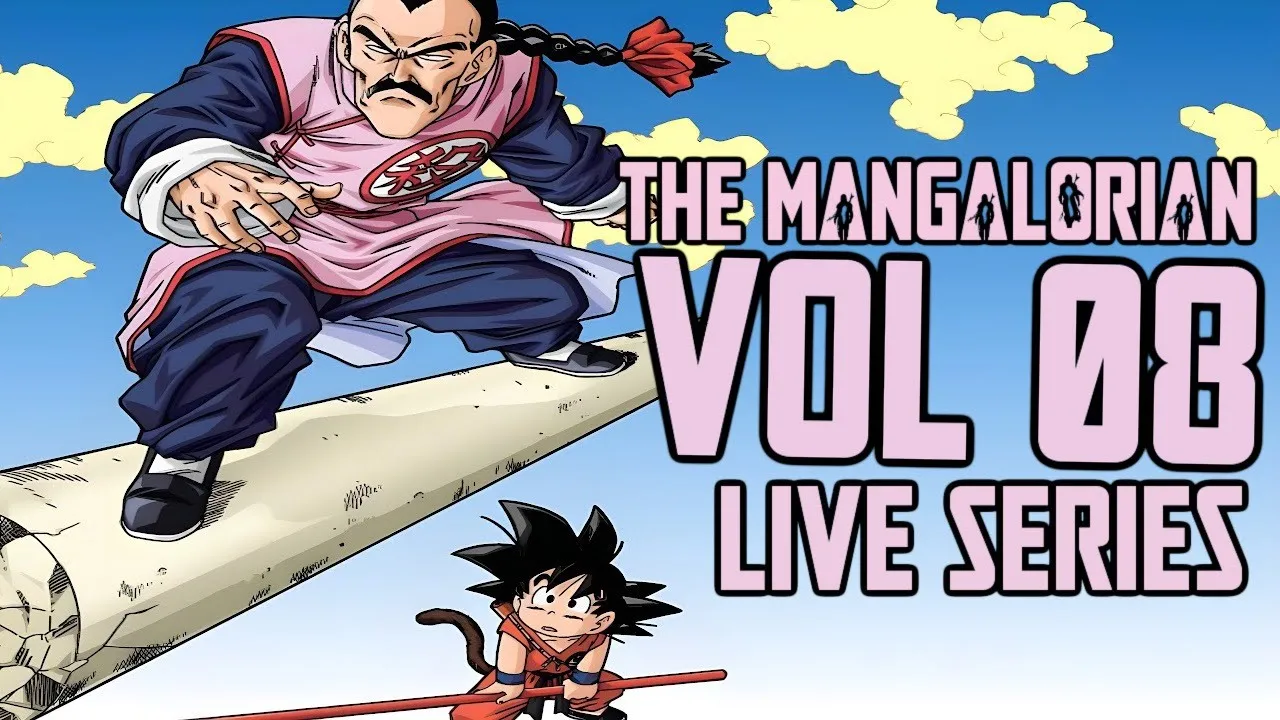
Adapted with AI from Geekdom101's video of 31 July 2024 and checked against the video before publication. Editorial standards · Corrections
More from @geekdom101
All →


Make videos? Your next one could be an article here.
We turn your videos into articles under your name, linked back to the original. You keep 60% of what they earn, non-exclusive, and you can leave whenever you like.
Become a SubPlotter →