Dragon Ball Z Super Butoden 2: why it's the best of the trilogy
The first game set the template, the second perfected it, and the third stripped out the story mode and left Piccolo behind.
 Geekdom101 (AI-assisted)19 November 2026Editor: Digital Fox Talent Editorial TeamOn YouTube since 2015 · more than 780,000 subscribers

The Dragon Ball Z: Super Butoden trilogy on the Super Famicom was the earliest set of Dragon Ball games I played when I was younger. Revisiting all three brings back some of my favorite childhood memories, and my verdict is simple. Super Butoden 1 was fine, Super Butoden 2 was great, and Super Butoden 3 was "neither."
Every one of the Super Butoden games has pros and cons, and at the end of the day "it's far from a perfect series." Here is how each one held up.
Dragon Ball Z: Super Butoden (1993) had the biggest roster and longest story mode
Dragon Ball Z: Super Butoden was released on March 20, 1993. That was while the fight between Goku and Cell was airing in the TV version, in episode 179, a day before Goku hit Cell with the warp Kamehameha. The promotion of this game was Dragon Ball Z building toward the Cell Games and toward Goku versus Cell.
The strengths of this first title are that it has the largest character roster in the series and the longest story mode of any of the first Butodens. The story mode begins with the fight between Goku and Piccolo from the tournament at the end of Dragon Ball, and it ends with Goku versus Cell in the Cell Games.
The roster is impressive. You can play as base form Goku and Vegeta, Piccolo, Frieza in his 100 percent power final form, Androids 18, 16 and 20, and first form Cell. If you put in a code, you unlock Future Trunks in his Super Saiyan Grade 3 form, Gohan in his full power Super Saiyan form, Super Saiyan versions of Goku and Vegeta, and Perfect Cell, the game's final boss.
That's a fantastic roster for its time and the most diverse of the first trilogy, with 13 characters in total. Many would not come back for the sequels, including the base forms of Goku and Vegeta. With these characters you can relive many of the classic battles of the series. My personal favorite character to play as is Android 16, because he has an amazing spin kick technique, and I love his Hell's Flash.
How Super Butoden set the template for Dragon Ball Z fighting games
Beyond the story mode, the game comes with a traditional versus mode, where you fight the computer or a second player. It also has a Tenkaichi Budokai mode, where you take eight characters and compete in a custom tournament.
The fighting mechanics set the bar for future Dragon Ball Z games, with a fighting engine unique to the series. All fighting games have punch and kick buttons, but how many have power up, fly and ki attack buttons? The stages are much bigger than in most fighting games, and if you go back far enough the screen splits. You can power up your character's ki, labeled as power, and then perform gigantic signature ki attacks like the Kamehameha or Frieza's energy cutter.
In this game you press down to power up, and you can only do it while flying, which was fixed in later versions. It's worth remembering the next time you play a modern Dragon Ball Z game that this was the first fighting game in all of Dragon Ball Z. Super Butoden sold 1.45 million copies in Japan, and when I revisited it, it still remained the bestselling Dragon Ball video game in Japan.
Why the first Super Butoden hasn't aged well
The truth is that Super Butoden has not aged well, especially compared to more modern games like the Budokai series, Burst Limit and Dragon Ball Xenoverse. For its time, though, it was all we had, and its roster and story mode carried the game.
The controls themselves are very clunky and unimpressive, and that would be fixed in the sequels. However, none of the Butoden sequels had a story mode that covered half of Dragon Ball Z, and to me that's a huge pro. In my opinion, as a fan of the series, it's worth at least a playthrough.
With Super Butoden being a big financial success, it was only a matter of time before a sequel was made, and Japanese players didn't even have to wait a year.
Super Butoden 2 focused on the Cell Games and the Broly and Bojack movies
Dragon Ball Z: Super Butoden 2 was released eight months after the first game, on December 17, 1993. The series was already in the very early Majin Buu arc, but the game didn't reflect that. Instead it focused on the end of the Cell Games and the two Dragon Ball Z movies that came out around that time, movies 8 and 9, which are the first Broly movie and the Bojack movie.
As a result, the roster is definitely lacking compared to the first game, and Frieza and the androids don't return. Instead the game features characters like Super Saiyan 2 Gohan, Super Saiyan Vegeta, Super Saiyan Future Trunks, Piccolo, Perfect Cell, Cell Jr., and Zangya and Bojack from movie 9.
Goku is missing because he was dead in the series. However, if you input a code during the intro, you can unlock Goku, and yes, Broly as well. This is the first video game where Broly is playable, and Broly fans will be happy, because "this guy's a tank." Still, this is the only Dragon Ball Z game I can think of where Goku isn't playable from the start.
Super Butoden 2's smoother combat added beam struggles and meteor combos
Super Butoden 2's gameplay is a big improvement over the first in the series. The modes stay the same, with versus, tournament and story modes, but the fighting is way smoother and easier than in Butoden 1. Each character's moves are much easier to execute. You can power up your ki at a much faster rate by holding the Y and B buttons at the same time, and you don't have to fly to do it.
There are new stages with gorgeous backgrounds, including one where you go underwater. The overall graphics had a huge overhaul. Ki blasts are now twice their size and much more accurate to the epic ki blasts in the series, and you can block or even counter a ki blast and have an epic beam struggle, just like in the show.
The game also introduces a much more complex combo system, with so called meteor combos that do lots of damage up close. You can pick the same fighter in versus mode with a palette swap. Interestingly, Goku and Vegeta have alternate costumes that look like the Resurrection 'F' costumes two decades early.
Super Butoden 2's branching story mode is the best of the trilogy
The biggest strong point of this game, in my opinion, is the epic story mode, the best of any of the Butodens and one of the best in any game. You choose from Gohan, Trunks, Vegeta or Piccolo and begin with the Cell Games, where Butoden 1 left off. What makes it so good is that depending on whether you win or lose, the story continues and takes a different turn, with a number of what if possibilities.
You choose a sparring partner first, and then Mr. Satan gets smacked. Cell blows himself up, comes back, and you have the big fight. If you can't beat Super Perfect Cell, Gohan will do it for you with the father and son Super Kamehameha. Once Cell is defeated, you move on to movie 9, known to Western audiences as Bojack Unbound.
The story in the game is vastly different from the movie. Bojack creates clones of the Z Fighters, and once you defeat them you fight resurrected Cell Juniors, then Zangya, then Bojack. I found it very interesting that of all Bojack's henchmen, Zangya was the only one who made the game. Maybe they wanted a female presence to replace 18 from the last game, but I don't know.
If you fight Bojack and lose, Broly appears and kills him for you, and then you have to beat Broly. If you play on the higher difficulties and make the correct decisions, you get what appears to be a retelling of the second Broly movie, where Broly arrives looking for Goku. Since Goku is dead, he has to fight the Z Fighters, and since they're the Cell saga Z Fighters, you don't get Goten or Kid Trunks. The story mode and enhanced combat make this, to me, the absolute best of the original three Butodens. Some preorders of Extreme Butoden came with a downloadable copy of it. It's "a truly classic Dragon Ball game," and probably the first real quality fighting game ever put out with the Dragon Ball Z name on it.
Super Butoden 3 kept the fighting engine but went generic on stages
Dragon Ball Z: Super Butoden 3 was released on September 29, 1994, around the time Buu and Babidi were terrorizing the Earth after Vegeta sacrificed his life. That's close to accurate to the time frame of the game. The only slight difference is that Gohan wears his early Buu saga clothing.
The fighting engine of Butoden 3 is just as good as its predecessor's, and probably slightly better. The same super powered ki attacks remain, as do the quick combos, so the fights are still much the same, without much of a difference from Butoden 2.
The graphics are lush, and the backgrounds, although way more generic than in the first two games, at least look nice. I think it's pretty lazy to have random skies with palette swaps of daytime and dusk as stages. The game makes up for it a little by including the Budokai stage and a stage inside Babidi's ship. That's the only stage in any of the three games where you can't fly, so flying away from your opponent and spamming ki blasts won't work there, even though it works on every other stage. Either way, the backgrounds and stages are still lacking, and that's about it when it comes to positives.
Super Butoden 3's roster includes Future Trunks but leaves out Piccolo
The reality is that this game is bad. Super Butoden 2 did everything right, and Butoden 3 did the opposite. Start with the roster. The playable characters are Goku, adult Gohan, Goten, Supreme Kai, Fat Buu, Kid Trunks, Majin Vegeta, 18 and Dabura. A code at the start of the game unlocks a secret character: Future Trunks.
Future Trunks had no epic battles in the Buu saga. The game includes him and not Piccolo, who was in that saga. It's cool that you can retell some of the most epic battles from the series, but I want to know who made that decision and why Piccolo isn't there. There are seven characters with blond hair, but no Piccolo.
No story mode leaves Super Butoden 3 with little replay value
That's not even the biggest problem. The best part of Super Butoden 2 was the story mode. In Super Butoden 3, it isn't worse. It isn't there at all. The only modes are versus, against the computer or another player, and tournament mode. The only way to beat the game is to win a random tournament and get the credits.
The game has 10 to 15 minutes of replay value at best, maybe more if you have a friend to play with, but not by much. The lack of anything close to a story mode, the smaller roster, and ki charging three times as fast as in Butoden 2, which makes ki spamming easier and cheaper, add up to a fail. The game feels unfinished, almost as if the designers were worried about meeting a deadline and took the fights from Butoden 2 and made slight changes.
Even though Dabura and Buu are fun to play, Super Butoden 3 isn't worth touching more than once or twice, even if you're a hardcore fan. Stick with Super Butoden 2.
Watch the original
@geekdom101 · YouTube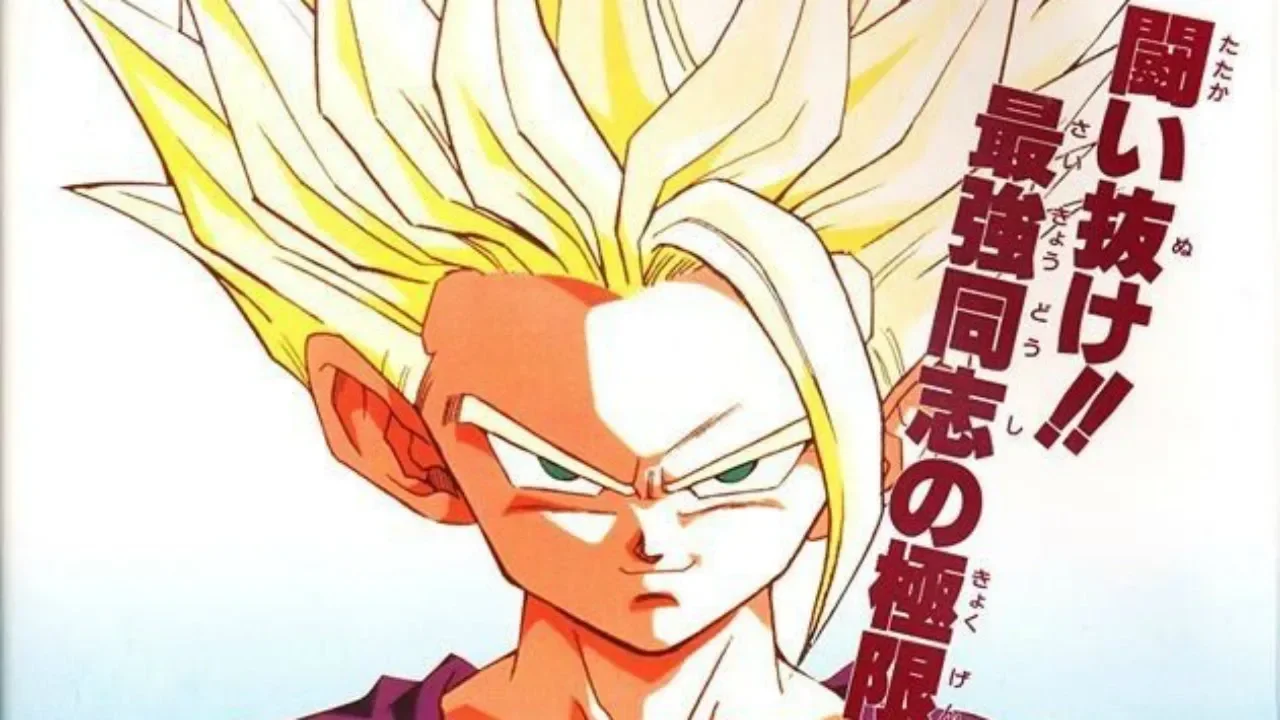
Adapted with AI from Geekdom101's video of 4 July 2019 and checked against the video before publication. Editorial standards · Corrections
More from @geekdom101
All →


Make videos? Your next one could be an article here.
We turn your videos into articles under your name, linked back to the original. You keep 60% of what they earn, non-exclusive, and you can leave whenever you like.
Become a SubPlotter →