Wonder Man Doorman episode: why is it Marvel's best Disney+ hour?
A black and white bottle episode about a nightclub doorman with portal powers became a satire of fame, Hollywood and the superhero business
 Heavy Spoilers (AI-assisted)17 November 2026Editor: Digital Fox Talent Editorial TeamOn YouTube since 2009 · more than 1.6 million subscribers

Wonder Man is one of those series I didn't think Marvel was capable of making, and its mid-season episode, Doorman, is where I think it shines brightest. I see it as "a masterful, self-contained gem" that introduces an obscure comic book character, enriches the overarching story and stands out from what Marvel has done before.
Wonder Man (2026) is the Disney+ series starring Yahya Abdul-Mateen II and Ben Kingsley. It blends meta commentary, Hollywood satire and character-driven storytelling, and nowhere is that clearer than in Doorman. With a clear nod to classic film noir, it's a story about the pitfalls of fame.
Why Marvel's Disney+ shows lost their audience before Wonder Man
After many mediocre entries on Disney+, it seemed like Marvel was making content for the sake of content. Too often it felt like they'd made four-hour movies and cut them up into episodes. That led to weird pacing and shows that dragged the story out "like a little bit of butter scraped over too much bread."
I think audiences have gotten used to the idea that a Marvel show on Disney+ probably won't be worth their time, and viewership has dropped sharply. At first, the shows were pushed as essential to understanding the films, and early series like WandaVision drew huge numbers. When people didn't flock to the later releases, Kevin Feige admitted you didn't have to see them. That left Disney+ in a strange place: content for hardcore fans and few others, and even then, not exactly prestige television. Wonder Man shows Marvel can take big swings and hit a home run.
Doorman follows DeMarr Davis, a nightclub doorman who loved his life
The episode chronicles the tragic arc of DeMarr Davis, a doorman at the Wilcox nightclub in Los Angeles. He accidentally acquires portal powers, becomes a superstar, finds that fame is fleeting and unwittingly reshapes Hollywood's rules for superpowered people. What makes it perfect is its fusion of humor, horror, heartbreak and social critique, turning a deep cut Marvel Comics figure into a cautionary tale. By focusing on a peripheral character whose story reverberates through the main plot, it's storytelling within storytelling.
At the start, DeMarr seems to genuinely love his life. People seem to love him too, whether it's a pair of women from Texas or famous actor Josh Gad. After a long shift, the club owner talks to him at the bar and presses on his lack of ambition. He's satisfied with a simple life and isn't interested in glitz and glamour. She then asks him to take out the trash.
Outside, he finds a Roxxon Corporation dumpster leaking ominous black liquid. I love that the episode subtly shows the dangers of Roxxon. The corporation has been quiet in the MCU, mostly appearing on signs in certain films, but this tells fans they're a nefarious bunch clearly experimenting with things they shouldn't. DeMarr pulls the classic astronaut in an alien movie move and touches the substance. I see it as a curiosity killed the cat moment, because it sends his life into a black hole.
DeMarr's portal powers turn him into a hero and a celebrity
DeMarr is taken to a vast void filled with glowing doors and wakes on his kitchen floor with new abilities: his body acts as a doorway that lets things pass through him. There's a great scene blending body horror with slapstick as he rescues his dog from his neighbor, and it sets the tone for his reluctant heroism and how he's always doing things for others.
The next night, a fire breaks out at the Wilcox, trapping everyone inside with Josh Gad. DeMarr passes through the blocked door and urges everyone to walk through him, with Gad leading the way. It saves everyone, but it also exposes his abilities, and saving so many lives makes him a celebrity overnight.
Gad then offers DeMarr a chance to work with his team. When Gad hits writer's block on his film, he comes up with an idea that uses DeMarr's powers. DeMarr hesitates at first because he can't really act, though to be fair, neither can most of Hollywood. Curiosity wins again, and that ultimately leads to his downfall.
How fame and overexposure broke Doorman
In the film, DeMarr's powers are pivotal to how the characters escape. He appears in his comic book accurate costume, and his catchphrase, "Ding dong," becomes a viral sensation. He's rubbing shoulders with A-listers and is even talked about as one of the greats of all time.
But fame proves corrosive. As his ego inflates, he falls victim to overexposure. His popularity wanes, he becomes a punchline on talk shows, the work dries up and he starts drinking. I think we've seen this time and time again in Hollywood, where people are always trying to get bigger. There's no real job security: a movie role ends, a show stops filming or gets canceled. The highs and lows can be enormous, and depending on luck and talent you can be on the verge of homelessness or living in a mansion. It's a cutthroat business that DeMarr isn't equipped for.
Deep down, he never wanted this life, but now he's hooked, and he sells himself to anyone who will pay. That leads to lawsuits over products he endorsed, and his bills go past due.
Doorman as a comment on superhero fatigue and Marvel's struggles
I think the episode comments not only on Hollywood but on how the comic book genre has worked. There was a time when these projects were a license to print money, so Hollywood greenlit everything it could. People got bored of seeing the same thing over and over and moved on. People often say there's no such thing as superhero fatigue, only bad movie fatigue, but I think the industry shows clearly less interest. A film like Superman should have sailed past the number it did, because he's probably the most famous superhero ever. The shows don't get the audiences they once did, and toy sales are nowhere near what they were.
So the characters greenlit during that era of overexposure were cast aside, and we've reached a point where shows like Wonder Man are dropped rather than pushed. Seeing this in the middle of the season blew me away, and I think it sums up much of the current landscape. Superman will always be popular because his powers seem cool. But with Doorman, whose power plays into his body being invaded, I don't know how many kids will wish they could grow up and have it.
That ability fits who he is. For his power to work, he has to be vulnerable, and there's the idea that everything passing through him adds to his loss of self as he spirals into a shadow of who he was. It also ties into authenticity versus facade and how actors take on other identities. Characters like Simon must hide their powers to work, which parallels how some actors hide parts of their private lives to succeed.
It feels like the industry as a whole is desperate for solid ground. Marvel went back to the Russos and Robert Downey Jr. because of the issues it was having, and I believe everything was pointing to Kang before they changed course to Doom at the last minute. Right now, Marvel seems to be kicking the can down the road and staying afloat for as long as it can, and the episode reflects that with a line about your next paycheck being your only paycheck.
Josh Gad's fate and the Doorman Clause
Desperate for a comeback, DeMarr gets what looks like a miracle when Gad pitches a sequel. It seems like a way out of the slump, but it's more can kicking. Gad attempts to jump through him and never emerges from the other side. He's lost forever in a dimensional void.
The Department of Damage Control intervenes and creates the Doorman Clause, which bans superpowered individuals from film and television. The episode then cuts to Simon Williams on the set of a project, reading news coverage of the clause on his phone. He rises and walks out, leaving us wondering how long he can keep his secret. Only then does the title card appear, and you fully understand how it all plays into the larger story. It's "a brutal bottle episode that perfectly builds into the bigger picture."
What Doorman says about Hollywood's exploitation and blacklists
At its heart, Doorman is the quintessential example of the perils and exploitation within the movie business. DeMarr starts out content with a mundane life. People see that as strange and push him to realize he's undervaluing his opportunities, but I think he would have been happy living with his dog and meeting people in the line. His bosses' push for more mirrors societal pressure to climb ladders, which leads to a fall. He's commodified for profit, and his life-saving ability becomes a gimmick.
That critiques how the industry elevates talent only to discard it when it's no longer useful. Rather than reflecting on how it works, Hollywood identifies people as the problem and pushes out those it doesn't need. It also echoes historical bans that position outsiders as liabilities: across the industry's long past, you can see it create blacklists rather than ask why problems happen. Gad ends up blacklisted, in a way, in a black void for what he's done, yet no one else really pays for trying to exploit DeMarr. His downfall comes from addiction and from opportunities drying up after he was used.
That tragedy mirrors the loneliness Simon feels on set. His scene is the first part of the episode shown in color, and it's where indecision hits him. Before, everything was black and white; now he faces several choices. His silent exit symbolizes his internal conflict and how his true self could threaten his dreams.
Marvel turned an obscure comic character into a poignant figure
For me, Doorman achieves perfection through its bold adaptation of an obscure character. In Marvel Comics, he first appeared in West Coast Avengers #46 and became something of a joke, much like in the show. Here, his arc reframes him as a poignant figure.
It shows what the MCU is capable of, drawing deep emotional beats out of seemingly irrelevant figures. In that irrelevance, they found commentary on both the character and the industry. Through DeMarr's journey from obscurity to infamy, the episode examines fame's illusions, Hollywood's hypocrisies and the burdens that could come with superpowers. It ends with Simon walking toward his own door, pondering which ones will open and which will lead to dark, unfulfilling voids.
What other creators are saying
More on Wonder Man →Cash Grab 2 on a film clapper, an in-character premiere interview and Avengers with their faces hidden on an inspiration board all hint at a very different take on Simon Williams
Andrew Guest described super speed, super strength and massive explosions, with hints that Simon Williams does not yet know the full extent of what he can do
I like episode three, where the trials finally make the show click, and I think the teenager might be Agatha's traded son, though it could be a red herring. I was genuinely surprised Sharon died so fast, since killing the one innocent helper felt too soon.
Nicky's story shows Death didn't have a specified father, and I think Schaeffer deliberately left that unanswered. The finale, read against the whole season, doesn't cheapen Agatha's story, and my verdict on that question is a firm no.
Watch the original
@heavyspoilers · YouTube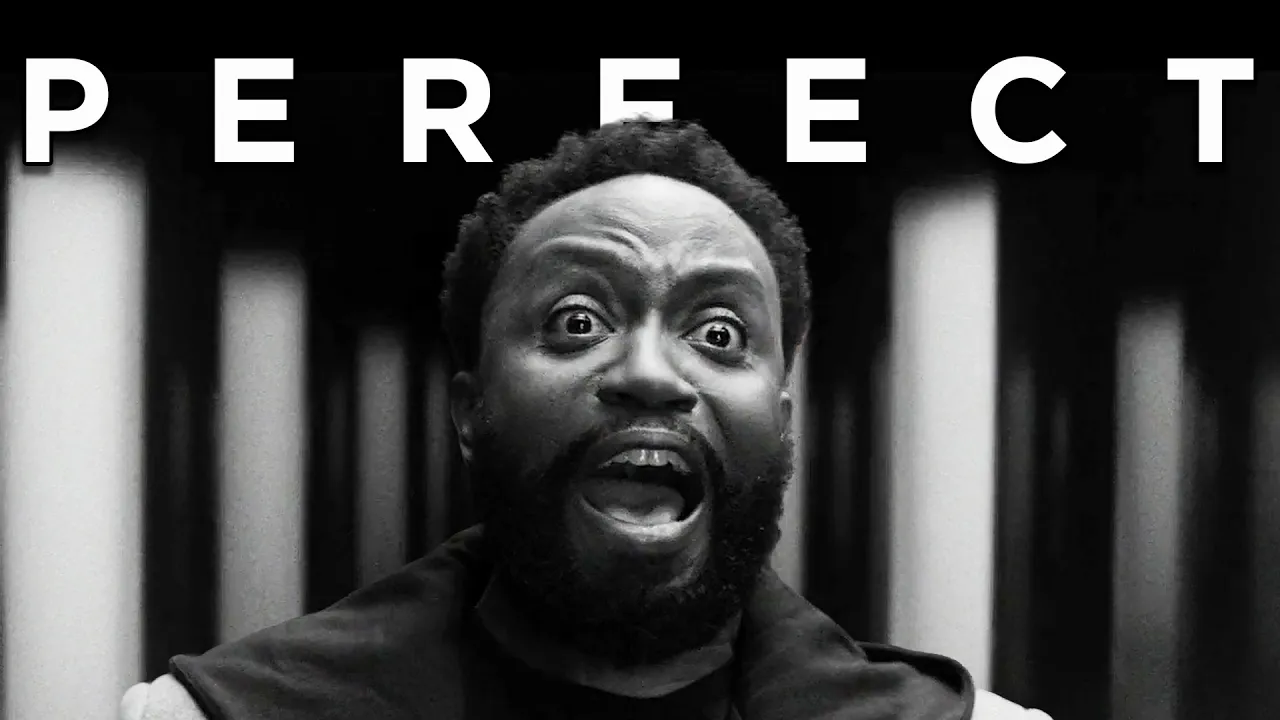
Adapted with AI from Heavy Spoilers' video of 29 January 2026 and checked against the video before publication. Editorial standards · Corrections
More from @heavyspoilers
All →


Make videos? Your next one could be an article here.
We turn your videos into articles under your name, linked back to the original. You keep 60% of what they earn, non-exclusive, and you can leave whenever you like.
Become a SubPlotter →