Weapons ending explained: who took the kids at 2:17 a.m.?
Zach Cregger's horror hides a parasite, a modern Pied Piper and a web of clues behind its title and its haunting time stamp
 Heavy Spoilers (AI-assisted)27 November 2026Editor: Digital Fox Talent Editorial TeamOn YouTube since 2009 · more than 1.6 million subscribers

Weapons is Zach Cregger's follow-up to Barbarian, and it's a horror built around a single night when a class of children walks out into the dark and vanishes. Heavy spoilers follow for the ending and the clues behind it. My verdict: it won't be for everyone, but for me, this was something phenomenal.
The film is Weapons (2025), starring Julia Garner, Josh Brolin and Alden Ehrenreich. Below, I'll go through the reveal of who took the children, what the title might mean, why the time 2:17 keeps repeating, and why the opening claims the children were never seen again even though we watch them come home.
Zach Cregger's move from comedy into horror
Cregger has made a name for himself in the last couple of years. With a background in comedy, he followed the Jordan Peele school of moving into horror. I've always thought comedians make the best storytellers when it comes to terror, because understanding timing is a big part of their job. Jokes also have to be unpredictable, and it's safe to say Cregger follows that mold.
Having made his name on Barbarian, I was excited to see what he would do with Weapons. There was a massive bidding war in Hollywood for this script, and apparently Jordan Peele even fired his team because they didn't manage to get the rights to it. It's safe to say Cregger didn't disappoint.
Gladys Lilly is the witch behind the missing children
The movie centers on the class of Justine Gandy. One night, most of the children disappear and the whole town is left wondering what happened. At the core is a central mystery we see from many different perspectives, including the parents, the most notable being Josh Brolin's Archer. At the center of it all is Justine, who is suspected of being involved. The town torments her to the point that they start calling her a witch. "Spoiler alert though, they were pretty close."
In the end, we learn that Amy Madigan's character, Gladys Lilly, is the witch. Using blood rituals and personal belongings, she was able to control the children. That's what made them disappear at 2:17 a.m., and they're hidden away in a basement in the town. She can mind control people with magic, and she has used one of the parents' houses to store the children.
Her abilities drain people of their life force, and that's how she stays young. When Gladys first arrives at the house, we discover she's dying of cancer and can barely walk. She's thought to have less than a month. Shortly after arriving, she begins to walk again, and over the course of the film she becomes much more sprightly. She's running by the end.
Because of her possession powers, it's even possible she acts like a leech, draining a person the longer they're under her spell. She gets better when she controls Alex and coerces him into helping her. It's your modern telling of the Pied Piper.
What the title Weapons means
Cregger has left the title ambiguous, with its meaning open to interpretation. However, he has said that the human body itself can be a weapon because of what it can be used for. A person has the capacity for good, but someone can also commit atrocities and abuse.
Looking at the film, there's also the thought that the children are being turned into living weapons. Lilly's control of them inflicts pain on the town, and I do feel that plays into the title. The children also rip her apart at the end, and they're used as a tool by others. That ties into the idea of manipulation, whether supernatural or psychological. People can be turned into weapons through their own actions or through someone else's, and if they're suspicious of someone, they can strike fear.
It's also thought the title can symbolize how a weapon is a tool intended to harm, and how that can apply to many things: blame, scapegoating, and demeaning someone because of something you believe, even if it isn't true. We see that narrative play out from many perspectives. It could also highlight how the use of an object can turn it into a weapon. The drug addict gets pleasure from his substances, but he also uses needles as a weapon on the cop. I would have happily taken a whole movie about those two, because that story was so well handled.
The leaked Weapons script and the Valentine's Day cards
The script leaked online a while back, and it adds some extra context. The original screenplay had a section about Valentine's Day cards. All the kids made them for the rest of the class, and the cards were used as part of the spell as a way to connect them. On the surface they seemed harmless, but they get weaponized and turned into tools of destruction.
Alex defeats Gladys, a parasite attached to his family
In the end, it's Alex who defeats the witch. In the cast list, Gladys shares Alex's surname, Lilly. However, I think she's a parasite who has attached herself to the family. The movie constantly mentions parasites. I first noticed it in the classroom nightmare, where it was up on the whiteboard, and later we hear a lesson about tapeworms. Marcus also watches something about ants and cordyceps. It's laced throughout.
It's possible she has even given the parents false memories, as Alex's dad says he doesn't really know her and his mother doesn't either. She does present herself like an auntie, though, and auntie is often one of those terms for someone who isn't really family.
Alex was bullied and looked down on by the rest of the class. However, he steps up and breaks the spell. He outsmarts Gladys in a supernatural showdown by using the same twigs she used to control the kids. He has them attack her, and the children are returned to their families. But it's clear nothing will ever be the same. All of them have been struck by trauma and grief, and they're shot to look completely vacant. That mirrors the opening, where Alex looked blank in the class.
Why the opening says the children were never seen again
The beginning of the movie gives us a piece of information I feel is significant. The opening tells us the children disappeared two years ago and were never seen again. So how can that be true when we clearly see them reunited? Personally, I think it's a comment on how much trauma can change you. The children come back, but they'll never be the same. They and their parents are reunited physically, but it's clear they're not there anymore.
Cregger has gone through his own trauma and has talked about how it affected him. In 2021, he lost his close friend Trevor Moore, who was part of their comedy troupe, The Whitest Kids U' Know. I think this film could even be Cregger drawing on his own life, and on how losing someone will vastly change you. Trevor died on the 7th of August, and that's the day the movie opened in previews.
Many of the characters are addicts too, and some use that to numb their pain. Whether it's alcohol with Justine and Paul, drugs or another vice, this is clearly the director commenting on trauma. He has said himself that the kids going missing isn't really what the movie is about, and that there's much more going on. Everyone has blank expressions and vacant looks, which shows they're emotionally broken.
It's possible some are still under the witch's control and won't ever be free from her grasp. Even with her gone, they're still victims and will likely live with it for the rest of their lives. The community has been torn apart, and they'll likely still have PTSD and nightmares. It's also possible that when she possesses and drains people, they lose themselves in the process. A parasite in your brain will eat away at it over time, and you'll drift toward being a vegetable. I feel that in strengthening herself, she takes more than the body: she drains the mind and soul, and the longer you're under the spell, the more you disappear. The kids were under her spell for a while, so it makes sense they'd be gone and never seen again.
Why does Gladys give herself away?
One of the big talking points as people left the cinema was that she gives herself away. The witch could lie low and stay hidden, but she reveals herself through her own hubris. The easy answer is that it wouldn't have been a movie otherwise.
A Reddit commenter explained it well, saying she felt capable of dealing with those who came after her. The witch is extremely powerful and can control people with her mind. She made all those kids leave their homes and can clearly infect the town's minds. But some people could possibly find out about her and catch her. Personally, I believe she haunts and taunts them to lure them to where she is, like the witch in Hansel and Gretel drawing people in. That way, she can either possess them or possess someone else who can take care of them.
The thread went on to discuss how Gladys could be hundreds of years old and might even be a victim of her own trauma. Witches were persecuted in the Salem witch trials, and that could be why she has turned against people and is draining their life force to live forever. Another commenter theorized that this trauma may have let her open her mind to darker things and unlock her powers.
What 2:17 means in Weapons
Many people are asking what 2:17 means. It was displayed everywhere at the premiere, and it keeps repeating, so you naturally wonder why the children disappear at exactly that time. It has been linked to the witching hour, which is typically around 3 a.m. Others think Cregger might have a personal connection to it.
Personally, I feel it might be a nod to The Shining and its infamous room. In the movie it's 237, but the book originally had the number as 217. That room held the spirit of an old, decrepit woman and was the scariest part of the hotel. It's also thought she possessed Jack in harming Danny, or that he came back and said nothing about her because he was under her spell. The Shining has hidden themes of child abuse that you can apply to this film. Alex's parents go after him the way Jack did, and they try to break through the door at the end like Jack trying to get to Wendy. The way the bathtub is used when they're breaking down the door plays on the expectation that the witch is hiding there. As a big fan of The Shining, I thought we were going to get a bathtub reveal.
The number 217 could also nod to the class itself: 19 people, with 17 going missing while two stayed behind in Alex and Justine. Whenever I see numbers laid out like that, my mind also goes to the Bible. There's a missing boy named Matthew, and I connect Matthew 2:17 to the slaughter of the innocents in Bethlehem by King Herod. It's connected to killing children, which you could definitely read into this movie.
Griffin, who I talked the movie over with, raised the point that it could also be a comment on how desensitized we are to violence. At one point we see a floating AR15, the kind of rifle often used in mass shootings. The Parkland school shooting happened on Valentine's Day, which may be why those Valentine's cards were part of the spell in the original draft. February is the second month, and 17 people were killed in that shooting, which I definitely think is more than a coincidence. What I love about the film is that you can make these connections and they might not even be real. Cregger has deliberately crafted something ambiguous and said every single person is going to take their own thing from it.
My Weapons review: a modern Brothers Grimm tale
With a film like this, there's a lot going on around it. First there's Barbarian, which I think was an incredible horror and got me excited for Cregger's next film. Then you hear about the bidding war, and the early reviews make it sound even better, so it's difficult not to get caught up in the hype.
I don't think this is going to be for everyone, and I know for some people it will wash right over them. That isn't about understanding it; it won't be everyone's cup of tea even if they understand the movie. But for me, this was something phenomenal. Sometimes you can feel the atmosphere throughout a film, and that alone sets the tone and the eeriness. That's much of what you get here. Even without big scares for most of it, there's a general mood that throws you off.
It's something like The Wicker Man, where the horror isn't happening on screen. It's going on in the background, the characters aren't aware of it, and in the end it bubbles to the surface. It's subversive and chilling, but at its core it feels like a Brothers Grimm fairy tale, with that same twisted sense, and for me it worked brilliantly. Like Barbarian, it balances many tones well, and at points you're laughing at how messed up it gets.
Maybe some of my readings are a reach. Either way, I enjoyed it, I'm excited to watch it again, and I think Cregger has made a standout for 2025. Between this and Sinners, we're watching a revival of horror that goes beyond slasher fests and jump scares.
What other creators are saying
More on Zach Cregger →The Sony horror reboot posted the best CinemaScore and Rotten Tomatoes numbers the franchise has ever seen, while new Nielsen data raises real questions about whether Lanterns is holding its audience.
Resident Evil box office: Cregger's reboot opens biggest ever →
Rather than cataloging every Easter egg, here is a look at how Cregger's new film captures the actual experience of playing Resident Evil, beat by beat.
Inside Zach Cregger's Resident Evil: How the Movie Recreates the Feel of a Survival Horror Game →
Zach Cregger's take on the game franchise plays more like a horror comedy than a straight horror movie, and the finale is where opinions will split.
A closer look at how skipping familiar game characters like Leon for a new medical courier named Bryan, played by Austin Abrams, makes this reinvention work.
Watch the original
@heavyspoilers · YouTube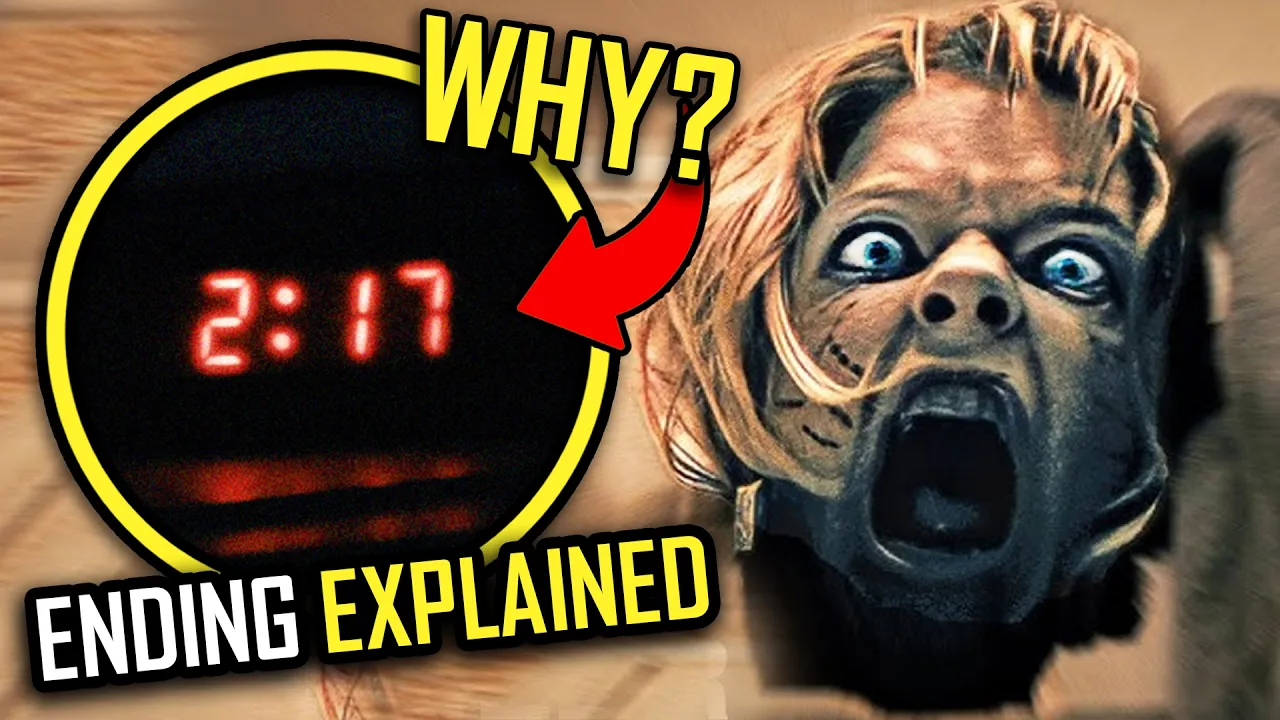
Adapted with AI from Heavy Spoilers' video of 7 August 2025 and checked against the video before publication. Editorial standards · Corrections
More from @heavyspoilers
All →


Make videos? Your next one could be an article here.
We turn your videos into articles under your name, linked back to the original. You keep 60% of what they earn, non-exclusive, and you can leave whenever you like.
Become a SubPlotter →