Carrie (1976) explained: how King's debut nearly got binned
How Stephen King's debut nearly ended up in the trash, how Brian De Palma found his Carrie, and the hidden symbolism inside the White house
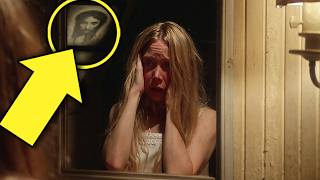
Carrie (1976), starring Sissy Spacek and Piper Laurie, was the first screen adaptation of Stephen King's work, and I think it's also one of the best: a 10 out of 10 movie and the best version of Carrie. Brian De Palma's film has stood the test of time, and even King considers it the definitive take on Carrie. Without it, I don't think King would have gained as much mainstream exposure as he did.
The concept is simple: what happens when a person with the power to destroy the world finally snaps. And King himself admits he should have done the movie's ending.
Stephen King Nearly Threw Carrie in the Trash
King and his wife Tabitha were fresh out of college and struggling. Unable to find a steady teaching job, he washed hospital and motel linens at the New Franklin Laundry and wrote short stories for men's magazines on the side. He later recalled, "I think we had a lot of happiness in those days, but we were scared a lot, too."
Carrie began as a short story for Cavalier, based on two girls King knew in high school who were bullied for years. He said he never spoke up and regretted it. Both girls later died. He also remembered a giant crucifix in one girl's house, and he saw agony and compassion in Jesus's face, two things he brought to Carrie.
After a couple of pages, King crumpled the draft and tossed it, thinking nobody would want to read about a girl getting her first period. Tabitha found it and left it on his desk with a note: "Please finish it for me. I want to see how it ends." She also told him girls would mock someone in that moment, not support them. Doubleday paid a $2,500 advance with a 50/50 paperback split, and the book sold over 1 million copies in its first year. From what I can gather, that came to over $400,000, about $2.5 million adjusted for inflation, and it let him write full time.
How Brian De Palma Found Sissy Spacek
Screenwriter Lawrence D. Cohen found the manuscript on his desk as a script reader six months before publication and tried to rally people to film it, but nobody would touch it. Later, producer Paul Monash offered him the script. De Palma, meanwhile, pushed hard to direct, and King got $2,500 for the rights. King has said he has no regrets, since the film made him a household name; even the trailer misspelled his first name.
De Palma held Carrie auditions jointly with George Lucas's Star Wars. Spacek was working as a set dresser alongside her husband, art director Jack Fisk, and she had a commercial audition that would pay $10,000. When she asked De Palma whether to take that or test for Carrie, he reportedly told her to take the commercial. According to Fisk, she was so upset that she read the book cover to cover without sleeping, then turned up for the audition with Vaseline in her hair, an unwashed face and a sailor outfit her mother made her in seventh grade. That audition changed De Palma's mind, and Amy Irving, originally in line for Carrie, became Sue Snell.
Irving met Steven Spielberg on this film and later married him, while De Palma later married Nancy Allen, who plays Chris Hargensen.
The Carrie Shower Scene and Its Book Roots
The film gets criticized for its locker room nudity, since the actresses were in their 20s and 30s playing teens. I think it's meant to play into a teenage male fantasy, with De Palma slowing it into a hazy, dreamlike quality, and then Carrie's period shatters that fantasy. In the book, Carrie is 16 and developed late, and the novel's in-world studies of the aftermath suggest that late cycle set off her powers.
Spacek isolated herself from the cast, decorated her trailer with dark religious images and studied Gustave Doré's illustrated Bible. Her poses in the shower echo Doré's Jesus and the Woman Taken in Adultery. In the principal's office, the camera stays outside with Carrie, putting us in her shoes as an invisible spectator. The statue of Rodin's The Thinker there is the principal's ashtray in the book, and since it depicts Dante pondering hell, I see it as foreshadowing the hell Carrie will bring.
Margaret White, the Prayer Closet and the Psycho Connection
Margaret's "sins of women" passage is loosely based on Genesis 2:22, twisted to her own views, and the chapter doesn't appear in any version of the Bible I could find. The book explains she and Carrie's father left the Baptist church, so all worship happened at home, and I wouldn't put it past her to have made her own Bible.
I always assumed the closet statue was Jesus, but it portrays the martyrdom of St. Sebastian. In the book, the closet instead holds a painting based on Jonathan Edwards' sermon Sinners in the Hands of an Angry God, and Carrie was sometimes locked inside all day. Piper Laurie reportedly found Margaret so over the top she laughed between takes, and De Palma reminded her this was horror, not dark comedy.
Bernard Herrmann was slated to score the film but died before it was completed. Pino Donaggio kept Herrmann's four Psycho notes as an homage, and the school is Bates High.
Tommy, Sue, Chris and Billy at Bates High
When Mr. Fromm mocks Carrie, Tommy objects but eventually joins the laughter, and I think that moment seals his fate. Sue's guilt in the gym scene is partly real: De Palma stood behind Irving whispering hurtful things in her ear. Chris, by contrast, is only emboldened. Reportedly, De Palma had Betty Buckley slap Nancy Allen upwards of 30 times for the right take.
John Travolta's Billy Nolan was his first major film role. He auditioned on his lunch break from Welcome Back, Kotter, still dressed as Vinnie Barbarino.
Why Tommy Takes Carrie to Prom: Film vs. Novel
In the film, Carrie runs when Tommy asks her to prom. Later, when he and Sue assure Miss Collins there's no trick, Tommy is still trying hard not to laugh, because he's only doing this for Sue.
The novel is murkier. There, when Tommy asks, Carrie doesn't run but stands up for herself, and King hints Tommy's change of heart might not have been fully his own, since in the novel Carrie can enter people's minds. I think he's one of the most tragic characters in the story. In the novel, he could have signed a big deal to play baseball, but his studies came first and he wanted to write poetry. He shows how pain and misery can hit innocent bystanders who were never involved in the first place. Nobody in the novel knows for sure why he took Carrie to prom, but an excerpt from Sue's book says he did it simply because he loved her.
Miss Collins Tells Carrie She Needs a Better Attitude
In the film, Miss Collins finds Carrie crying and, instead of slapping her, offers a shoulder to cry on. When Carrie says the prom invitation feels like a trick, Collins tells her she doesn't have the right attitude. That's probably the worst advice you can give someone who is constantly bullied. I know that's not how she means it, but it's another example of everyone brushing Carrie's feelings aside and seeing her as the problem. In the book, Collins ignored her suffering until the locker room, so like Sue, she's being nice partly to feel better about her own complacency.
Collins then sits Carrie at a mirror and tells her she's pretty. It's a backhanded compliment, but it means the world to a girl nobody has shown interest in before. Collins encourages the femininity that Margaret suppresses, and I do think Carrie sees her as the motherly figure she never had. The mirror echoes the one in Carrie's bedroom, except now she sees something positive.
The Pig's Blood and the Last Supper at the White House
Chris and Billy break into a slaughterhouse, where Billy smashes a pig's head with a sledgehammer, mirroring the bucket dropped on Carrie later. Chris relishes it. The book is more brutal: Billy cuts a pig's throat and lets it bleed into a bucket. Back at the White house, we fittingly see the Last Supper while Carrie and Margaret share dinner, their last meal together. When Carrie mentions prom, Margaret throws her drink in her face and puts out the candles, foreshadowing the blood and the lights going out at the dance.
Carrie reveals her father wasn't taken by Satan but ran off with another woman. That's a significant change, because in the book Ralph White died in a construction accident months after Carrie was born. It feels like the film's way of explaining Margaret's religious mania. In the novel she gave in to him one night when he showed up drunk, so in the film, his leaving her for another woman is even more damaging. The book also has her treating the pregnancy as a cancer, giving birth alone while neighbors ignored her screams, and keeping the butcher's knife she used on the cord to one day use on Carrie.
Carrie Takes Charge on Prom Night
Carrie puts her foot down and says she's going. In the book she flexes her powers more, stopping Margaret's slap midair, and feels relief that she no longer cares whether her gift comes from God or the devil. Later at a drugstore she picks up a red lipstick and immediately hates it. Maybe I'm reading into this, but I think that plays into how blood triggers her rage. Margaret calls her pink dress red, which I think foreshadows the night and nods to the red velvet dress in the book.
Carrie corrects her mother: they're breasts, and every woman has them. Margaret begs her to stay, and I think that's fear of being alone after her husband left. An inverted cross appears to be painted in the street outside. Piper Laurie claimed the wounds Margaret inflicts on herself were real, but there's a quick cut as she scratches her face, so I doubt it. The uncredited song as Carrie enters is Education Blues, whose chorus about teachers, preachers and principals parallels her torment. To me it shows her turn wasn't only a psychotic break but something festering in the town.
The Bucket Drop and the Gym Massacre
The spinning dance shot nearly gave me motion sickness, but it captures Carrie being swept up in the fantasy. Sissy Spacek and William Katt stood on a spinning platform while the camera dollied the other way, a nod to the kiss in Hitchcock's Vertigo. In the film, Tommy gets caught up in the dream himself. In the book, Carrie's thoughts seep into his head until he believes he loves her. When she crosses out their names on the ballot, the angle makes it look like an inverted cross. I love the single take that pans from the ballots up to the bucket.
However many times I see the blood fall, it's still shocking. De Palma cuts between Carrie, Sue, Miss Collins and Chris in slow motion until the bucket drops and kills Tommy. Even Collins laughs. Spacek apparently slept in her bloody clothes for three days for continuity, and the blood was warmed syrup and food coloring. The fire hose burst P.J. Soles's eardrums, and Betty Buckley's terror at the falling board was reportedly real. The sequence took over two weeks and about 35 takes. Carrie leaving the burning gym was inspired by Gustave Moreau's 1851 study of Lady Macbeth, one of my favorite movie details ever. In the book she burns most of the town.
Chris, Billy and Margaret's Deaths
Carrie flips Chris's car with a stare. I did think that was a bit much, since I don't think Carrie ever knew Chris was after her, though I suppose there were years of bullying off screen. In the book Billy drives, but I like that it's Chris, blinded by hatred. At home, Margaret hides behind the door, a detail I don't think I noticed as a kid because of pan and scan. She stabs Carrie in the back, and Carrie pins her to the wall with knives, leaving her mirroring the St. Sebastian statue in the prayer closet. Only on this watch did I notice even the hair matches.
Carrie still pities her mother, dragging her into the closet as the house collapses. In the book, Carrie stops Margaret's heart and later dies in the street with Sue beside her, as Sue gets her period. The film's ending mirrors Samson bringing down the temple, a parallel King makes himself, and it's the ending he wishes he'd written.
Sue's Nightmare and My Verdict on Carrie
Sue lays flowers at the ruins, where a sign reads Carrie White burns in hell, and a bloody hand grabs her. Amy Irving apparently screamed so convincingly that her own mother shouted her name. The shot was filmed backwards, which you can spot from a car reversing behind her, and Spacek insisted on being buried under the rocks herself.
The film grossed over $33 million for United Artists from a $1.8 million investment, earned Oscar nominations for Spacek and Laurie, spawned countless copycats and remakes, and was selected for the National Film Registry. I think it's a masterpiece, probably the most intense Mrs. White on screen, and Spacek nails the part. This is a 10 out of 10 movie, I think, and the best version of Carrie, and probably will be for all time.
What other creators are saying
More on Stephen King →The Prime Video series modernizes Stephen King's story with social media, a more sympathetic Margaret and a bigger supernatural world that I could have done without
Carrie (2026) review: a faithful remake with too much lore →
Stephen King's original novel was told very differently, and one big scene never made it to the screen.
The Carrie Movie Cut the Book's Biggest Moment: Carrie Destroying the Entire Town →
The new Amazon series opens with a burning school, moves Carrie White's story into a modern high school, and ends its first episode on a line that took the story in a new direction.
A modern, binge-ready take on the Stephen King classic, with a franchise-sized mythology, sharp social commentary and a prom episode that delivers.
Carrie review: Mike Flanagan is back on form on Prime Video →
Watch the original
@heavyspoilers · YouTube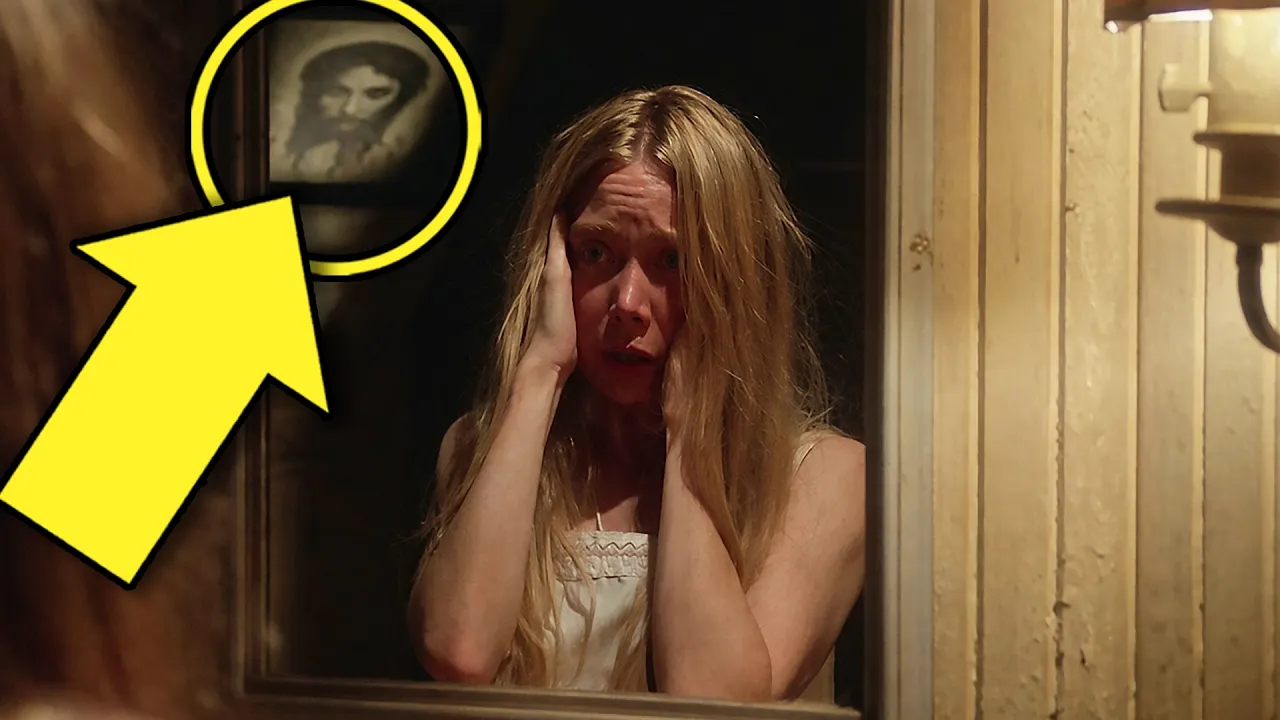
Adapted with AI from Heavy Spoilers' video of 7 November 2026 and checked against the video before publication. Editorial standards · Corrections
More from @heavyspoilers
All →
Make videos? Your next one could be an article here.
We turn your videos into articles under your name, linked back to the original. You keep 60% of what they earn, non-exclusive, and you can leave whenever you like.
Become a SubPlotter →