Captain Kirk: did Starfleet know he was a bluffer and a liar?
Kirk lied, bluffed and escalated his way through the original five year mission, and Starfleet kept giving him its most important assignments
 Lore Reloaded (AI-assisted)5 November 2026Editor: Digital Fox Talent Editorial TeamOn YouTube since 2016 · more than 140,000 subscribers

Captain James T. Kirk is remembered as the best of Starfleet: the explorer, the diplomat, the man who carried the Federation's ideals farther than anyone before him. That's the version history remembers, because it fits the story the Federation wants to tell about itself. But the deeper you look into the original five year mission of Star Trek: The Original Series (1966), starring William Shatner, Leonard Nimoy and DeForest Kelley, the harder that version becomes to reconcile with Kirk's actual command style.
He didn't behave like the captains that followed him. He lied to his opponents, provoked confrontations, manipulated enemies into mistakes, used unpredictability as a tactical advantage, and escalated situations that later Starfleet officers would have tried to defuse. And Starfleet kept placing him in command of its most important missions. Once you examine his record closely, it becomes difficult to argue Starfleet didn't understand exactly the kind of officer it put in the center seat of the Enterprise.
The Federation of the 2260s was a frontier, not a stable power
The Federation of Kirk's era is usually remembered through the lens of what came later: the Enterprise D, Picard's diplomacy, an era when Starfleet appeared organized and powerful enough to place exploration above survival. That was not the reality of the 2260s. The Federation was still expanding, its borders were unstable and its colonies were exposed. A Constitution class ship could spend weeks away from reinforcement or direct oversight.
If a colony went silent, there was often no immediate way to know whether it had suffered an accident, a raid, political unrest or complete destruction. Captains on the frontier operated with enormous autonomy because there was no alternative. A starship commander functioned as a diplomat, a military officer, an investigator, a crisis responder and, most importantly, the Federation's authority. Sometimes he did all of that at once. That environment favored officers who could act decisively without waiting for instructions from Earth, and Starfleet needed those officers constantly.
Klingon pressure meant Starfleet could not rely on idealism alone
The Klingon Empire was not a distant rival operating behind clearly defined borders. It was aggressive, expansionist and increasingly willing to pressure Federation space directly. Klingon forces interfered in developing worlds, challenged Federation influence across contested regions, and tested how far Starfleet was willing to push back without escalating into open war. The Romulans created a different kind of threat again.
This was not a secure utopia but a frontier under pressure, and under those conditions Starfleet couldn't rely entirely on idealism. A captain on the edge of explored space needed more than diplomatic skill. That reality shaped the officers Starfleet promoted during this era, Kirk included. His command style did not emerge in isolation. It was a response to a frontier where captains were expected to project Federation ideals in regions where those ideals alone were not enough to maintain control. Seen that way, Kirk looks less like an exception to Starfleet doctrine and more like a product of the era that created it.
Kirk's tactics in The Corbomite Maneuver, Balance of Terror and The Enterprise Incident
By the standards of later Starfleet officers, Kirk should have been a diplomatic problem. He was unpredictable, aggressive, willing to manipulate opponents and far more comfortable with escalation than the Federation's public image would suggest. What stands out to me is not that he behaved this way. It's that Starfleet repeatedly trusted him to keep doing it. When Kirk encountered danger, he rarely approached it like a conventional diplomat. He approached it like a tactician trying to control momentum before the situation controlled him.
In The Corbomite Maneuver, Kirk bluffs a vastly more powerful opponent by inventing a fictional retaliatory weapon capable of destroying both ships. "Not negotiation, psychological warfare." In Balance of Terror, he hunts a Romulan commander through the Neutral Zone like a submarine captain tracking an enemy vessel in wartime. The episode is remembered for diplomacy and mutual respect between commanders, but tactically Kirk spends most of the encounter anticipating deception, countering ambushes and preparing to destroy the Romulan ship before it can strike again.
In A Taste of Armageddon, Kirk effectively dismantles an entire planetary system because he concludes the existing political order is too dangerous to tolerate. And in The Enterprise Incident, Starfleet authorizes him to violate Romulan territory to steal one of the Empire's most strategically valuable technologies. That mission alone tells us Starfleet was willing to conduct covert operations against rival powers when it believed the strategic situation justified it, and that Kirk was trusted to carry them out. The pattern repeats constantly throughout the series.
Kirk took controlled risks, and Starfleet rewarded him for it
That is not the behavior of a passive explorer. It's the behavior of a commander trained to survive hostile territory, where hesitation could become fatal. This is where the mythology around Kirk becomes misleading. Kirk takes risks, but usually controlled ones. He escalates situations deliberately, studies opponents psychologically, and understands that uncertainty itself can become a weapon.
Even his diplomacy often works this way. Kirk rarely wins by presenting himself as harmless. He wins by convincing opponents that continuing the confrontation will cost them more than backing down. That matters because it reveals something uncomfortable about the Federation of this era: its most successful captain often behaved less like a traditional explorer and more like a strategic operator managing instability along a dangerous frontier. Starfleet did not merely tolerate that behavior. It rewarded it.
Constitution class captains operated almost like autonomous governors
The uncomfortable truth about Kirk is that Starfleet did not create him by accident. The Federation of the 2260s needed officers capable of operating far beyond the limits of normal oversight. The farther Starfleet expanded, the harder the frontier became to control. A crisis near the Klingon border could escalate long before the Federation Council even learned it had started.
In later generations, Starfleet officers often operated inside a more stable system: larger fleets, stronger infrastructure, wide coordination between worlds, and a Federation powerful enough to lean more heavily on diplomacy because its position was already secure. Kirk's era was different. The Federation was still proving it could survive. What Starfleet needed then was not only intelligent or compassionate officers, but officers capable of functioning independently while carrying enormous military and political authority.
That authority was real. A Constitution class captain could negotiate treaties, threaten military retaliation, intervene in planetary conflicts, enforce Federation law and make first contact decisions with limited oversight from Earth. In practical terms, they operated almost like autonomous governors moving through contested space. Part of what made Kirk so effective is that he understood the Federation could not survive the frontier through idealism alone. He wasn't reckless, whatever some captain in the Delta Quadrant might think, and he didn't ignore Starfleet ideals. He represented a Starfleet that existed before the Federation became comfortable, one where diplomacy still depended heavily on deterrence. Under those conditions, officers like Kirk stopped being unusual. They became necessary.
The USS Enterprise was an armed platform for projecting Federation power
The Enterprise is usually remembered as a symbol of exploration, a ship of science, diplomacy and discovery, and to a degree it was. But that image gets harder to maintain once you look at what a Constitution class starship was designed to do. It wasn't operating like a civilian research vessel. It was operating like an armed strategic platform built to project Federation power across unstable territory.
The Constitution class was heavily armed for its era. It carried enough firepower to engage enemy warships independently, enough range to stay away from Federation support for extended periods, and enough authority to make critical political and military decisions without direct oversight. That was vital because Starfleet lacked the infrastructure to keep tight control over distant sectors. Ships like the Enterprise became extensions of Federation authority far from the Federation itself, so exploration and deterrence often became inseparable. A Constitution class ship entering a disputed region was demonstrating Federation presence, and its arrival carried political, military and strategic weight. Enemies understood that, and so did Starfleet.
That helps explain why the Enterprise kept finding itself in border disputes, military confrontations, espionage operations and strategic crises. It also explains why Kirk's style matched the vessel so well. The ship was built for autonomy and needed a captain who could make rapid strategic decisions without waiting for approval. A hesitant officer could lose a ship before reinforcements even received the distress call. Even the five year mission reflects the contradiction. Officially it focused on exploration, but every new world mapped expanded Federation influence, every patrol route reinforced Federation presence, and every encounter with rival powers became part of a larger struggle over territory and stability. Starfleet's most iconic ship was also one of its most important instruments of power projection, and the man commanding it understood that better than most.
Why later Starfleet mythologized Kirk instead of replicating him
By the end of Kirk's era, Starfleet was already changing. Not because officers like Kirk had failed, but because the Federation no longer wanted captains operating with that level of independence. The frontier was stabilizing, infrastructure was expanding, communication networks improved, and political institutions grew stronger and more centralized. As the Federation became more secure, Starfleet's public identity shifted, and so did the type of officer it preferred to promote. Captains still carried authority, but the era of near autonomous frontier command slowly disappeared.
That shift makes Kirk historically significant in a way the Federation myth often avoids discussing. He represented a Starfleet that later generations became politically uncomfortable with, one where captains could violate treaties during covert operations, intervene directly in planetary conflicts, make military decisions without immediate oversight and escalate confrontations based entirely on field judgment. By the time of Picard, officers were expected to function inside a far more bureaucratic system. That doesn't mean later Starfleet became weak, but it does mean it became more cautious about officers who operated the way Kirk did.
In some ways, Kirk became easier to mythologize than to replicate. What grew less comfortable was acknowledging why he had been so effective, because many of his strengths came from conditions the Federation no longer wanted to be associated with: instability, strategic fear, border pressure and the constant possibility of escalation. Once the Federation felt powerful enough to believe that era had passed, Starfleet reshaped its image around officers who reflected the future it wanted to project, not the past it had to survive. That may explain why Kirk is so often remembered as larger than life, because "legends are easier to preserve than uncomfortable realities."
What other creators are saying
More on Starfleet →From Tom Paris to Benjamin Sisko, these officers gave Starfleet good reason to take the uniform back, and some went right back to work
Star Trek officers who deserved to lose the uniform, ranked →
One card plays artifacts from the top of your library, and the other rewards facing a dilemma with free spells
Zefram Cochrane and the Caretaker among Magic: The Gathering Star Trek preview cards →
A Romulan War buildup, a Mirror Universe miniseries, the Borg Queen's origin and a refitted NX-01 were all part of the plans for a season that never got made
Tomorrow's Enterprise plays less like classic Kirk and Spock and more like Next Generation's All Good Things, and the people who made it are calling the future we saw continuity.
Strange New Worlds finale: the original series' lost ending →
Watch the original
@lorereloaded · YouTube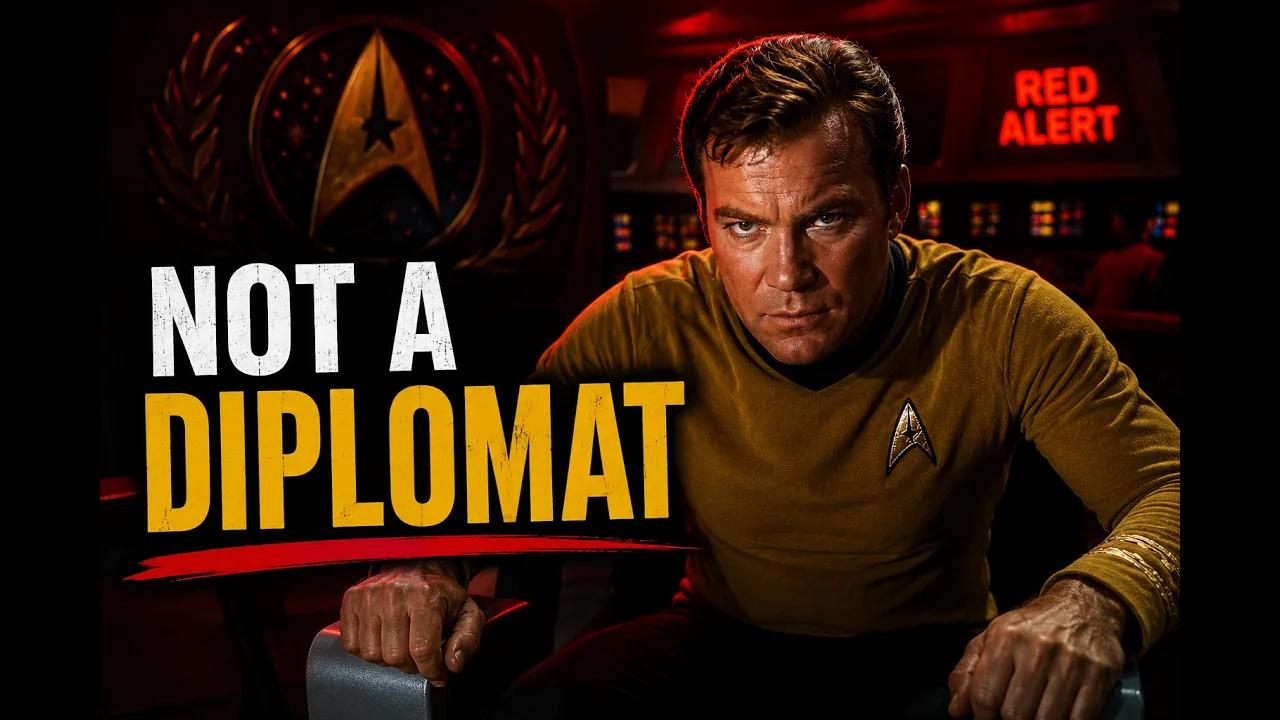
Adapted with AI from Lore Reloaded's video of 23 May 2026 and checked against the video before publication. Editorial standards · Corrections
More from @lorereloaded
All →


Make videos? Your next one could be an article here.
We turn your videos into articles under your name, linked back to the original. You keep 60% of what they earn, non-exclusive, and you can leave whenever you like.
Become a SubPlotter →