Tolkien's Letters on Sam Gamgee: C.S. Lewis's Tears, War Losses and Mercy
Tracing The Choices of Master Samwise through Tolkien's wartime letters, from a reading that moved C.S. Lewis to tears to the moment Tolkien called the most tragic in the story

What could Tolkien have written that made C.S. Lewis, the man who gave us Narnia, cry the first time he heard it? The answer is one chapter of The Lord of the Rings, The Choices of Master Samwise. I traced it through Tolkien's letters from the weeks he was writing it, in the middle of the Second World War, with his son far from home. By the end, I hope you'll know not only the world he built but more about the man himself.
Peter Jackson's films were my gateway to Middle-earth. This year I've also been visiting the places where Tolkien grew up.
Why Sam breaking, not fighting Shelob, is what stays with me in The Choices of Master Samwise
The chapter ends brutally. Sam cries out, but his faint voice is drowned in the noise. The great doors slam shut and iron bars fall into place inside. Sam throws himself against the bolted brass plates and falls senseless to the ground. He is out in the dark. Frodo is alive but taken by the enemy.
When I think about this chapter, the moment that stays with me isn't Sam fighting Shelob, or even fighting the orcs. It's the moment Sam breaks. He has lost the person he cares about most and is trying to work out the right thing to do. He doesn't know what will happen, whether he can finish the quest, or even whether he's making the right choice. He only knows something has to be done. I think that tells us a lot about the kind of hero Tolkien valued.
Letter 66: Tolkien tells Christopher he is a hobbit among the Uruk-hai
Tolkien wrote this chapter in May 1944. His son Christopher was in South Africa training with the Royal Air Force. Tolkien had fought in the First World War himself, so he knew military life, and he wrote regularly to Christopher, who was having a very hard time.
On May 6 he sent a wonderful letter, number 66 in The Letters of J.R.R. Tolkien. He tells Christopher the family doesn't mind his long letters, and that he wrote the same way, or worse, to poor Vincent Trought. Camp life hasn't changed, he says, and what makes it maddening is that its worst features are unnecessary, down to human stupidity that planners refuse to see and that organization always makes worse. He calls Christopher's service very bad, living on the reputation of a few brave men.
Then he describes the war itself in the language of his own legendarium. We are trying to defeat Sauron with the Ring, he writes, and it seems we will succeed, but the price is breeding new Saurons and slowly turning men and elves into orcs. Real life isn't as clear as stories, he adds, since we started out with many orcs on our side. Then comes the part I love: "Keep up your hobbitry in heart, and think that all stories feel like that when you are in them." He tells Christopher he is inside a very great story.
I enjoyed that letter. Here is Tolkien in the middle of a war, encouraging his son to hold on to the things that make him who he is, while he himself was writing Sam and Frodo's journey into Mordor.
Shelob's name and the reading that made C.S. Lewis cry
Two weeks later, on May 21, he wrote again. He was struggling with this part of the story, rewriting constantly and throwing drafts away. He even asked Christopher whether Shelob was a good name for a giant spider. I find that very entertaining. Shelob is one of the most terrifying creatures in Middle-earth, and Tolkien is simply asking his son whether the name works.
Then on May 31 he wrote the letter that I think will move us as fans. In letter 72 he explains that he didn't get back until after midnight, and that the rest of his time had gone on a desperate attempt to bring the Ring to a proper pause: Frodo in the hands of the orcs in the passes of Mordor, before he had to stop for exams. By sitting up all night he managed it, and on Monday morning he read the last two chapters, Shelob's Lair and The Choices of Master Samwise, to C.S. Lewis. Lewis praised them with unusual fervor and was moved to tears by the last one. So, Tolkien concludes, the story seems to be holding up.
C.S. Lewis, who would later give us The Chronicles of Narnia, sat listening to Tolkien read about this little hobbit, his grief, his despair and the decision in front of him, and it made him cry. I find that amazing. When we talk about Tolkien today we spend a lot of time on the enormous world he created: the battles, the history, the mythology, thousands of years of events. There are great creators talking about all that, and they're right to. But here is Tolkien writing to his son during a war, reading a chapter about a grieving hobbit to one of his closest friends, and that friend weeping.
For me, knowing that gives the story something you don't get from seeing Middle-earth on screen. It's the humanity behind it, and it matters enormously. That's why I think we need to keep talking about it, because I don't think film and television have quite captured that yet, and I'm not even sure they're trying. Of course, this is only my personal interpretation of the chapter, but it's one of the reasons I love Samwise Gamgee.
Letter 131 to Milton Waldman: Sam rises to heroic stature
It becomes even more compelling because Tolkien returned to this exact moment in 1951. In a huge letter to a publisher named Milton Waldman, letter 131, he explains his whole mythology, how the pieces fit together and what he was trying to achieve.
His summary of Book Four covers Gollum's return and taming, the near repentance spoiled by Sam's impatient rebuke, the Dead Marshes, Faramir, and Gollum's betrayal in the Mountains of Shadow. The book ends in apparent disaster, with Frodo lying as if dead after the monstrous spider strikes him down. Sam now rises to supreme heroic stature, Tolkien writes. He fights the spider, saves his master's body, takes up the burden of the Ring and prepares to go on alone. But the orcs carry off his master, Sam's first loyalty wins, and he throws himself senseless and despairing against the brass door as it closes.
I think that's hugely important. Think of everything in The Lord of the Rings: Gandalf fighting the Balrog, Helm's Deep, the charge of the Rohirrim, Aragorn crowned king. Those are enormous moments. Yet of all the moments Tolkien could have dwelt on, he chose this little hobbit, alone, grieving his friend, facing a decision he doesn't want to make.
In the same letter Tolkien explains that the story is deliberately seen mainly through hobbit eyes, because of a recurring theme: the unforeseen deeds of will and virtue by seemingly small, unregarded people in the politics of the world. He ends with a line I know by heart: without the high and noble, the simple and vulgar is utterly mean, and "without the simple and ordinary the noble and heroic is meaningless." I think that's wonderful, and worth keeping in mind in everyday life too. Tolkien isn't saying great battles don't matter. Of course they do. He's saying the extraordinary needs the ordinary. Otherwise, what's the point?
Sam and Rosie Cotton: why ordinary love matters
People sometimes overlook something else in this letter: Sam's relationship with Rosie Cotton. Tolkien makes clear that simple, ordinary love is essential to understanding Sam.
What does Sam actually want? He wants to go home. He wants his garden, the Shire and Rosie. He doesn't want to be a great warrior or a king, or to have songs written about him. He wants the ordinary life he left behind. And yet, facing a completely impossible situation, he finds the courage to do something extraordinary. It's easy to get swept up in the grandeur of Middle-earth, the big battles and everything we'll see unfold in The Rings of Power. But sometimes, to understand what Tolkien was trying to tell us, you have to look at the gardener.
Privates, batmen and the T.C.B.S.: the First World War behind Sam
Tolkien explains where the inspiration came from, and I think it's amazing. In a 1956 letter to a reader, he says Sam was largely inspired by the ordinary soldiers he knew in the First World War, especially the privates and his batman. A batman was a soldier assigned to look after an officer, caring for his kit and daily needs while being a soldier himself. Tolkien knew these men personally, and he says he considered them far superior to himself. Here is a man who served as an officer, and when he looks back, it's the ordinary soldiers he holds in high esteem. You can see that influence in Frodo and Sam.
Another part of his life matters just as much. At King Edward's School in Birmingham, Tolkien had a close group of friends who called themselves the T.C.B.S., the Tea Club and Barrovian Society, which I have to say is a wonderfully British name for young men who loved tea and books. There were four: Tolkien, Rob Gilson, Geoffrey Smith and Christopher Wiseman. They shared poems, stories and the belief that they might one day give the world something important.
On July 1, 1916, the first day of the Somme, Rob Gilson was killed. Tolkien was devastated, and that August he wrote to Geoffrey Smith that he felt the group had come to an end. A few months later Geoffrey died of wounds received in France. Geoffrey had written Tolkien a moving letter: he knew he probably wouldn't survive, and told Tolkien that if he died, their friendship and everything they believed in shouldn't end. He hoped Tolkien would go on saying the things they had wanted to say as a group. I think that's an extraordinary thing to ask of a friend, especially alongside Sam, who believes he has lost Frodo and faces carrying on something they began together.
I'm not suggesting Frodo and Sam are directly based on Tolkien and Geoffrey; Tolkien disliked that kind of allegory. But he knew what losing friends felt like, what it meant to have others depend on you, and the courage of ordinary men in terrible circumstances. In the foreword to The Lord of the Rings he writes that by 1918 all but one of his close friends were dead. So when he read this chapter to Lewis years later, these weren't just interesting ideas. They were things he understood personally. I think that's beautiful, and despite all the tragedy, friendship was a huge part of his life. You can feel that in Sam.
Letter 191: Frodo's failure and the role of mercy
It's easy to slip into the idea that in Tolkien good characters do good, bad characters do evil and good wins. What struck me in his letters is how important mercy and forgiveness were to him. At Mount Doom, Frodo, exhausted and starving, has carried the Ring further than anyone could reasonably expect, and at the last moment he claims it and fails.
In letter 191, in 1956, Tolkien doesn't condemn him. He writes that good people, even saints, can be subjected to a power of evil too great for them, and that here the cause, not the hero, was triumphant, because through the exercise of pity, mercy and forgiveness a situation was created in which disaster was averted. Mercy isn't real if it's shown because it might be useful later, he says. Frodo deserves all honor for spending every drop of will and body, which was exactly enough to bring him to the destined point and no further. Few others, perhaps no one, would have got that far.
I find that fascinating, because what saved the quest wasn't Frodo suddenly finding extraordinary willpower. It was mercy. Frodo spared Gollum, and before him Bilbo pitied Gollum. Without those choices, Gollum wouldn't have been at Mount Doom. All those battles, the armies of Gondor and Rohan, Aragorn marching on the Black Gate, and the Ring was destroyed because someone chose not to kill a nasty little creature when he could.
Letter 246: Sam, Gollum and the most tragic moment in the story
Sam is one of my favorite characters, but Tolkien didn't think he was perfect. In letter 246 he calls Sam a bit conceited. His loyalty is admirable, but it can make him possessive and suspicious, especially of Gollum.
On the stairs of Cirith Ungol in The Two Towers, Gollum finds Frodo asleep, and for a brief moment something changes. He reaches toward Frodo very gently, as if a small part of Sméagol is still there. Then Sam wakes, sees Gollum touching Frodo, assumes the worst and shouts at him, and the chance for Sméagol to come back is lost. Tolkien describes this as the most tragic moment in the whole story. Not Boromir, not the Scouring of the Shire, not the great tragedies of war, but a small moment where Sam fails to see that someone is trying to change. Tolkien even suggests things could have been very different had Sam responded kindly.
Let's give Sam some slack: he had every reason to distrust Gollum, and Tolkien admits that too. But that's what makes the moment land. Sometimes doing the right thing is hard, and showing compassion to someone who hasn't earned it is hard. Even Sam, one of the greatest heroes of the story, gets it wrong.
Father Francis Morgan: where Tolkien first learned charity and forgiveness
Tolkien understood this personally. When his mother died in 1904, he and his younger brother were orphaned. I talked about this earlier in the year when I visited the Lickey Hills as part of my Tolkien tours. The boys were placed in the care of a priest, Father Francis Morgan, who became hugely important in Tolkien's life.
In 1965, in letter 267 to his son Michael, Tolkien recalls his mother worn down by persecution, poverty and illness, dying alone in rented rooms in a postman's house at Rednal. He says he has met priests who were stupid, lazy, drunken, cruel and worse, but Father Francis outshines them all. To some he seemed a snobbish old gossip, and he was, and he wasn't. From him, Tolkien writes, he first learned charity and forgiveness.
So here is someone who experienced kindness when he needed it most and went on to write stories where kindness and mercy can change the fate of the world. It wasn't about reward. You don't show mercy because it will serve you; you show it because it's right. Tolkien was telling us that almost from the start, when Gandalf explains to Frodo why Bilbo spared Gollum. So when I say I'm worried about losing Tolkien, this is what I mean: not the events, not copying something word for word or rule for rule, but the beliefs, the experiences and the humanity that lie behind it.
Watch the original
@ajm_nerdcore · YouTube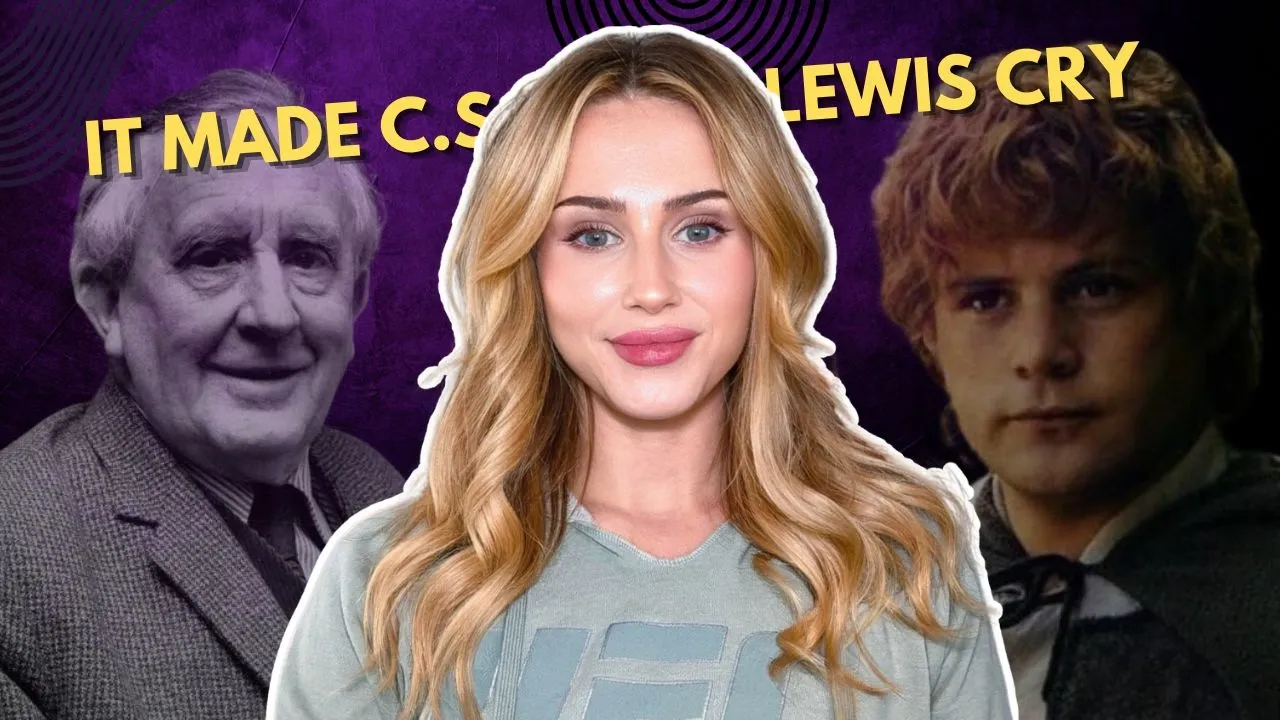
Adapted with AI from Alex's video of 30 October 2026 and checked against the video before publication. Editorial standards · Corrections
More from @ajm_nerdcore
All →


Make videos? Your next one could be an article here.
We turn your videos into articles under your name, linked back to the original. You keep 60% of what they earn, non-exclusive, and you can leave whenever you like.
Become a SubPlotter →