Shelob's name meaning: Tolkien's spiders and Old English
Tolkien's spiders carry names built from old words for spider, and his letter to his son Christopher shows Shelob's name was a deliberate choice
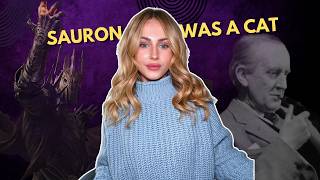
Middle-earth has vampires, werewolves and giant spiders. Tolkien's spider episodes include Shelob in The Two Towers and the Mirkwood spiders in The Hobbit. Their names aren't elaborate inventions. They're built from old English words for spiders and poison, and Tolkien chose the name Shelob on purpose.
I've been reading Tolkien since I was about 10. In his own words, these creatures show a writer who, I think, spent an awful lot of time making spiders terrifying.
Sauron calls Shelob his cat, but Tolkien says she owns him
Sauron even calls Shelob his cat, but Tolkien makes it clear that she doesn't belong to him. In The Two Towers, Sauron knows where she lurks. Tolkien writes that "It pleased him that she should dwell there hungry, but unabated in malice," because she made a surer watch on the ancient path into his land than anything his own skill could have devised.
The orcs were useful slaves, but Sauron had plenty of them. If Shelob caught a few now and again to stay her appetite, she was welcome to them. Sometimes he would send her prisoners he had no better use for. He had them driven to her hole, and had the play she made of them reported back to him. Tolkien compares it to a man tossing a dainty to his cat: "his cat he calls her, but she owns him."
The passage closes with the two of them living on, each delighting in their own devices, fearing no assault or end to their wickedness. "Never yet had any fly escaped from Shelob's webs," Tolkien writes, and her rage and hunger had only grown greater. I think that's a fairly accurate description of cat behavior.
Shelob's chapter from The Two Towers was my bedtime story at 10
I saw The Lord of the Rings films before I read the book. When The Return of the King came out in 2003, I was about 10, I think. I remember my mom being very excited about Shelob being on screen. On the drive home, she told me all the bits the films didn't include.
That night, my bedtime story was Shelob's chapter from The Two Towers. Looking back, I think that was a questionable choice for a 10 year old. Most kids were getting a nice story, maybe about a bear. I was getting an enormous spider trying to eat Frodo.
But I love The Two Towers, and I love that memory. It's one of those moments where the films led me to the books, and I started finding out how much more there was to Tolkien's world.
Bilbo's insults for the Mirkwood spiders in The Hobbit are real old words
Then there's Mirkwood in The Hobbit, where Bilbo, three feet tall and surrounded by giant talking spiders, decides the best plan is to start insulting them. He calls them Attercop, Lazy Lob and Crazy Cob. As the spiders run to different points in the glade and spin webs between the tree stems, trying to fence him in, Bilbo plucks up his courage and starts a new song.
"Lazy Lob and Crazy Cob, are weaving webs to wind me. I am far more sweet than other meat, but still they cannot find me," he sings, going on to call himself a naughty little fly and the spiders fat and lazy. In the second half of the chapter, Bilbo kills his first spider and names Sting, then drives the spiders away with that mocking song.
It sounds like something you'd hear in a primary school playground, except these are real words. Attercop comes from the Old English attercop, which roughly means poison head. That's a good name for a spider. Lob and cob are old words for spider too, and cob is where we get cobweb.
Tolkien's letter to Christopher shows Shelob simply means she spider
When Tolkien named Shelob, he didn't invent some complicated Elvish name. He took she and lob, she spider, and that's it. The man invented entire languages, and he called her lady spider.
He did it on purpose, and he explains it in a letter to his son Christopher, the one where he reports the chapters he'd just finished. He writes of using a bitter cold gray week to write, hitting a sticky patch, and finding that what he'd sketched before was of little use because times and motives had changed. With great labor, he says, he had written or nearly written everything up to the capture of Frodo in the high pass on the brink of Mordor, and now had to go back to the other folk and bring things to the final crash.
Then he asks Christopher: "Do you think that Shelob is a good name for a monstrous spider creature? It is, of course, only she plus lob equals spider." Written as one word, he adds, it seems to him quite noisome.
So I think, for a man who didn't particularly dislike spiders, Tolkien spent an awful lot of time making them terrifying.
Watch the original
@ajm_nerdcore · YouTube
Adapted with AI from Alex's video of 26 October 2026 and checked against the video before publication. Editorial standards · Corrections
More from @ajm_nerdcore
All →


Make videos? Your next one could be an article here.
We turn your videos into articles under your name, linked back to the original. You keep 60% of what they earn, non-exclusive, and you can leave whenever you like.
Become a SubPlotter →