Thor: The Dark World: did Loki's death get reshot?
A Romeo and Juliet pitch, a vetoed Hela, a real Loki death and two Malekith casting near misses sat behind the 2013 Marvel sequel
 Breakdowns & Blockbusters (AI-assisted)26 November 2026Editor: Digital Fox Talent Editorial TeamOn YouTube since 2023 · more than 240,000 subscribers

Loki was originally supposed to die for real in Thor: The Dark World, and that is only one of several things that almost happened to the film. At one point it was going to be a grand, operatic cosmic love story in the vein of Romeo and Juliet, directed by Wonder Woman's Patty Jenkins. Benedict Cumberbatch was approached to play Malekith, and the Aether wasn't an Infinity Stone at all.
Thor: The Dark World (2013), starring Chris Hemsworth, Natalie Portman and Tom Hiddleston, went through a long and messy road from those ideas to the movie we got. Here's how it unfolded, from the director search through the reshoots, and how what didn't happen ended up shaping the future of the MCU.
Why Kenneth Branagh didn't return to direct Thor 2
A sequel to Thor was announced before the first film ever came out, much to director Kenneth Branagh's surprise. Branagh had wanted to properly plan out a trilogy of Thor films, but he held back because he was unsure how Thor would do at the box office.
His caution had reasons behind it. The Incredible Hulk had underperformed, and he was worried audiences might reject Thor's fantasy heavy elements, like the Rainbow Bridge and the Frost Giants, after the grounded realism of Iron Man. When the response to Thor turned out to be positive both critically and commercially, Branagh wasn't ready to jump straight back into directing a sequel. He was exhausted after spending three years on the first film, so the search for a new director began.
Natalie Portman championed Patty Jenkins as Don Payne swapped Hela for Malekith
Natalie Portman, who plays Jane Foster and is an advocate for female directors, suggested Patty Jenkins. At the time, Jenkins had directed Monster, which won Charlize Theron an Oscar, and she would eventually go on to direct Wonder Woman. Portman had recently given birth and was considering taking a few years off to focus on raising her child. She reportedly became engaged with Thor 2 again once Jenkins signed on, proud that she'd helped open the door for a woman to direct a blockbuster like this.
Before Jenkins was hired, though, Don Payne, who had been brought in to polish the script for the first film, was hired to write the second. His plan was to make Hela the villain. At the time, Marvel's New York creative committee was calling many of the shots, often overruling Kevin Feige, and it vetoed Hela because it worried that boys wouldn't buy female action figures. Payne pivoted to Malekith as the villain as he completed his draft.
Valkyrie was almost in the film too. Early concept art showed a much more traditional version of the character, accurate to the comics, but she was ultimately cut.
Patty Jenkins' Thor 2 was a Romeo and Juliet story built on Odin's ban on Earth
Patty Jenkins had a very different vision for the film: a grand, operatic love story akin to Romeo and Juliet. Following the events of The Avengers, Thor has returned to Asgard to restore order to the nine realms while Jane Foster remains on Earth. This isn't just a long distance relationship, though. It's a divine decree. Odin has strictly forbidden Thor from returning to Midgard, viewing humanity as a primitive, insignificant speck in the cosmos that doesn't concern the gods.
The central tension isn't a physical threat at first, but the agony of separation and the impossibility of a future king marrying a mortal. To Odin, why would the future king of Asgard waste his time with a mortal who would wither and die in the blink of an eye? That apathy becomes the very thing Malekith exploits. The dark elf doesn't stumble on the Aether by accident. He hides the dark energy on Earth specifically because he knows the Asgardians are too arrogant to notice or intervene on such a minor planet, gambling that by the time Odin realizes what's happening, it'll be too late.
When Jane unwittingly discovers the Aether's energy signature, she paints a target on her back. Thor begs his father to intervene, but Odin sees a minor skirmish on a minor world and will not risk Asgardian blood for a single human life. Torn between duty and his heart, Thor commits high treason, abandoning his post and traveling to Earth solely to save Jane. Only then do they discover that Malekith has tricked them all, and that Odin has let the ultimate weapon fester right under his nose.
Thor's romantic rebellion exposes the threat and drags Asgard into a grand, operatic war. The film would have culminated in a battle of gods and monsters on Earth, with Thor fighting to protect Jane from Malekith while bridging the divide between his two worlds, ultimately proving to Odin that humanity is worth saving and that love is worth fighting for.
Why Marvel and Patty Jenkins parted ways
On paper, the pairing seemed perfect: a director with a distinct vision for emotional storytelling, tackling the most Shakespearean Avenger with a modern retelling of Romeo and Juliet. Behind the scenes, though, Marvel began to panic, convinced that Jenkins wasn't moving decisively enough to hit the release date. Executives felt she showed a lack of overall clarity in her choices, which led to internal fears that the production would become difficult and spiral out of control.
Marvel was also operating under a restrictive creative committee with specific universe building checkboxes the film had to hit, and Jenkins' vision wasn't fitting into those constraints fast enough. Marvel recognized that Don Payne's script needed work, but it still wanted to follow his story over hers. For Jenkins, that was the breaking point. She realized she simply couldn't make a good film out of it, and she knew that if she directed a story she didn't believe in and the movie flopped, the industry wouldn't blame the writers or the studio. It would blame her. She refused to be the scapegoat for a broken story, and she and the studio parted ways.
Natalie Portman was reportedly furious over Jenkins' exit
The fallout was catastrophic. Natalie Portman, who had personally championed Jenkins for the job, wasn't even given a heads up by Marvel. She was blindsided by the news and furious that Marvel had fired its first female director.
Allegedly, Portman tried to quit the production immediately, unwilling to take part in a version of the film that had stripped away the creative soul she had signed up for. Marvel played hardball and enforced her contract, compelling her to show up and shoot a movie she no longer wanted to be a part of. That bad blood is one of the reasons she didn't return for Ragnarok.
Alan Taylor brought a Game of Thrones feel to Thor: The Dark World
Alan Taylor, best known at the time for directing episodes of HBO's Game of Thrones, was brought in to helm the sequel. His goal was to steer Thor: The Dark World in a darker, more grounded direction than Kenneth Branagh's more theatrical, fantasy forward first film.
Taylor intentionally leaned into the Thrones influence. He aimed for a grittier, boots on the ground feel, where the nine realms looked and behaved like real, lived in places, while still keeping the larger mythic scale and the magical gods and monsters atmosphere that makes Thor feel like its own corner of the MCU.
Loki was supposed to die in Thor: The Dark World until test audiences refused to believe it
Taylor's first cut of the film was very different. The Dark World was originally intended as the conclusion to a Loki trilogy exploring the relationship between Thor and Loki across the first Thor film, The Avengers and this one. Taylor opened his cut with imagery of the brothers as children, full of childlike wonder, to contrast with their estranged relationship as adults.
Loki was also supposed to die in the film for real. When Marvel showed his death to test audiences, nobody bought it, because everyone simply refused to believe the god of mischief was really dead. Realizing it had a major asset in Tom Hiddleston, Marvel ordered a series of reshoots specifically designed to put more Loki into the movie.
The twist ending, which reveals that Odin is Loki in disguise, was shot specifically to satisfy that audience disbelief. It turned the character from a tragic martyr back into a clever survivor who weaseled his way out of captivity. Marvel also added the scene of Loki shapeshifting into Captain America, which became one of the film's funniest moments. It shot an entirely new introduction to bridge the gap from The Avengers too, one that saw Loki and Odin face off one more time and explained exactly why and how Loki ended up imprisoned.
Joss Whedon rewrote scenes as the script kept changing
The chaos extended to the script itself, which remained in flux during filming and even into postproduction. Coming from television, Taylor was used to the script being the Bible, but at Marvel it was treated more like a rough draft, which Taylor admitted took some time to get used to.
Joss Whedon, writer and director of The Avengers, was even airlifted in to rewrite scenes on the fly, fixing moments that weren't landing. Whedon did a pass on the emotional conversation between Thor and Jane, as well as the scene where Thor and Loki finally talk as brothers on the skiff at night, which became one of Taylor's favorite scenes.
The Aether only became the Red Infinity Stone later
The Aether wasn't originally intended to be an Infinity Stone. That was a later retcon by Marvel. When James Gunn was filming Guardians of the Galaxy, Kevin Feige approached him and told him they were thinking that maybe some of these things, like the Aether, were actually Infinity Stones in different forms.
As a result, the Power Stone in Guardians, which was originally red, was changed to purple during postproduction so that the Aether could become the Red Infinity Stone.
Natalie Portman wasn't there for the Thor and Jane kiss
Jane and Thor were originally going to stay broken up. During reshoots, Marvel decided to pivot and add a scene after the credits where Thor returns to her. The problem was that Natalie Portman wasn't available to film it, and rumors swirled that she purposely refused to show up over how the Patty Jenkins situation had played out.
Instead, production shot the moment using Chris Hemsworth's real life wife wearing a wig. That's why the kiss is so passionate: technically, it's Thor making out with his actual spouse.
Benedict Cumberbatch, Mads Mikkelsen and Zachary Levi's casting stories
One of the biggest casting what ifs involves two actors who would later play major roles in Doctor Strange. Mads Mikkelsen, who would eventually play the villain Kaecilius, was approached to play Malekith, but the role conflicted with his commitment to the TV series Hannibal, so he was forced to decline. Benedict Cumberbatch was approached for Malekith too. He politely declined, telling Feige he wanted to hold out for something a bit more juicy, before the idea of him playing Doctor Strange was floated.
In hindsight, it's probably for the best that neither actor landed Malekith, since the character was widely criticized as one of the MCU's most underused villains. Both actors ended up in far stronger roles that made a bigger impact on the franchise.
Even the supporting cast had turbulence. Josh Dallas, who played Fandral in the first film, couldn't return because of schedule commitments with his ABC show Once Upon a Time. Marvel turned to Zachary Levi, who would eventually play Shazam. Levi only agreed to sign on because he was told the Warriors Three would be used much more effectively this time. He'd seen the first film and felt they were somewhat wasted. Marvel assured him he'd be very busy in The Dark World, and then he wasn't, much to his disappointment.
How what didn't happen in Thor: The Dark World shaped the MCU
The Dark World wasn't just a troubled shoot. It was an inflection point for the entire MCU, and the ripples of what didn't happen are staggering. If Patty Jenkins hadn't walked away, she likely never would have gone over to DC to direct Wonder Woman. Natalie Portman likely would have returned for the third film, which would have been very different from what we got. If either Benedict Cumberbatch or Mads Mikkelsen had accepted Malekith, they would have been wasted on a forgettable villain, leaving Kaecilius and Doctor Strange to other actors.
Perhaps most significantly, if Marvel had stuck to its guns and kept Loki dead, we would have lost the connective tissue for the next decade of storytelling. No Ragnarok redemption, no death at the hands of Thanos, and certainly no TVA or multiverse saga with Loki becoming the god of time. In a strange way, while The Dark World may have been a failure to many, it inadvertently shaped the future of the MCU.
What other creators are saying
More on Loki →I believe Steve Rogers is Loki in disguise for part of Avengers Doomsday, with the real Steve secretly recruiting heroes across the multiverse, though I think this plan probably still won't stop Doom from winning in the end.
In 2988 BC Kang may have rigged the Avengers time heist, Howard Stark might have known about the Skrulls, Infinity War was not Loki's fault, Steve Rogers escaped TVA pruning somehow, Wanda's Scarlet Witch destiny was foreseen by He Who Remains, and everything in MCU history probably happened according to Kang's plan.
I think Doom's real target in Doomsday is Loki, not a hero, because Loki holds every timeline together and Doom needs that power to undo losing his child. My read is Loki will work both sides until the end, then pay for it, like he always does.
I believe Doom will build his own multiversal team, possibly including Thanos and a returning Chris Evans, while Loki assembles Sylvie, Mobius, Deadpool and Wolverine, and everyone eventually converges at the TVA for a final showdown, ending with Doom becoming God Emperor Doom.
Avengers: Doomsday teams: who is on the Doom and Loki squads? →
Watch the original
@breakdownsandblockbusters · YouTube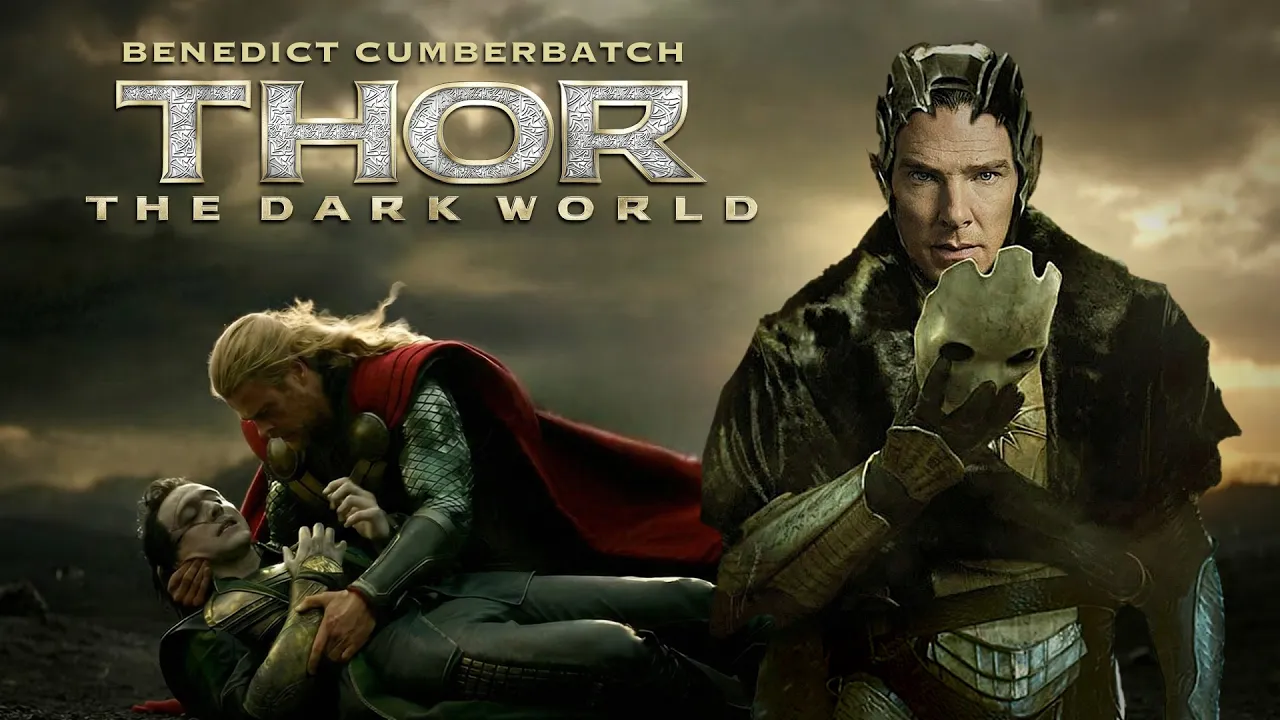
Adapted with AI from Breakdowns & Blockbusters' video of 7 February 2026 and checked against the video before publication. Editorial standards · Corrections
More from @breakdownsandblockbusters
All →


Make videos? Your next one could be an article here.
We turn your videos into articles under your name, linked back to the original. You keep 60% of what they earn, non-exclusive, and you can leave whenever you like.
Become a SubPlotter →