Wesley Snipes' Black Panther: why the 1990s movie never got made
From John Singleton's civil rights drama to Ryan Coogler's plans for Kraven the Hunter and Patriot, here is how Black Panther almost looked very different
 Breakdowns & Blockbusters (AI-assisted)22 November 2026Editor: Digital Fox Talent Editorial TeamOn YouTube since 2023 · more than 240,000 subscribers

Wesley Snipes almost played Black Panther in the '90s, before he ever played Blade. Long before Chadwick Boseman brought T'Challa to life in the MCU, Marvel was trying to get a Black Panther movie off the ground with Snipes in the lead.
Black Panther (2018) starred Chadwick Boseman, Michael B. Jordan and Lupita Nyong'o. At one point, director John Singleton wanted to drop Wakanda altogether and reframe the Panther as a generational drama about the civil rights movement. Later, there was an attempt to feature the character in a third Fantastic Four film, and eventual director Ryan Coogler tried to include Kraven the Hunter and Patriot. Here's how all of that led to the movie we got.
Why Wesley Snipes wanted to play Black Panther in the 1990s
In the mid '90s, Marvel approached Wesley Snipes about starring in a big screen adaptation of Black Panther. By then, Snipes was quickly becoming one of Hollywood's hottest stars, fresh off hits like White Men Can't Jump and Demolition Man. He was drawn to the project because the character represented dignity, strength, and a rejection of the stereotypes often associated with Africa and the Black community.
In that era, Black superhero films were typically played for laughs, like the comedies The Meteor Man and Blankman. That made the idea of a serious, big budget adaptation stand out as something entirely different.
Snipes admired how the character connected to the legacy of real African empires and royalty, like the Mali Empire under Mansa Musa, whose wealth rivaled that of today's richest figures. For Snipes, it was a chance to highlight a side of African history that mainstream audiences had rarely seen. He was also intrigued by the futuristic technology of Wakanda, seeing it as a forward thinking vision of what African societies could represent in science fiction.
Hollywood executives confused Black Panther with the Black Panther Party
Back then, Marvel was not producing its own films, so it had to rely on outside studios to finance and produce them. Almost immediately, Hollywood executives misunderstood the pitch, confusing the project with the Black Panther political movement of the 1960s rather than a comic book superhero. That perception became a major hurdle in getting the film off the ground.
Columbia did show interest, though, so Snipes began the hunt for a director. For him, choosing a Black director felt essential. He believed the film's subject matter demanded someone with a cultural understanding to bring authenticity to the story.
Just as Steven Spielberg drew on his Jewish heritage to make Schindler's List, or Martin Scorsese infused Goodfellas with the lived nuances of his Italian American background, a different director could have done a technically competent job, but there were cultural layers that only someone within the community could fully capture. As Denzel Washington would say years later, when asked why a Black director had to direct Fences, "We all know what it is when a hot comb hits your head on a Sunday morning what it smells like."
John Singleton's civil rights version of Black Panther
With that in mind, Snipes first approached Mario Van Peebles, who had directed him in New Jack City and who, around the same period, would ironically go on to make Panther, a film about the Black Panther Party. Snipes also reached out to director John Singleton.
Singleton was interested, but his vision leaned in a different direction. Rather than embracing the Afrofuturist concept of Wakanda as a hidden, technologically advanced African nation, Singleton wanted to ground the story in the civil rights movement. His version envisioned a father with the spirit of the Black Panther trying to get his son to join the civil rights movement.
That dynamic would have fueled the central conflict: a father striving to guide his son toward responsibility and political consciousness, and a son determined to rebel, caught up in youthful defiance. The film would have been less about high tech heroics and more about generational conflict, politics, and social activism.
Snipes balked at Singleton's vision, arguing that this approach stripped away the very elements that made the character unique in the Marvel universe. For Snipes, the appeal of Black Panther was in showing a vision of Africa rarely seen on screen: wealthy, powerful, and scientifically advanced. He wanted audiences to experience Wakanda's glory, a futuristic civilization that defied the stereotypes Hollywood had long perpetuated about the continent. Singleton's version may have been a powerful political drama, but Snipes believed the world needed to see the grandeur of Wakanda brought to life as a true superhero epic.
Terry Hayes pitched baby T'Challa set adrift on a river
Australian screenwriter Terry Hayes, who co-wrote the two Mad Max sequels, next delivered what Snipes later described as an unforgettable pitch. It opened with a sweeping battle sequence in Wakanda, climaxing with baby T'Challa placed in a basket and set adrift on a river to ensure his survival, like the story of Moses.
The story then leapt forward in time, reintroducing T'Challa as an adult living far away from his homeland. His ordinary life would be suddenly interrupted when he was ambushed in an elevator, leading into an intense, intricately choreographed fight in close quarters, similar to the elevator scene in Captain America: The Winter Soldier. That fight would begin his journey. From there, the narrative would expand outward, tracing T'Challa's path back to Wakanda and his destiny as the Black Panther.
Why Wesley Snipes moved on to Blade
Unfortunately, Snipes struggled to lock down the right pairing of director and screenwriter. In many ways, his vision was simply ahead of its time. The visual effects technology of the mid '90s wasn't advanced enough to convincingly bring Wakanda's futuristic world to life, and Hollywood wasn't ready to invest in that scale of storytelling for a Black superhero.
When the opportunity for Blade came along, Snipes seized it. To him, it felt like a natural shift. Both characters carried a sense of nobility and strength, but Blade could be realized with the resources available. If Black Panther had to wait, then a Black vampire superhero was the next way to push boundaries and redefine what a Marvel character could look like on screen.
Tim Story wanted Black Panther in a third Fantastic Four film
Black Panther's next potential brush with the big screen came when Fantastic Four director Tim Story began developing a third installment in the series. Story had hoped to include T'Challa from the moment he signed on for the first film, and he wanted to cast Djimon Hounsou, who would later appear in Guardians of the Galaxy and Captain Marvel as Korath.
The problem was that Fox, the studio behind the Fantastic Four films, didn't actually hold the rights to Black Panther, despite the character's debut in a Fantastic Four comic back in 1966. That, coupled with the franchise's declining box office and poor reviews, meant the series was ultimately rebooted instead.
Ike Perlmutter's New York committee blocked Black Panther at Marvel
Meanwhile, Marvel was preparing to take full control of its own future. The success of Iron Man in 2008 proved that audiences would embrace films built around lesser known heroes, paving the way for a self contained cinematic universe. To expand on that success, Marvel launched a writer program aimed at developing scripts for characters beyond its flagship heroes, like the Guardians of the Galaxy and Black Panther.
Snipes, however, was no longer in the mix. His career momentum had slowed, which sidelined his involvement just as Marvel was ready to bring T'Challa into the fold.
Marvel's plan then hit another roadblock when its New York based creative committee, led by Marvel Entertainment CEO Ike Perlmutter, blocked the project from moving forward. At the time, Kevin Feige was the public face of Marvel Studios, but the New York committee wielded heavy influence over major decisions, which often clashed with Feige's vision. Perlmutter reportedly argued that films with Black leads struggled internationally at the box office, and that toys based on Black superheroes didn't sell.
The repeated interference pushed Feige to his breaking point, and he threatened to resign. Disney CEO Bob Iger was forced to step in. Iger ultimately sided with Feige, giving him full creative authority over Marvel Studios and removing the committee's stranglehold, which cleared the path for films like Black Panther to move forward.
Ryan Coogler wanted Kraven the Hunter and Patriot in Black Panther
Black Panther first debuted in Civil War before director Ryan Coogler was hired to give the character his own standalone film. As a huge Marvel fan, Coogler wanted to include as many characters as possible, drawing inspiration from stories that had left a lasting impression on him.
One character he was especially eager to include was Kraven the Hunter. Coogler admired Christopher Priest's acclaimed run on the Black Panther comics, particularly issue six, which features a striking sequence where Kraven ambushes T'Challa at a state dinner before defeating him. Unfortunately, Kraven's film rights were tied up at Sony, where the character remained part of the Spider-Man universe. That legal barrier kept Coogler from bringing one of his favorite comic moments to life. Still, his passion for Priest's run and his nods to iconic storylines shaped much of the film's texture, even if Kraven himself never made it to the screen.
Coogler also wanted to include Eli Bradley, better known as Patriot. Patriot is the grandson of Isaiah Bradley, one of the few soldiers to survive the brutal super soldier experiments conducted during World War II. As development went on, it became clear that Patriot had no real connection to T'Challa's story, so Coogler set him aside to keep the narrative focused on Wakanda itself and its characters. Patriot and his family later found their place in the MCU through The Falcon and the Winter Soldier, where Eli and Isaiah were given their live action debut.
Cut scenes, a Namor tease and the Wakanda salute
The adventures outside of Wakanda used to be much longer. After the trip to Korea, the characters would have traveled to additional countries, with the narrative exploring themes of African and African American identity on a global stage. Those sequences had to be cut for time, as the film was already running long.
The film's first post credits scene, where T'Challa addresses the United Nations, was originally scripted as the film's true ending. During post production, Coogler moved it to the credits, deciding that the story should close in Oakland, the same place it began, to give the narrative a full circle resonance.
His initial idea for the post credits tease was far more ambitious: a setup for the sequel involving Namor, the king of Atlantis. The scene would have shown nothing more than a trail of wet footprints leading to the throne in Wakanda's palace, hinting at his arrival. Due to complicated rights issues surrounding the character at the time, Coogler was forced to shelve the idea.
The now iconic Wakanda salute was born during rehearsals, created by Chadwick Boseman and Ryan Coogler. When producer Nate Moore first saw it used during the tribal council scene, he was unsure whether the gesture would look cool or be rejected by audiences. By the end of filming, it had spread across the entire set, with cast, extras and crew all doing it, which led Moore to realize it was going to become iconic.
Decades later, when Black Panther and Wakanda arrived on screen, it fulfilled the dream Wesley Snipes had been fighting for back in the '90s: a vision of Africa as powerful, advanced, and unshakably proud. Snipes may never have gotten to play the king of Wakanda, but his efforts helped make sure the kingdom would one day be seen.
What other creators are saying
More on Black Panther →Breaking down strength, durability, speed, skill and weapons to see whether Wolverine's healing factor can survive T'Challa's vibranium arsenal.
Wolverine vs Black Panther: can vibranium beat adamantium? →
Blade: Trinity is fun and campy but the weakest of the trilogy, with thin stakes, underused vampires and villains, too little Blade, and underutilized Jessica Biel and the Nightstalkers. Still, it doesn't have to be deep to be fun, and it's a decent watch.
Blade: Trinity review: is it worth watching after the first two? →
I think Guillermo del Toro does a phenomenal job with Blade II, deliberately modeling the Reapers on leeches to make vampires feel animalistic and disgusting again rather than romanticized, and I love how these layered Easter eggs, practical effects and Prague production details enrich the film.
Watch the original
@breakdownsandblockbusters · YouTube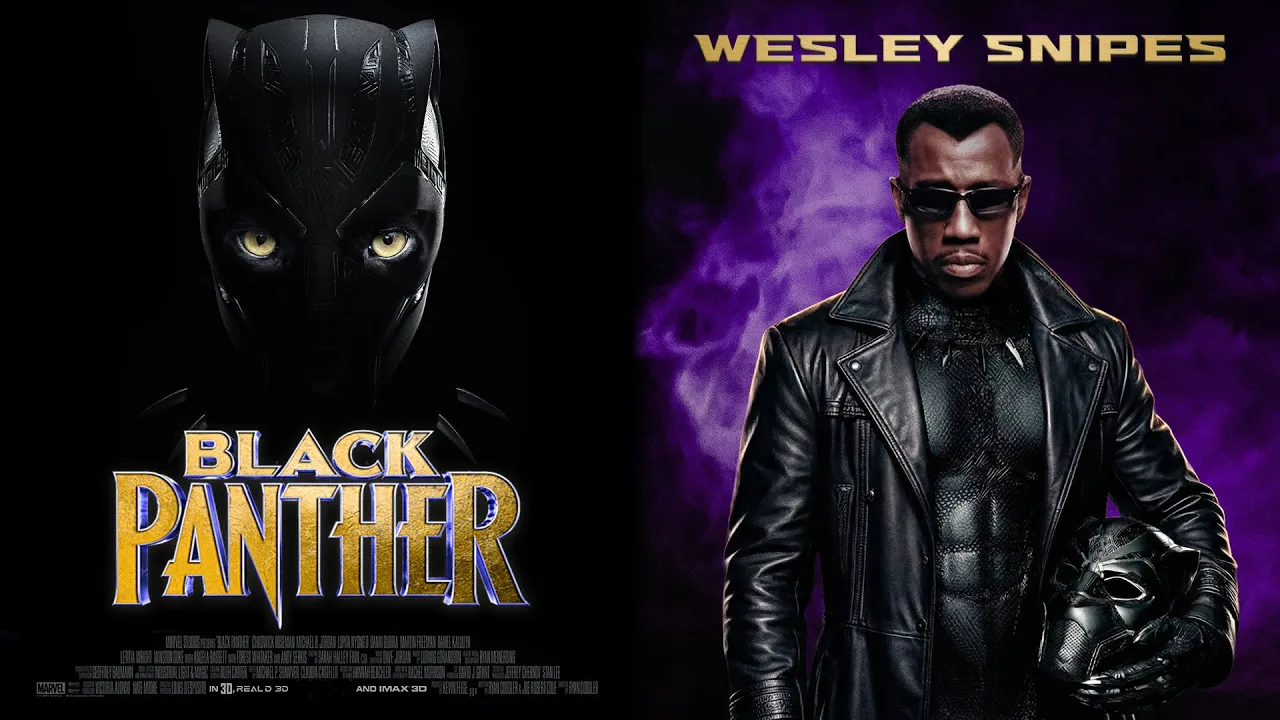
Adapted with AI from Breakdowns & Blockbusters' video of 20 September 2025 and checked against the video before publication. Editorial standards · Corrections
More from @breakdownsandblockbusters
All →


Make videos? Your next one could be an article here.
We turn your videos into articles under your name, linked back to the original. You keep 60% of what they earn, non-exclusive, and you can leave whenever you like.
Become a SubPlotter →