Raiders of the Lost Ark: why did Tom Selleck lose Indiana Jones?
From a procrastination idea and a beach in Hawaii to a lost casting choice and set pieces cut for cost, here is how Indiana Jones came together
 Breakdowns & Blockbusters (AI-assisted)21 November 2026Editor: Digital Fox Talent Editorial TeamOn YouTube since 2023 · more than 240,000 subscribers

Raiders of the Lost Ark is considered one of the greatest films ever made, and it helped create the formula for modern action movies. Yet it was almost a very different film: the whip wielding archaeologist would have been called Indiana Smith, and he would have been played by Tom Selleck.
The 1981 film, directed by Steven Spielberg and starring Harrison Ford and Karen Allen, went from that to the movie we all know and love. Here is how it got from there to here, and what could have been.
George Lucas dreamed up the archaeologist while avoiding American Graffiti
While writing American Graffiti, George Lucas got bored and started working on other things to avoid what he was supposed to be doing. Out of that procrastination came two ideas for films. The first was a feature adaptation of the Flash Gordon serials of the 1930s. The second was an original idea about an archaeologist hunting for supernatural artifacts, also drawn from serials of the 1930s and 1940s.
One of those influences was Zorro Rides Again, whose hero not only used a whip but performed daring stunts such as leaping from a horse onto a moving truck. After finishing American Graffiti, Lucas decided to move ahead with Flash Gordon, feeling it had more potential of the two. He couldn't get the rights, so he chose instead to build his own space opera from the ground up.
Lucas never lost his desire to make the archaeologist film, though. He approached filmmaker Philip Kaufman to write and direct it while Lucas himself worked on Star Wars.
Philip Kaufman brought the Ark of the Covenant into Raiders
Kaufman proposed the Ark of the Covenant as the story's MacGuffin. He drew inspiration from his former dentist, who Kaufman remembered being obsessed with the lost relic and its alleged powers. The MacGuffin also gave the film its title, with the idea that each new installment would be called Raiders of whatever that film's MacGuffin turned out to be. That's also why Spielberg, to this day, calls each Indy film Raiders 1, 2, 3 or 4 rather than by their actual titles.
Lucas named the character Indiana after his dog, an Alaskan Malamute called Indiana, who also inspired Chewbacca. Lucas wanted the hero to have a generic American surname too, so he became Indiana Smith.
Unfortunately for Lucas, Kaufman was offered a job adapting the novel The Outlaw Josey Wales for Clint Eastwood and had to leave Raiders, so the project went back on the shelf. Kaufman still received a story by credit in the opening titles for his contributions.
Steven Spielberg heard the pitch on a beach in Hawaii
The day after Star Wars opened, Lucas took a vacation to Hawaii to get away from the stress of opening weekend, when he wasn't sure whether the film would be a hit. Steven Spielberg, taking time off from editing Close Encounters, eventually joined him. As they sat on the beach building sandcastles, Spielberg said he wanted to direct a James Bond film but lamented that they wouldn't let him because he wasn't English.
Lucas, filled with newfound confidence after learning Star Wars was a massive hit, told Spielberg he had something better and pitched him The Adventures of Indiana Smith. Spielberg loved it and asked to direct. Lucas was still committed to Kaufman, but he promised that if Kaufman wasn't interested, Spielberg could do it. Several months later, Kaufman dropped out to direct The Right Stuff, opening the door for Spielberg.
Lawrence Kasdan, Lucas and Spielberg built Indiana Jones in five days
To write it, Spielberg turned to Lawrence Kasdan. He was impressed by Kasdan's script for Continental Divide, about a brash Chicago journalist who falls in love with a woman studying eagles in the mountains, which recalled a classic Spencer Tracy and Katharine Hepburn comedy. Spielberg liked it enough to produce it, but more importantly it captured the 1930s and 1940s sensibility he and Lucas wanted for Raiders.
Kasdan had only been a professional screenwriter for about a month, so he must have felt like he'd struck gold. He, Lucas and Spielberg shut themselves in an office for five days to brainstorm, with Kasdan then going off to write the script.
The first thing Spielberg wanted to change was the surname, which reminded him of the Steve McQueen film Nevada Smith. Lucas suggested Jones instead, probably taken from Alan Ladd's character in China, who is named Mr. Jones and bears a striking resemblance to the now famous hero.
Lucas wanted a Bond style playboy, Spielberg wanted a gambler
Lucas wanted the character to be more like James Bond, imagining him as a kung fu practitioner and a playboy who funds his lifestyle with the spoils of his adventures. He pictured a scene where Brody visits Jones at home, Jones answers the door in a tux, and Brody steps inside to find a beautiful blonde sipping champagne in Indy's living room.
Kasdan and Spielberg eventually pushed back, arguing the character was complicated enough being both an adventurer and an archaeologist. Shades of the idea still surfaced at the start of Temple of Doom, which puts Indy in a nightclub wearing the same tux Bond wore in Goldfinger.
Spielberg, for his part, wanted Jones to be an avid gambler, an alcoholic, or both, something like Humphrey Bogart's character in The Treasure of the Sierra Madre. This time Lucas pushed back, wanting Jones to be a role model for children. Visually, they based the character's look on Charlton Heston's character in Secret of the Incas, and several moments from that film made their way into Raiders.
Just like the serials that inspired it, the script put a cliffhanger every 20 pages or so. Unlike the old serials, audiences didn't have to wait a week to see how the hero escaped. That formula went on to become the staple for every action film that followed.
The first Raiders draft held scenes later used in Temple of Doom
Kasdan took everyone's ideas and wrote the screenplay in Spielberg's office while the director was off making 1941. In this version, the headpiece to the Staff of Ra was split into two pieces, so Indy began his adventure in Shanghai to recover the first half from the private museum of a warlord.
Before he could steal it, two samurai wielding katanas stopped him. Jones dropped the first with two rounds from his pistol, but the second sliced off the barrel of his gun. Indy used his whip to strangle him, and the samurai lost consciousness and fell into the glass case holding the headpiece. That shattered it and set off a giant golden gong that echoed through the building. The enraged warlord grabbed a submachine gun and sprayed the museum with bullets, so Indy cut the gong loose from the ceiling, hid behind it as it rolled toward a window, and dived through to escape.
That whole sequence was cut, because Lucas and Spielberg felt the script was too long and expensive, but it was repurposed for Temple of Doom. So was the next beat, in which Jones boards a plane to reach Marion in Nepal, falls asleep, and wakes to find everyone has parachuted out, forcing him to escape with an inflatable raft.
In the scene where Marion is smuggled around Cairo in a basket, Indy originally gave chase on a camel, perhaps partly inspired by Spielberg's favorite film, Lawrence of Arabia. And for the climax, a few villains would have survived the opening of the Ark and pursued Indy and Marion in mine carts after the pair stole it. That chase was deemed too expensive alongside the film's many other set pieces, and it shifted focus away from the opening of the Ark, which was climactic enough on its own. Like the other two, the mine cart chase found its way into Temple of Doom.
Studios balked at Lucas's deal and Spielberg's 1941
When Kasdan delivered the script, Lucas asked him to rewrite The Empire Strikes Back, since its writer, Leigh Brackett, had sadly died after writing the first draft. Kasdan asked whether Lucas wanted to read Raiders first. Lucas replied, "if I read Raiders and hate it I'll take back the offer." Lucas obviously loved it, since Kasdan got to work on Empire right away.
Lucas then shopped the script around Hollywood, but even fresh off Star Wars, everyone turned him down for two reasons. First was what became known as Lucas's killer deal: the studio would put up all the money, have zero creative input, and let him keep the sequel and licensing rights. Everyone balked. Second, Spielberg's 1941 was a box office disappointment, and he'd gone way over schedule and budget on it. He had done the same on Jaws and Close Encounters, but those were huge hits, so all was forgiven. 1941 wasn't, and studios grew hesitant.
To his credit, Lucas refused to find another director. Then Paramount Pictures president Michael Eisner entered negotiations on the strength of the script and because he didn't want to pass up working with Lucas and Spielberg. Eisner demanded strong penalties against Lucas if the film went over budget and schedule, and he wanted sequel rights, which Lucas accepted as long as he was involved in producing them.
Spielberg shot Raiders fast, like the serials
After a long heart to heart with Lucas, Spielberg was determined to come in on time and on budget, and decided to shoot Raiders fast, just like the serials that inspired it. Spielberg later said: "on Raiders I learned to like instead of love. If I liked a scene after I shot it, I printed it. I didn't shoot it again 17 times until I got the take that I loved." He was given 85 days to shoot and finished in 73.
Tom Selleck lost Indiana Jones to Magnum, P.I.
Spielberg suggested Harrison Ford for Indy, but Lucas quickly shot that down. He didn't want Ford to be the Robert De Niro to his Martin Scorsese, since Ford had already appeared in American Graffiti and the Star Wars films. Lucas also worried Ford would hesitate over a three picture deal, which he had refused to sign on Star Wars.
After auditions, casting director Mike Fenton felt Jeff Bridges was the most suitable, but Lucas's wife Marcia favored and pushed for a then largely unknown TV actor, Tom Selleck. Lucas and Spielberg agreed and offered him the role. The problem was that Selleck had just shot the pilot for Magnum, P.I. for CBS in Hawaii and was contractually obligated to the show if it went to series. As Spielberg and Lucas tried to negotiate, CBS realized Selleck was in demand and immediately greenlit Magnum, P.I., forcing him to drop out.
In a cruel twist of irony, the 1980 actors strike later put Magnum, P.I. on hiatus for three months, which would have let Selleck star as Indiana Jones and altered history as we know it. With shooting just weeks away, Spielberg again suggested Ford. Lucas reluctantly agreed, and Ford loved the script and signed the three picture deal. Fans did get a glimpse of Selleck's version in the Magnum, P.I. episode Raiders of the Lost Art, in which Magnum dresses up as Indiana Jones and goes on a similar adventure.
How Marion Ravenwood, Sallah and Toht were cast and changed
Spielberg first offered Marion to Amy Irving, his girlfriend at the time, but the two broke up and she lost the part. He then cast Karen Allen after seeing her in National Lampoon's Animal House, feeling she embodied early 20th century leading ladies who were equal to their male counterparts. Kasdan came up with the name: his grandmother-in-law was called Marion, and every day on his way to the studio in Los Angeles he drove past Ravenwood Court.
Sallah was originally written as something like a human version of a small creature from the Star Wars cantina, placed in an earthbound adventure. Spielberg offered the part to Danny DeVito, who couldn't do it because of scheduling conflicts with the sitcom Taxi, though rumors suggest his agent was asking for too much money. Spielberg instead cast John Rhys-Davies after seeing him in Shogun, which led Rhys-Davies to jokingly ask whether Spielberg was proposing surgery to reduce his height.
Toht was different too. He was originally envisioned with a mechanical arm in the style of Dr. Strangelove, with a machine gun that fired through its forefinger, but that was cut due to budget constraints.
Tunisia, food poisoning and the famous sword fight
Just as on Star Wars, Lucas shot several scenes in Tunisia. The canyon where Indy, armed with a rocket launcher, confronts the Nazis over the Ark is the same canyon Lucas used for Tatooine. Shooting there was hard enough with temperatures above 100 degrees, and on top of that the entire cast and crew suffered food poisoning, except Spielberg, who stuck to a diet of canned food.
Stuntman Terry Richards had spent weeks practicing his sword skills for a long, elaborate fight with Ford. But Ford, sick with dysentery and exhausted by the heat, suggested to Spielberg that Indy simply shoot the swordsman, creating one of the film's iconic moments.
The deleted submarine scene and Marcia Lucas's ending
Many fans have long wondered how Indy survived the journey on the submarine. A deleted scene would have answered it, showing Indy securing himself to the sub's periscope and holding on throughout the trip. Spielberg felt the scene looked poor and cut it, hoping audiences wouldn't care how Jones survived.
Marcia Lucas, who had helped save Star Wars in the editing room, wasn't done. After seeing a rough cut, she complained there was no emotional closure for Indy and Marion, since the film originally ended with Indy delivering the Ark to US government officials. That inspired Spielberg to shoot a final exterior sequence on the steps of San Francisco City Hall showing Indy and Marion together, bookending what would become an all-time great film whose influence is still felt today.
What other creators are saying
More on Raiders of the Lost Ark →From God light in the Peruvian temple to the melting faces at the Ark, the hidden layers of Raiders of the Lost Ark reward close attention
Raiders of the Lost Ark: do the Golden Idol's eyes really move? →
Two visual changes to the film have me thinking about what it means that movies, like video games, can now be patched after release.
Spider-Man: No Way Home was altered after release: what changed? →
Watch the original
@breakdownsandblockbusters · YouTube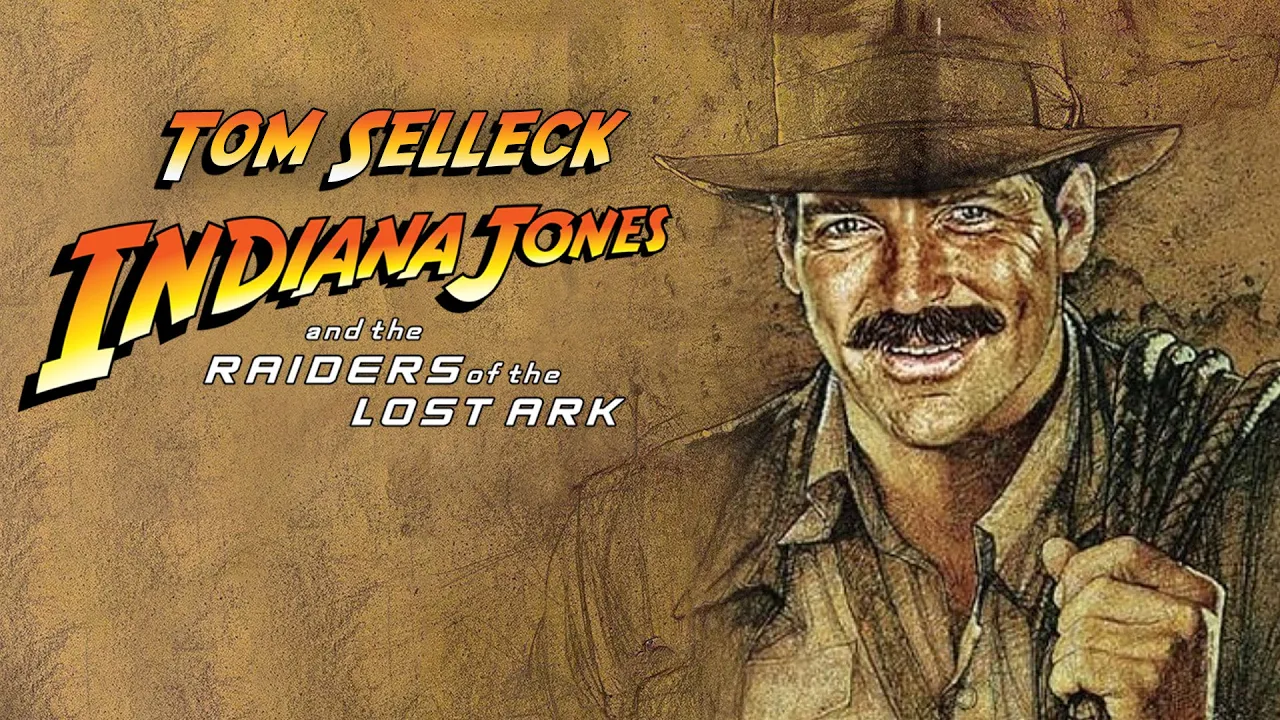
Adapted with AI from Breakdowns & Blockbusters' video of 8 June 2024 and checked against the video before publication. Editorial standards · Corrections
More from @breakdownsandblockbusters
All →


Make videos? Your next one could be an article here.
We turn your videos into articles under your name, linked back to the original. You keep 60% of what they earn, non-exclusive, and you can leave whenever you like.
Become a SubPlotter →