Why Green Lantern Failed: A 15 Year Look Back at the Ryan Reynolds Disaster
From a decade of false starts to a troubled shoot and a hero who never earns anything, here is what went wrong with the 2011 film
Ryan Reynolds' Green Lantern was released roughly 15 years ago, and it was a disaster. It tried to tell the story of how Hal Jordan becomes a Green Lantern and to launch a cinematic universe. Because of the film's unsurprising failure, that universe never happened, and the DC brand was rebooted with Man of Steel only two years later.
With the new Lanterns show now out on HBO Max, I wanted to look back at the last major attempt to tell a Green Lantern story. Why did this movie fail? What went on behind the scenes? And most importantly, what about the movie doesn't work? The short answer, which I get into below, is that the story is not the problem. The problem is how it is told.
Green Lantern Spent More Than a Decade in Development Before 2011
There had been attempts to make a Green Lantern movie for well over a decade before the 2011 film. In the late '90s, Warner Brothers approached Kevin Smith to make one. This was shortly after Smith finished writing Superman Lives, but he turned the offer down without much consideration. There is no specific year attached, but Quentin Tarantino was allegedly offered the chance to write and direct a Green Lantern movie. A Green Lantern film is so unlike everything else in Tarantino's filmography that it is no surprise he said no.
In 2004, Robert Smigel submitted a script that would have starred Jack Black, but Warner Brothers rejected the idea after poor fan reactions. Allegedly, the ring would have accidentally chosen Jack Black's character, who would then go on to do silly things, because that's all he did in the mid 2000s. There are full breakdowns online of how ridiculous this movie would have been, and it is a fascinating rabbit hole to go down.
In 2007, an actor and writer made another attempt, centred on John Stewart. It would have been titled Green Lantern: Birth of a Hero, and it was met with positive feedback from Warner Brothers. For reasons that are not publicly available, it never happened. Later in 2007, Greg Berlanti signed on to write and direct. Over the next two years, three drafts were written and submitted to the studio, but by early 2009 Berlanti had left and was replaced by Martin Campbell. Berlanti later said he was fired and had absolutely nothing to do with the final product.
Warner Brothers Forced Martin Campbell to Cut His Story and Overruled His Casting
Martin Campbell had a pretty massive filmography and was best known for directing two James Bond films, GoldenEye and Casino Royale. He was a really interesting choice for a superhero movie because he had never done anything like it, and he would even go on to say that he didn't really care for superheroes.
Still, it is unfair to put the blame solely on Campbell's shoulders. Since the film's release, a lot of information has come out about just how badly Warner Brothers treated him. Right from the start of preproduction, Campbell had meeting after meeting where the studio told him to cut aspects of his story. Allegedly, they didn't have the budget to make his version of the movie. Many years later, Campbell said the ending was the part that was altered the most.
When it came to casting, the actors considered included Bradley Cooper, Justin Timberlake and Jared Leto. Campbell allegedly really wanted Bradley Cooper. While that may seem like an obvious choice today, back in 2009 Cooper was not yet a superstar, and his breakout film The Hangover hadn't been released. Despite Campbell's wishes and without his consent, Warner Brothers went with Ryan Reynolds as Hal Jordan. Blake Lively, Peter Sarsgaard, Mark Strong, Tim Robbins, Temuera Morrison and Taika Waititi rounded out the cast.
Ryan Reynolds and Blake Lively Met on a Production Plagued by Problems
Funnily enough, Ryan Reynolds and Blake Lively first met while making this film. When production began, Reynolds was still married to Scarlett Johansson. He met Lively in July 2010, divorced Johansson in December 2010, and then it was announced he was dating Lively in October 2011. At the time, Lively was best known for playing Serena van der Woodsen in Gossip Girl.
I don't believe I have ever said this before, but Serena van der Woodsen is my least favourite character in any movie or show I have ever watched. Yes, I have watched Gossip Girl in its entirety. And yes, seeing Blake Lively in any project clouds my judgment of the movie.
Regardless, principal photography began in January 2010 and was met with issue after issue. Filming locations kept shifting, putting a strain on the entire production team. Some actors were cast after production had begun, such as Angela Bassett as Amanda Waller. Campbell was forced to film scenes he didn't think belonged in the movie, such as the death of Hal's father. Reynolds separated his shoulder and filmed most of the movie in a lot of pain.
It was also reported that Reynolds and Campbell had a pretty poor working relationship. Campbell allegedly grew frustrated with Reynolds trying to bring his humour into the movie, while Reynolds grew frustrated with Campbell making him do multiple takes plenty of times. Since the release, the two have had nothing but good things to say about each other, but those are still the reports of what happened during production.
Visual Effects, 3D and Marketing Sent Costs Soaring
Entering postproduction, things only got worse. Green Lantern was very reliant on visual effects, and to make them somewhat passable, I guess, Warner Brothers needed to raise an extra $9 million just to finish on time. Because the film was made during the 3D craze, the studio spent even more to give it a 3D release. All the money saved by having Campbell trim his story ended up being spent on the movie anyway.
To make matters worse, the marketing budget ballooned. The first trailer arrived in November 2010 and was met with a strongly poor reception from fans, which led Warner Brothers to pause and delay the marketing so it could refocus. A ton of money also went into supplemental material, including an animated show, prequel comics, video games and even roller coasters. Finally, on June 17, 2011, Green Lantern reached theatres.
Green Lantern Is a Bad Movie, but Not a Morbius Level Disaster
When I watched Green Lantern for the first time last year, I was actually quite surprised. Is it good? No, not even close. Is it bad? Yes, I would say so. But is it as awful as some people on the internet would lead you to believe? Not really. This movie does not belong in the class of Morbius. "It's just a normal bad superhero movie."
Looking at it more deeply, I tried to work out what makes it bad, because on a general overview it has potential. There is interesting lore to explore. The main character clearly has a personality. He even goes on an arc where he learns to overcome his fears rather than run from them. So the problem is not the story. The problem is that the writers chose to tell it in the most unengaging way possible.
This idea, that something can be conceptually interesting but told in the most boring way, is something I have been focusing on, and something I discussed heavily with the recent season of House of the Dragon. That season is much better than Green Lantern, but it largely suffers from the same problems, especially with its main character. What makes this hard to pin down is that engagement is purely subjective. You might find Hal Jordan's story engaging, and you wouldn't be wrong. But given how many people hate this movie, I want to explain why so many people, myself included, find it unengaging. The film centres entirely on Hal, so that is where I focus.
Hal Jordan's Opening 20 Minutes Actually Work
After a bunch of exposition, the film opens with a day in Hal's life. He wakes up after sleeping with his girl, drives to work showing he is a little irresponsible, and then aces his flight test, proving he is a pretty great pilot. Afterwards he has a mini panic attack that crashes his jet, and he is scolded for being childish and choking under pressure, both at work and by his family. At the 20 minute mark, the ring chooses him as he walks back to his car.
Up to this point, I don't have any problems with Hal's story. He clearly has flaws: he is immature and he crumbles under pressure. He is a competent pilot, which could be engaging, and most importantly, those flaws have an active impact on his relationships. People fear for Hal, and he brushes it off.
I don't think Ryan Reynolds' performance does the film any favours. Reynolds has been typecast since this movie as the goofy, unserious, irresponsible child, and funnily enough I think that is what the writers wanted for Hal. The problem is that, whether because of Reynolds himself or the direction he was given, he feels held back from fully committing to the character, which makes Hal a bit one dimensional. Regardless, the opening works. The problems start once he is chosen.
The Ring Chooses Hal Jordan Without Him Earning It
How does Hal become a Green Lantern? He is magically chosen by the ring, and that is not very engaging. It is satisfying to watch a superhero work to become a hero, or at least work to be chosen. Bruce Wayne and Tony Stark are billionaires with massive head starts, yet both became heroes after arcs where they suffered and learned the importance of doing what is right. They earned it.
Steve Rogers, like Hal, was chosen by an external force. But the first Captain America movie spent time showing us who Steve was, and it was through his actions that he was chosen. Hal does nothing at the start of this film to warrant being chosen. We simply have to believe the ring saw something in him. Storytelling is about setup and payoff, and Hal being chosen pays off nothing, so there is no emotion behind it.
There are plenty of heroes who never earned their powers. Thor was born the son of Odin, and I'm assuming he had his powers from birth. Superman was born a Kryptonian with his strength. The difference is that Thor and Superman earn our respect through how they use their powers. Thor is stripped of his powers until he proves he is worthy, and in every iteration of Superman we grow to respect Clark through his selfless actions, not his powers. Hal does nothing in this film to earn our respect. He is handed his powers out of the blue and then goes through the motions.
Hal Jordan Is Not an Active Protagonist
Hal also has no motivation. Everything he does after being chosen is because others tell him to. The fix would be internal motivation. The ring could still choose him out of the blue, but what if the powers made him want to do good? Maybe Hal is fed up with everyone calling him irresponsible and wants to prove them wrong. In a perfect world he shouldn't use his powers for that, but this is a story, and people begin flawed. Maybe he figures out how to fly to the Lantern homeworld himself because he wants to train. A hero with a goal who goes out of his way to reach it is someone we can respect.
Instead, Hal learns about his powers because he is told to. He doesn't fly to the Lantern homeworld because he wants to; he is literally picked up and dragged there to start training. Once there, he doesn't tell anyone how badly he wants to be a Lantern. He is told to train and just follows the other Lanterns around. We have no respect for Hal and no reason to invest in him.
I understand what the writers were going for. Hal is so afraid of failing that he won't commit to anything, so it makes sense he would have to be dragged into this. But just because something makes sense doesn't mean it is good or engaging. Sometimes a character's main flaw can make them annoying. A few scenes into his first visit, Hal trains with Sinestro for about three minutes, then wants to quit, saying "The ring clearly made a mistake choosing me." Then he heads back to Earth. Sure, it makes him flawed, but it also makes me want to tell him to toughen up. You trained at something for the first time for about five minutes; obviously you won't be good. Cut yourself some slack. Instead he mopes and leaves.
Carol and the Other Lanterns Are Just as Uninteresting as Hal
Around the halfway point, there is a brief banquet scene where Hal talks with several other characters, and it is a good moment to point out that the supporting cast is just as uninteresting as he is. Carol, played by Blake Lively, is the second most important character. Despite this film leading to Reynolds and Lively getting married, they surprisingly have very little chemistry. Carol has no personality beyond being a bit uptight and caring for Hal because they are childhood friends, which we learn through a random exposition scene. It is a pretty weak dynamic.
The other Lanterns don't fare much better. Some have distinct traits, like the fish character being a lot kinder and the big one being rough around the edges, but beyond that there is nothing interesting. Sinestro and the council are boring, and none have any real dynamic with Hal because he barely spends time with them. Most of the movie is them complaining about Parallax and how they must overcome fear.
Parallax and Hector Hammond Are Weak, Forgettable Villains
The writers could not have made Parallax and Hector Hammond more one dimensional if they tried. Parallax is a giant cloud that feeds on fear. He wants to destroy Hal and Earth because he is angry that Hal thwarted his earlier plans, and he is defeated when Hal tricks him into flying too close to the sun. How deep.
Hector is arguably just as uninteresting. He becomes the big brained villain after touching a dead Lantern's body and getting infected. His motivation seems to be that Carol likes Hal, Hector likes Carol, and Hector is jealous because Hal seems cool and Hector is a loser. We know he likes Carol because he creeps on her with newspaper pictures. They share one scene early on, in which Carol is nothing but kind and polite. As for the jealousy, it wasn't until that banquet scene halfway through that I learned Hector even knew Hal existed; in fact, they know each other.
Hector's anger at his father leads him to attack a helicopter, his descent into evil, after which he wants to attack everyone. Was I on the edge of my seat watching Hector and Hal go back and forth? No. Hector never earns our respect and barely drives the plot. Then, to no one's surprise, Parallax kills him near the end and he is never mentioned again. The villains don't even reflect the theme of fear, and they are completely forgettable.
Green Lantern's Ending Falls Flat Because Nothing Is Earned
The ending is another example of something that has depth on paper but falls flat. Hal kind of loses a fight to Hector, returns to Carol and admits he wants to quit because he is afraid; every time he has run from something, it was out of fear. Carol then gives a pretty good speech: "The ring chose you not because you're fearless, but because you possess the ability to overcome fear, and I see it, too."
On paper, it is a great speech that would work in the right setting. The problem is that nothing builds to it. For it to land, the film needed to give us reasons to believe Hal could overcome his fears, perhaps by showing him doing it a handful of times without recognising it. You can't have a fearful person hear someone say they believe in them and suddenly stop being afraid. That is not a proper character arc.
Shortly afterwards, Hal tells the Council of Lanterns that they are all afraid and must overcome their fears, and Sinestro can't put on the yellow ring because that would be giving in to fear. At this point Hal still hasn't overcome any fear, unless he feared the other Lanterns, which I don't believe. He was just told by his girlfriend he is courageous, and now he lectures a council of elders on courage. There is nothing really wrong with the scene; the movie simply didn't do the legwork to earn it. The same goes for the rest: Hal defeats Parallax, is praised by the other Lanterns, and commits to the Corps, no longer running away. Nothing feels earned, so there is no weight behind anything, and that is why so many people dislike this movie. It makes them feel nothing.
A Financial Disaster That Kept Green Lantern Out of Live Action for 15 Years
Green Lantern scored 25% on Rotten Tomatoes with a 45% audience score, and 5.5 out of 10 on IMDb. It grossed $237 million at the box office on a $200 million budget, making it a financial disaster. It was so disappointing that Warner Brothers cancelled all future plans. Ryan Reynolds has since slammed the film at every chance he gets, famously mocking it in the post credits scene of Deadpool. Martin Campbell has said directing it was a mistake and that he should never have taken the job.
What I find even more interesting is that 15 years later, Green Lantern is only now recovering in live action. There were many plans to bring him back, but only now, with HBO's Lanterns under James Gunn, are we getting that. I wonder whether this film's failure scared the DCEU off introducing the character in 2017's Justice League, which featured every prominent member except Green Lantern. A planned Green Lantern movie was going to be part of the DCEU, but after Justice League failed it was never made. It took 15 years for Green Lantern to lead his own live action project again.
Do you agree with my take on Green Lantern, or do you think I'm way off?
Watch the original
@thegoldman25 · YouTube
Adapted with AI from The Gold Man's video of 3 September 2026 and reviewed by Digital Fox Talent before publication. Editorial standards · Corrections
Also on Green Lantern
9 creators, 48 takes →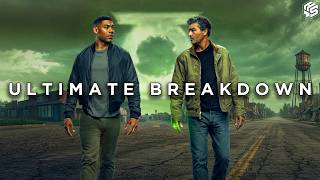
More from @thegoldman25
All →


Make videos? Your next one could be an article here.
We turn your videos into articles under your name, linked back to the original. You keep 60% of what they earn, non-exclusive, and you can leave whenever you like.
Become a SubPlotter →