DS9's Bajoran civil war: how did Sisko stop the Circle?
How the Circle, a paralyzed government and hidden Cardassian weapons nearly tore Bajor apart, and how Sisko bought the time to stop it
 Lore Reloaded (AI-assisted)17 November 2026Editor: Digital Fox Talent Editorial TeamOn YouTube since 2016 · more than 140,000 subscribers

The crisis that nearly toppled Bajor's provisional government was never officially called a war. But it behaved like one, and it was the first war Benjamin Sisko was never allowed to fight. When the Federation stepped back, Sisko stayed and bought time. That was all he had, and it proved to be enough.
This all plays out in Star Trek: Deep Space Nine (1993), starring Avery Brooks, Nana Visitor and Rene Auberjonois. The real threat to Bajor in this story was not coming from the Cardassians anymore. It was coming from within, and it took shape as nationalism.
Bajor's Rise After the Wormhole Put Pressure on Sisko's Mission
In the years after the Cardassian occupation ended, the Federation had been working to help Bajor rebuild. Then the discovery of the wormhole transformed the region almost overnight. Trade routes shifted, political attention followed, and a recovering world on the edge of Federation space became a focal point of the entire quadrant. Bajor was becoming one of the most important worlds in the sector, and one of the most unstable.
Sisko had been sent to Deep Space Nine not just to administer the station but to help guide Bajor toward stability, so the Bajoran people would one day be ready for Federation membership. The station was meant to be a symbol of cooperation, a bridge between two governments learning to trust each other after decades of occupation and trauma. For a time, it worked.
Underneath that fragile peace, though, something was shifting. Political factions became more vocal. Religious groups, long central to Bajoran identity, began to reassert themselves in public life. What had once been unity through survival was slowly turning into disagreement over what Bajor should become.
The Bombing of the Station School Exposed Bajor's Divisions
A year earlier, that tension had already surfaced. A hardline religious faction pushed back against a Federation run school on the station, objecting to the way the teacher described the wormhole. To many Bajorans, the Prophets were not a metaphor or an alien species. They were gods, and teaching otherwise was seen as an insult to their faith and culture.
Debate turned into confrontation, confrontation turned into division, and eventually the school was bombed. No one was inside, but the message was clear. The incident left a scar not just between Bajorans and the Federation but among Bajorans themselves. Some religious groups stepped in to support the Federation afterward, showing that many Bajorans still wanted the partnership to succeed. Still, faith, politics and identity were starting to pull in different directions.
The Circle Grew From a Nuisance Into a Movement Filling a Vacuum
Inside the provisional government, ministers argued and decisions stalled. Smaller factions and sects emerged, each with their own vision for Bajor. One stood out: the Circle. At first it was seen as little more than a nuisance, a nationalist movement insisting that Bajor was for Bajorans alone and that all non-Bajorans should leave. Its presence was mostly protests, graffiti and the occasional street level confrontation.
While the government appeared weak and divided, the Circle projected strength, certainty and action. There were suggestions early on that the Circle was helping people. The specifics were never fully detailed, but the perception mattered. Even long-standing issues, like holding other powers to their treaty obligations, went unaddressed, and some Bajoran prisoners of war were still unaccounted for. Into that vacuum, the Circle offered a sense that someone was finally taking control.
Its symbol started appearing everywhere, including in public spaces on Deep Space Nine and eventually on the door of Sisko's own quarters. Then words became action. Non-Bajorans were targeted and harassed, and in at least one case publicly assaulted and branded with the movement's symbol. This wasn't just extremism. It was an identity driven movement filling a vacuum.
For many Bajorans, the Federation had represented safety, a shield against a Cardassian return. Kira herself made it clear that this was one of the reasons Bajorans wanted Starfleet there. But the Federation promised long term stability, diplomacy and gradual progress. The Circle promised immediate change, immediate control and immediate protection. Sisko wasn't fighting an army. He was fighting an idea, and it became harder for him to offer anything that felt immediate enough to compete.
Bajor's Provisional Government Was Coming Apart Before the Coup
By the time the Circle rose to prominence, the government had spent more than a year moving from one crisis to the next. When Starfleet and Bajor were forced to abandon Kai Opaka, it left a spiritual and political void that was never fully replaced. Then a faction attempted to kidnap Dax on Deep Space Nine. It was an attack on Bajoran territory itself, yet the government's response felt limited. The government began to look toothless.
Ministers started maneuvering, worrying as much about their own survival as about Bajor. Figures like Minister Jaro Essa began positioning themselves as alternatives. Even the return of Li Nalas, a war hero and symbol of resistance, was pulled into the political machinery. Rather than serving as a unifying figure on Bajor, he was transferred to Deep Space Nine as second in command, removing Major Kira Nerys and shifting one of Bajor's strongest voices away from the center of power.
General Krim's Military and Vedek Winn's Sect Drifted Away
Local security forces tried to track the Circle but found themselves one step behind, the movement vanishing every time they moved to intervene. The military was brought in, and patrols increased. But Sisko noticed a pattern: every time the military had a chance to confront the Circle directly, it pulled back. When he called this out, General Krim made it clear he was unwilling to use the military against Bajoran citizens.
That position made sense on its face, since no one wanted Bajorans fighting Bajorans. In practice, whether intentional or not, the hesitation began to look less like restraint and more like quiet distance from the government the military was meant to support. Religious leadership fractured too. Vedek Winn's sect, which held considerable influence, lent support to the idea of political change, and other religious voices did not openly challenge her.
Meanwhile, Bajor was pulling away from the Federation. Decisions and transfers were made without consultation, and Sisko was increasingly removed from discussions. The Federation chose not to intervene: no new diplomats, no investigations, no political pressure. When civil war began to feel inevitable, it chose to withdraw.
The Cardassians Were Arming the Circle Through an Intermediary
By the time Sisko uncovered the truth, Bajor was already on the brink. The Circle was being armed, with weapons flowing in through a third party intermediary, and behind that intermediary were the Cardassians, quietly feeding the conflict so Bajor would tear itself apart and the Federation would be forced to leave.
With channels on Bajor already being cut, Sisko took what he had learned to Admiral Chekote. The response was immediate and final. This was an internal Bajoran matter, Bajor was sovereign, and the admiral told him: "The Cardassians might involve themselves in other people's civil wars, but we don't. The Prime Directive applies, Ben." The order was to evacuate Deep Space Nine and withdraw all Starfleet personnel.
From Sisko's perspective, it must have felt like everything was slipping away at once. In theory, it might not have taken much to change the outcome: a single starship, a diplomatic intervention, a direct confrontation with the ministers. That wasn't the choice that was made.
Sisko Followed the Evacuation Order to the Letter to Buy Time
Bajoran assault craft were already on their way, and all non-Bajorans were ordered to leave within seven hours. Sisko evacuated civilians and Starfleet families. But the order, as given, was to evacuate all Starfleet personnel and all Starfleet material. So he followed it to the letter: every data pad, every phaser, every piece of equipment, every chair. An evacuation like that would take days to weeks, and he intended to stay until the job was done.
He couldn't openly defy Starfleet, intervene in Bajor's politics or fight the war that was forming. But he could buy time, and sometimes time is the only weapon left. The small group of officers who stayed behind had a simple, dangerous objective: stay hidden, stay mobile and keep the Bajoran militia off balance until the truth reached people with the authority to stop what was happening.
Sisko knew they could never retake and hold the station. What followed was, in many ways, guerrilla resistance, forcing the militia, now acting under General Krim and Minister Jaro, to commit resources to constant search parties and patrols.
Kira and Dax Delivered the Proof to Bajor's Ministers
The real mission was happening elsewhere. With official channels compromised, Kira and Dax flew an old Bajoran fighter from the occupation to deliver proof of Cardassian involvement before the transfer of power was complete. Militia ships intercepted them, and a chaotic fight spilled dangerously close to the civilians both sides claimed to protect. They disabled one pursuer but were hit and forced down.
Members of a small Bajoran religious sect sheltered them and guided them past security into the chambers where the ministers still held power. At the last possible moment, the truth was laid out. Once it became impossible to deny, Vedek Winn's sect began withdrawing its support, and Minister Jaro and General Krim found themselves increasingly isolated.
Li Nalas Died Protecting Sisko and Became the Hero Bajor Needed
On the station, Sisko sent Bashir and his team to stage a calculated feint so he could confront General Krim directly. Li Nalas laid out the truth about the Circle and the Cardassians, and Krim hesitated. The realization that Bajor's own people had nearly turned on each other for someone else's gain was enough to break the momentum.
Not everyone was willing to step back. One officer raised his weapon to kill Sisko, and Li Nalas stepped into the blast. His life had always been more complicated than the story people told, and he knew it. But in the end he became what Bajor needed him to be: a hero. The legend endured, not entirely the truth, but the kind of truth Bajor needed to believe. The transfer of power fell apart, the government regained a measure of legitimacy, and Starfleet was welcomed back. Sisko went back to work, with no celebration.
A Civil War in Everything but Name
What's most interesting isn't what Sisko did next. It's what no one seemed willing to call what had happened. There were no formal declarations and no battle lines. But political authority fractured, military loyalty drifted, religious legitimacy divided, civilians armed themselves, and Starfleet officers fought skirmishes in corridors. It may not have been labeled a civil war, but it behaved like one.
This was new for Sisko. Earlier, he had faced a clear external threat, and later he would command fleets against the Dominion. Here, he learned that institutions don't fall all at once; they erode, fracture, hesitate and drift. He learned that nationalism can rise from fear and uncertainty, that identity can be weaponized, and that truth can arrive too late if no one buys it time. It was a civil war that almost was, and the first war Sisko was never allowed to fight.
What other creators are saying
More on Benjamin Sisko →Poisoning a planet to force one fugitive's surrender is a decision I can't defend, even from a captain I love
Why Benjamin Sisko should have been taken off the bridge and investigated →
Star Trek (2009) and The Force Awakens share a director, a reboot mission and the start of a trilogy
J.J. Abrams Played an Almost Identical Role in Star Trek and Star Wars →
One card plays artifacts from the top of your library, and the other rewards facing a dilemma with free spells
Zefram Cochrane and the Caretaker among Magic: The Gathering Star Trek preview cards →
A Romulan War buildup, a Mirror Universe miniseries, the Borg Queen's origin and a refitted NX-01 were all part of the plans for a season that never got made
Watch the original
@lorereloaded · YouTube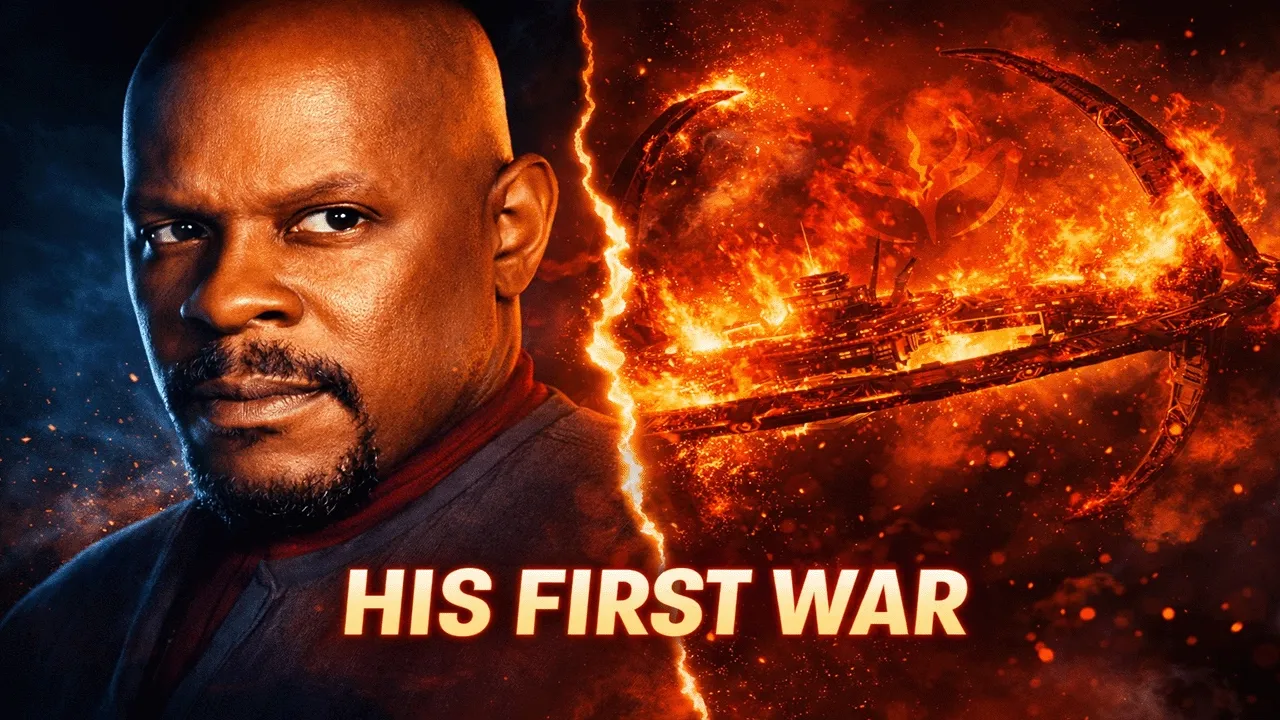
Adapted with AI from Lore Reloaded's video of 21 February 2026 and checked against the video before publication. Editorial standards · Corrections
More from @lorereloaded
All →


Make videos? Your next one could be an article here.
We turn your videos into articles under your name, linked back to the original. You keep 60% of what they earn, non-exclusive, and you can leave whenever you like.
Become a SubPlotter →