Could Sisko alone win the Dominion War? Star Trek captains ranked
How Archer, Pike, Kirk, Picard and Janeway might each have handled the Dominion, and why Sisko's early acceptance of an ugly war set him apart.
 Lore Reloaded (AI-assisted)4 November 2026Editor: Digital Fox Talent Editorial TeamOn YouTube since 2016 · more than 140,000 subscribers

I don't think the question is who the best Star Trek captain is. The question is who survives becoming a wartime leader. Benjamin Sisko of Star Trek: Deep Space Nine (1993), played by Avery Brooks, won the Dominion War. My argument is that he wasn't necessarily the smartest, most diplomatic or most compassionate captain. What set him apart is that he accepted the nature of that war faster than anyone else would have.
There's a point where peace stops being recoverable. For the Federation, that moment came above Deep Space Nine. The Dominion fleet crossed the wormhole, Starfleet mobilized, and Sisko stood on the station and gave orders that effectively ended the old Federation forever. That call to arms isn't really about battle. It's about what happens next.
Why the Dominion broke the Federation's faith in peace
For decades, the Federation believed its ideals could outlast almost any crisis. Diplomacy, patience and cooperation rested on an assumption that if people were given enough time, coexistence would win out over conflict. The Dominion shattered that assumption. It wasn't because they were stronger than every enemy Starfleet had faced. The Borg were arguably more terrifying on a pure military level. The difference was philosophical.
The Dominion didn't see Federation morality as admirable. They saw it as exploitable. Peace treaties became delay tactics. Negotiations became intelligence operations. Loyalty became a leash. Entire planets could burn if it moved the Founders closer to strategic victory. This isn't a frontier dispute or a border crisis solved with one clever maneuver or an inspiring speech. It's occupation, espionage and infiltration, fleet warfare measured in attrition instead of exploration.
Sooner or later the Dominion War forces every captain into the same question: what happens when the other side doesn't want peace? Some captains would spend months trying to prevent the war entirely. Others would prepare for total conflict almost immediately. A few might survive only by becoming people they would barely recognize afterward. Would Pike still believe diplomacy could work after the fall of Betazed? Would Picard cross the line Sisko crossed in In the Pale Moonlight? Would Janeway become more dangerous with the full weight of Starfleet behind her? Would Kirk thrive in a war where hesitation costs worlds instead of ships? Before the war tests strategy, it tests whether a captain can recognize the moment peace has already failed.
Jonathan Archer would prepare for the Dominion War earlier than almost anyone
Jonathan Archer would fight the Dominion. It's that straightforward. The question is how quickly he stops believing diplomacy can contain them. Archer comes from a very different era than later captains, and the word Federation barely fits. Humanity is still new to deep space, and Earth still feels exposed and fragile. Archer spends most of his career learning that optimism doesn't stop hostile powers from hurting you.
That changes him, and you can see it during the Xindi crisis. Archer steals a warp coil and strands another crew. He authorizes torture. He grows suspicious and colder. By the end of the mission he's still Archer, but some part of him has calcified. The Dominion would hit those instincts almost immediately. Unlike Picard or Pike, Archer probably doesn't spend long convincing himself peace is salvageable once the pattern becomes obvious. The Dominion infiltrates governments, manipulates allies and smiles while preparing for conquest, and Archer has seen enough to know where that road goes.
I think he starts preparing Starfleet for war earlier than almost anyone else on this list: more reconnaissance, more intelligence gathering, and sector fortifications long before open conflict. He would see an existential threat before many Federation politicians were emotionally ready to admit one existed. Early war Starfleet probably performs better under Archer than people expect.
The trade-off is that Archer adapts to fear faster than most captains. That helps him survive, but it also pushes Starfleet somewhere darker. A prolonged war under Archer probably creates a far more militarized Federation than Picard would tolerate, with expanded surveillance, preemptive operations and a broader willingness to justify morally ugly decisions. Archer could probably live with those choices. Picard sees war as a breakdown of Federation ideals; Archer sees it as proof the galaxy was never safe. In the opening phase, that mindset might save the Federation before anyone else understands what they're fighting.
Christopher Pike's optimism could cost the Federation precious time
Christopher Pike is going to fight the Dominion eventually. That matters more than anything else here, because his greatest strength is also the thing most likely to hurt the Federation during the build-up. He believes people can still choose to be better. He trusts people under pressure, gives second chances and treats diplomacy as something meaningful instead of procedural theater. Even with hostile powers, he tends to believe conflict can be prevented if somebody slows things down long enough to ask honestly.
Normally that makes him exceptional. Against the Dominion it makes him dangerous, because the Dominion understands hesitation better than almost any enemy Starfleet has faced. Pike would spend the early crisis trying to preserve the Federation's moral center. He would push negotiations hard, search for fractures inside the Dominion hierarchy and resist escalation as long as possible, because he understands that once large-scale war starts, nobody controls what it turns people into. And he's right.
The tragedy is that the Dominion benefits from every month Starfleet delays. Pike would realize that eventually. He's optimistic, not stupid, and when violence becomes unavoidable he's capable of decisive action. But he needs to believe there's no other path first, and that delay could be catastrophic. At first, I think Pike's Federation struggles more than Archer's or Sisko's. He would resist rapid militarization and push back against extreme intelligence measures, and Section 31 would probably view him as an obstacle almost immediately.
Then Betazed falls, and I think something inside Pike changes. The optimism becomes harder to access and less instinctive. I can imagine him still giving speeches about Federation ideals while privately wondering whether the Dominion proved those ideals only work when everyone plays by the same rules. Pike, I think, would survive the Dominion War. But I don't think he comes out of it believing in the Federation quite as easily as he did before.
James T. Kirk would thrive early, then gamble on ending the war
Kirk wouldn't struggle with the idea of fighting the Dominion. He'd struggle with restraint. He already operates like a captain who expects violence to arrive without warning. His Starfleet is still frontier territory, and the Enterprise constantly deals with hostile powers, military standoffs, unstable borders and situations where hesitation can get everybody killed. That environment shapes him more than people remember. He acts before every variable settles, trusting instinct, pressure and momentum. If waiting gives the enemy an advantage, Kirk moves.
Against the Dominion, that becomes terrifyingly effective. The Founders expect governments to behave predictably, with bureaucracy, delay and political paralysis. Kirk disrupts that. He's also comfortable with deception in wartime. That distinction matters because pop culture flattened Kirk into a caricature years ago. The actual character makes cold tactical decisions constantly. He bluffs stronger enemies, violates treaties when necessary, manipulates opponents psychologically and, when he believes a threat can't be contained later, is fully willing to strike first.
The Dominion War rewards fast decision-makers, so Kirk would thrive early. The danger comes later. Once he commits fully, I think he starts seeing the war as something that must be ended decisively instead of managed carefully. He pushes offensives harder than Picard would, takes larger gambles and accepts casualty risks other captains might reject if he thinks an operation could shorten the war. Some of those gambles save entire sectors. Others probably end in disaster.
Kirk creates momentum faster than almost anyone here, but momentum is unstable by nature. Still, he has one enormous advantage: he doesn't need the Dominion to destroy his optimism before he takes them seriously. He already understands the galaxy can be brutal. The war wouldn't teach him that lesson. It would just hand him a much larger battlefield.
Jean-Luc Picard would fight, but never separate survival from morality
No captain on this list understands the Federation ideal better than Jean-Luc Picard, and that's exactly why the war becomes so dangerous for him. Picard doesn't treat diplomacy as a useful tactic. To him, the Federation itself is proof civilization can evolve beyond fear, conquest and endless retaliation. For most of his life that belief works. He prevents wars, stabilizes political disasters and talks hostile civilizations away from escalation. Even in military confrontation, his instinct is to create room for de-escalation before reaching for force.
The Dominion twists those instincts against him. I'm not saying Picard is weak. I'm saying the Dominion understands how to manipulate people who still want peace. Picard would spend the early crisis searching desperately for a political solution and would want proof the Founders could not be reasoned with before committing to total war. Archer would prepare first, Kirk would strike first, and Picard would keep looking for another option. Part of the audience would probably agree with him, because he understands something Archer sometimes loses sight of: once fear takes control of a civilization, it rarely gives power back willingly.
The Dominion War doesn't threaten the Federation militarily. It threatens it culturally, and Picard would notice that immediately. That creates friction with almost everyone around him. Admirals demanding emergency powers would see him as obstructive. Section 31 would absolutely despise him. More aggressive captains might quietly wonder whether he understands the scale of the threat at all.
But once Picard accepts the Federation itself is in danger, I do believe he'd fight hard. Wolf 359 alone guarantees he understands what happens when existential threats are underestimated, and the idea that he would freeze in wartime is, I believe, nonsense. The difference is that Picard never fully separates survival from morality. "If Starfleet survives by abandoning everything it claims to stand for, then what actually survives?" That question would haunt his entire war, and the frightening thing is that he may not get a satisfying answer by the end.
Kathryn Janeway may be the most frightening captain once the war escalates
Kathryn Janeway may be the most frightening captain on this list once the war escalates fully. She doesn't lack morality. She's capable of compartmentalizing it when survival is at stake in ways most captains cannot. That contradiction defines her throughout Voyager. One moment she embodies Starfleet idealism. The next she's forming alliances with the Borg, weaponizing biological warfare against Species 8472, or making decisions that would horrify peacetime Federation politicians. She doesn't drift into ruthlessness accidentally. She gets there on her own, usually after deciding there are no acceptable alternatives left.
Unlike Picard or Pike, Janeway probably recognizes very early that conventional Starfleet thinking isn't built for an enemy like this. The Founders don't simply want territory or leverage; they're willing to erase worlds if it secures long-term stability. Voyager changed how she thinks about command. Years without reinforcement, reliable communication or institutional support forced her into a mindset built around adaptation and survival rather than procedure. Most captains think like Starfleet officers in a crisis. Janeway often thinks like someone stranded behind enemy lines.
She would likely support harsher counterintelligence measures far earlier than Picard or Pike. Changeling infiltration alone probably pushes her toward security policies many Federation citizens would find deeply uncomfortable. Unlike captains who openly agonize, she tends to internalize those compromises privately. "The crew sees composure, coffee, control." The Dominion would meet a Janeway willing to bend rules until they almost snap if it keeps the Federation alive, and there are stretches of this war where she might outperform even Sisko strategically. Border diplomacy and psychological pressure would fail quickly against her; the Dominion likes exploiting emotional weakness, and Voyager burned most of hers out years ago.
Prolonged war would still change her. The longer it lasts, the more likely she becomes to judge morality by outcomes instead of principles, not because she stops caring about ethics, but because survival slowly becomes the prerequisite for every ethical discussion. That's where she and Picard diverge. Picard worries what the Federation is becoming during the war. Janeway worries whether there will still be a Federation left once it ends.
How each captain would come out of the Dominion War changed
By the height of the war, every captain on this list would understand that the Federation that entered it no longer exists in quite the same form afterward. Archer hardens early, prepares faster than most and probably protects the Federation effectively in the opening stages, but there's always the risk he wins by reshaping Starfleet into something permanently defined by fear. Pike resists that transformation longer than almost anyone, even while the war tears pieces out of the Federation's moral center.
Kirk becomes one of the Dominion's most frustrating opponents, aggressive and unpredictable, disrupting momentum before the Founders can stabilize situations politically, though eventually some of his gambles would go catastrophically wrong. Picard probably preserves the Federation's soul better than anyone, because he keeps asking the questions nobody else wants to confront. With Picard, I'm not sure the Federation survives. Janeway becomes frighteningly effective once she accepts the scale of the threat. Intimidation stops working on her. Manipulation stops working on her. Exhaustion? She's got coffee.
Why Sisko was the captain who could win the Dominion War
That brings everything back to Sisko. He understood early that this conflict would not end cleanly. He recognized that ideals still matter, but that ideals alone are not enough against an enemy willing to weaponize them against you. Most importantly, he understood something several captains resist until it's almost too late: sometimes protecting the Federation requires carrying decisions that would horrify the Federation in peacetime.
That doesn't make him morally superior. If anything, Deep Space Nine spends years showing the damage those choices inflict on him. But the Dominion War was never going to be won by someone untouched by compromise. It was going to be won by someone capable of surviving it emotionally, politically and strategically all at once. That's why Sisko works: not because he abandons Federation ideals, but because he understands exactly how painful protecting them becomes once peace has already failed.
What other creators are saying
More on Deep Space Nine →A weapon never seen on screen, an earlier name, and a close call in First Contact
One card plays artifacts from the top of your library, and the other rewards facing a dilemma with free spells
Zefram Cochrane and the Caretaker among Magic: The Gathering Star Trek preview cards →
A Romulan War buildup, a Mirror Universe miniseries, the Borg Queen's origin and a refitted NX-01 were all part of the plans for a season that never got made
Tomorrow's Enterprise plays less like classic Kirk and Spock and more like Next Generation's All Good Things, and the people who made it are calling the future we saw continuity.
Strange New Worlds finale: the original series' lost ending →
Watch the original
@lorereloaded · YouTube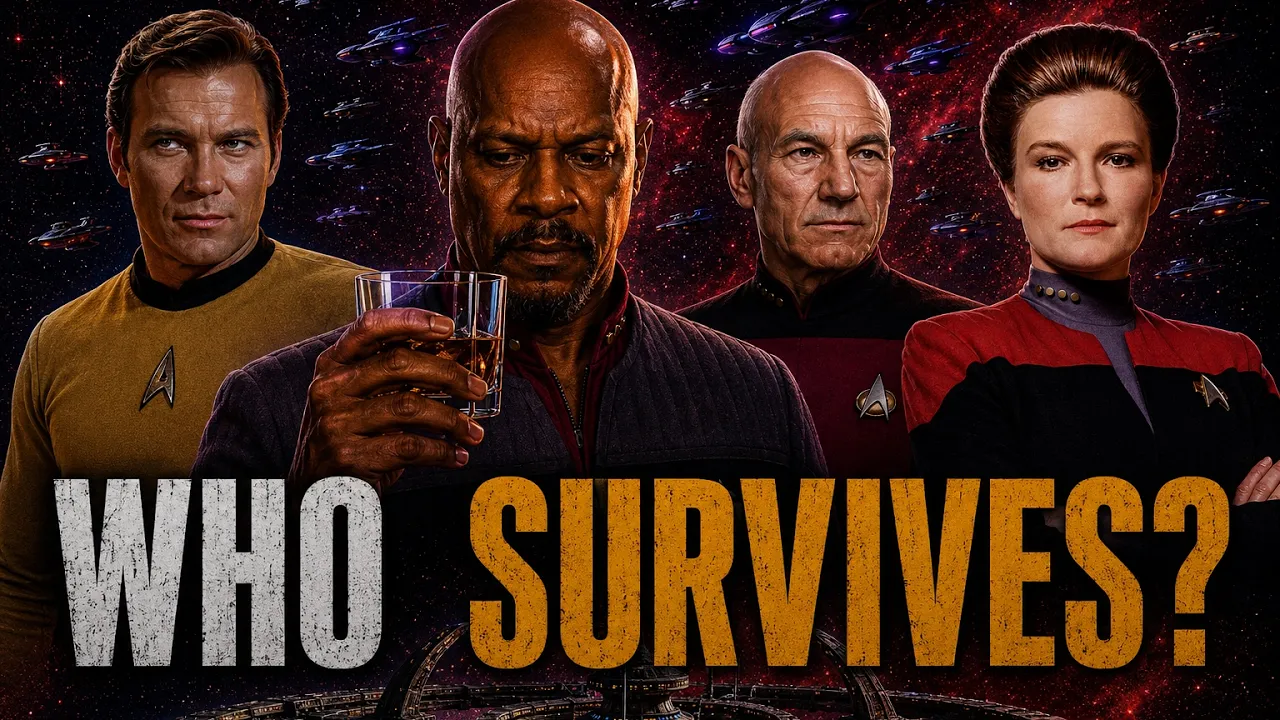
Adapted with AI from Lore Reloaded's video of 1 June 2026 and checked against the video before publication. Editorial standards · Corrections
More from @lorereloaded
All →


Make videos? Your next one could be an article here.
We turn your videos into articles under your name, linked back to the original. You keep 60% of what they earn, non-exclusive, and you can leave whenever you like.
Become a SubPlotter →