Captain America: The Winter Soldier Works Because Steve Rogers Refuses to Change
A decade after the Captain America trilogy ended, The Winter Soldier stands out for its themes, its Natasha Romanoff, and a hero who holds firm
 The Gold Man (AI-assisted)22 November 2026Editor: Digital Fox Talent Editorial TeamOn YouTube since 2014 · more than 170,000 subscribers

Captain America: The Winter Soldier (2014), starring Chris Evans, Scarlett Johansson and Sebastian Stan, is everything The First Avenger isn't. It has interesting themes, rich characters and a complex plot. Maybe most importantly, Captain America goes on an arc, and I'd argue it's an excellent flat arc: a hero who is tested throughout the story and doesn't change.
The Captain America films are some of the most popular superhero films ever made. Along with the rest of the Marvel Cinematic Universe, they turned Steve Rogers into one of the most beloved and popular characters of the decade. All over the world, not just in the United States, you'll see kids with Captain America on their shirts. For most of his history, though, Captain America wasn't a pop culture phenomenon. He was popular within Marvel Comics, but he was mostly seen as a piece of World War II propaganda and nothing more. Looking back at the trilogy, I want to understand how he became a worldwide icon in the span of a decade, and, given the unfortunate state of the MCU, what Marvel can learn from it.
The First Avenger did the setup work The Winter Soldier needed
When I looked at The First Avenger, I kept coming back to how that film was more of a setup for the rest of the MCU than anything else. Whether or not that hurt it, it absolutely benefited the rest of the Captain America films. Setting the first movie in the past and having the second explore the themes of being out of time was a smart decision.
Introducing Steve Rogers, establishing his beliefs and personality, having him fall asleep for 70 years and exploring the ramifications of that is a lot to fit into one movie. Because the first film did the legwork of setting up Steve's worldview, The Winter Soldier can devote all of its time to challenging it. Everything about wanting to see how Steve would act in the modern world gets explored here. It reminds me of The Dark Knight, which could do as much as it did with Batman and the Joker because Batman Begins did the legwork of setting up the character.
What was done with the character was incredibly risky. Using a movie as a setup for the rest of a franchise often doesn't work out well. But because The First Avenger focused almost entirely on developing Steve Rogers, and the writers understood where the character had to go, the decision paid off.
Why The Winter Soldier stays true to Captain America where Man of Steel changed Superman
I came across an essay from High Top Films comparing The Winter Soldier to Man of Steel. Its main argument was that Man of Steel took Superman and tried to change him to fit the modern world, while The Winter Soldier stayed true to the roots of the character and explored how Captain America held firm in his beliefs in the modern world. I found that to be an excellent point.
Thinking deeper about it, what stood out to me is that The Winter Soldier had the advantage of being a sequel. If Captain America had been born in the 90s and was an adult in the 2010s, it would feel out of place for him to act the way the Steve Rogers we know does. But Steve grew up in the 30s and was an adult during World War II, a time that is a lot more black and white narratively. That allowed him to build morals and ideals of America that get challenged when he wakes up in the future.
Project Insight forces Steve Rogers to question America's institutions
The movie opens with Steve dealing with being a man out of time, and he does it by serving his country, which here means serving SHIELD. At the start, he's all about following orders and being the perfect soldier. Then he finds Natasha up to something, which leads him to question Fury, and Fury introduces him to Project Insight.
Project Insight was the perfect narrative plot point for Steve because it forces him to reevaluate the world he lives in. Back in World War II, he never had to question America's decisions. He questioned why they were using their super soldier as a mascot, but he didn't question the overall mission of the United States to win the war. In a post 9/11 America, everything is different. Even if it wasn't intentional, the connection between what SHIELD is doing and what the NSA was up to is evident. The seeds are planted for Steve losing trust in these American institutions.
Steve Rogers' free time with Sam, Peggy and the World War II museum
The scenes that follow are important. Steve goes to the World War II museum to relive some history, meets Sam and sees the work he does with veterans, and reconnects with Peggy. It's refreshing to see what a superhero does with his free time, and it's important character work that lets us get to know the hero on a deep level.
In the first movie, Cap had no free time, and when he did, he went off to rescue a bunch of soldiers. Here, we see that he likes to spend it connecting with things that remind him of his past. Being around Sam and other veterans reminds him of his time in the war. The museum and its memorial to his friends obviously take him back too. And Peggy is the last person from his past who is still alive.
So why is Steve so against Project Insight? It's not only that he sees it as bad. It contradicts the worldview of America he carries from his past, and SHIELD contradicts his values. I love the line in his conversation with Peggy where he says, "I just want to do what's right but I'm not sure what that is anymore." That sets up his internal conflict for the movie: will Steve change in a world that is changing, and how can he do the right thing when the right thing isn't entirely clear?
Natasha Romanoff is Steve's foil, and Hawkeye had nothing to offer
His trust in leadership only grows worse when Fury comes to him saying not to trust anyone and is then assassinated. His conversation with Pierce doesn't go well, and SHIELD officially turns on him, which leads to a great fight sequence. The next 45 minutes or so are devoted to Steve and Natasha investigating what's really going on.
Natasha is a great foil for Steve. When I was a big MCU nerd ten years ago, I always questioned why Hawkeye wasn't in this movie, since he was a SHIELD agent. I don't know the in universe reason, but from a narrative perspective it's because he doesn't have anything to offer the story. Natasha does, because she's the total opposite of Steve: the realist who doesn't make connections with anyone and is all about survival.
In this movie, Steve helps Natasha begin what will become her arc for the rest of her tenure in the MCU, her journey from a cold blooded assassin to someone who loves and cares for people and sees the Avengers as her family. So while these scenes affirm Steve's belief in good, they're mostly critical to Natasha's development.
Saving Bucky is the climax of Steve's internal conflict
The big turning point is when Steve finds out that Bucky is not only alive but has been brainwashed by Hydra. The easy answer for why that matters is that it adds a more personal element to the story. The real reason is that his fight with Bucky is the emotional climax of the movie.
The final act is all about Steve and his friends taking down Hydra without Bucky, and it's pretty black and white when it comes to him. Steve has every reason to believe there's no Bucky left in the Winter Soldier. America has changed, SHIELD has changed, all of it has changed. But Steve is someone who deeply cares about the individual. That's why it's so important in the first movie when he tells Erskine he doesn't want to kill Nazis, he just doesn't like bullies. Steve has no loyalty to institutions or organizations. His loyalty is to individuals and their freedoms.
If Steve fights and kills Bucky, or abandons him, that would signify that Steve too has changed with this world. He sees Bucky as a victim, so doing that would mean abandoning his loyalty to fight for those in need. In the moment of truth, regardless of what the whole movie has tried to tell him, Steve risks his life to save one person he once called a friend. Will Steve change in a world that is changing? No, he will not.
I'm not saying Steve didn't change in any way. His perspective on institutions changed, and in the later films he learns to open up and not be such a stickler for the rules. But what The Winter Soldier reaffirms is that his core beliefs don't change, and that is the essence of Steve's character.
Steve Rogers goes on a flat arc in The Winter Soldier
I went back and forth on what kind of arc Steve goes on here. One option is a flat arc, where the character doesn't change but is tested throughout the story and holds firm in their beliefs at the end. The other is a standard character arc, where the character's change signifies a theme in the story. I'd argue Steve's arc is mostly a flat arc.
His perspective on SHIELD and institutions does change, and that's a major plot point in Civil War. But that change isn't really part of an arc. For it to be one, a fundamental part of Steve's identity would have to be his belief in institutions, and that's never been the case. I can't recall a time in the first movie where he blindly supported America. He wanted to fight in the war because he saw Nazis as bullies, not because he blindly loved his country. He never chose the name Captain America; it was given to him while he toured as a propaganda figure.
The First Avenger gives no indication that Steve would blindly follow the American military either. When he's given direct orders not to save the hostages, he does it anyway, and when he returns, he's ready to face the consequences. So his loss of trust in American institutions in The Winter Soldier isn't a fundamental shift in his character. His steadfastness also affects those around him, most notably Natasha but Bucky too, which is more in line with the goals of a flat arc.
How Captain America: The Winter Soldier was received
Many people see The Winter Soldier as one of the best of the MCU, so it's worth checking the reception to see if a lot of people agree. It holds a 92% audience score on Rotten Tomatoes. On IMDb it scored a 7.7 out of 10, making it the 10th highest rated MCU movie there. The MCU was in full swing, and Phase 2 continued to dominate the box office.
For me, Captain America: The Winter Soldier is an excellent movie. The action and all of that was great, but it's the inner conflict within Steve that resonates the most with me, and his flat arc is an excellent one.
What other creators are saying
More on Captain America →I think the Doomsday house is the same Endgame home relocated to a new universe, probably by Loki and TVA tech, and the farm setting is meant to contrast with Fantastic Four's retro futuristic city while setting up Doom confronting Steve over his choice to stay in the past.
Avengers: Doomsday teaser: is Steve's house the Endgame home? →
A reported Loki scene in Steve and Peggy's home points to three ways a multiversal Avengers team could begin.
Avengers: Doomsday theory: will Loki and Doom both recruit Cap? →
According to the theory, yes. Old man Steve Rogers from the main MCU timeline was never confirmed dead, may be stationed on the S.W.O.R.D. base, and could be guiding Sam Wilson's Avengers as a behind the scenes commander, similar to Commander Rogers in the comics.
Avengers: Doomsday theory: is old man Steve Rogers leading? →
Disney's jungle hero is stronger and faster than many people expect, but skill and the vibranium shield decide it
Captain America vs Tarzan: who wins, Steve Rogers or Disney's? →
Watch the original
@thegoldman25 · YouTube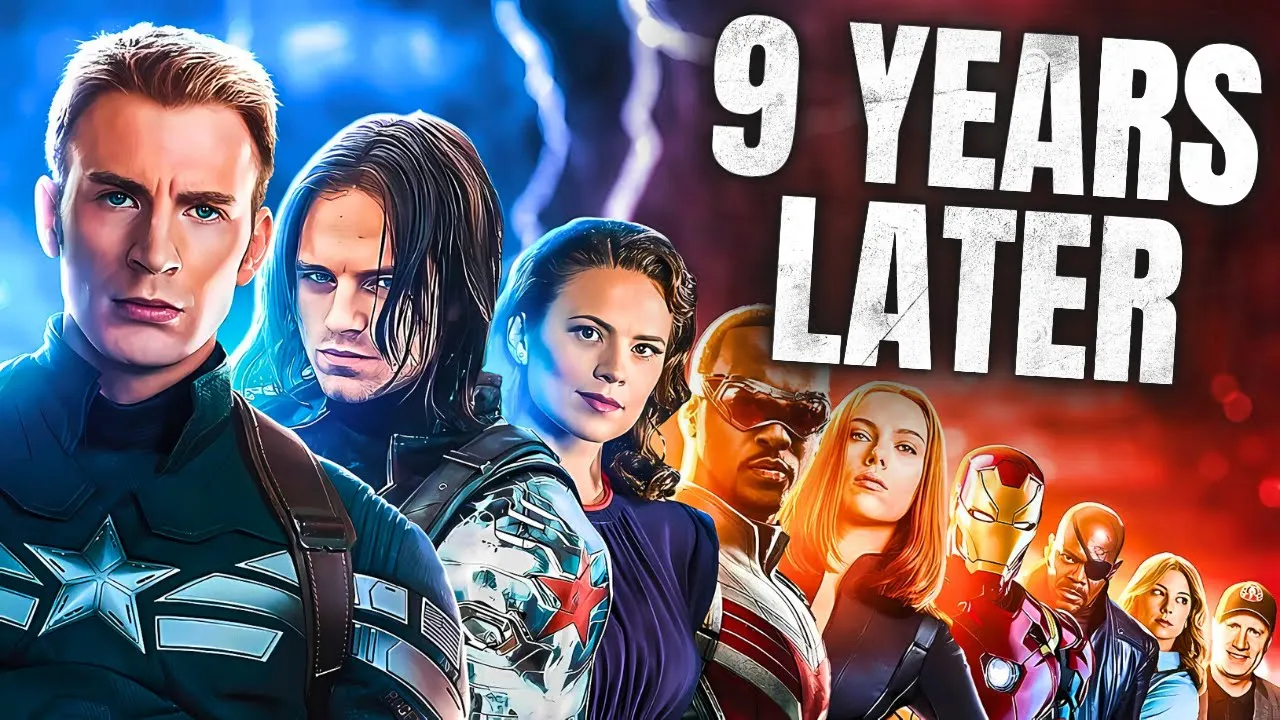
Adapted with AI from The Gold Man's video of 25 January 2025 and checked against the video before publication. Editorial standards · Corrections
More from @thegoldman25
All →


Make videos? Your next one could be an article here.
We turn your videos into articles under your name, linked back to the original. You keep 60% of what they earn, non-exclusive, and you can leave whenever you like.
Become a SubPlotter →