Did the Joker break Heath Ledger? What really happened
The isolated diary, the sleepless nights and a warning from Jack Nicholson tell a more complicated story than the legend
 Breakdowns & Blockbusters (AI-assisted)21 November 2026Editor: Digital Fox Talent Editorial TeamOn YouTube since 2023 · more than 240,000 subscribers

You've heard the myth: Heath Ledger became so consumed by playing the Joker that it drove him to madness, addiction and, ultimately, death. It's a chilling story, and it has been repeated for years. The truth, like Ledger himself, is far more complex. When you look at what happened behind the scenes, the role was only one part of a much bigger picture.
Ledger played the Joker in Christopher Nolan's The Dark Knight (2008), opposite Christian Bale as Batman. To work out how much of the legend is real and how much has been twisted by headlines, hearsay and Hollywood lore, it helps to start before he ever put on the makeup.
Brokeback Mountain's awards campaign left Heath Ledger exhausted
After starring in Brokeback Mountain, Ledger cemented himself as one of Hollywood's most respected young actors. As one of the film's leads, though, he was required to go on the awards season campaign trail to promote it. The constant interviews, red carpets and press events took a toll. Ledger felt he was doing everything he hated about the industry.
When he ultimately lost the Oscar to Philip Seymour Hoffman, the experience left him feeling used, exhausted and defeated. Soon after, however, he would be offered a role that gave him a potential break from all of it.
Why Ledger took the Joker: a pay or play deal in The Dark Knight
Years earlier, Ledger had met with Christopher Nolan about playing Bruce Wayne in Batman Begins. He wasn't interested in pursuing that role, fearing it would define him, limit his choices and turn him into an action figure. The Dark Knight came with something different: a pay or play deal, which meant he would be paid no matter what, even if he was fired.
That gave Ledger a sense of creative freedom. He drew inspiration from Johnny Depp's bold turn as Captain Jack Sparrow in Pirates of the Caribbean, a performance so eccentric it nearly got Depp fired. Ledger aimed to take that idea further, hoping his Joker would be so unhinged and so unpredictable that he would get fired too and walk away with a paid vacation thanks to his contract.
Ledger was also hired very early, and the production was a long one. That gave him an excuse to turn down other offers and use the lengthy preproduction period to disappear fully into the character.
Inside Heath Ledger's Joker diary and six weeks in a London hotel
Over the course of six weeks, Ledger isolated himself in a London hotel room, immersing himself in the mind of the Joker. He kept a chaotic character diary filled with disturbing thoughts, sketches and fragments of dialogue, all in an effort to understand the character's madness from the inside out.
The diary included everything from comic strips and clown imagery to pictures of Alex DeLarge, the violent and sadistic protagonist of Stanley Kubrick's A Clockwork Orange, who finds chaos amusing. Ledger borrowed heavily from A Clockwork Orange, even working the infamous Kubrick stare into the Joker's most unnerving moments.
One page of the diary features a list of twisted things a Joker would find funny: AIDS, blind babies and beloved pets dying in car accidents, before ending with the periodic table of elements. That last entry is so random and out of place that it becomes darkly funny in its absurdity, perfectly capturing the Joker's erratic, nonsensical sense of humor.
Tom Waits, hyenas and a Francis Bacon painting shaped the Joker
Ledger knew that finding an iconic voice and laugh was crucial. He eventually landed on a voice inspired by the raspy, off kilter cadence of musician Tom Waits. For the laugh, his diary revealed the inspiration: the hyena, known for chilling, high pitched cackles that can signal anything from fear to aggression. It became the model for a laugh that wasn't just a sound but a psychological weapon.
The Joker's look was partly inspired by a distorted face from the left panel of Francis Bacon's 1972 triptych, an image that had haunted Christopher Nolan since he first saw it as a teenager. While preparing The Dark Knight, Nolan showed the painting to Ledger, who immediately connected with its raw, unsettling emotion. It helped shape the makeup in a tactile, almost grotesque way, emphasizing smeared paint and decaying skin over clean lines or symmetry.
Ironically, in the 1989 Batman, Jack Nicholson's Joker stops his henchmen from destroying another Francis Bacon painting, saying, "I kind of like this one." It unknowingly foreshadowed the influence Bacon would have on a very different Joker years later.
Ledger envisioned the Joker as someone who applied his own makeup: messy, uneven, left on for days and done without care for precision. He wanted it to look smeared on by hand, and if you look closely, traces of white makeup can be seen on the Joker's fingers. Despite the popular belief that Ledger did his own makeup throughout the film, he only did it once, for the initial makeup test.
Insomnia, Ambien and a real punch in the interrogation scene
As filming began, Ledger threw himself into the role with his usual all in approach. In the past, that had often come at the cost of sleep, as he struggled with insomnia whenever he fully committed to a role. This time was no different. He averaged two hours of rest a night and admitted to taking Ambien, but even that barely worked. One pill had no effect, and a second only granted him an hour of sleep.
Despite the physical and mental strain, he called it the most fun he'd ever had playing a character.
The interrogation scene between Batman and the Joker was the first scene filmed, and it set the tone for everything that followed. Nolan later called it his favorite scene in the film, saying, "I had never seen anybody sell a punch the way Heath was able to do with Christian." That's because it was real. According to Christian Bale, Ledger was egging him on, encouraging him to actually hit him and throwing himself around the set with reckless abandon. Bale recalled tiled walls on the set that were cracked and dented from Ledger hurling himself into them.
The Dark Knight myths: Michael Caine's forgotten lines and the hospital explosion
Over time, a handful of urban legends have grown up around Ledger's performance, repeated so widely that many have mistaken them for fact. Michael Caine recalled that the first time he saw Ledger in full Joker makeup was during the penthouse party scene. As the elevator doors opened and Ledger stepped out in character, Caine was so stunned that he forgot his lines. "It was chilling," he later said. "Absolutely floored me the first time I saw him in action. I was terrified." Many attribute that moment to the take used in the movie, but it happened during rehearsal.
One of the most enduring myths is that Ledger improvised the Joker's reaction when the hospital explosion briefly stalls. For years, fans believed the detonator had genuinely malfunctioned and that Ledger's fidgeting and confused expression were a brilliant improvisation that saved the take. It makes for a great story, but it isn't true.
The pause was carefully planned by Nolan and the special effects team so that Ledger could safely exit the building before the full demolition. The delay was written into the sequence to heighten tension and make the explosion feel unpredictable for both the audience and the character. Nolan confirmed the scene was rehearsed about 12 times that morning so Ledger could hit every beat safely and precisely.
What Ledger improvised, and how he behaved between takes
Some moments were Ledger's own invention. The Joker's slow, sarcastic clap during Gordon's promotion to commissioner was entirely improvised. So was his sudden "look at me" outburst during the penthouse scene with Rachel, which he delivered on the spot when Maggie Gyllenhaal, legitimately uneasy, struggled to look him in the eye.
Unlike some method actors who stay in character between takes, Ledger only became the Joker during takes. Between them, he was relaxed and approachable: joking with the crew and his fellow cast members, flipping through his Joker journal, smoking cigarettes and even skateboarding around the set in full costume. He greeted the crew with big hugs every morning and night and was warm and friendly. On set, he was nothing like the chaotic, menacing figure he portrayed.
At the end of filming, Ledger closed his Joker diary with a simple, haunting farewell, writing "bye-bye" on the final page.
The Imaginarium of Doctor Parnassus and Ledger's declining health
After the exhausting Dark Knight shoot wrapped, Ledger had only a narrow window of rest before starting his next project, The Imaginarium of Doctor Parnassus. Director Terry Gilliam worried about the toll the Joker might have taken, especially as Ledger was dealing with chronic insomnia, the end of his relationship with Michelle Williams and an increasingly bitter custody battle over their daughter, Matilda.
That film was meant to be a return to something lighter and more whimsical, but the shoot proved grueling in its own way. Parts were filmed at night outdoors in cold, damp conditions that wore down the cast and crew. Co-star Christopher Plummer later recalled that most of them came down with colds, but Ledger's condition worsened. He showed up one day with a terrible cough, soaked in sweat and visibly shivering.
A doctor diagnosed the early stages of pneumonia and advised rest and antibiotics, but Ledger refused to stop. "No way," he said. "I'm not going home. If I do, I won't sleep. I'll just be thinking about everything. I'd rather stay here and work."
Unable to sleep and physically deteriorating, Ledger increasingly relied on a mix of prescription medications: Ambien to sleep, anti-anxiety pills to cope and painkillers for the physical toll. He had struggled with insomnia for years, but the emotional stress of his breakup, his illness and intense back to back shoots pushed things to a breaking point. Plummer noted that Ledger was constantly saying he couldn't sleep and was taking all these pills to help him. By the time Ledger moved back to New York, his health was in serious decline. On the morning of January 22, 2008, he was found dead in his SoHo apartment. The autopsy found an accidental overdose caused by a lethal mix of prescription drugs.
What Jack Nicholson meant by "I warned him"
When news of Ledger's death broke, paparazzi caught Jack Nicholson outside a restaurant late at night and told him on the spot. Visibly shocked, he responded with a cryptic "I warned him." The remark quickly fueled speculation that he meant the dangers of playing the Joker.
In later interviews, Nicholson clarified that he had warned Ledger about Ambien. "I took it once," he said, adding, "I woke up in my car 50 yards from my house. I almost drove off a cliff." His comment wasn't about the role but about the unpredictable and sometimes dangerous effects of prescription sleep aids, something Ledger, a chronic insomniac, had struggled with for years.
The legend says the Joker broke him. The truth is that it was a perfect storm: exhaustion, an unforgiving schedule, emotional stress in his personal life and a lack of rest, compounded by chronic insomnia and a growing reliance on prescription drugs to cope. In the end, the Oscar that had eluded him for Brokeback Mountain was awarded to him for The Dark Knight, a haunting reminder of the brilliance he left behind and the loss that still lingers.
What other creators are saying
More on Heath Ledger →I believe the Joker's makeup, applied and altered scene by scene, hints at a hidden true story Nolan deliberately never confirms, and I think small details like melted paint, fresh lipstick, and possible green screen trickery suggest his origin is even more unknowable and multiple choice than fans realize.
The Dark Knight: What the Joker's Makeup Reveals Scene by Scene →
Joker: Folie à Deux fails because it undoes the first film by having Arthur reject his Joker identity without that being set up, wastes its musical numbers which mostly don't matter to the story, and sidelines Arthur into a passive character with little chemistry with Harley.
A turn in the 2010 animated Batman film left me stunned and reminded me of the Joker
Batman: Under the Red Hood twist left me in disbelief, and I think the Joker would want it →
From Rachel Dawes in Gotham to Qui-Gon Jinn in the Phantom Menace, these are the deaths that triggered wars, collapsed kingdoms and released monsters across their universes.
Movie deaths that broke their franchises: Qui-Gon to Tony Stark →
Watch the original
@breakdownsandblockbusters · YouTube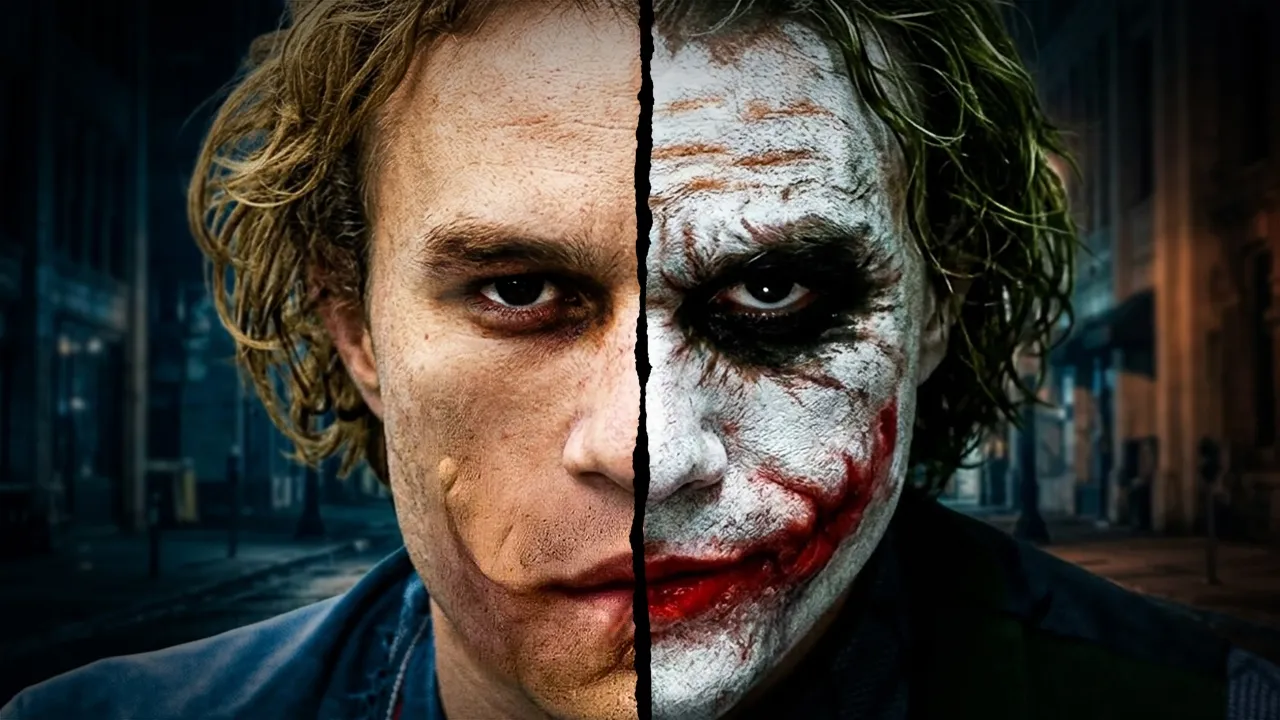
Adapted with AI from Breakdowns & Blockbusters' video of 13 October 2025 and checked against the video before publication. Editorial standards · Corrections
More from @breakdownsandblockbusters
All →


Make videos? Your next one could be an article here.
We turn your videos into articles under your name, linked back to the original. You keep 60% of what they earn, non-exclusive, and you can leave whenever you like.
Become a SubPlotter →