Spider-Man: Brand New Day cut plots: the impostor story
An international Spider-Man, a trademark battle, a talking cat and a body-jumping psychic: the abandoned ideas behind Tom Holland's latest outing
 Breakdowns & Blockbusters (AI-assisted)21 November 2026Editor: Digital Fox Talent Editorial TeamOn YouTube since 2023 · more than 240,000 subscribers

Spider-Man: Brand New Day almost didn't feature Jean Grey at all. Earlier versions revolved around an impostor stealing the Spider-Man identity, forcing Peter to hire Matt Murdock and fight to prove he was the real Spider-Man. Others had Peter abandoning New York to operate overseas in a globe-trotting adventure inspired by the Bourne Identity movies. Still others swapped in Chameleon or even the X-Men villain Shadow King in a street level thriller set over a single day, inspired by Die Hard with a Vengeance.
Believe it or not, all of these things almost happened on the way to the 2026 film starring Tom Holland. Here's how the movie got from all of that to the version we ended up with.
Brand New Day's original opening had Peter living with Boomerang and Overdrive
Brand New Day opens with a montage catching us up on Peter's life in the years since No Way Home. With Ned and MJ away at school and everyone else having forgotten who he is, Peter has devoted his entire life to being Spider-Man, taking down a series of street level villains across New York. Many of these quick fights were designed to recreate famous Spider-Man comic book imagery, while Michael Mando's Scorpion returns after being teased all the way back in Homecoming.
Originally, though, this sequence focused on Peter struggling to afford his apartment and looking for somewhere cheaper to live. He eventually finds two new roommates and moves in with them, only to discover that they're the low level villains Boomerang and Overdrive. Before Peter can get himself out of the situation, the two invite him to trivia night at the Bar with No Name, the infamous New York hangout where super villains gather when they aren't committing crimes.
A Bourne-style opening sent Peter to Southeast Asia while an impostor took over as Spider-Man
Another version of the opening went in a completely different direction. It would have seen Peter abandon his old life and move to Southeast Asia, where he would be living alone on a boat, repairing its engine himself and continuing to make his own web fluid. Peter would still operate as Spider-Man overseas, with writer Chris McKenna describing the opening as a Bourne-style sequence where Spider-Man takes down criminals abroad.
While he's away, Peter discovers that someone else has started operating as Spider-Man back in New York. This impostor isn't simply wearing Peter's costume. He has also trademarked the Spider-Man name and copyrighted Peter's web fluid formula, effectively claiming legal ownership over Spider-Man. As a result, Peter is forced to return to New York to prove that he's the real Spider-Man, only to find himself caught in a legal battle over his own superhero identity.
Matt Murdock, a courtroom comedy and a talking cat
Because Peter suddenly needs a lawyer, he turns to the same attorney who represented him in No Way Home. Thanks to Doctor Strange's spell, Matt Murdock no longer remembers Peter, so Peter would have to introduce himself all over again and convince Murdock to take the case. The idea eventually developed into something resembling a Spider-Man courtroom comedy, with Peter trying to legally prove he was the original Spider-Man while an impostor had beaten him to the trademark.
This version also featured one of the strangest ideas the writers ever considered. At some point, Peter becomes so exhausted and overwhelmed by the case that he collapses inside a convenience store. While he's unconscious, the store's cat begins talking to him and tells Peter that he's part of a much larger group of spider-powered beings. The cat explains the spider totem mythology and tells Peter that he needs to seek out others like himself.
Peter then wakes up inside an ambulance and discovers that none of this happened. He simply had appendicitis. The sequence still served an important purpose. When the paramedics try to figure out who to contact for Peter, they discover he has nobody listed as his emergency contact, which was the entire point of the scene. Peter had isolated himself so completely that when something happened to him, there was nobody for anyone to call. Eventually, the writers realized these storylines were taking the movie too far in a different direction and abandoned them.
Finding a villain: the Spot and Kraven the Hunter were lost back on No Way Home
Finding the right villain for Brand New Day turned out to be one of the biggest challenges of developing the film. Writers McKenna and Erik Sommers had already run into this problem while writing No Way Home, where their ideas kept colliding with Sony's plans for its own Spider-Man spin-offs.
At one point, the Spot was going to be the villain of No Way Home, and the writers spent roughly two weeks writing a version of the story around him. Then they discovered that Sony Animation was already planning to use the character in Across the Spider-Verse, which immediately took him off the table.
Their fallback was Kraven the Hunter. According to McKenna, Sony had specifically told them it had no plans to make a standalone Kraven movie, so they began developing a story where Kraven was hired by someone else to hunt Spider-Man throughout New York. McKenna compared the idea to Home Alone, with Kraven transforming the city into one enormous trap for Peter, planting booby traps throughout New York and stalking Spider-Man from location to location. Then Sony changed course and decided to make Kraven the Hunter after all, once again forcing McKenna and Sommers to abandon the character.
A Die Hard with a Vengeance thriller led the writers to Chameleon
Years later, when they began developing Brand New Day, Kraven came up again as they experimented with making the film a much more contained street level thriller. One approach took inspiration from Die Hard with a Vengeance, with the entire story unfolding over roughly a single day as a mysterious villain toys with Spider-Man across New York.
The antagonist was described as something resembling a mysterious bomber, communicating with Peter from a distance and forcing him from one situation into another, rather than another world-ending MCU threat. The movie would use New York itself as the obstacle course, with Spider-Man racing across the city trying to figure out who was manipulating him and where the villain would strike next. While they considered Kraven as the villain, they moved on to his half brother instead: Chameleon.
Chameleon presented a different problem. His traditional gimmick revolves around disguising himself as other people, usually through masks and elaborate impersonations. By this point, the MCU had already spent years using the Skrulls as shape shifters, so introducing another villain who could physically become other people risked feeling repetitive.
From possession and Fallen to Shadow King
The writers began searching for a different way to achieve the same effect. Instead of Chameleon physically disguising himself as someone else, what if he could take control of them? That led McKenna and Sommers toward telepathy and possession. They began imagining a villain who could move from person to person, using different bodies as temporary hosts. McKenna compared the idea to the 1998 Denzel Washington film Fallen, where the villain is able to jump between people, making almost anyone around the protagonist a potential threat.
The concept also fit what they were trying to do with Peter. After the ending of No Way Home, Peter has responded to losing everyone in his life by isolating himself. He doesn't want anyone to get close to him because he believes keeping people away is the only way to protect them. So the writers wanted a villain who could directly challenge that mindset. If Peter wants to hide from everyone around him, what better enemy than someone who could be anyone around him?
That eventually led them to Shadow King, the powerful psychic villain most commonly associated with Professor X and the X-Men. In the comics, Shadow King exists primarily on the astral plane and is capable of possessing other people, making him a natural fit for the villain McKenna and Sommers had already been trying to create. The writers became particularly interested in Peter chasing a disembodied enemy throughout New York, with Spider-Man initially able to use his spider sense to detect when the villain had jumped into someone else and follow the threat from body to body.
The unnamed Shadow King draft and why Jean Grey replaced him
Moving toward Shadow King created another problem. The moment the writers began using a telepath connected to the X-Men, Brand New Day was no longer operating entirely inside Sony's Spider-Man sandbox. It was stepping directly into Marvel Studios' plans for mutants, something Marvel was still figuring out internally. Marvel allowed them to keep exploring the idea, but with some very specific restrictions. They couldn't call the villain Shadow King.
So the writers developed an entire version of the story around a character who was essentially Shadow King without ever being identified as him. This wasn't an idea they kicked around for a few days. McKenna and Sommers wrote an entire draft around him. In it, the villain's physical body had been taken from him years earlier by people who recognized how dangerous he was and hidden somewhere in New York. He spends the movie without a body of his own, jumping between other people as he searches the city for where his original body was hidden, while Peter spends much of the story chasing a villain he can never see.
Eventually the writers realized that was the idea's biggest problem: Peter was fighting a disembodied voice. They began searching for a character who could preserve everything they liked about the concept while giving Peter an actual person to interact with. Then, in September 2024, McKenna received a call from one of the producers telling him Marvel had approved Jean Grey. She allowed them to keep the telepathy, the possession and the mystery elements they had developed for Shadow King while solving the biggest problem. There was now an actual person behind the powers.
Ben Riley, a gray Savage Hulk and a reshot fight
Another abandoned idea involved Ben Riley, who in the comics is a clone of Peter Parker. As an Easter egg for fans, the writers thought it would be funny if, when Peter reconnects with MJ, he introduced himself as Ben Riley and pretended to be British. That would mean Tom Holland, an English actor, playing an American character doing a bad British accent.
The Hulk fight was also originally much different. The filmmakers experimented with versions where Savage Hulk moved on all fours like a muscular insect and was constantly twitching because he couldn't keep his rage under control. They also tried the opposite direction, where Hulk was in complete control and behaved like a Shakespearean villain. They considered making Hulk gray when he turns into Savage Hulk, to show he's more ferocious than ever, before deciding to stick with the traditional green version best known to audiences.
The fight originally ended very differently too, with Peter getting hold of a Shocker gauntlet and using it to deliver a Superman punch that knocked Hulk unconscious. Test audiences didn't buy that Spider-Man could take Hulk down that easily, so the filmmakers went back and reshot it.
Frank and Peter went from disliking each other to more of a big brother, little brother rivalry
Frank Castle and Peter also originally didn't like each other. Once Holland and Jon Bernthal started improvising on set, director Destin Daniel Cretton leaned into their real life friendship and turned the relationship into more of a big brother, little brother rivalry.
Holland and Bernthal were already close before the film. Bernthal helped Holland with a Spider-Man audition tape years earlier, and Holland later returned the favor by helping Bernthal with his audition for The Punisher.
The test screening recut the filmmakers hated
Even after all of these ideas came together, Brand New Day still wasn't finished changing. Following early test screenings, the filmmakers created a radically different version that attempted to incorporate virtually all of the audience's feedback. According to Tom Holland, when the creative team watched that cut, they hated it and felt that trying to satisfy every note had stripped away what they liked about the movie in the first place.
The filmmakers ultimately moved back toward their original cut. Considering how often Marvel has spent the last several years reacting to test screenings with massive recuts and reshoots, potentially hurting the very movies it was trying to fix, there's something refreshing about them realizing that sometimes the best response to audience feedback is not to listen to it. Because, as Brand New Day proved, "the audience isn't always right."
What other creators are saying
More on Tom Holland →I thought Spider-Man: Brand New Day was a glorious return to form for Marvel, even though Sadie Sink's Jean Grey never felt like the real Jean Grey to me and the film's changes to the X-Men as feared threats struck me as a particularly bad choice.
I think the Spidey tracker scene, the Russos' chess king image, the shared writers and Feige's comments all point to Tom Holland's Spider-Man appearing in Avengers: Doomsday, likely via a cameo or post-credits scene, with Marvel getting multiple Spider-Man variants from Sony for Doomsday and Secret Wars.
Spider-Man in Avengers: Doomsday: will Tom Holland appear? →
I think Tom Holland's Spider-Man will only briefly appear in Avengers: Doomsday, likely in a post credits scene, while Tobey Maguire is the main Spider-Man, and I believe Marvel is building a street level crossover uniting Spider-Man, the Punisher and the returning Defenders against Kingpin.
Avengers: Doomsday post-credits scene: is Spider-Man in it? →
I ranked all 14 Spider-Men by power, putting Spider-Noir at the bottom as the weakest version of the abilities and Tom Holland's MCU Peter Parker at number one thanks to his spider sense, tech, villain experience, and Brand New Day upgrades, with Tobey Maguire a close second.
Strongest Spider-Man ranked: is Tom Holland's MCU Peter No. 1? →
Watch the original
@breakdownsandblockbusters · YouTube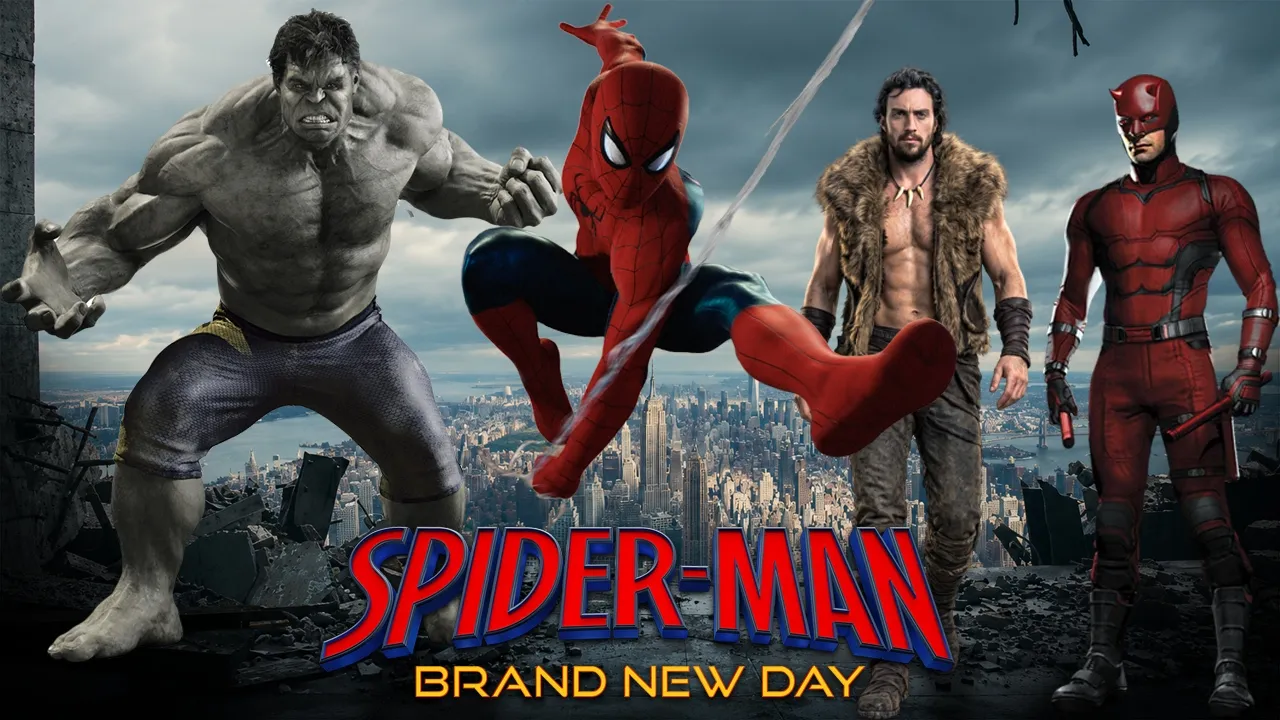
Adapted with AI from Breakdowns & Blockbusters' video of 21 November 2026 and checked against the video before publication. Editorial standards · Corrections
More from @breakdownsandblockbusters
All →


Make videos? Your next one could be an article here.
We turn your videos into articles under your name, linked back to the original. You keep 60% of what they earn, non-exclusive, and you can leave whenever you like.
Become a SubPlotter →