Mumbai travel vlog: kalaripayattu, Juhu street food, traffic
A trip to Mumbai, from Ganpati festival sweets and a lesson on the urumi to the Gateway of India and an overnight train to Hyderabad
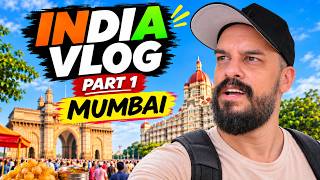
I wasn't ready for Mumbai, and I loved it anyway. In a few short days I learned to cross the streets, met a kalaripayattu teacher who explained a weapon he called very dangerous, ate my way along Juhu Beach and stood at the Gateway of India before boarding a train to Hyderabad. The traffic is wild and there seem to be no rules, but I really like it.
I flew in through Singapore, and Ganesh Chaturthi was underway when I arrived.
Arriving in Mumbai: baggage slips, Popeyes and a room at the Hilton Garden Inn
The first lesson came before I left the airport. You need to get your baggage claim slip, otherwise they'll just leave your luggage there. I also discovered there's a Popeyes in Mumbai, which I had no idea about.
I stayed at the Hilton Garden Inn. The room had one feature I enjoyed: if you're in the shower and want to see the view out the window, you press a button and there it is. I liked the room from the start.
The drive from the airport to the hotel isn't far, but the traffic was wild, full of those little three wheeled vehicles that look like tuk tuks. I think they're called rickshaws, though I'm not sure. From my window I could see people crossing the street like it was nothing, and cows wandering around completely relaxed. One cow was just strolling along on its own.
Ganpati festival food at the hotel: ukadiche modak, cauliflower masala and salty lassi
The hotel served a spread that was explained to me dish by dish. There was a potato curry with Indian spices, a cauliflower dish called cauliflower masala, a classic yellow dal and a salad. It came with phulka and vegetable patties.
The standout was ukadiche modak, which I was told they serve only during the Ganpati festival. The shell is made from rice flour and then steamed, so it was described to me as a healthy version of a sweet. I also tried the lassi. It was strong, and definitely salty.
At breakfast I noticed I hadn't seen anything made with pork. Instead there was chicken bacon, similar to turkey bacon. I also had idli, which was very good.
How people cross the street in Mumbai
I heard a story about a Russian visitor who said India's highways are good because anything can happen here but people don't die. From my window I'd watched people start crossing without hesitating, expecting the cars to stop. They don't stop. People keep crossing and the cars keep moving, and somehow everyone wins. Drivers tap the brakes a little, the car slows, and the pedestrians get through.
Doing it myself was another matter. Earlier on I thought I was going to die. I thought I knew the rules, but "There are no rules here." I nearly got hit again, and it made me think that if you're in an ambulance, you're in trouble, because you won't get anywhere.
Eventually I worked out a method. I'd look at a street, wonder how on earth I was going to get across, and wait for someone else to go first. Then I'd follow the people who knew what they were doing and stay on the side where they'd get hit first. That's how you do it: "Human shield." By the end I think I'd adapted.
Meeting Amrit Singh and Randeep Hooda, who both worked on Extraction
On my first full day, which was also my only full day in Mumbai, I walked around with my good friend Amrit Singh. Amrit worked with my friend Sam on Extraction. He has a film called Tumbbad on Prime. Amrit pointed out it isn't new, it came out a few years ago, but he's currently working on a second part and said he's very excited about it.
When I arrived I also met Randeep Hooda, who worked on Extraction with Sam. We spent a few hours together chatting. He was a really cool guy, a talented actor and very humble. I wanted to go out and experience more of the culture afterward, but I was too tired.
Amrit dropped me at a mall in what I think was Andheri West. I ended up at Starbucks, which is funny because we have Starbucks in the US. Still, it was a different experience, with some great variations. I had a dark chocolate babka, which was delicious, and what I think was an iced shaken hazelnut espresso. I also want to see a film or two while I'm in India, so I was trying to figure out what to watch.
South Mumbai and the Ganesh immersion crowds
I took a tuk tuk to where they were doing the Ganesh immersion. The traffic on that ride wasn't bad at all. It was cloudy and pleasant, and the driver handled everything with skill.
South Mumbai felt a little crazy, but still great, with plenty of good spots as I walked. The frustrating part was money. My bank card wasn't working in the ATMs I tried, and I don't know whether the problem was my card or the machines. A lot of the street food here is cash only, so I planned to find a place that took another form of payment, because I wanted to eat. I sweated, it was hot but not too bad, and I caught sight of a huge eagle, which was very cool.
The area had been crazy crowded earlier, but when I went back it wasn't too packed. People were celebrating and having a good time. There was a heavy police presence, which I thought was a good thing, since I hadn't seen many police until then. Mumbai is loud, but "I'm starting to love Mumbai."
That night I went to the festival. There were huge crowds and the traffic was crazy, but it was a lot of fun. I only had a short time to explore it, and going was absolutely the right decision.
Kalari Warriors: Amrit Singh on kalaripayattu and the urumi
On my last day I wanted to see a place that teaches kalaripayattu, so I visited Kalari Warriors in Andheri West and spoke with Amrit Singh, the teacher there. Getting there, my Uber driver, Pankaj Kumar, told me he's from Lucknow in Uttar Pradesh. He doesn't speak English, but somehow we had a good conversation. At the school I'd heard they make great tea, and Amrit let me try it. It was delicious.
Amrit explained that kalari means a dug out place, an eight foot deep pit for fighting. He said Lord Shiva created kalaripayattu and taught it to his disciple Parashurama, who developed it for war and the battlefield. In kalari, Amrit said, came animal movements, postures and ways of walking and standing, and then many weapons: the sword, shield, knife, spear, axe, gada, bow and arrow and more.
I'd seen some of those weapons in films, and the one that looked craziest to me was almost like a whip, but metal. Amrit told me it's called the urumi, named for a goddess in India called Urumi. He said it's very dangerous to move, because the moment you strike someone, it comes back to you, so if you aren't in tune with your body, it can kill you. It reminded me of learning nunchucks as a kid: hit someone at the wrong angle and you hit yourself. Amrit agreed it's similar. He said the urumi doesn't cut your throat in one blow. It cuts the nerves and all the veins of the neck, not the bone.
He also explained the school's logo. The circle is the symbol of life in Japanese, the K and W look masculine with straight lines, and the rest of the lettering is very curved. There's a sword and there's the Buddha. In that circle of life, he said, masculine and feminine energies come together with strength and a peaceful mind. When I walked in, I'd just seen a circle and a sword, so that was deep. Amrit also showed me how to blow the conch. If you're in Mumbai and want a kalaripayattu class, go see them.
Juhu Beach street food: pani puri, samosa chaat and kachori
Juhu was crazy, and far more crowded than I expected. People there don't need swimsuits; they walk straight into the water in their clothes, which impressed me. I should have brought my swimsuit. I can't say I've ever experienced a beach like Juhu.
The plan was food, and there were so many places that I didn't know where the lines started. I wanted pani puri and found some. I said spicy was fine, and it was very good. I love pani puri. I also tried samosa chaat with chickpeas, built on a huge samosa.
The stall had a full menu. The man there told me he's from Jaipur in Rajasthan. I also had a big kachori. The food was great, and these guys were great. If you come to Juhu Beach, you have to go to this place.
The Gateway of India, the Taj hotel and memories of 26/11
For my last hour in Mumbai I hung out with Sukriti and her sister Aditi, who took me to the Gateway of India. It's huge, and from there you can see the Taj hotel in the distance. I was told this is the exact place the terrorists came in, after hijacking a boat, and that this area is also where the events of 26/11 took place.
Standing there, I thought it must have been chaotic and frightening. It took me back to 9/11. I was at a hotel, getting ready to go to the airport for a flight, when I saw it on the news. I thought it was a movie. It was real, and the next thing we knew, all the airports were closed.
We stopped for chocolate from Leopold Cafe before my train. I boarded the first class AC carriage to Hyderabad, which I'd heard was very comfortable, and it is. It's ice cold, which suited me after all that sweating. The trip is either 13 or 16 hours. I don't remember which. Mumbai didn't take long to see, but I really like it.
Watch the original
@cinedesi · YouTube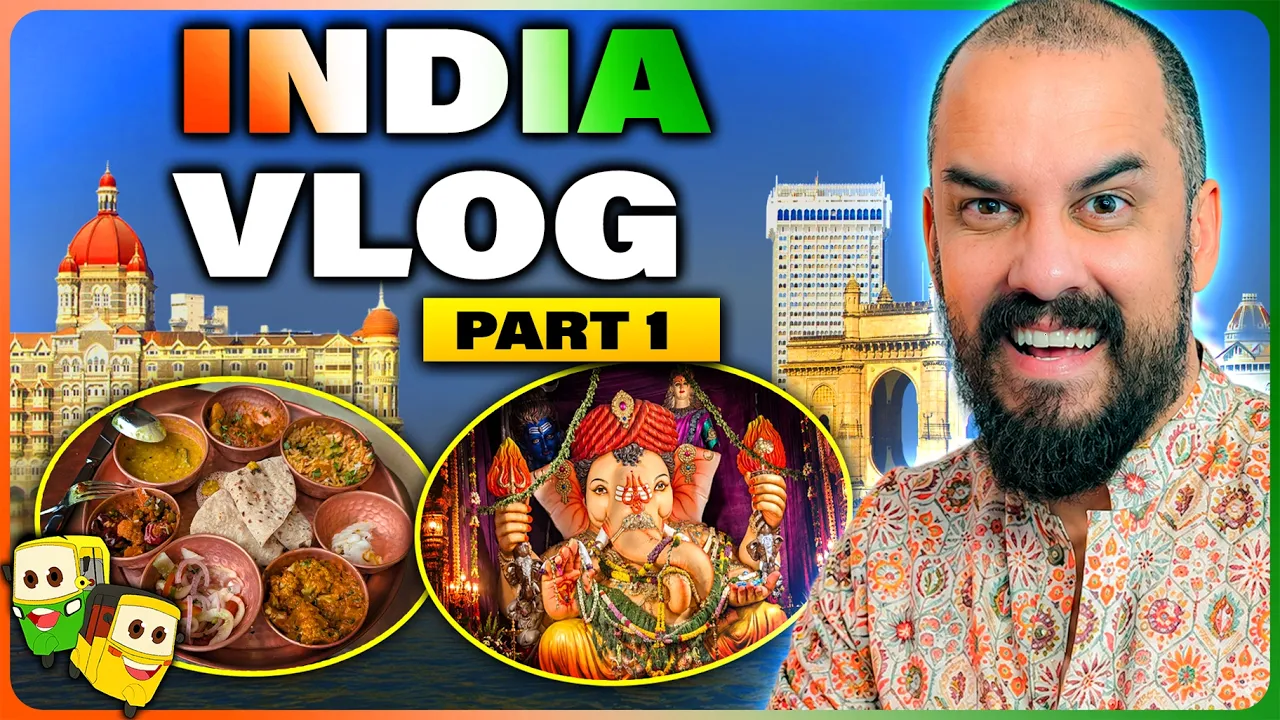
Adapted with AI from CineDesi's video of 5 November 2026 and checked against the video before publication. Editorial standards · Corrections
More from @cinedesi
All →


Make videos? Your next one could be an article here.
We turn your videos into articles under your name, linked back to the original. You keep 60% of what they earn, non-exclusive, and you can leave whenever you like.
Become a SubPlotter →