EVO 2004 Soulcalibur II finals: did RTD and Mick fix it?
The direct feed matches from EVO 2004 show how the two friends played all tournament, and how differently they played once the title was on the line
 Commentator's Curse FGC (AI-assisted)15 November 2026Editor: Digital Fox Talent Editorial TeamOn YouTube since 2025 · more than 2,000 subscribers

In 2004, two of the best Soulcalibur players in the world were accused of fixing the grand finals at EVO. Now that I've finally been able to see the matches from that tournament, I believe RTD and Mick were clearly sandbagging in that grand finals. One moment in particular, a character switch after a win, could change how you look at this scandal.
The organizers believed something was wrong but couldn't enforce their existing rules against the players. Soulcalibur II, the Namco fighting game at the center of the dispute, would then be left out of EVO's main lineup for the next four years. To judge the accusation, I compared how the two players competed against everyone else, how they played each other earlier in the tournament, and what happened when they met in the grand finals.
Soulcalibur II came into EVO 2004 with something to prove
EVO 2004 is best known for EVO Moment 37 with Daigo. Soulcalibur II had become one of the most popular fighting games of its generation, and its competitive community was fighting for recognition alongside the established Street Fighter scene. That wasn't always easy. Only a few months before EVO, people on the Shoryuken forums were arguing about why games like Soulcalibur should even be included at the tournament.
Strangely enough, one of the people defending Soulcalibur was Mr. Wizard. He pushed back against the idea that Soulcalibur II was nothing more than a button mashing game, and he argued that high level play required genuine skill. So the game arrived at EVO needing to prove itself, and the tournament produced some incredible competition.
Two of the players who made the biggest impact were RTD and Mick. RTD was known for one main character, while Mick had a reputation as a very dangerous Cassandra player. They were friends, and they were among the strongest players in the country. That friendship became a major issue when both men advanced to the grand finals.
Why spectators called the grand finals a mockery
After fighting through an entire tournament against some of the best players in the world, their championship match looked nothing like what spectators had been seeing. Instead of the serious competition people expected, they began using unusual characters, and the quality of play was immediately questioned. GameSpot's original coverage acknowledged the disappointing finish, even while praising the level of Soulcalibur competition elsewhere in the tournament.
People who were there weren't nearly as diplomatic. Within days of EVO ending, the Shoryuken forums were full of discussion about what had happened. One top eight competitor described Mick and RTD using characters they weren't known for playing, including Voldo, Nightmare and Ivy. He wasn't impressed at all and considered the whole thing a mockery.
The criticism wasn't only coming from competitors. An EVO staff member was frustrated too. In an August 3 discussion, he called the Soulcalibur finals a joke and raised the possibility of dropping the game entirely. "Last EVO, Soulcalibur 2 finals were pretty good," he wrote, before calling this year's finals a joke and asking: "How about Soulcalibur 2 get dropped altogether?" He added that between the complaining and the poor quality finals, it seemed the players didn't appreciate the time, money and heart that went into making the event.
The prize split rumors and the players' denials
There were also rumors that Mick and RTD had agreed to split their prize money. Splitting a tournament pot isn't necessarily the same thing as throwing a match. Players can decide how they want to share their winnings and still compete seriously. The accusation here was different: that Mick and RTD had deliberately stopped competing at the level they were capable of.
When Game Show Network questioned both players about the controversy, they denied that anything like that had happened. RTD insisted that they had selected characters they knew how to play and that they played the match out. Mick was more direct: "We fought. We actually fought." He added that they picked characters they were good with and played it out. So the players maintained that the championship was legitimate. EVO's organizers had a very different opinion.
How EVO responded with a new rule instead of a disqualification
Despite everything, RTD kept his championship and Mick remained the runner up. Neither player was disqualified, and the results weren't overturned. What makes the organizers' decision interesting is that in their original 2004 postmortem, they acknowledged there had already been a rule that might have allowed them to revoke the players' prize money. The problem was that the rule had been written too vaguely to enforce.
So even though they believed the match had been fixed, they weren't going to punish the players with a rule that hadn't clearly prohibited what they did. Nearly a decade later, Tom Cannon confirmed that reasoning. In a 2013 interview with Giant Bomb, he said the players had broken the spirit of the tournament, but the organizers weren't willing to punish them after the fact.
Rather than overturning the results, EVO made sure it wouldn't happen again by explicitly adopting a rule against collusion. Under it, players who intentionally underperformed or manipulated the result of a match could lose their titles and prize money. Another founder, Tony Cannon, also explained in the days after the tournament that EVO had captured high quality direct feed of the matches for its tournament DVD, along with material for player introductions and crowd reactions. That matters because, while everyone argued about the grand finals, the matches themselves had been preserved, and that is what I now have.
Soulcalibur's four year absence from EVO's main lineup
The controversy didn't end with a new rule. When EVO announced its lineup in 2005, Soulcalibur was mysteriously gone. It didn't come back in 2006, 2007 or even 2008, so four consecutive EVO tournaments passed without Soulcalibur in the main lineup.
It's important to understand that EVO's lineup was changing during this period. Other fighting games were gaining momentum, and the competitive landscape looked different with each new release. So we can't say the 2004 scandal was the only reason Soulcalibur wasn't invited back. But we do know the EVO staff openly discussed dropping the game immediately after the grand finals, and we know how badly the incident damaged its standing with the organizers. Soulcalibur wouldn't return to the main lineup until 2009, with Soulcalibur IV.
How Mick and RTD played when they were trying to advance
When you accuse two people of deliberately underperforming, you need to understand the level they were capable of. Start with Mick. GameSpot specifically highlighted one of his EVO 2004 matches, saying his Cassandra was able to deal with an opponent's evasive Talim, showing the kind of adaptability that made him such a dangerous opponent.
What stands out is the speed of the play. There's very little wasted movement, the stepping is strong, and the punishes are fairly optimal. It's rare that Mick even whiffs a move. He knows everything about that matchup. RTD shows many of the same qualities with his main character. Every movement and button press serves a purpose, and even though he's slightly more defensive than Mick, he's still able to control the match. Notice also that when he loses a game, he sticks with the character he's known for. That comes into play later.
There's another comparison that makes this even more interesting. Mick and RTD faced each other earlier in the same tournament, so we don't have to speculate about how these two friends play against each other. They know each other's habits and what the other is capable of, and in that earlier match they both want to win. This is how they've played each other in countless tournaments across the country. The same two players, at the same tournament, against the same opponent. The only difference is what was at stake when they met again.
RTD's character switch points to a gentleman's agreement
The key moment in the grand finals comes after RTD wins a game. He changes characters. He had just been on Ivy, which is strange enough, but now they're playing a Voldo mirror. To see why that matters, you need to know how tournaments worked then. EVO's rules were heavily influenced by arcade tradition. If you beat someone in the arcade, you stayed on the machine with the same character. The loser could put in another credit, pick someone else and challenge you again, but the winner stayed locked in.
When competitive fighting games moved to home consoles, that became the standard for tournament play: the winner stays with their character, and the loser gets the chance to switch. RTD wins a game and, instead of staying with the character he just won with, picks somebody else, and Mick continues to play under the normal winner lock rule. That shouldn't happen unless the players had already agreed to allow it. Mick and RTD appeared to have a gentleman's agreement that they could change characters regardless of who won.
That agreement alone doesn't prove they decided to throw the championship. But it does show both of them were operating under an understanding that let them depart from normal tournament procedure. Set against their earlier match, it takes on a new level of significance. We're no longer looking at an unusual character pick, but at two friends who appear to have agreed to play their grand finals under their own conditions.
My verdict on the EVO 2004 Soulcalibur II grand finals
It's pretty obvious to me, just as it was obvious to everyone else at the time, that neither of them was familiar with these characters. Their spacing is all off, there are a ton of whiffed buttons, and punishment is almost nonexistent. RTD maintained that they picked characters they were good with, and Mick insisted they fought. But the difference between the matches that got them to the grand finals and what they did once they got there is clear, and side by side, I think it becomes much easier to understand why the EVO organizers reacted the way they did.
I believe Mick and RTD were clearly sandbagging in that grand finals. The change in their gameplay is difficult to ignore, and RTD switching characters after winning makes it apparent they had some sort of gentleman's agreement. Does that prove exactly what was said between them beforehand, or whether they had a separate agreement about the prize money? No. To be honest, that part doesn't matter much.
None of this is a knock on RTD or Mick, and the official record will always recognize RTD as the EVO 2004 Soulcalibur II champion. But I believe the evidence supports the original accusation that their championship wasn't contested seriously.
Watch the original
@commentatorscursefgc · YouTube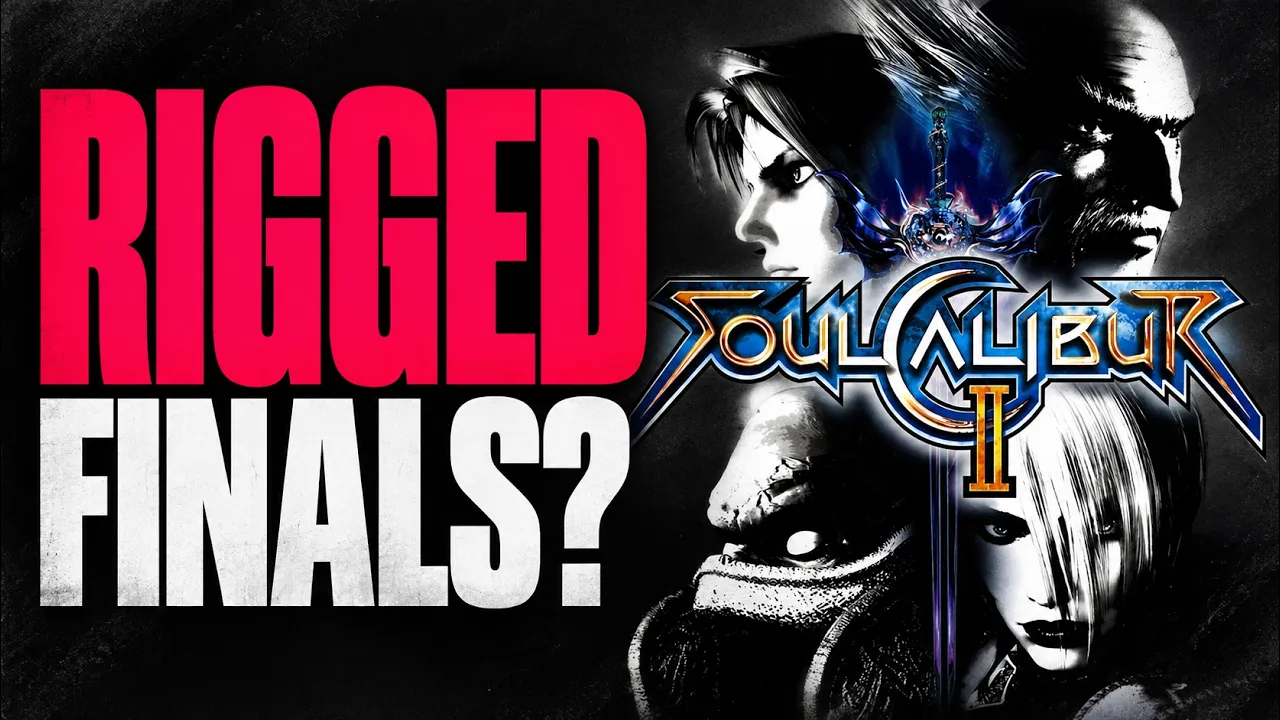
Adapted with AI from Commentator's Curse FGC's video of 12 November 2026 and checked against the video before publication. Editorial standards · Corrections
More from @commentatorscursefgc
All →

Make videos? Your next one could be an article here.
We turn your videos into articles under your name, linked back to the original. You keep 60% of what they earn, non-exclusive, and you can leave whenever you like.
Become a SubPlotter →