How Japan Crowned a National Street Fighter II Champion in 1991 While America Was Still Catching Up
Arcade crowds, train travel and Gamest magazine turned World Warrior into a national hierarchy before the rest of the world knew competition had started
 Commentator's Curse FGC (AI-assisted)4 October 2026 · Editor: Digital Fox Talent Editorial Team
In 1991, Japan solved competitive Street Fighter, and the rest of the world didn't even know the competition had started yet. By the end of that year, Japan had done what no other country had yet achieved: it crowned a national Street Fighter II champion, and almost nobody outside the country understood what that meant.
It did not happen publicly, theatrically, or with the world watching. While the United States was still reacting to Street Fighter II as a cultural explosion, Japanese arcades were already organizing it, ranking it and eliminating players from it. Inside crowded game centers in Tokyo, Osaka and Nagoya, the strongest players were not simply winning matches. They were surviving a filtration system that repeated every week. Arcade crowds watched the same names keep winning, and local reputations spread to other cities.
Street Fighter II made arcade results repeatable, and Japanese crowds turned that into rankings
When Street Fighter II released in 1991, Capcom expected popularity. They didn't expect filtration. Before this game, arcade competition was sporadic. Players chased high scores or competed in isolated rivalries that rarely extended beyond a single building. Street Fighter changed that because the outcomes were repeatable. If a player understood spacing, they would win again. If they mistimed their defence against jumps, they would lose again. The game didn't hide weaknesses. It exposed them.
Japanese arcade operators recognized this almost immediately. Cabinets that once sat quietly against side walls were moved to central floors where crowds could gather. Players stood shoulder to shoulder around the cabinet, with coins stacked along the bezel waiting for the next challenger. Spectators watched matches, discussed results, and remembered who kept winning.
When those same players continued beating everyone else, the crowds began creating something that had rarely existed in arcades before: unofficial rankings. That moment matters because once results repeat publicly, competition stops being casual. It becomes a hierarchy.
Tokyo, Osaka and Nagoya built rival scenes, and train travel made reputations testable
Japan didn't begin with a national league. It began with regional ecosystems. Tokyo developed aggressive players who thrived under pressure. Osaka produced defensive specialists who controlled space differently. Nagoya built its own local reputations. Each arcade believed it had the strongest players.
But Japan had something that made those claims testable: travel. Players could board a train in Tokyo and challenge another city's arcade in hours. Victories followed them home, and so did losses. Reputation became portable, and portable reputation demands verification. If a Tokyo player using Guile dismantled Osaka players, the story spread before he even returned home. If a Kansai player survived Tokyo pressure, that result mattered. By mid 1991, the question was no longer local. Who was the strongest in Japan?
Gamest magazine turned word of mouth into a permanent national record
This is where Gamest magazine changed everything. Gamest didn't sensationalize Street Fighter competition. It documented it. The magazine began publishing tournament results, recording win streaks, printing brackets and naming regional champions. What had once existed only as stories passed between players became permanent records. "Before Gamest, dominance was anecdotal. After Gamest, it was archived."
Documentation changes behavior. Once results are printed nationally, players treat competition differently. Wins become proof. Losses become public. Arcade tournaments began feeding into larger events supported by Gamest. Regional winners advanced, and results were shared across the country.
Without announcing a formal league, Japan effectively created one. By late 1991, the Gamest Cup functioned as a national championship in everything but name, and everyone serious understood it.
World Warrior rewarded defence, and Guile fit that environment
Understanding the version of Street Fighter being played is important. This was World Warrior, the original arcade release. The game was slower, more rigid and far less forgiving than later versions. Character advantages were pronounced. Defensive play was disproportionately rewarded. Mistakes were expensive because momentum was difficult to recover.
Guile exemplified this environment. His Sonic Boom controlled horizontal space and dictated pace. His Flash Kick shut down reckless jump ins. A disciplined Guile could force opponents to approach on unfavorable terms. In single elimination tournaments, forcing movement is control, and control wins tournaments.
The 1991 Gamest Cup final rounds felt inevitable for its Guile champion
By the time the 1991 Gamest Cup reached its final rounds, randomness had already been filtered out. The bracket wasn't full of unknowns. It was full of players who had survived regional competition, and each round reduced volatility. Arcade crowds in that era didn't erupt constantly. They leaned forward. The tension was quieter, but heavier.
As the bracket tightened, one pattern became impossible to ignore. Match after match, one Guile player dictated the pace. Opponents were not being overwhelmed. They were being forced into mistakes. He created defensive walls with Sonic Booms, punished impatience, and controlled space until opponents ran out of options. In World Warrior, that style is brutally effective, because when an opponent is forced to move first, the Guile player controls the match.
When the final result was recorded, the outcome didn't feel chaotic. It felt inevitable. Gamest printed the results, naming that Guile player as Japan's first nationally recognized Street Fighter champion. He was not crowned through spectacle. He was confirmed through documentation.
Japan led because of structure, not individual talent or mystique
There's a misconception about early fighting game competition. People assume dominance comes from individual talent, but competitive ecosystems rarely work that way. Dominance comes from structure. Japan had already built several components the United States lacked: repeatable tournament formats, cross regional competition, national documentation, travel based verification, and strategic discussion through print media.
The United States had strong players in 1991. What it didn't have was consistent filtration. There was no nationwide documentation comparable to Gamest, and no expectation that regional dominance had to survive systematic intercity testing. "Japan wasn't ahead because of mystique. Japan was ahead because it institutionalized competition first."
The first champion mattered as proof that Japan's system worked
It's tempting to mythologize pioneers, but this champion's importance is structural. He represents the first successful output of Japan's competitive filtration system. His Guile minimized risk and controlled space, relying on patience and reaction rather than spectacle. That approach thrives in single elimination environments where volatility eliminates careless players.
His victory demonstrated something far more important than a single champion: Japan's system worked. The strongest players survived multiple layers of competition, the results were recorded, and the process could now be repeated.
Champion Edition scaled a pipeline Japan had already built
When Champion Edition accelerated Street Fighter's gameplay in 1992, Japan didn't need to reorganize its competitive structure. The infrastructure already existed. More players entered tournaments, regional rivalries intensified, and new versions of the game fed into the same competitive pipeline. National competition didn't need to restart. It scaled.
By the time international rivalries emerged later in the decade, Japanese players had already survived years of domestic filtration. They were battle tested before the world ever compared them, and that difference begins here. Modern fighting game history often focuses on moments: upsets, rivalries, international showdowns. But moments rarely appear on their own. They are produced by systems.
In 1991, before most of the world treated Street Fighter seriously, Japan proved that national competitive fighting games were sustainable. They documented results, repeated tournaments and crowned a champion who was not just the first national winner but confirmation that a countrywide hierarchy could exist. Once hierarchy exists, comparison becomes inevitable, because once one country crowns a champion, another country eventually asks, "Can he beat us?"
Do you think early fighting game dominance came down to structure, as I argue here, or does individual talent deserve more of the credit?
Watch the original
@commentatorscursefgc · YouTube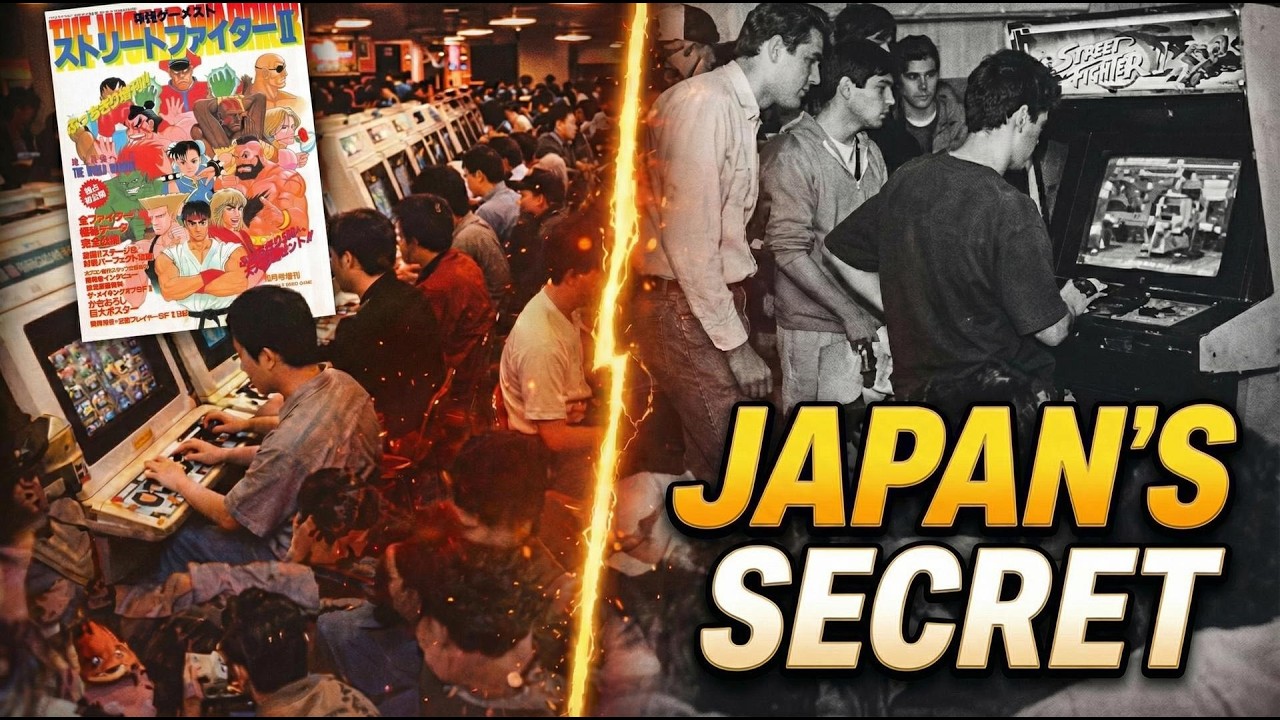
Adapted with AI from Commentator's Curse FGC's video of 14 March 2026 and reviewed by Digital Fox Talent before publication. Editorial standards · Corrections
More from @commentatorscursefgc
All →


Make videos? Your next one could be an article here.
We turn your videos into articles under your name, linked back to the original. You keep 60% of what they earn, non-exclusive, and you can leave whenever you like.
Become a SubPlotter →