Fallout season 2 episode 6: is the Enclave the other player?
Wilzig's threat to Barb, a super mutant's warning and Hank's obedience factory all point to a hidden government steering the apocalypse

Episode 5 of Fallout's second season plants the question like a landmine, and episode 6 answers it: the other player at the table is the Enclave. Fallout is Prime Video's series that premiered in 2024, starring Ella Purnell, Walton Goggins and Aaron Moten. In episode 5, Robert House sits there calm on the surface, but you can tell he's rattled underneath. The numbers don't add up, and his models can't see the hand that's steering the wheel. So he says it out loud. There's another player. Not Vault-Tec, not House, not China, but something that can move pieces without ever showing its face.
This season, every faction has felt loud, messy and obvious. The Brotherhood marches around like they own the place, the NCR and Legion are still stuck in their forever war cosplay, and Vault-Tec executives treat the apocalypse like a brand refresh. That's why the Enclave reveal hits different. It explains why the world feels like it was destroyed by people who weren't even in the room. It explains why Barb, for all her sins, never quite feels like the final boss. And it explains why Hank MacLean, who thinks he's building peace, is reinventing a cage with better lighting.
Fallout episode 6 shows the end of the world as Vault-Tec corporate meetings
The episode opens in the past, and it's almost funny in the darkest way, because the end of the world looks like corporate meetings that should have been emails. Barb sits through pitch after pitch where people talk about nuclear fire like they're designing a billboard. Then it gets worse. They talk about the vault water systems like they're discussing office printers: a 30% fail rate, and they'll know which ones will fail before they install them. That means someone is deciding ahead of time which vault gets to die of thirst.
That reframes the present day vault storyline. The water crisis in Vault 33 doesn't feel random anymore. It starts to feel like an old choice coming due, a curse that was always scheduled to activate. It also tells you something simple about how Vault-Tec thinks. Human lives are variables. Loss is acceptable. Suffering is baked into the plan.
Robert House's automated man is the blueprint for Hank MacLean's plan
Then House shows up, or at least the public facing version of him, with a gift from RobCo: the automated man. The show plays it like a little sci-fi toy at first, but episode 6 makes clear it's the blueprint for everything Hank is doing now. Control chips, behavior changes, people turned into calm little workers who smile on command. The trade is that Vault-Tec gets the chip tech and House gets access to cold fusion for his private New Vegas project.
The key detail is that nobody in that scene feels like the person holding power. Barb looks uneasy. Hank is taking notes like a guy desperate to matter. Even House feels like a messenger, not a king. It's like watching chess pieces talk themselves into believing they're the players.
Wilzig's elevator threat shows Barb is being coerced
Then comes the elevator scene, the one that makes the title click. Barb steps into the lift, and there's Wilzig, the man you thought was done in season 1. Now he's standing there in the past like he's always been part of this machine. He tells her flat out that she's replaceable. If she forgets her place, she dies and her family dies.
That's the moment episode 6 stops letting you blame Barb as the single monster. This isn't just corporate evil. This is coercion. Barb isn't pitching genocide because she's bored. She's being boxed in by something bigger than Vault-Tec, something that can threaten her life casually, like it's HR policy. Wilzig then delivers the message that connects straight back to season 1's infamous boardroom line: Barb has to tell the gathered corporate leaders that the only way to guarantee results is to drop the bombs themselves. Now we know that line didn't begin as Barb's brilliant idea. It was handed to her like a script. The Enclave is the hidden hand that pushed the table toward the apocalypse.
Why the Enclave is the perfect other player in Fallout
If you're coming at this only from the show, the Enclave reads like the world's nastiest magic trick: a group that hides behind flags and patriot language while doing the kind of things that make Vault-Tec look like amateurs with clipboards. In the wider Fallout lore, the Enclave presents itself as the continuation of the US government after the Great War. Continuity of government, deep state survivors, the real America. But it's also tied to brutal power grabs and a worldview where anyone outside their circle is disposable.
That's why they're the perfect other player. Vault-Tec is loud. RobCo is loud. The Brotherhood is loud. The Enclave doesn't need to be loud. They only need to nudge things, apply pressure, and let everyone else do the dirty work while thinking it was their own idea.
Barb and Cooper's flashback argument turns on Janey
This makes Cooper and Barb's flashback argument hit harder. Cooper looks at Barb like she's the devil in a dress, and yes, she's involved in some horrifying stuff. But episode 6 forces you to sit with an uglier truth: Barb is terrified too. She keeps coming back to one thing. If she doesn't play her part, her daughter Janey dies.
The show doesn't excuse her, but it does make her human in the worst way, because many people can justify a terrible choice when you hold their child over a cliff. That's the emotional trick of the other player. It doesn't make Barb good. It makes her smaller than Cooper believed. She isn't the storm. She's someone trying not to drown inside it.
Cooper the Ghoul is slipping until a super mutant saves him
In the present, the story does its own reveal through body horror and heartbreak. Cooper, the Ghoul, is still impaled, desperate for his vials, and slipping. You can hear it in the way he repeats his own name, Cooper Howard, like he's trying to anchor himself to reality, and then the one name that still makes him sound like a dad instead of a monster: Janey. It's easy to watch the Ghoul as a cool gunslinger and forget what the show keeps whispering. Ghouls don't just become evil. They break, they fade, they lose themselves. For the first time in a while, Cooper looks like he's losing the fight.
Then the super mutant arrives, and Fallout goes full myth mode, like a monster out of a church painting stepping into the story. A massive figure drags Cooper to a church filled with gore bags, hangs him up like a grim display, and heals him by stuffing uranium into the wound like it's medicine. The super mutant is played by Ron Perlman, the voice tied to Fallout's most famous line.
The real point of the scene is that the mutant names the Enclave as the enemy. He calls their kind abominations and talks like someone who's been used and discarded. He tells Cooper a war is coming and they need him healthy for it, and he talks about revenge on the people who set all this in motion. Cooper, stubborn, angry and half feral, refuses. He says he works alone. The irony is that the wasteland is about to force him into a party anyway, because Dogmeat leads Maximus and Thaddeus right to him. Their reunion, with Maximus and Cooper trading the same curse word and Thaddeus waving like it's a play date, works as comedy, but it also matters structurally. Cooper was just told he'll need allies, and two show up immediately, whether he wants them or not.
Lucy discovers Hank MacLean's factory for obedience
Lucy and Hank's storyline is where the episode gets quietly terrifying. Lucy wakes up in a replica of home built inside Vault-Tec offices. It's like Hank is wrapping her in nostalgia the way a snake wraps around prey: soft, familiar, comforting and completely controlling. Outside the room she sees legionaries who are polite and friendly, the kind of nice that feels wrong on them. Then she notices the devices in their necks, and everything clicks. Hank didn't only run to Vegas and hide. He built a factory for obedience.
Lucy walks through an office full of synchronized workers making more control devices. They move like they've been edited into the same rhythm, smile the same and speak the same. It feels like a cult without the chanting. She finds Hank in a simulation room, in a fake vault home, acting like they're doing book club. He brings up All Quiet on the Western Front and talks about soldiers dying for nothing over inches of land, then compares it to the surface, where everyone fights over scraps, bottle caps and uniforms. He delivers the Fallout theme right into Lucy's face, war never changes, except he uses it to justify a new kind of war: war against free will.
Lucy tries to arrest him with a knife to his neck, and Hank surrenders, even cuffing himself. For a second you might believe he's broken. But he isn't surrendering because he's guilty. He's surrendering because he thinks he's about to win, because Lucy's weakness has always been compassion. He walks her through his peace project like a museum tour, introducing former murderers, cannibals and enemies from rival factions who are now pencil sharpeners, trail mix makers and happy coworkers. Lucy tells them they're free to go, and they say no thanks, they like it here. That's not just a statement that mind control is evil. It's the show saying some people will choose the cage if the cage feels safe.
The stapler fight proves Hank's system works
Then the snake oil salesman shows up with two people who haven't been fixed yet, one from the NCR and one from Caesar's Legion. Lucy tries to do the moral thing and let them go as they are, with no chip activation and no forced personality rewrite. For about 10 seconds it looks like she's right. Then the Legion soldier attacks, grabbing a stapler and stapling the NCR man's head. Lucy stabs him with a pencil, but it doesn't stop him, and Hank stands there like a teacher waiting for his student to admit the answer on the board.
So Lucy pushes the button. The devices activate, the violence shuts off like a light, and the two enemies become instant friends. Hank smiles like he's proved peace is possible if you're willing to remove the part of people that chooses. That's the real horror of episode 6. Not that Hank is evil in a mustache twirling way, but that his system works.
Vault 33 and Vault 32 echo the theme of control
That circles back to the Enclave, because now you can see the pattern. Control isn't a side plot. It's the theme. Vault-Tec experiments with humans, the Enclave operates above it all, and Hank is building a mini version of the same philosophy: people are a problem, so we'll solve people.
Even the vault storylines echo it. Reg's support group grows into a weird little movement, partly because people are scared and partly because snacks taste better than truth. Overseer Betty shuts it down, citing the water shortage, and it becomes a power struggle. Reg points out the ugly secret nobody wants to say: the vault is built on favoritism, on chosen bloodlines, on who your parents were. When he calls out that Betty is from Vault 31, you can feel the room shift. In Vault 32, Chad learning from a poster that he's getting married the next day is funny for a second, then creepy, because it suggests Steph isn't asking. She's arranging, controlling the narrative like it's an election she can rig with flyers and smiles.
The Enclave, FEV and the super mutant connection
Episode 6 doesn't just introduce the Enclave as a name drop. It uses them to reframe the whole prewar timeline. If Wilzig is delivering threats and instructions, then the Enclave isn't only something that survived the apocalypse. It shaped it. It's the reason Barb is terrified, and the reason dropping the bombs themselves starts sounding less like Vault-Tec arrogance and more like a plan forced into motion by an even higher tier of power.
In the wider Fallout world, the Enclave is closely tied to the Forced Evolutionary Virus, or FEV, which creates super mutants and many of the franchise's mutated nightmares. In the lore, FEV is a prewar bioweapon project designed to evolve organisms by rewriting their DNA. So when episode 6 drops a super mutant into the story and has him point straight at the Enclave, it's not random fan service. It's the show drawing a line from prewar secrets to postwar monsters, telling you that the thing you're scared of was built on purpose. The world didn't end because humans are chaotic. It ended because a small group of powerful people decided chaos was useful.
Hank MacLean was hiding the cold fusion all along
That's also why Hank feels like a pawn in episode 6. Even while he acts like the mastermind of his own little kingdom, in the past he's a note taker, the guy in the corner watching Barb and House talk. Later we find out the cold fusion was hidden inside him the whole time, like a walking safe deposit box. Not because he was important, but because he was invisible. That's such a Vault-Tec move and such an Enclave move too. Real power doesn't always sit at the head of the table. Sometimes it hides inside the guy holding the clipboard.
When Cooper drugs Hank in the past, opens the case and finds the injector instead of the cold fusion itself, it's a perfect little gut punch. Cooper thought he was grabbing the magic prize. Instead he's holding the tool that moves the prize, and Barb walks in, takes it, and uses it like she's already accepted she's trapped inside this game.
The Enclave is the hand behind the hand
By the end of episode 6, the season's endgame feels clearer. Lucy has Hank in handcuffs, but Hank still has the philosophy that can infect her: control can look like kindness. Cooper has been rescued by a super mutant who is telling him to pick a side because war is coming. Maximus and Thaddeus are back in the mix, chasing the idea that cold fusion should go to someone good, even though this world keeps proving good is fragile. Above them all, the Enclave hangs like a shadow that has stepped into the light.
Episode 6 answers the question but makes it bigger. If the Enclave was the hand behind the hand, what is the real goal? Dropping the bombs isn't only destruction. It's a reset button that wipes the board so the right people can rebuild in their image. The game was never fair. It was a trap disguised as a plan, and Barb, House, Hank, Cooper and Lucy have all been stuck inside it, making the best choices they can while the walls close in. If the super mutant is right and war is coming, this is where Fallout stops being about who you can trust and becomes about what happens when the hidden government decides it's time to take the world back.
That's what should chill you most. Episode 6 reveals the real hierarchy. Vault-Tec isn't the top of the food chain, and neither is House. Hank is a pawn who got promoted to useful. And Cooper has realized the people who ruined his life weren't only monsters. They were managers with a bigger boss. Now the hidden hand is ready to close into a fist.
What other creators are saying
More on Fallout →From a cushy bunker childhood built on her father's lies to a mercy killing that changes everything, Lucy's journey takes her from naive to wiser without losing her kindness
Bethesda confirms Obsidian is working with it on a new Fallout project, reportedly led by the director of New Vegas, but layoffs, cancellations and a lot of unknowns mean the excitement comes with caveats.
Watch the original
@filmparadise · YouTube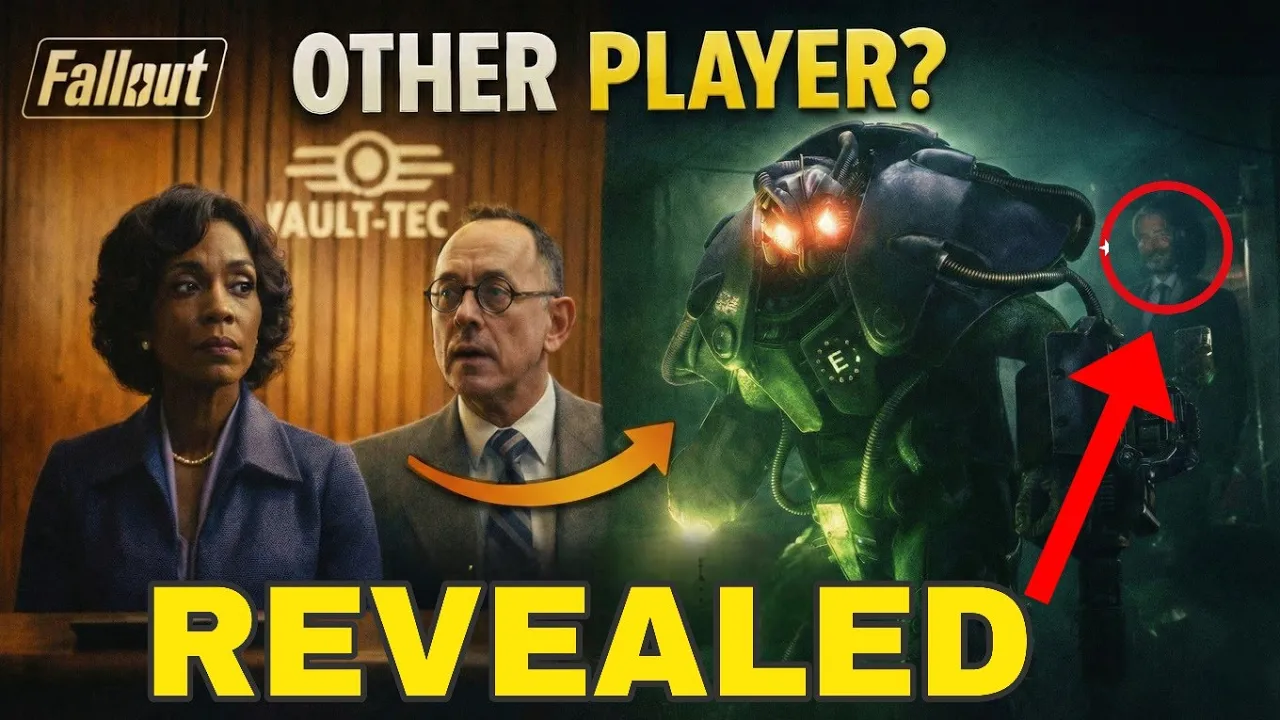
Adapted with AI from Film Paradise's video of 22 January 2026 and checked against the video before publication. Editorial standards · Corrections
More from @filmparadise
All →

Make videos? Your next one could be an article here.
We turn your videos into articles under your name, linked back to the original. You keep 60% of what they earn, non-exclusive, and you can leave whenever you like.
Become a SubPlotter →