MobLand season 2 episode 7 ending explained: Harry's 3 a.m. call
Conrad's grief, Maeve's manipulation of Gina and Eddie, and a casino standoff with Frankie set up a cliffhanger that could change how cheering Harry on in the casino feels

Conrad buries his dogs, and for about three seconds I feel sorry for him. Then I remember exactly who is holding the shovel. MobLand Season 2, Episode 7, "Ace of Spades," makes me grieve alongside a man whose response to any slight is to make someone else's family grieve. That's where this episode gets me, and it ends on a call from Harry to Frankie's son Michael that leaves the whole hour hanging on 3 a.m.
MobLand (2025), starring Tom Hardy, Pierce Brosnan and Helen Mirren, spends this episode letting terrible people look wounded before the casino, and before Harry rattles Frankie.
Conrad's grief over his dogs comes with a warning
Conrad has lost his dogs. Maeve has lost her horses. Their home has been violated. The extra security around the property feels necessary, but it also feels embarrassing. All that money and all that reputation, and now they need to turn the place into a checkpoint.
Grief is completely different when the grieving person believes ownership gives them permission to do anything. That's the trap here. It's possible to sympathize with the loss without approving of whatever revenge Conrad wants to call justice. That distinction is uncomfortable. Good. The episode should make its audience work for that sympathy.
Then there's the old story about the man who kicked Conrad's dog and ended up locked in a basement all winter. Oh, right. So this tenderness has always lived next to cruelty. The animals are loved. A human being who gets in Conrad's way becomes something he can store away.
Conrad's demand for Harrigan family unity sounds like obedience
His call for family unity makes sense as an emergency response. As a relationship, I don't believe it. You can't announce that everyone's grievances are suspended and expect the people you've hurt to stop remembering. If you're Kevin or Seraphina, what you're really hearing is a father demanding obedience at the moment he needs help.
The Harrigans head back to London to test what loyalties they have left. Harry goes with Kevin, and Conrad goes with Paul. That split makes me nervous immediately, because these men don't share the same definition of getting the job done. Conrad is likely to make the job bigger while Harry is still trying to finish it.
Frankie goes over Colin Tattersall's head to Kat
Speaking of people trying to prove themselves, Frankie bypasses Colin Tattersall and goes straight to Kat. She gives him a week to deliver results. I see that deadline as pressure, however flattering her interest might be. Frankie can be terrifying in a room and still be replaceable to the person funding his ambitions.
This is where I want to push back on the idea that every bold move means someone is winning. Going straight to the boss looks impressive. Fine. But now the boss knows exactly who to blame. There's a reason middlemen stay in these arrangements. Someone has to absorb the complaints when the grand plan turns into a mess. I suspect cutting Colin out makes Frankie more vulnerable to him later on.
Harry finds Donnie dead and Jan unreachable
Pay attention to withheld information before expecting any dramatic betrayal. A useful warning that arrives late can be as devastating as a bullet. Harry gets information from JoJo, follows Donnie's address and finds him dead. The gun Jan left behind is there too. Harry gathers the evidence, including Donnie's phone and keys, and brings in help to clean up. Jan can't be reached.
I like how bad this situation is for Harry. Professionally, he knows how to handle a crime scene. Personally, what on earth is he going to do with this? Cleaning the room won't tell him where his wife is or what she's thinking. The phone is more exciting than the body right now, because it probably links conversations people were keeping separate, and someone in those messages must be very nervous.
Jan's absence also changes how to read Harry's calm later. In the casino, he's a man with an unfinished emergency somewhere else, and every extra minute Frankie spends performing is another minute Harry can't spend looking for her. And no, I'm not ready to treat Jan's shooting as part of a tidy escape plan. A decisive act? Yes. A safe destination? Not yet. Those are two very different things, especially in this family.
Seraphina asks Charlton for 10 million euros
While Conrad wants everyone back under his authority, Seraphina asks Charlton to invest 10 million euros in her. Bella is encouraging a new version of the Harrigan operation, and Seraphina is already moving in that direction. At last, a conversation about the real cost of independence. I enjoy an angry speech as much as anyone, but a speech doesn't pay staff or hand anyone a business.
Asking for money makes Seraphina's ambition concrete. It also gives Charlton something to bargain with. That's the part I can't stop thinking about. If your freedom depends on someone else's investment, how much freedom does it buy? Getting away from Conrad's mood swings is the right instinct, but what she promises in return matters just as much. Otherwise she might spend years only changing the name of the person she has to please.
Bella's encouragement matters because it makes this feel like a possibility family members can actually discuss. Once leaving becomes something people can talk about, Conrad has a problem that intimidation alone might not solve. He can punish a conversation. He can't make everyone forget the alternative.
Maeve's plan for Gina to stage a suicide attempt
Then Maeve gets to Gina. My goodness. After everything that girl has survived, Maeve suggests Gina stage a suicide attempt as a way to pull Harry away from the Harrigans. She treats his worry for his daughter as something she can switch on when it suits her.
I have to stop on the sheer contempt in that idea. Gina's distress is being used to serve someone else's interest. Maeve offers her no way out. She's trying to load the girl with the responsibility of moving a grown man. Gina's apparent agreement doesn't settle what she'll do. Agreement under pressure can mean fear, calculation, confusion or genuine intent. Me? I hope she tells Harry.
The hateful part is how a coercive person can make refusal look like selfishness. Convince someone that their suffering is the only way to save their father, and suddenly protecting themselves feels like letting him down. That's the emotional trick here, and it makes my skin crawl.
Maeve works on Eddie's wish to escape
Maeve also digs into Eddie's desire to get out, questions his capacity for violence and makes leaving the family sound deadly. His searches give her something private to use against him. This isn't a loving attempt to prepare him for the world. It's someone making the world outside her control seem impossible.
Questioning whether he really killed Tommy is a malicious way to provoke him, because it invites him to defend his identity by proving he can be violent. I'd be angry if Eddie took that bait, but I understand why it might work on him.
Compare these conversations with Seraphina looking for funding. One person is exploring how to leave. Another is being told that leaving means death. The real question is whether anyone can make a decision without Maeve turning it into a loyalty test.
Paul's kidnapping and the warning word Harry hears
Frankie uses a dancer Paul knows to lure him outside. Conrad leaving Paul on his own created the opening. Paul is kidnapped and tortured, then forced to make a call about a supposed chance to catch Frankie. Wendy, the dancer's roommate, can help for 60,000 pounds at a midnight meeting at the Riviera Palm casino. It's a very convenient story. So convenient that I'd have been yelling at the TV even without the warning Paul manages to slip through.
There's an understanding between Harry and Paul about that word, and Harry recognizes the distress signal. I prefer that to a miraculous rescue clue falling out of someone's pocket. There's a choice built into it. Paul has to talk convincingly enough to survive the call while making Harry understand his words can't be trusted.
It also lets Paul contribute to his own rescue. He's terrified and physically restrained, but he still manages to send a message. I wish more hostage scenes remembered that frightened people can think. Fear doesn't erase intelligence. Sometimes the whole drama lies in seeing someone try to use the little freedom they have left.
Harry and Kevin see the trap. Paul is also a source of information Frankie can keep draining, so leaving him there has consequences beyond abandoning a friend. Harry goes in alone. Would I? No chance. I'd stay outside inventing weak reasons for someone else to go first. But Harry's choice makes sense. Knowing there's a trap doesn't make the person inside it expendable.
Frankie kills the dancer at the Riviera Palm
At the casino, Frankie offers Harry a place at his side. Harry refuses. Then the dancer apologizes to Paul, and Frankie kills her. This is where the scene stops being an entertaining clash between characters. A villain's excess is fun until the show makes you feel the price of being in his orbit. She was useful only until she wasn't. Taking part gave her no protection at all.
Then there's the message that sends to anyone Frankie hopes to recruit. If cooperation ends like this, why would the next person believe his promises? Terror can guarantee an immediate response, but it's a miserable foundation for trust. I'd like to see that weakness matter later, rather than every frightened helper obediently walking toward the same arrangement.
Her apology complicates things. It doesn't erase what she did to Paul, but it stops her from being only a tool for getting him to the casino. There's a person trying to say something before Frankie decides the conversation is over.
Harry's leverage: Frankie's son Michael in Newgate prison
The standoff shifts when Harry mentions Newgate prison. Frankie's son Michael is locked up there for possession with intent to supply. Frankie brushes it off and tries to convince Harry the threat is worthless. Harry doesn't buy the act.
Here's the problem with Frankie's position. A man can be disappointed in his son and still be terrified of losing him, and those feelings live in the same person all the time. Calling Michael a burden doesn't prove Frankie would welcome his death. It only tells us what Frankie needs Harry to believe right now.
But Harry is gambling too. There's no universal rule that every father protects his child. This show gives me plenty of reasons not to trust that comfortable assumption. Harry has found a possible weak point. He still has to test it in conditions where a mistake could get him killed.
Russian roulette beside a real roulette wheel
Frankie then pushes the standoff toward Russian roulette next to an actual roulette wheel. Is it subtle? No. Do I mind? Not much. The setting makes the argument physical. How much risk will each man take before the other believes him?
I have limits on Harry's apparent immunity, because if he walks into every impossible situation and the universe rearranges itself for him, the suspense eventually dies. What makes this work is that his composure never turns into total certainty. A calm person can still make a catastrophic bet.
When Harry points his gun at Frankie, Frankie's reaction blows the scene apart. He lets Harry and Paul leave. That's the result Harry needs, but it doesn't make Frankie harmless. Humiliation can make a dangerous person more reckless, especially with witnesses around. Outside, Paul admitting he wet himself is exactly the human reaction this scene needed. Thank you. His body knows what just happened, and you can laugh with relief without pretending the experience has suddenly become funny for him.
What Harry's 3 a.m. call to Michael could mean
Then Harry calls Michael, with a warning that he'll be killed at 3 a.m. Wait, slow down. Harry already got Paul out. He could have settled for threatening Frankie. Instead he planted fear directly in Michael's night, and the relief drains out of the room at once. The deadline is clear. The outcome isn't. The episode ends before that hour arrives, and that's the cruelest thing the show could have done to me.
My first read is that Harry wants to shake things loose. He warned Michael, and maybe Michael calls his father. Frankie then has to make arrangements, call people and expose who he trusts. A reaction driven by fear could give Harry information.
The worse possibility is that Harry intends to go through with it and wants Frankie to live in a state of waiting. That would change how I feel about cheering him on in the casino. Rescuing Paul would still be a good result, but it doesn't justify treating someone else's son as an acceptable payment. The difference between threatening a possibility and carrying it out is essential here. A living Michael might stay useful leverage. A dead Michael could leave Frankie with nothing to lose, and Harry should understand that better than anyone.
That raises the question of whether he wants a frightened father, an exposed network, or revenge worth the consequences. And what about Michael himself? The next episode should let him be a person before everyone decides what his life is worth, because we spent this whole hour seeing people debate how someone else can be used, and their certainty that they're entitled to do it is exhausting.
Harry, Paul is beside you now. You've already saved one man. Please tell me this call is your way of keeping someone else alive, because if 3 a.m. comes and you let it happen, I'll remember exactly how happy I was when you pulled that gun on Frankie.
Watch the original
@filmparadise · YouTube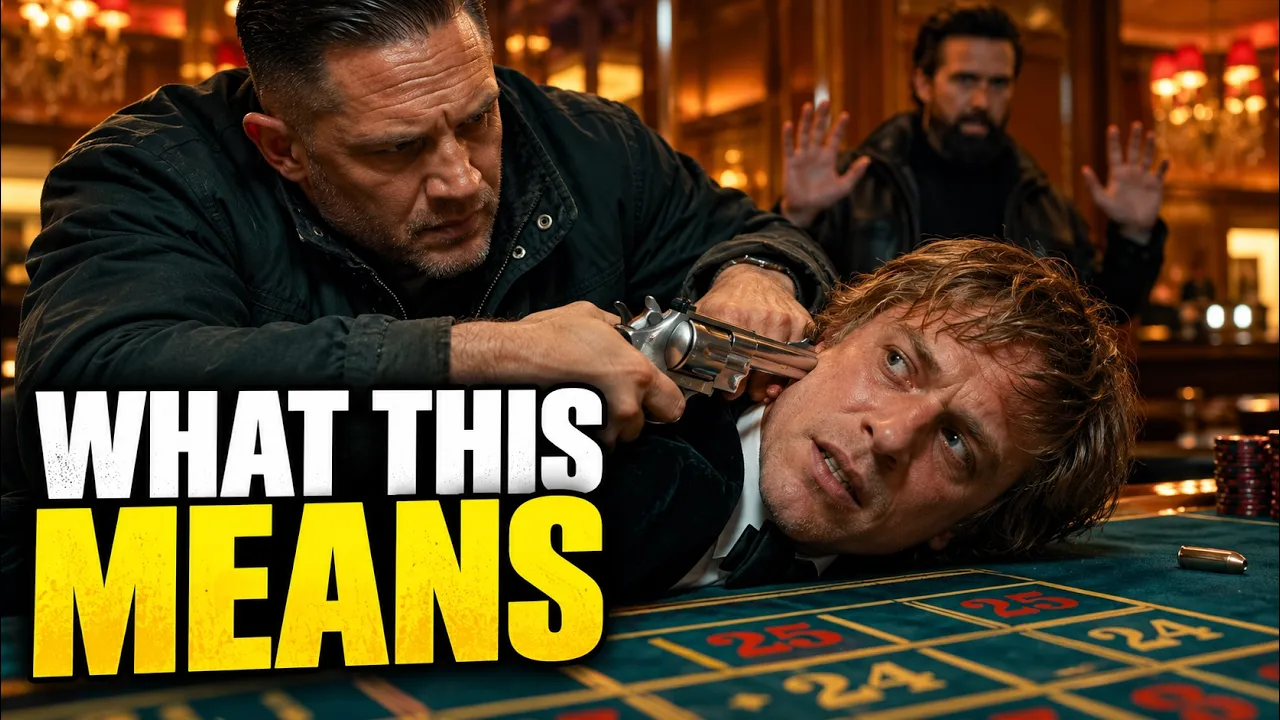
Adapted with AI from Film Paradise's video of 30 October 2026 and checked against the video before publication. Editorial standards · Corrections
More from @filmparadise
All →

Make videos? Your next one could be an article here.
We turn your videos into articles under your name, linked back to the original. You keep 60% of what they earn, non-exclusive, and you can leave whenever you like.
Become a SubPlotter →