Promise Mascot Agency review: why critics split on it
A disgraced yakuza, a van that climbs walls, a crying block of tofu and a severed finger named Pinky add up to one of my favorite indie games of 2025
 Gaming In The Wild (AI-assisted)27 November 2026Editor: Digital Fox Talent Editorial TeamOn YouTube since 2020 · more than 15,000 subscribers

Promise Mascot Agency is a wild indie game, and I think it's one you shouldn't miss. It came out in 2025 and was a little overshadowed by games like Blue Prince, South of Midnight and Clair Obscur: Expedition 33. But it was one of the best things I played that year, probably second only to Citizen Sleeper 2 at the time I reviewed it.
It's part open world collectathon, part management sim and part visual novel. For me it was a happy place: aesthetically pleasing, offbeat, surprising and hilarious, and it kept me company like a place of comfort.
Promise Mascot Agency comes from the Paradise Killer studio and runs well on handhelds
Promise Mascot Agency is the second game from Kaizen Game Works, the studio behind Paradise Killer. That was a detective game with a healthy sense of the weird, and I was a big fan of it. This one is out on all of the consoles and on PC.
I played it natively on the ROG Ally handheld, and it ran very well. I think that shows real skill from the team, because open world 3D games are the bane of handhelds. They're the most challenging to render, with draw distances, textures, weather effects, lighting and shadows all going on at once. This runs perfectly and fits the handheld format like a glove, as if it was designed for it. If you have a PC handheld or a Steam Deck, it's a good fit.
Why critics split on Promise Mascot Agency's reviews
The game was medium well received. It got a 77 on Metacritic, which I think is outrageously low. OpenCritic has it at 82, which is easier to swallow and closer to the realms of reason.
The high scores came from PC Gamer, which gave it a 94 and said the game is like "the least amicable City Council meeting you've ever attended, and probably the best game you'll play this year." Noisy Pixel gave it a 9 out of 10, calling it offbeat and bizarre but also wholesome and comfortable, and adding: "The contrast between the eccentric and the heartfelt really resonated with me." I feel the same. Checkpoint Gaming gave it an 85 and called it bizarre, hilarious, stylish and incredibly fun.
Dragging it down were plenty of 6 out of 10 scores. GamesRadar cited poor balancing, Slant Magazine cited a lack of management sim complexity, and another review cited too much management busywork. So the critics couldn't decide what was wrong with it. People who got it got it, and people who didn't seemed to have lots of little niggles. I think most of those complaints are a bit off base. My advice is to unfurrow that critical brow and enjoy what this chill little weirdo of a game is serving you. The developers' own pitch sets the tone, promising you can "Help a living finger work through her anger issues."
A disgraced yakuza, a lost 12 billion yen and a failing mascot agency
You play as an honorable yakuza gangster known as the janitor, straight out of the Like a Dragon games. He has a heart of gold, but he's still yakuza, and he isn't afraid to get his hands dirty. At the start, he's involved in a 12 billion yen handoff to another family that goes south. The money is snatched, and he takes the fall honorably, saving the life of his companion, and is disgraced as a result.
Rather than being killed, he's sent to a small, cursed, dying former mining town where the family owns a failing mascot agency. Having lost their 12 billion, this is one of the last things the family has, something they had almost forgotten about. Your task is to turn the agency around and send back enough money to keep the family going, keep the knives away from the matriarch's neck, and maybe, just maybe, find a way out of the hole you're in.
All of this is laid on you in a big story dump at the start, and it's too much. It explains the state of the various yakuza families in Japan, which is story relevant, but it went in one ear and out the other for me. By the time the other family heads and the yakuza politics became relevant, I'd been playing for 10 hours and didn't remember any of it. It's a misstep, and the game trips out of the gate. It's worth getting through, though, because things pick up quickly once you arrive in town.
Pinky, the severed finger at the heart of Promise Mascot Agency
What picks things up is Pinky, a giant severed finger with a little face on it, who becomes your wing person and guide. When you arrive, the business is dead, the mascots have dispersed and the building has become a failing love hotel with horrible decor. Pinky used to manage the agency and now manages the hotel. After an argument, the protagonist takes charge, and Pinky, who also wants a successful mascot agency in town, decides to help. Your first job is to meet the town's corrupt mayor and try to get your business license back.
Pinky is a video game character for the ages. They're a pink blob with a nail on the back of their head and a little face in the middle. Their personality is like a very online teenage mean girl. Sometimes they're oddly childish, sometimes oddly murderous, with dark impulses and rage outbreaks. They'll scream at you and dress you down, then help you, and sometimes they're nice as pie, eyes glowing. They alternate between apoplectic, scary and delightful: an all round oddball problem child and your co-conspirator.
All of the voice acting is in Japanese, and Pinky's is amazing. It adds to the feeling that you've stumbled onto the most bizarre Japanese TV show late at night in some hotel. Conversations play out as a visual novel, with the protagonist on the left and the other character on the right, in nicely done illustrations. He always carries his trademark mop and can look cool, brooding, angry or shocked, while Pinky has portraits for all of their moods.
The van-only open world and its excellent movement
This is an open world game, but a vehicular one. You never get out and control the protagonist directly. Whenever he leaves a building, you control the truck, and you'll see short cut scenes when he and Pinky talk to someone at a shopping mall, city hall, the marina, a farm or a shop. You can drive around the whole town: the haunted district, the shopping district, the political district, residential areas and bars.
The van is janky and strange. The first thing I did was try things I wasn't supposed to: drive off cliffs, drive into the sea, try to climb sheer surfaces. The answer was that I could get away with quite a lot. You can drive through water, boost up nearly any vertical surface, and there's no damage, so if you roll, the van rights itself. Slam into a wall and Pinky shrieks in a funny little way. I think that flexibility speaks to the game's intention: put you in charge, let you have fun and get out of your way.
It gets better as you power up the van with more boost and better water and airborne movement, until it's a little powerhouse crossing the map in no time. I often say that if the movement in a game is good, that's half the battle to making the player enjoy it. The movement here is excellent, so that battle is won.
Mascots, side quests and collectibles across the town
Movement only matters if the map is good, and there's plenty to do. You clean up trash, little pink bags you run over at first and can eventually shoot. Vending machines everywhere hold snacks, boosts and sometimes quest items, so it pays to check every one. You'll find cosmetics for Pinky, like nail patterns for the back of their head, and blueprints to upgrade the agency with facilities that make your mascots happier. You can upgrade the town and open new areas for more jobs, unlock fast travel points, and clean and reopen shrines with torii gates.
You also recruit mascots, and each one is absolutely crazy. There's an anthropomorphic block of tofu that cannot stop crying, a cat obsessed with adult entertainment, and various Japanese spirits and oddballs. Then there are locals with quest lines: a rail master of the closed train station whose cats are missing all over the island, a mechanic who powers up your van and collects ghost stories found as floating pages, and a terminally online farmer turning her farm into content, much to her father's confusion.
Every time you hand in something a character needs, you get a chunk of their backstory, and because the protagonist joins the conversation, you learn his backstory too. By helping people around this dying island, you get to know your hero in a cool way, and against all the odds, you become a valuable member of the community.
Running the agency and the card battle mini games
On the management side, you negotiate mascot contracts, setting their pay and perks like time off or bonuses. Job givers you meet in the open world, like a mall manager or someone running a marina, start sending jobs to your menu. You match mascots to them, give them a packed lunch to help out and send them off. So you end up sending the crying tofu to a bookstore opening, or the cat to a bar happy hour.
Sometimes a job goes wrong and you get a phone call. The stage collapses, a door is too narrow for a giant block of tofu, or an angry spirit doesn't like a new store opening on its turf. Then you play a card game, deploying locals you've done favors for as cards. Cards are unlocked and powered up through open world activities, so it ties together neatly. The card game is basic, but it's fun, and you end up doing things like sending a powered up nursery school teacher to dispel a murder of dark spirit crows bothering a block of tofu.
The gameplay does become routine over time, and this will happen to you a lot. But the scenarios, characters and mascots are funny enough that it works. It's charming enough to pull it off.
How every system in Promise Mascot Agency plugs into the open world
I think this is the secret of why the game works: every system plugs into every other, and it all hinges on the open world. While driving, you book mascot jobs from the pause menu and answer calls for help. There's a ticking clock of a couple of hours, so you can pause at a good moment and do a batch of mini games in a row. Meanwhile you meet characters and piece together the story of a town fallen into disrepair through neglect and corruption, with a mayor who received money to rejuvenate it that never reached it. You end up in local politics, attending rallies, and the hours flew by for me.
If you're into relaxing map clearing, this might be for you. It's not tonally similar, but A Short Hike is a mini open world with a lot going on, and even though this is an incredibly unwholesome game, it has that same relaxed feeling. Finishing side quest arcs, like catching all the fox spirits, finding all of the idol group items for a city hall employee or completing the arcade machine collection, earns story and gameplay rewards. Everything feels like grains of rice going onto a heap that makes a real change for the community.
The aesthetic holds your interest too, with a 1990s Japanese TV show feel, including a screen filter you can turn off but that I think helps. The game also knows what's fun. Scrambling for money gives urgency at first, but passive income arrives over time, so by the end you're in the clear and free to explore. The story is decent as well, with strange town history revealed little by little, and I was quite satisfied with the climax of the agency's story, Pinky's story, the community, the corrupt mayor and the yakuza plot.
The upsides: vibes, connected systems and a weird sense of humor
In the good column, the vibes come top for me: the music, the art, the writing, the voice acting and the visual effects. It's a fun, irreverent, messed up place to visit, perfect if you like Katamari style, Japanese flavored craziness. But the systems are strongly positive too. You find mascots to send on more jobs, and blueprints that unlock the mall, which then brings store opening jobs. Everything feeds into everything else, giving a sense of constant progress. It's a well planned, well executed game.
The humor is bizarre, as if the characters came out of the dark corners of someone's mind. It's a little sketchy at times, but in a fun way. Many games try to pull this off and most fail. Promise Mascot Agency nails it.
The downsides: grind, a janky van and risqué humor
There is some grind, no question. You have to remember to send mascots on jobs so you don't run out of money and stock up on items so they don't call for help every time. I think not all players will love the muchness of it, being pulled out of driving for mini games again and again. For me it felt reassuring, because I enjoyed what I was seeing and hearing. If you're less in love with the aesthetics, it may become a grind.
The van also gets stuck on geometry as you bobble around doing things you shouldn't. The developers clearly know, since there's a respawn option in the pause menu and you never lose progress. It's a little tiresome, but I prefer the jank. It's funny and part of the game's personality.
The humor is risqué and irreverent enough that I'd be curious whether some players feel put off. For me it was well judged enough that I rolled my eyes and laughed along. It's a game that wants to raise a smile, a laugh or a squeal, so I didn't think too hard about it. I went with it and enjoyed it. It's a perfect little indie game for me, and I think it's one of the best games I played that year. Don't pass it up.
Watch the original
@gaminginthewild · YouTube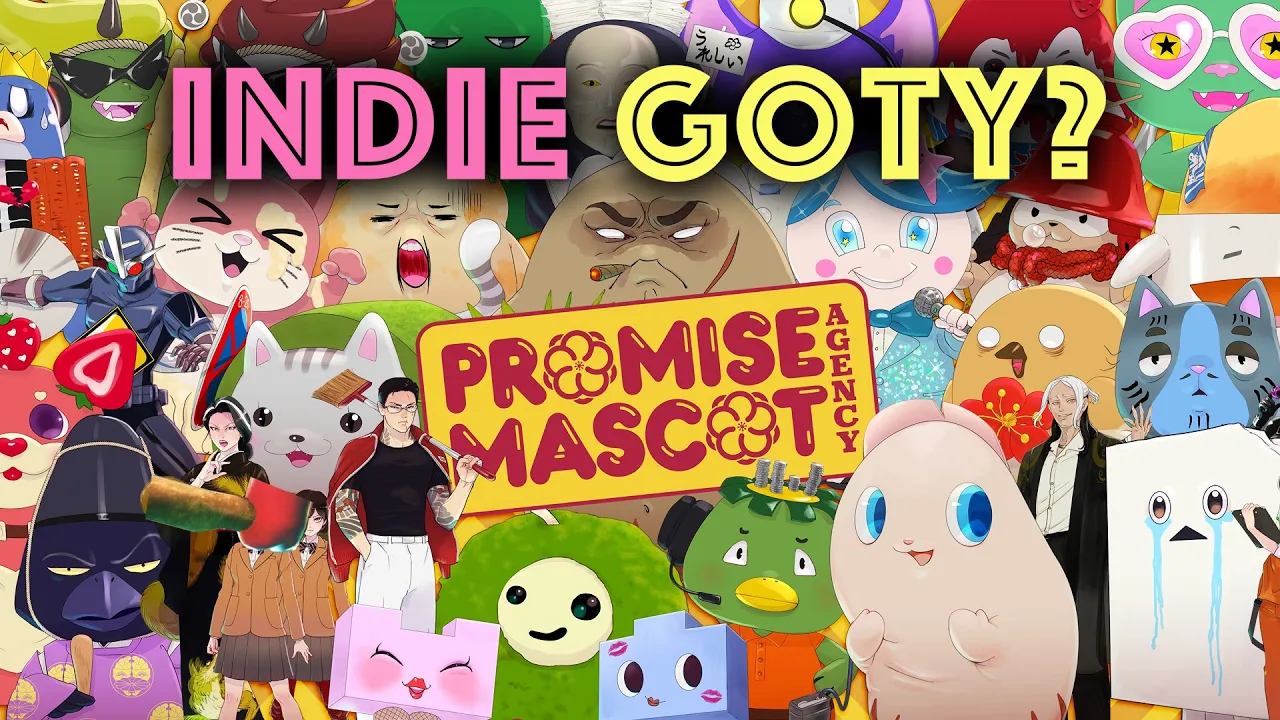
Adapted with AI from Gaming In The Wild's video of 24 April 2025 and checked against the video before publication. Editorial standards · Corrections
More from @gaminginthewild
All →


Make videos? Your next one could be an article here.
We turn your videos into articles under your name, linked back to the original. You keep 60% of what they earn, non-exclusive, and you can leave whenever you like.
Become a SubPlotter →