Assassin's Creed Shadows review: great Japan, weak new systems
Two contrasting heroes and a beautiful, well researched Japan carry the game, while the pathfinding mode, base building and repetitive targets fall short
 Gaming In The Wild (AI-assisted)27 November 2026Editor: Digital Fox Talent Editorial TeamOn YouTube since 2020 · more than 15,000 subscribers

Assassin's Creed Shadows, Ubisoft's take on feudal Japan, gave me a great time across the 30 hours I'd played when I wrote this review. To me it's one of the best Assassin's Creed games I've played, right up there with Valhalla, Black Flag and Odyssey, even if some of its new ideas are big misses.
Japan holds a deep fascination for many people, gamers included, so it makes perfect sense as a setting for this long running series. It has vast temples and humble Shinto shrines, thick bamboo groves and Sakura petals framed by torii gates, and a sense of busyness alongside a refined kind of tranquility. The series is famous for virtual tourism through sprawling, detailed worlds as much as for stealth. By the time Shadows was coming out, it had also become known for maps that had maybe gotten a little too big, filled with cookie cutter activities that left players burned out after a while. So I went into Shadows with both optimism and trepidation, and had uncovered a large portion of the map by the time the review embargo lifted, as the game was coming out.
Naoe and Yasuke make Assassin's Creed Shadows the first in the series with two protagonists
Shadows is set in 16th century Japan, when Oda Nobunaga's armies were sweeping across the country. He conquered region after region and made daimyo after daimyo bend the knee, solidifying his power in pursuit of a strong, unified Japan ready for a new era of international trade and politics. He's a real historical figure, and he touches the lives of both protagonists in different ways.
For the first time in an Assassin's Creed game, there are two. Naoe is a shinobi who sneaks around in the shadows, the assassin and the acrobat. Yasuke is a samurai, a Black samurai no less, a compelling figure based on fragments of history and embellished here to give him a dramatic story.
The game opens with Nobunaga's army conquering Naoe's homeland of Iga in a bloody siege, with Yasuke at his side. It ends in the death of a loved one and starts Naoe's quest for revenge, which lasts the whole game. Yasuke starts out as an African slave of Portuguese traders, but Nobunaga sees potential in him and elevates him to train as a samurai and become his personal champion and bodyguard. Playable flashbacks reveal both histories and how they intertwine. It's an interesting swerve for a series that has often made us choose between a male and female protagonist: two leads, each an outsider in their own way, each with their own play style and story.
The slow story opening of Assassin's Creed Shadows pays off
The game starts with a huge dump of story and quite a lot of cutscenes, a little too much, I'd say. I was dying to dive into the action while I sat through them and played story missions set in frustratingly narrow corridors.
After 30 hours, I refined that early opinion a little. It is annoying at the time, but I think it did its job of making me feel invested in both protagonists, which came to matter more as the game wore on. I want to know their stories, and I feel I understand who they are. So even though the intro is slow, it serves that purpose.
Naoe's Eagle Vision improves scouting, and the castle looting is addictive
Before long you're released into the open world as Naoe, with Yasuke arriving as a playable character further down the line. Naoe is a compelling protagonist who can climb anything, and when she's in shadow, enemies can't see her until they're right next to her. Her Eagle Vision turns the world grayscale, showing enemies in red through walls so you can tag them, and highlighting chests and resources. I think it's an improvement on the bird scouting of Odyssey and Valhalla, because tagging enemies without flying around as a bird speeds things up.
Small encampments have a few fences and guards, but enemies are often laid out like a puzzle: how do you take out one who's looking directly at another? Distraction and classic stealth tricks get you through. Larger castles have layers of security: an outer area with guard houses, a guarded inner yard, and the palace, the inner sanctum, with fewer guards but more servants who'll scream if you alarm them. Several samurai guard access to a legendary chest in the highest tower, usually holding loot like a legendary weapon, and major and minor chests with resources, weapons, outfits and talismans fill every area. I find this looting addictive, because it gives you a good excuse to look in every corner.
The game starts off quite tricky on the base difficulty. Naoe isn't exactly a powerhouse at first, so you can't break stealth early on. As you level up, you become more able to fight your way out of scrapes in open combat. If it gets too much, her grappling hook lets you escape over the rooftops, heal up, then sneak back to finish the job.
Shrines, lost pages and skill trees drive leveling up
That makes leveling up quickly all important. Base XP increases your stats, and skill trees unlock gradually as you earn knowledge points by honoring and exploring shrines. I like the lost pages: at a major shrine complex, Eagle Vision reveals little dots in strange places, up a tree, on top of a temple, in the middle of a pond. Collect them all and you earn a knowledge point. I think that's a good way to get us to spend time in these beautiful shrines, with some gameplay implications too.
Mastery points, earned by completing missions of all kinds, are needed to attain each skill. Tool skills cover the shuriken and kunai, like throwing two at once or landing critical hits. The assassin tree includes double and leaping assassinations and the cool ability of stabbing someone's silhouette through a paper wall. Weapon trees cover the katana, the tanto dagger and a chain weapon called the kusarigama. Some unlocks are passive, like bleed damage or staggering, while special attacks such as chaining strikes, beheadings or area of effect attacks run on cooldowns or your adrenaline meter. They change combat and offer welcome depth and variety.
Each weapon has its own move set and play style, which I think does the game a great service, because over 30, 40 or 50 hours it could get stale. I encourage players to try weapons they don't like at first and explore those different play styles.
Yasuke plays like a heavy powerhouse next to the nimble Naoe
Yasuke is a very different proposition: huge, heavy and a brutal warrior. He can't climb, dodge or sprint like Naoe, but he can run straight through wooden doors, and each strike takes huge chunks of an enemy's health. It took me a while to get used to him after about 10 hours as Naoe, but once you do, he's a real powerhouse, wielding weapons like a spear, a club and a rifle.
After his backstory, which charts his path from slave to honored legendary samurai, you can switch freely between the two, though sometimes the story demands one. I spent most of my time as Naoe because she's so fast; she feels better in most circumstances, especially exploring. But there are times when tanking through camps as Yasuke feels awesome.
I was impressed by how different they feel. Yasuke's footsteps feel heavier, and the camera moves differently when he runs. People bow to him instead of saying "Go away, girl" as they do to Naoe. When climbing, he struggles to keep his balance, making alarm sounds and putting his arms out like a kid walking across a branch, and where Naoe dives gracefully from high places, he throws himself down like a sack of potatoes. I think it's one of the game's good innovations.
Assassin's Creed Shadows side quests are good but too few
The quest takes you across Japan, scaling towers and mountains for that classic helicopter shot and unlocking mini bases for supplies and fast travel. Targets usually sit in large camps and castles that feed the loop of sneaking, fighting and looting.
Side quest highlights include following a wounded dog who sits by his dead master to find out what happened, and learning tea ceremony etiquette as Naoe to infiltrate high society, remembering how deeply to bow and how to rotate your cup. Sadly, these were few and far between. Many quests are a little prosaic, like collecting something or killing bandits, and I'd have enjoyed more tailored RPG style content.
The Hideout base building is a miss, except for the animals
The Hideout is Naoe's estate, with rudimentary base building. Weirdly, the frame rate tanked here in the build I played before release, halving from a smooth 60 in performance mode to 30, which is jarring; maybe a patch would fix it. You build things like a forge, a planning room and an art gallery, some adding minor buffs to weapons or your preferred outfit or loadout, but it's all a little simple. I think I'd rather it had been like the bar in Jedi Survivor, where a new room opens up as you find people. Still, adding animals you've petted, like tanuki, kittens or puppies, was a real highlight.
Why I switched off the pathfinding mode immediately
The default pathfinding mode gives you directions to targets and makes you deploy scouts to get a map pin. You don't get a precise location, just something like east of the dock but south of the castle. To be blunt, it's pretty terrible: you wander in circles in the same few streets hoping to stumble over your target.
I switched to guided exploration mode immediately, ignoring the warning that it isn't the intended way to play, and got simple, crisp, traditional markers. I think whatever they were trying here is a bit of a failure. It slows the game down and significantly lengthens play time in an already giant game. Once I turned it off, I never looked back.
Feudal Japan in Assassin's Creed Shadows is virtual tourism at its best
Those are minor downsides, because the game is beautiful. Shrine complexes are authentic, some with weathered wooden torii gates and some freshly painted red. Little Shinto shrines are everywhere, as in real Japan today, and you get buffs for praying in that distinctive style: bow, bow, clap, clap, bow. NPCs use them too. In Japan, I saw people using these shrines, became fascinated and started using them myself.
There are towns with industries like boat building and farming, forests full and cut down, bamboo groves, mountaintop temples and vast castles with deep moats. Seasons change from deep snow to Sakura spring to blazing autumn, with mist, rain, birds taking off as you approach, moments to sketch wildlife, and a deep codex that fills out as you explore. It's well researched, visually stunning and immersive, and it has tranquility amid the busyness, which is the essence of Japan to me from the month or so I spent there. It took me back and made me eagerly await going again, and that felt like a real gift.
The visuals are more than ornamental. If you're immersed in how a world looks, sounds and feels, you're happy to play longer, and seeing what lies over the next hill becomes a motivating factor. I think it elevates the game in a meaningful way.
Repetitive targets, dense forests and the Animus story hold Shadows back
The assassination quests get repetitive and are practically endless, with a pyramid scheme feel: kill eight people to reach one who sits in another circle of eight, to reach your ultimate target. It's as if the game wants you to play tens of hours longer than its story needs, and the systems are spread a little thin. I don't think it's a good game to binge; a few hours at a time is good for this one.
Dense forest is hard to explore, and if you get lost you can spend minutes in blurry leaves looking for the road. Western rock and roll music in some battles felt jarring and immersion breaking to me. And, though fans will be mad with me, I wish Ubisoft would give up the pretense that the Animus material matters to these historical open world stealth games. They've minimized it here, which I think is a blessing, but I'd be happy if it was dispensed with altogether.
Assassin's Creed Shadows ranks among the series' best
I do like the odd AAA game. I played Odyssey to its conclusion, played Black Flag and some Valhalla, and Shadows is right up there with the best of them for me. It's easy to get lost in, distracted by a temple offering knowledge points or a castle to raid, and the game doubles as a cultural and history lesson I'm very much here for. At 30 hours, I thought I probably had 30 more to go, and I'd mostly had a good time. If you're an Assassin's Creed fan, you're going to love it, and if you're new to the series, it's as good a place as any to start.
What other creators are saying
More on Assassin's Creed →Invictus testers asked for a stronger Assassin's Creed foundation, Hexe's next big update is set for 2027, and Valhalla gets New Game Plus on November 5
The official franchise update also brings New Game Plus to Valhalla, more Black Flag remake features, and a 2027 update planned for Codename Hexe
Assassin's Creed remakes: is an AC1 remake in development? →
Sales numbers, a Tom Henderson leak about Project Stardust, and a Capcom style remake cadence point toward Assassin's Creed 1 as the next full remake, with Rogue and the Ezio trilogy held in reserve.
Assassin's Creed 1 remake: is it Ubisoft's next after Black Flag? →
I think Far Cry 3 has aged surprisingly well despite a dated, tone deaf outsider storyline, and if the rumored Far Cry anthology drama happens, it has to start with Far Cry 3, since Vaas, Citra and Rook Island give it everything a first season needs.
Watch the original
@gaminginthewild · YouTube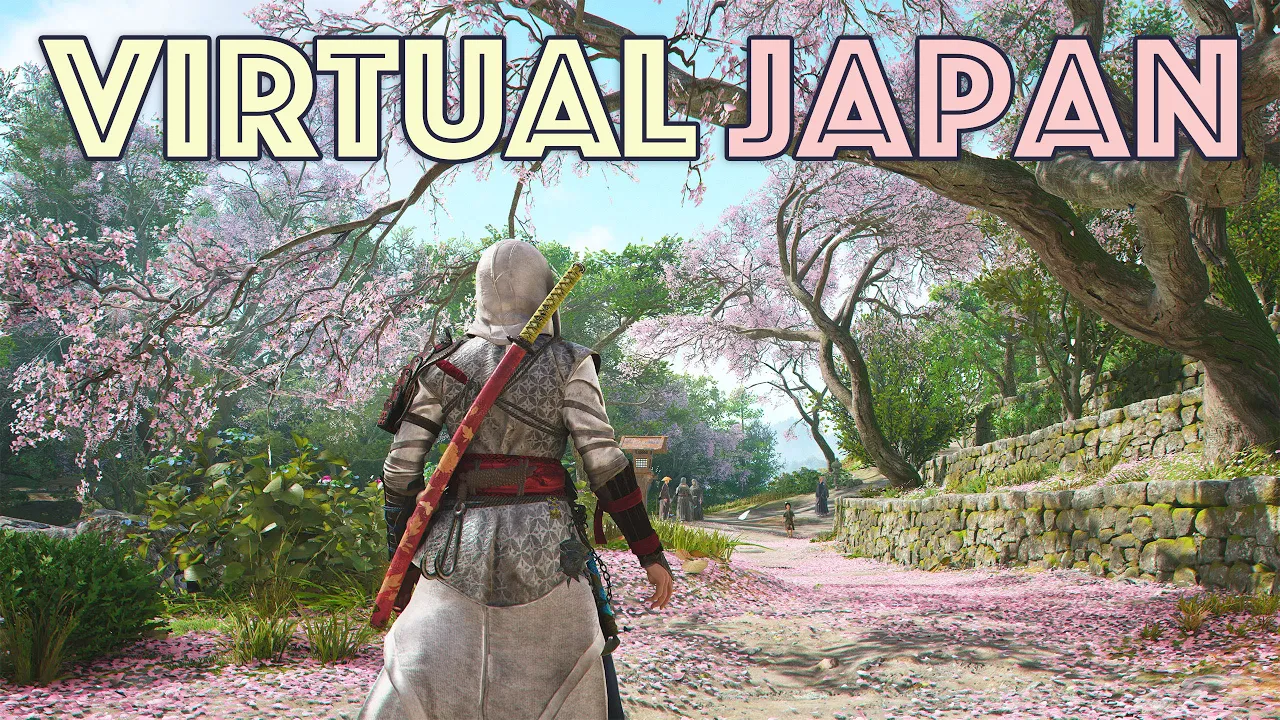
Adapted with AI from Gaming In The Wild's video of 18 March 2025 and checked against the video before publication. Editorial standards · Corrections
More from @gaminginthewild
All →


Make videos? Your next one could be an article here.
We turn your videos into articles under your name, linked back to the original. You keep 60% of what they earn, non-exclusive, and you can leave whenever you like.
Become a SubPlotter →