Dragon Ball ki explained: Chinese chi and Akira Toriyama
How Akira Toriyama turned an ancient philosophy into the energy blasts, chanted attacks and Spirit Bomb that define his series

Ki is the true most powerful force in the Dragon Ball universe. The word force fits, because Akira Toriyama got his idea for ki from the same principles George Lucas drew on for the Force in Star Wars. Ancient oriental philosophies are the root of ki energy, and the way Toriyama implemented it in his martial arts manga, which began in 1984, and in the anime has been loved by fans even outside the East.
We all love huge ki blasts and explosions. It's what makes Dragon Ball fun. Here I want to give a better understanding of where ki comes from, how Toriyama uses it, and why energy matters so much in a series built on martial arts.
Dragon Ball's ki comes from the Chinese concept of chi
If you've seen many kung fu movies or taken martial arts, you know that ki, whether in Dragon Ball, any other anime or any form of Japanese fiction, is derived from the Chinese chi. Ki is the Japanese inheritance of that word, and you can use the two interchangeably.
If you're reading the Viz translation of the Dragon Ball manga, it uses the word chi. It's the same thing. If you watch the anime, though, the characters will refer to it as ki. The Japanese do have different versions of the word ki, but I want to focus on the main one.
The original texts make ki sound like the Force and midichlorians
In a funny way, the essential idea behind ki is like what George Lucas tried to put over with the midichlorians. I know many Star Wars fans hated midichlorians because they took away from the magical Force energy. But if you look into the original oriental texts, you'll find some interesting things about ki.
Essentially, those texts say the existence of all life is based on minuscule particles, maybe even smaller than microscopic, that balance and control the universe. It sounds an awful lot like the Force. It really does.
There's another, similar definition of ki in Japanese culture that exemplifies Dragon Ball even more: the manifestation of willpower, or fighting spirit. You could call it courage, bravery or valor. It's when somebody shows they're willing to fight for what they believe in, overcome their obstacles and not give up. Time and time again Goku and the other characters, usually Goku, surpass their limitations, whether by discovering a new power or transformation, breaking past their own knowledge, or pushing their bodies to the absolute max.
Toriyama borrowed from kung fu films, and was most likely influenced by Zu Warriors from the Magic Mountain
Toriyama is and was a huge fan of cinema, not just Western cinema but kung fu films, specifically Jackie Chan and Bruce Lee. A common theme in those films is the hero who trains under a master and learns to tap into his secret power and control his ki. Typically, by the end of the movie he learns how to do it, taps into a new power, most likely defeats the grand villain, and we all get a happy ending. That formula was used again and again, and Toriyama borrows from it heavily in Dragon Ball.
A good example is the 1983 Chinese and Hong Kong film Zu Warriors from the Magic Mountain. It has characters doing ki blasts, flying and having big epic battles, along with hermits and wizards. Much of what makes Dragon Ball so well known is in that movie, and it came out a year before Toriyama started his manga.
So it's easy to figure out that he was most likely influenced heavily by it and other films of the time, but this one especially, because it took battles to a new level in special effects and epic scale. The special effects don't hold up, but it is from 1983, so you have to give the filmmakers credit for trying. They did the best they could.
Ki is invisible, so Toriyama gave the Kamehameha a shape
One thing to understand about ki, whether in the real philosophy or in Dragon Ball, is that it can't be seen by the naked eye. Some believe you can see it if you develop the third eye. Many Taoist beliefs cover that third eye and how it affects ki, and it also helped influence Toriyama in creating the character Tien Shinhan.
For the reader, though, it would be much harder to get invested in a fight involving ki if every molecule were invisible. We would have to pretend things were there, and that wouldn't work. So instead of leaving ki invisible, Toriyama gave it a shape and a form.
What you're seeing when characters do ki attacks is them taking these molecules and igniting them into pure concentrated energy, something like heat, and firing it at their opponents. Hypothetically, in real life that would never show any form. Toriyama talked about this in an interview for a 2009 Dragon Ball guidebook, explaining that for the Kamehameha "I thought I'd see if I couldn't express ki energy which can't be seen with the naked eye" in a shonen sort of way. That's where the Dragon Ball ki blast originated.
Why ki comes in so many colors in the Dragon Ball anime
When Toriyama drew the original manga in Shonen Jump and the original collected volumes, it was mostly black and white, so you couldn't see the color of ki on every page. The anime adaptations of Dragon Ball, Dragon Ball Z and the later series all chose to illustrate ki in different colors. That was Toei Animation using some artistic liberty to give Dragon Ball a vibrant, colorful look, which is why characters use yellow, red, blue and green energy.
The colors do carry some representation from Taoism, but much of it was the animators being creative for the show. Be aware, too, that the animators were just as aware as Toriyama of the secrets of ki, and they gave it their own touch.
Toriyama himself has admitted several times that his coloring often comes down to whatever he has on his desk. When he worked on Dragon Quest, he colored some of the slimes blue and some green, and over the years he forgot what their original color was. Sometimes villains have a reddish, dark, evil ki and the good guys have a white or light blue ki, which would make sense, except that all kinds of colors appear as the series progresses. In Dragon Ball GT, Goku uses a red Kamehameha, which looks awesome, and it symbolizes the power and fury behind his strength as a Super Saiyan 4 with the 10x Kamehameha.
Why Goku and other characters shout the names of their attacks
Many people, not just Dragon Ball fans, have wondered why characters in manga, anime and Eastern storytelling always chant the names of their moves, from the Kamehameha, Destructo Disc and Special Beam Cannon to the Hadouken in Street Fighter.
It is my understanding that they don't do it only to make the scene seem cooler and more epic, or to build familiarity with the reader. It also presents a psychological advantage. If you use ki in your day to day combat, whether through martial arts, study or meditation, it sometimes helps to say what you want to do under your breath.
In a manga or anime, shouting gives it that extra kick, and yes, it's for dramatic purposes, but there is a root to it. In real life, people normally don't scream these moves at the top of their lungs the way Goku has with the Kaioken and other techniques.
Genki explains why the Spirit Bomb wouldn't work on the androids
There are different kinds of ki, and two specific kinds in Dragon Ball are worth discussing. The first is Genki, the energy Goku uses to summon power for the Genki Dama, the Spirit Bomb. Genki is not traditional ki.
Genki represents health energy. It represents the ability to be positive, strong and spiritual, which is why calling it the Spirit Bomb isn't as far off a translation as many would lead you to believe.
Many fans have asked why Goku didn't use the Spirit Bomb to siphon the androids' power. The androids, the artificial humans, may have unlimited ki, but they don't have unlimited Genki. They don't have unlimited health. They are mortals and can get sick like everybody else, cancer presumably. Goku gathers his Genki from waters, trees, lakes, animals and humans, and it's not an unlimited supply.
God ki in Battle of Gods is a higher form of energy, not a requirement
The second kind is God ki, which Beerus introduced in Dragon Ball Z: Battle of Gods and which carried into Dragon Ball Super. God ki is essentially a celestial level of energy that mortals can't typically attain unless they're given god power, like the powers Goku gained in Battle of Gods and that grew as Dragon Ball Super progressed.
Beerus's God ki is basically an enhanced version of regular ki for the gods. There's no real history of God ki in Taoist culture, though there is history of gods and mortals there. The way Toriyama uses God ki is much more basic: it's a different kind of ki, and presumably it is more powerful.
However, we've seen mortals fight gods, as with Goku and Beerus, and Golden Frieza fighting Super Saiyan Blue Goku. Super Saiyan Blue Goku had God ki and Golden Frieza did not, yet Frieza was still able to damage him. So you don't need God ki to hurt someone who has it. That's one big misconception. There might be more to it in the secret Buddhist roots, but in Dragon Ball it's a higher form of energy and not that complicated, and I think people do overcomplicate it.
Watch the original
@geekdom101 · YouTube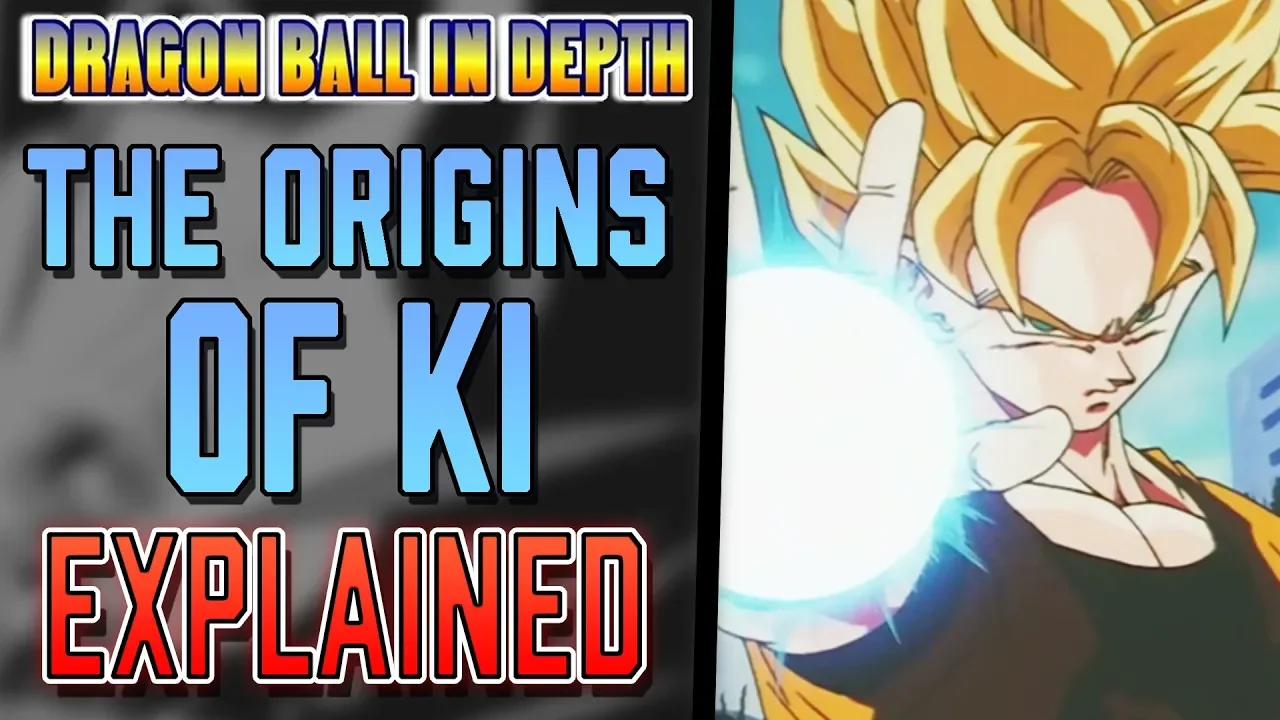
Adapted with AI from Geekdom101's video of 4 January 2020 and checked against the video before publication. Editorial standards · Corrections
Also on Akira Toriyama
2 creators, 16 takes →
More from @geekdom101
All →


Make videos? Your next one could be an article here.
We turn your videos into articles under your name, linked back to the original. You keep 60% of what they earn, non-exclusive, and you can leave whenever you like.
Become a SubPlotter →