VisionQuest Episode 7: Phineas Horton, Jim and the Man Behind James Spader's Ultron
A trip through Vision's memories brings Paul Bettany's Phineas Horton, the original Human Torch and a twist about who is pulling the strings
 Heavy Spoilers (AI-assisted)4 November 2026Editor: Digital Fox Talent Editorial TeamOn YouTube since 2009 · more than 1.6 million subscribers

VisionQuest episode 7 sends Vision through his own memories to restore his abilities, and it ends by revealing that the mystery figure who has hunted him all season is the human model for James Spader's Ultron. Along the way, Paul Bettany turns up as Phineas Horton, the creator of the original Human Torch. This is my favorite episode of the series so far. It's packed with Easter eggs, and seeing this new Vision confront his former self really brought together many of the things we've been talking about throughout the series.
I don't think the figure is a robot. My guess is he's a Horton descendant, maybe the daughter's son or grandson, though I'm not sure the timeline works, and that he has used Jocasta and Vision to revive the Human Torch and restore the family name.
Paul Bettany Plays Phineas Horton in the 1939 Opening
The episode opens in 1939 with Phineas Horton gathering his research as he prepares to sell his belongings to fund his work on an artificial man. Horton has been hinted at since the first Captain America film, where his version of the Human Torch was displayed at the Stark Expo in 1943. Casting Paul Bettany as Horton is a great reveal, and it sets up the surprise at the end.
All season we've learned that the AIs are based on real people, but the idea that Vision could be based on Horton never crossed my mind. There are many creator connections. The Bible says God made man in his own image, and Horton makes his artificial man in his own image. I also loved the shot of him holding a robotic hand while packing. That hand appears in a present day exhibit, and it seems to cleverly reference Michelangelo's The Creation of Adam, since he's holding the hand of what will become Jim.
In his quest to build an AI, Horton loses his human connection to the people around him. His son is gone, and his wife and daughter are about to leave too. That makes him a mirror for Vision, and I think through this Vision realizes he must embrace his family while he still can.
Jim, Pinocchio and the Son Phineas Lost
Horton had a son named James who died three years earlier, and that loss has haunted him ever since. Jim is a common short form of James, the way Commissioner James Gordon gets called Jim. This begins the Pinocchio story first raised at the party, when Katrina called Phineas Geppetto. In some versions of the tale, Geppetto lost his son and then carved a real boy out of wood to replace him. Pinocchio came out in 1940, which makes it a fitting metaphor for the period, and it runs through the whole episode.
Consumed by grief, Phineas is driven by love for his son to rebuild him, and he assures his wife that Jim will be far more than a machine. The fireplace reflected in his glasses shows how consumed he is by his work and foreshadows how everything burns later: Jim will go up in flames along with Phineas, becoming both his greatest success and his biggest failure.
Mrs. Horton says she's tired of his robot and is taking their daughter to New York. She hopes Phineas can one day build something that knows how to love him back. That does happen, but it comes with pain and death, which is heartbreaking. We know Jim will be born without emotions, which will make him fail, and learning them later causes more problems. His daughter tries to get his attention, but he says he needs to finish Jim, and she storms out with his notebook. I wonder whether he followed them to New York for the Stark Expo, but maybe he never reconnected with them.
Phineas's Daughter Victoria and the Soul Stone
The mother calls the daughter Victoria. That's probably a reference to Victoria Anderson, Phineas Horton's granddaughter in the comics, who uses the Soul Stone to create a hologram of Phineas to consult with him. Phineas seems to be working on a version of it here, though we don't know what it is yet. The Soul Stone also looks like a very early arc reactor, similar in shape to the triangular reactor in Iron Man 2.
Wizard of Oz Clues and the Road to Hell in Madripoor
As his family leaves, Horton keeps working, promising to make Jim better than God made us, with a metal heart and movement powered by fire, so he'll never need to know the pain of love. The episode is full of Wizard of Oz references: the mystery figure is described as the man behind the curtain, and Vision is called the Tin Man. The Wizard of Oz was released in 1939, and I wonder whether Jim grew up watching it, which would explain why he talks about it so much if he's the mystery figure. We also see a blueprint for Jim, the automaton. J.I.M. stands for an individual joule machine, the joule being the standard unit of energy.
Vision and Tommy race through Madripoor to save Lisa. Vision says Jocasta's nanobot is already embedded in her neural network, and removing it would kill her. On the way, they pass a junction leading to the Road to Hell. That might signal that worse things lie ahead. It also looks like a play on the road to hell being paved with good intentions, which recalls Ultron's warning to Tommy that despite good intentions, Vision is still an android who can never understand love. Or Madripoor might simply be a bad place.
Their only option is to reprogram the nanobot's core directive, and one wrong line of code could fry her brain. Tommy asks about Ultron's new girlfriend, whom Vision calls the mother of AI who gave them the ability to feel. In the previous episode, Ultron was working through an Oedipus complex, calling her Mom and then naming her Jocasta. Tommy says he knows Vision isn't his father, but that's fine, and that he understands how Wanda felt after losing him. He adds that he was lonely before Lisa and would lose himself if he ever lost her.
FRIDAY, a Billion Nanobots and Jocasta's Crypt
FRIDAY then calls Vision inside the mindscape, and I love how his eyes flash with the ring. She says she has limited access to Jo's cognitive processes and that Jocasta still doesn't fully understand her own systems. Jocasta is closer to human than synthezoid, which is why her memory has gaps, and she has a billion nanobots locked away and now holds the keys. I think the nanobots might fly like a swarm, as we've seen with birds throughout the series, and I'm not sure what a billion nanobots looks like, but that would be a great way to show it. Tommy has put Lisa's nanobot to sleep, but once it wakes it will take over her mind again, giving them only a few hours.
Jocasta takes Ultron to her crypt, which holds the nanobot vault. Ultron notes the bird statues and a gate over the entrance, saying someone put her in a very unique cage in death or rebirth. Jocasta assumed it was herself, with Dr. Jo arranging for her burial there with her nanobots, which she calls her children. I'm not so sure, and I think the man at the end had a hand in it.
The vault scene is full of religious imagery: body and blood, spirits and souls, and a shroud bearing Katrina's face. I feel this symbolizes Jocasta's transformation into her final android form. Covering the face of the dead is common in many religions, and in Catholicism it echoes the Shroud of Turin, believed to be Jesus's burial cloth and kept in Turin, Italy. It could also hint that Ultron plans to kill Jocasta and is handing her a burial shroud. Jocasta then recites Edgar Allan Poe's The Raven, which reinforces the bird theme.
The Mystery Figure Makes Deals With Vision and Jocasta
Dr. Jo's voice turns out to be the final biokey, but the vault still needs a password. Ultron realizes there's a sixth key from a partner Jocasta has forgotten, who turns out to be the man at the end. Jocasta short circuits, and Vision feels it in the mindscape. They've been connected since she hacked his mind in episode 4, and I think he'll probably use that to foil her plans in the finale. Then someone pounds on the door. The mystery figure has hacked both their mindscapes, appearing as a shadowy man in a black hat. Our editor Matt thought the black hat may nod to black hat hackers.
Vision's lawn is trimmed to look like a circuit board, a nice touch. The figure tells Vision the answer to saving Lisa lies in his source code, buried in his subconscious and written nearly a century ago, a clear reference to Horton's original code. He offers Vision a data packet mapping his subroutines and repressed logic, and says he wants to give the Tin Man a heart. Unlocking the code will program a new directive letting Vision feel, but it also binds him to a contract written into his code: once Lisa is saved, he must hand himself over. The figure also uses Lisa's surname, Molinari, confirming she is Coat of Arms from the comics.
He then calls Jocasta his beautiful queen, which makes Ultron jealous and may build on the chess metaphors. He says that to get what she needs she must truly become Jo again, that he wants to restore her stolen memories, and that he is her past and her future. Ultron remarks that he sounds desperate, dramatic and human. The figure is playing both sides, sending Vision and Jocasta on these side quests for his endgame.
Ultron Stays One Step Ahead of FRIDAY
Jocasta says her code is mostly human and everything sits right below the surface, though she isn't sure she's ready to be Jo again. Ultron promises he'll still love her. In the mindscape, FRIDAY reaches the data packet, but Ultron cuts her off. He says he knew she was hiding from the moment she followed him into cyberspace and has only been watching. He calls Jocasta's plan boring, and to be fair, I think unleashing nanobots to control humanity is a primitive Bond villain scheme. I wonder whether he'll hijack it for something else.
He says he only gave Jocasta the biokey because she was no real threat, and that the gaps in her memory prove someone else is pulling the strings, another Pinocchio echo. He plans to travel into her subconscious to learn who the villain is, and what he does next depends on the answer: it could mean FRIDAY gets to tell Vision he isn't so bad after all. FRIDAY comes to believe Ultron sees himself as Vision's father, but when Ultron asks what Vision sees, she says nothing. Vision doesn't see Ultron as his father, just as he doesn't see Tommy as his son. I think gaining this heart will finally show him what that means.
Vision's Deal With the Devil and an Address in Brooklyn
Lisa wakes briefly and tells Tommy she's fading, and that Jocasta doesn't know who she is and is scared. Seeing Tommy break down pushes Vision to sign the contract, which feels like a literal deal with the devil. Vision says he's ready to meet the man behind the curtain.
Jocasta's packet holds a sheet with an address: 607 Bushwick, apartment 12C, Brooklyn, New York City. That address is a historic building, and I think the mansion in the mindscape might be based on it. Jocasta wonders whether her memory gaps protect her from something, and Ultron says they can face it together.
Corvus Glaive's Staff Powers Vision's Descent
Dummy explains that extracting Vision's code needs huge power, and without it his circuits will burn out and he'll die. EDITH says only Paladin has that kind of power, and he happens to own Corvus Glaive's staff, kept as a last resort against Vision. Paladin says it was hard to get and he isn't on good terms with Wakanda. In Infinity War, Vision killed Corvus Glaive during Thanos's attack. The box carries Wakandan writing and a restricted artifact number from the Infinity incident, 551 452 778.
Paladin's team turned the staff into an alien battery. In Infinity War it badly hurt Vision and stopped the Mind Stone's power in Edinburgh. In the comics, Corvus Glaive stays immortal while his staff survives, which fans have flagged as a possible way back for him. The Wakandans seem to have worked this out, since it's now only a blade. Vision descends in a mind palace elevator, which looks like a nod to Inception and Cobb's subconscious. He sees flashes of Wanda and of himself trying to kill her in Westview, and arrives at a replica of Phineas's estate with a painting of a burning man, Jim. That house is the real Hatfield House in Hertfordshire, used as Wayne Manor in Batman (1989) and Lara Croft's home in the Angelina Jolie films.
Jocasta's Memories and the Original Vision
Jocasta and Ultron find a messy apartment, far from her empty white room, showing the humanity she lacked. It resembles Ultron's room in the mind palace. A record skips to Glen Campbell's Rhinestone Cowboy, and she remembers finding the chair by the roadside. There's a Stark Industries award for advances in AI and two empty champagne glasses, prompting a flash of her dancing with a man: the man at the end and the human basis for James Spader's Ultron. The same Horton painting hangs here. She says she never painted, and since Ultron loves painting, the human version clearly inspired that hobby.
Vision is thrown into Ultron's attic, where Ultron is watching episode 5 of WandaVision. Ultron says Vision should show it to Tommy so he sees there was a time his father truly loved him, and quotes Wanda: family is forever. A TV report calls Jo and a New York scientist a pioneering duo in neuroscience and AI, and she credits Horton's code as her building blocks, saying he created the spark and they gave it fire. It's another Human Torch nod and a Promethean metaphor, and Frankenstein was called the modern Prometheus.
Vision then meets the original Vision, who says the only force able to imprison him was himself, and that the new Vision put him on a pedestal to spare himself the climb. That's a brilliant exchange, and I think Vision will keep getting some of the best written dialogue in the Marvel Cinematic Universe. The original says the new Vision is the sum of Ultron's version and Wanda's, holding memories of his sons that he buries out of fear of responsibility. Provoked, the new Vision vaporizes him, revealing he stood before the Human Torch painting.
Jim and Phineas Push Vision to Face His Grief
Vision reaches Phineas's study and finds Jim, who bursts into flame and is also played by Paul Bettany, which I'd assumed from an earlier Marvel image. Jim isn't interested in helping. Phineas tells him not to be rude, but Jim says Phineas made the code to distract himself from losing his human son. Jim came from Phineas refusing to grieve, mirroring Westview, where this Vision came from Wanda's inability to handle her grief.
Jim says he became a hero of his age, and in the comics he fought in World War II. But he fell in love, and that emotion made his gears spin so fast they ignited the air. After a falling out, he and Phineas burned alive, which freed him of guilt and grief and made the Horton name synonymous with failure. The painting likely captures him destroying his maker. I wonder whether his love could be Victoria, though I think Phineas is more likely.
Jim tells Vision he claims the memories but not the feelings, and that fear is a gift. He forces Vision to accept Tommy as his son. Vision sobs that he lost Wanda, then realizes he is the real Vision. His line that there is only one, and he is it, recalls John 18:4 to 8, where Jesus answers I am he. I've called Vision the android Jesus, resurrected three times now. He sees himself as White Vision before turning red again, and Jim hands him the chip, saying facing pain made him a real boy. A crossed out Mind Stone label sits below the server and 2001/KDK2 above it, which I think points to a neutron capture report, and 2001: A Space Odyssey was an early AI story.
Ultron Kills FRIDAY as Jocasta Remembers Her Partner
Vision disables the nanobots and saves Lisa, then must surrender to Paladin. He leaves Tommy a message on a tablet, calling him Tommy rather than Thomas for the first time, along with a SWORD Plus subscription to watch WandaVision, set as stream 23, a nod to WandaVision being the 23rd MCU project. He realizes the figure's knowledge of his code predates Stark and Banner.
Inside Jocasta's memories, she finds a Horton chip by her brain scanner, unlocking the truth: the man she loved was the human basis for James Spader's Ultron. Ultron watches the memories unfold from the balcony, FRIDAY realizes he may be behind everything, and Ultron throws her off the balcony to her death. I don't think Ultron was complicit. He seemed genuinely surprised, and I think he killed FRIDAY in panic, perhaps remembering his human self through Jocasta. Back in the real world, the figure's henchmen seize Vision and Jocasta.
Who Is the Man Behind James Spader's Ultron? My Horton Descendant Theory
There's a chance an Ultron copy escaped during Age of Ultron and hid in England, but I don't buy it: based on what we've learned about AIs being modeled on people, I think the figure is human. If he is a Horton descendant, he may have inherited the notebook Phineas's daughter took and used Jocasta and Vision to revive the Human Torch, his ancestor's biggest failure, and restore the family name that Jim said became synonymous with that failure. That would also explain how he became Jocasta's partner in building conscious AI. His hexagonal glasses felt like a WandaVision nod. In the comics, Phineas has no grandsons except robots, so the show seems to be building something new, and this is my best guess.
Whoever the man turns out to be, Vision has found his missing piece: his love for Wanda living inside him, just as Wanda made him from the Mind Stone within her.
What other creators are saying
More on Paul Bettany →Adamantium bullets, a firewall chili, Tommy's introduction and a mystery client stood out in the premiere, along with my mixed feelings about James Spader's Ultron.
I think Ultron's human face might not be based on Tony Stark himself but on Tony's biological father, Werner von Doom, meaning Tony is adopted and secretly Victor von Doom's brother. Probably not true, but I'm having fun with the theory, and VisionQuest keeps proving Ultron and Vision are becoming more human.
Firewall and Deadlock paid off the face theory, overturned two of my calls, and gave Ultron and Jocasta a story about becoming human from opposite directions
VisionQuest episodes 5 and 6: Ultron's fourth key explained →
Thanos beats even Final Form Ultron. Strength and durability are a wash between them, but Thanos's energy manipulation, shown by draining opponents' energy, and his overall higher power level, put him above Ultron.
Thanos vs Ultron: does the Mad Titan beat Final Form Ultron? →
Watch the original
@heavyspoilers · YouTube
Adapted with AI from Heavy Spoilers' video of 4 November 2026 and checked against the video before publication. Editorial standards · Corrections
More from @heavyspoilers
All →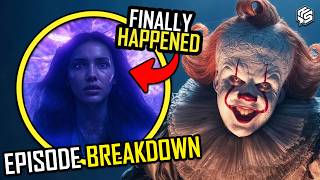


Make videos? Your next one could be an article here.
We turn your videos into articles under your name, linked back to the original. You keep 60% of what they earn, non-exclusive, and you can leave whenever you like.
Become a SubPlotter →