Annabelle: Creation: is the Mullins story based on a real case?
A breakdown of how the 2017 prequel ties into the Conjuring universe, the real haunted orphanage that echoes it, and the behind the scenes fights over doll heads and branding irons
 Heavy Spoilers (AI-assisted)18 November 2026Editor: Digital Fox Talent Editorial TeamOn YouTube since 2009 · more than 1.6 million subscribers

Annabelle: Creation (2017), directed by David F. Sandberg and starring Stephanie Sigman, Talitha Bateman and Lulu Wilson, goes back further than the first Annabelle film to show when the doll was made and how she became evil. I think Creation often gets overlooked because it doesn't involve the Warrens, but I think it's one of the stronger films in the franchise.
After three Conjuring universe movies, it was clear Annabelle was the star, so the studio made a prequel to the Annabelle prequel. Sandberg packs it with nods to the wider Conjuring universe and to his own short horror films.
Annabelle: Creation is not a Warren case, but the Gore Orphanage legend has parallels
The story of Annabelle: Creation isn't based on any of the Warrens' case files. It's an original story made for the movie. The real Annabelle is a Raggedy Ann doll, and there's no concrete evidence of the doll before the Warrens came to own it, so the prequels are made up backstories.
Through some internet digging, though, I found a haunted orphanage case that's similar and possibly could have lent some inspiration. In 1902, Reverend Johann Sprunger and his wife Katharina opened the Light of Hope orphanage in Vermilion, Ohio, after their previous orphanage in Indiana burned down, a fire that came with the death of their 7 year old daughter. The property on Gore Road had four farm buildings and an abandoned house known as the Swift Mansion.
That mansion came with its own ghost story. Young children supposedly died there, and the owner, Joseph Swift, sold it to Nicholas Wilbur, who was said to be a spiritualist holding seances to conjure the dead kids. The story goes that the Sprungers tortured and starved the nearly 127 children in their care, and that with no real laws or regulations at the time, nothing could be done. Their daughter's death had turned them intensely religious, and they used that as an excuse. A school fire in nearby Collinwood also claimed 176 children. The orphanage closed in 1916, and local legend says the children's ghosts still haunt what's now known as the Gore Orphanage.
This is very different from the film, but I see parallels with the Mullins. They aren't looking to physically hurt the children, but their daughter's death and strong faith inadvertently put the kids in danger. This is entirely my own interpretation, but I think there are enough similarities for a very loose inspiration.
The Annabelle doll's opening scene hides foreshadowing and legal fights
The film opens with Samuel Mullins making the doll. Right away, Annabelle's eye rolls across the floor, foreshadowing how his wife, Esther, will lose an eye to the Annabelle demon. Sandberg has explained that, for some Hollywood legal reason, they initially only had clearance to show doll body parts, not heads. A doll maker with only arms, legs and butts seemed strange to him, so he had to fight to get some heads added to the shot.
An ad on the wall says the Mullins have made fine dolls by hand for over 20 years, and Sam later brands the doll as a limited edition of only 100. That explains why Mia was so excited to receive the doll in Annabelle (2014), and why her husband told her not to ask the price. Text at the bottom of the ad says the doll is available at a toy shop that shares its name with the apartment complex Mia and John move to, which answers where John got the doll, since the shop was most likely nearby.
We close in on Annabelle's face with the eyes still cut out, making her head look like a mask, a nice touch since Annabelle is the mask of a demon. It's also when I realized Annabelle has teeth, which makes her creepier. Sandberg had to fight for the brand too: he wanted to see smoke coming from a real branding iron, but the studio didn't like it. It's his hand writing the number one on the label, but he said his ones looked bad, so the number was added with CGI.
Sam puts the doll in her box as if into a coffin, foreshadowing his daughter's death. We learn the daughter is named Annabelle but goes by Bee, so the doll is a tribute to her. A boy doll in the corner of the shop is possibly a reference to Robert the Doll, one of the first supposedly haunted dolls.
Crosses, flowers and You Are My Sunshine set up the Mullins house
Bee slips a "Find me" note under the door, a classic Annabelle move that points to what happens to her. A toy gun on the couch will be used in a scare later. The Mullins house was also used in Westworld. The crosses on the front door sit at the top and bottom of the window, with the top ones inverted, symbolizing the battle between good and evil in the house.
Esther leaves You Are My Sunshine playing, following the Conjuring motif of a musical device that sets up a later scare. The film uses a cover recorded for it, apparently because that was cheaper than licensing the Bing Crosby version. For legal reasons the cover couldn't go in the trailers, so the trailer used Crosby's version, which couldn't go in the film. It makes no sense, but that's Hollywood.
At church, a customer named Victor confronts Sam about his doll order; he's the toy shop owner, again seemingly tied to the apartment complex. On the way home, a lug nut flies into the road, Bee goes to fetch it and is hit by a car. I'm not sure how they shot it, but it's very well made. Twelve years later, a roadside cross bears Bee's photo and a ring of flowers like a halo. Flowers fill the house too, and they can often foreshadow death.
Janice, Linda and the orphans the demon targets
A bus brings the orphans, led by Janice, played by Talitha Bateman, sister of Gabriel Bateman from Sandberg's Lights Out, and her friend Linda. Linda's paper fortune teller says she'll soon make new friends, which doesn't end well with a haunted doll around. The two make a pact to stay together, later paralleled when the possessed Janice goes after Linda. Janice also says Linda's doll looks just like her, a line that comes back later.
Carol is played by Grace Caroline Currey, who played Mary Marvel in Sandberg's Shazam films, and Sister Charlotte leads the group. We hear Mrs. Mullins is bound to her room by a condition, and that Janice has polio, which is most likely why the demon targets her as the most vulnerable. There are golden bees on the banister and a flower on Janice's stair lift chair, and Mr. Mullins stresses it won't work unless the seat belt is locked.
As Janice reaches the top of the stairs, you can barely make out Bee's ghost in a dark hallway. Turn the brightness up and it's definitely there, a clever setup since you can't see it unless you focus. I also think I saw someone reflected in a mirror behind a door, but it might be my eyes playing tricks on me. The older girls claim the biggest room, isolating Janice and Linda further, another reason they're targeted.
Sister Charlotte's cut backstory and the setup for The Nun
Sister Charlotte stares at a baby blanket that never comes back. Sandberg explained in a Reddit post that a storyline was cut in which Charlotte gave a child up for adoption, and the child died and came back to haunt her, explaining why she tries to do right by these kids. It was removed for time, but I wish it made the final cut. I think Charlotte is the MVP of the movie, and that grief would give her more emotional weight. A deleted scene on the DVD shows a ghost boy.
The dumbwaiter wasn't part of the original set; production designer Jennifer Spence suggested it, and Sandberg wrote a scene around it. A photo shows Charlotte with other nuns at the abbey in Romania where The Nun takes place, and when she later shows Mr. Mullins the picture, the Nun hides in the darkness. The photo is dated 1951, and The Nun is set a year later, confirming Charlotte was there first. She also mentions Sister Lucia, a reference to St. Lucy from The Nun II.
Bee's room, the sheet scare and Sandberg's short Attic Panic
At dinner, Mrs. Mullins rings a bell, and Mr. Mullins doesn't stop his prayer. I feel the bell shows how evil still lives in the house despite his attempts to hold it back with prayer. Carol peeks into her room and is shaken by what's later revealed to be a porcelain doll mask covering a lost eye. The dinner framing has a Last Supper vibe, with Charlotte at the head, which could represent her saving the girls and this being their last meal before Janice is possessed.
That night, notes lead Janice into Bee's room and a hidden closet where the doll sits surrounded by Bible pages, lit so her eyes look like black holes. It's a smart way to keep a doll we've seen in two movies scary. Janice covers the doll with a sheet that then rises and follows her, a callback to Carolyn Perron under a sheet in The Conjuring.
The sheet drops to reveal no one is there, one of my favorite effects in the film and a clever subversion of a stock scare. It comes from Sandberg's short Attic Panic, and the same score he composed for that short is used here, covered by composer Benjamin Wallfisch with a live string orchestra. The next transition into the well, with the girls looking down, was made from a still photo in Blender, a technique Sandberg also used for the end credits.
The Annabelle demon, its lore and Joseph Bishara
Linda later finds the doll in a crawl space under the stairs, with the demon behind it, eyes glowing. In the films, this demon uses Annabelle as a conduit to torment victims until it can take their souls, and it's the brother of Valak. In real demonology, though, the figure it's named after has no special powers, mainly builds towers for stronger demons and is usually depicted as a dove or a raven. The Conjuring films make him a ram to tie him to the Disciples of the Ram cult.
He's played by Joseph Bishara, whom I'd call the secret star of the Conjuring franchise, having played Bathsheba and the demon in Insidious while also composing. The demon then scares the older girls as Mrs. Mullins, which shows how it preys on each person's specific fears: Carol talks a big game but was genuinely scared at dinner. The performer is also the actress who played Diana in Lights Out.
The stair lift sequence is my favorite part of Annabelle: Creation
Linda shoots the doll in the head with Bee's toy gun, and when they look back, Annabelle is staring at them. I think Sandberg builds tension without loud signals, putting us in the characters' viewpoint so a simple head turn feels creepier than bigger scares elsewhere. Bee's last diary entry reads "Dear diary, today I came home," which is possibly setting up Annabelle Comes Home.
Bee turns to reveal the demon's face, and Janice gets a cut on her leg like Mia's in the 2014 film, marking her as a target. She forgets her seat belt on the stair lift, the demon drags her back up, and she's thrown to the ground. While I think the "your soul" bit is a bit cheesy, this is easily my favorite part of the film, reminding me of the care and patience of the first Conjuring.
Charlotte then tells Janice the devil preys on those weak in faith, not the physically weak. I like Charlotte, but you'd think a nun would be more open to the possibility of a demon in the house. Since Janice does become possessed, it's good intentions and horrible advice.
Janice's possession and why the film makes us care
Janice tells Linda she's a burden, and the two swap dolls. Sandberg said he wanted this scene because Janice basically dies after it, and the characters needed a farewell. He also said it's a bleak ending where evil triumphs. I think it gives Janice and Linda real emotional weight instead of making them random targets.
The demon, appearing as the Nun, pushes Janice into the workshop and she vomits black bile, fully possessed, a classic trope and another callback to The Conjuring. I think focusing on her friendship and isolation helps us care in a way I didn't with earlier possessed characters. No disrespect to the Perrons, but I never felt they were in real danger; the focus was on the Warrens. Like the first Annabelle, I think their absence lets the demon feel more threatening.
Going frame by frame, I noticed we see nearly every sunrise and sunset since the girls arrived, giving a sense of the haunting in real time. Linda tells Mr. Mullins about the doll, and he finds it at the dining table where he found Bee in the opening, a dark mirror ending with a note saying "Found you." The possessed Janice stands, transforms and breaks his fingers until he drops his cross, and we hear him seemingly being folded up like a pretzel before he's taken away in what I guess is an ambulance. I love how Annabelle sits at the head of the table like a mob boss with the demon as enforcer.
The well scene and the Mullins backstory
Linda throws the doll down the well with Sister Charlotte, then is nearly pulled in. It reminds me of the Goosebumps episode Night of the Living Dummy III, I think it was, where Hayden Christensen throws Slappy down a well, and I think it inspired this scene. Sandberg was apparently never happy with it: child labor laws meant the kids couldn't work past midnight, so they had about two hours after the sun set at 10 p.m., with time lost to faulty fog machines. It also echoes another of his shorts, where a character is pulled into a box.
Mrs. Mullins explains the demon tricked them by posing as Bee, they let it into the doll, and it took her eye. They locked the doll in the closet with Bible pages and had priests bless it, paralleling the Warrens' blessed glass case, though the Mullins didn't make her a tourist attraction.
The ending ties Annabelle: Creation to Annabelle (2014)
Mrs. Mullins is found cut in half in a crucifixion pose, which I found shocking because the Conjuring films usually don't show brutal violence. Charlotte's levitation was done by slowly moving the camera down, and a light bulb unscrewing itself is another Attic Panic nod. Charlotte traps Janice in the closet, but police find she has dug her way out, leaving the doll, which a priest blesses and takes.
The adoption agent at the end is played by Sandberg's wife, Lotta Losten, who cameos in all his work. The couple are the Higginses from Annabelle (2014), adopting Janice, and we jump to her killing them 12 years later. I don't know if it's confirmed lore, but it seems the demon claims a soul every 12 years, matching the gap from Bee's death to the girls' arrival. A disclaimer saying no "entity" received payment is funny, and maybe the demon works with Warner Brothers.
For me, Creation feels like the most classic horror entry in the franchise. Sandberg focused on the characters first, and I think it has one of the better endings because the demon actually wins and nothing is neatly wrapped up with a big group hug.
What other creators are saying
More on The Conjuring →Composer Joseph Bishara has scored the Insidious and Conjuring films and played demons in both franchises
The Insidious Lipstick Demon actor also played Bathsheba in The Conjuring →
A Kickstarter promise led two self-declared horror haters to sit through the 2013 film, and it won some respect
Watch the original
@heavyspoilers · YouTube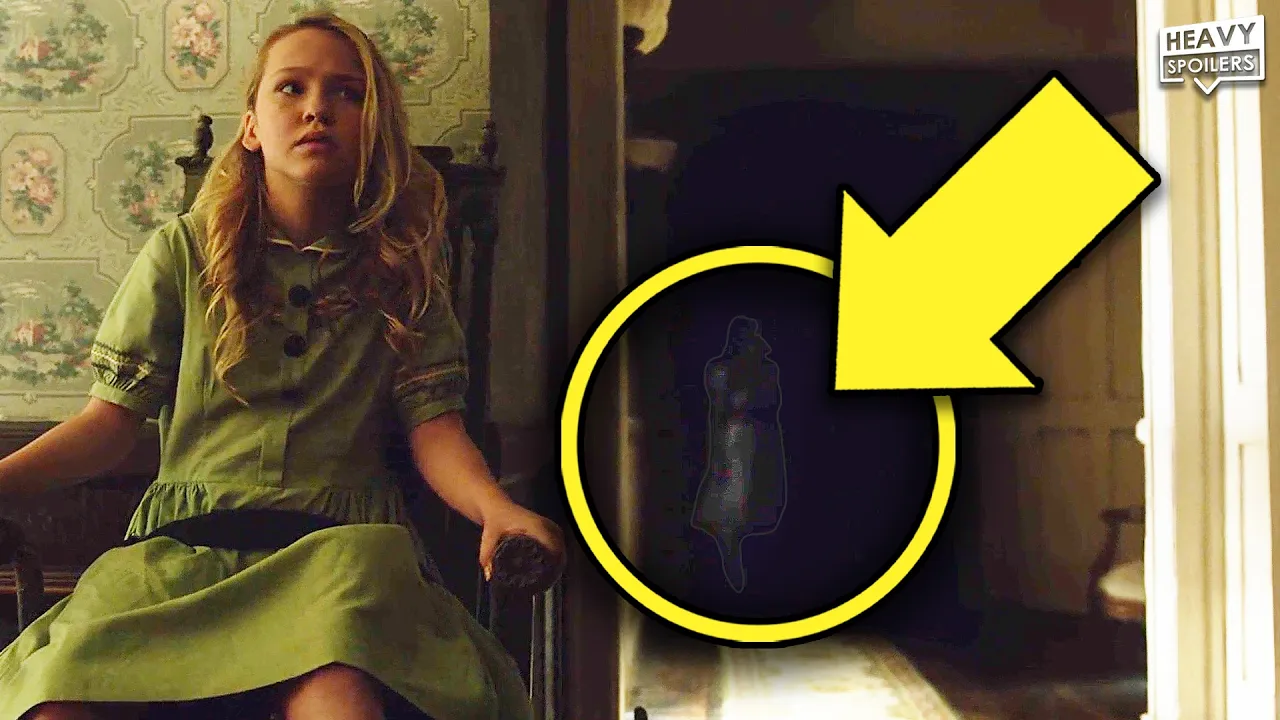
Adapted with AI from Heavy Spoilers' video of 10 January 2026 and checked against the video before publication. Editorial standards · Corrections
More from @heavyspoilers
All →


Make videos? Your next one could be an article here.
We turn your videos into articles under your name, linked back to the original. You keep 60% of what they earn, non-exclusive, and you can leave whenever you like.
Become a SubPlotter →