Federation vs Klingons: why did the peace never last?
From Organia and Sherman's Planet to Khitomer, the Klingon Civil War and the 2372 invasion of Cardassia, the conflict never truly ended
 Lore Reloaded (AI-assisted)28 November 2026Editor: Digital Fox Talent Editorial TeamOn YouTube since 2016 · more than 140,000 subscribers

In Star Trek, the struggle between the United Federation of Planets and the Klingon Empire is one endless conflict. It began before the Federation existed and was paused by treaties, accords and outside powers, but never resolved. Across two centuries of lore it moved from open war to imposed peace, then sabotage, cold hostility, alliance, civil war and, finally, betrayal engineered by the Dominion.
Here is how that conflict unfolded, from the first contact under fire to the war of 2372 that broke the alliance apart.
Before the Federation, the Klingons tested the Vulcans, Andorians, Tellarites and Earth
Long before Earth joined the stars, the Klingons were out there spreading, testing and conquering. They didn't see diplomacy. They didn't see culture. They only saw strength or weakness. The Vulcans met them first, and the two logic-driven powers could never see eye to eye. The Andorians came next and gave them a proper fight. Even the Tellarites, loud, proud and defiant, saw their trade ships shattered by Klingon disruptors.
Then came Earth. Captain Jonathan Archer made contact under fire. No peace was offered and no quarter was given, only challenge and contempt. The Klingons saw early humanity as brash, reckless and naive. That may have been true, but it was also dangerous, because humans didn't back down. They reached out to allies: the Vulcans, the Andorians and even the Tellarites.
When those four worlds united, the Klingon Empire took notice. The Klingons didn't fear the Federation because it was powerful. They feared it because it had potential: the potential to resist, to last and to win. So even before the Federation raised its flag, Klingon blades were already drawn.
The war of 2267 ended when the Organians imposed peace
By 2267, tensions had reached their breaking point. The cold war between the Federation and the Klingon Empire boiled over. Diplomacy failed, borders were violated and open conflict began. This was the first true war between the two powers, kind of. Fleets were mobilized, outposts were attacked and Starfleet issued a general order to prepare for full-scale war. The war didn't last long, but it revealed everything about how the two sides would fight for the next century.
The Federation sent the USS Enterprise to secure Organia, a minor world in contested space. The Klingons arrived afterward and weren't interested in negotiation. Occupation began swiftly. Organia offered no resistance, and the Federation moved to reclaim it. But the real resistance didn't come from Starfleet. It came from the Organians themselves, who were not what they appeared to be. Beneath their calm, pastoral surface was an ancient noncorporeal species, powerful and disinterested in violence.
When both sides stood poised for total destruction, the Organians stopped it. They froze weapons systems, paralyzed fleets and spoke to both empires as equals and as children. As they would ultimately say: "We find your war disgusting." They imposed peace not through negotiation but through force. The result was the Organian Peace Treaty, a document neither side wanted but both were bound to.
The treaty ended the war, but it didn't resolve anything. The Klingons were humiliated and the Federation felt exposed. The Organians vanished from the galactic stage, not to intervene again, at least not yet. The war of 2267 was short, but it revealed a truth both empires would learn the hard way: sometimes peace isn't earned, it's imposed.
Sherman's Planet in 2268: Arne Darvin, a grain shipment and the tribbles
Not every battle is fought with disruptors. Sometimes all it takes is a crate of grain, a fake diplomat and one very judgmental tribble. In 2268, war was off the table, but that didn't mean peace had arrived. Under the terms of the Organian treaty, the Federation and the Klingon Empire competed for influence through development rights. It was a soft war waged with policy, not phasers.
One such battleground was Sherman's Planet. Whichever side could best develop it would gain control. The Klingons used deception and the Federation used diplomacy. The Klingon plan was subtle: a covert operative, surgically altered to appear human, posing as a Federation official. His name was Arne Darvin, and his mission was to sabotage the Federation's grain shipment, ruin the colonization effort and hand the planet to the Empire.
It was nearly a perfect plan until the tribbles arrived. Tribbles hate Klingons, and one sniff of Darvin blew the entire operation wide open. The Federation exposed the plot, Sherman's Planet remained under Federation jurisdiction and Darvin became a footnote in the annals of failed Klingon espionage.
The real story was never about the tribbles, though. It was about how the war continued without weapons, through sabotage, infiltration and legal manipulation. The Klingons had adapted to the rules of the treaty and turned them into a weapon, and it wouldn't be the last time. Sherman's Planet never became a battlefield, but it proved that even peace can be manipulated.
Praxis, Chancellor Gorkon and the Khitomer Accords of 2293
Some wars end in fire. Others end because a star explodes and an empire realizes it can't survive another one. For decades, the Federation and the Klingon Empire existed in cold hostility, with skirmishes, proxy wars and spying. Through it all ran an unspoken truth: neither side was ready to change. Then Praxis exploded.
In 2293, the Klingon Empire's key energy moon was destroyed in a catastrophic accident. Environmental collapse on Qo'noS was imminent, and without outside aid the Empire would fall. For the first time in living memory, the Klingons asked for peace. Chancellor Gorkon, a reformer, offered something unprecedented: diplomacy, not from weakness but from vision. The Federation agreed, but not everyone supported it.
Inside Starfleet and the High Council, a conspiracy formed to stop the peace. General Chang, Admiral Cartwright and agents from both sides plotted the assassination of Gorkon, the derailment of the Khitomer conference and the preservation of the old order. They almost succeeded. Gorkon was killed, and Kirk and McCoy were framed. Peace hung by a thread, but the truth prevailed. Spock, Uhura and the crew of the Enterprise uncovered the conspiracy, and at Khitomer diplomacy triumphed over fear.
The Khitomer Accords were signed not as a surrender but as a choice to evolve. To the Federation, they were a triumph of values. To the Klingons, a painful compromise. To the galaxy, they were hope. The Accords would hold for almost a century, but even a signed peace must be defended. Praxis forced the Klingons to change, and Khitomer gave the Federation a reason to believe in it. The old warriors never truly left. They waited for the next war.
A quiet escalation along the 24th century Klingon border
After Khitomer, the war ended, but only on paper. Through much of the 24th century, the border between the Federation and the Klingon Empire remained unsettled. There was no declared war, but ships were lost, colonies were contested and trust remained scarce. The Organian Peace Treaty had kept the two sides apart for decades, but with the Khitomer Accords in 2293 the old rules were gone. The Klingon Neutral Zone was abolished, the Organians had vanished, and peace now depended on diplomacy and restraint.
The Archanis sector, Donatu V and other disputed regions would flare up, then settle. There were no declarations of battle, only a pattern of small incursions and silent losses. The Klingons, proud and fractious, tested Starfleet's patience with raids, honor missions, rogue houses and displays of influence. The Federation responded in kind. Outposts were upgraded, patrols increased, and veteran ships like the USS Rutledge and the USS Tecumseh were reassigned to flash points.
This wasn't open war, but it was quiet escalation. Power was shown through posture rather than conquest, and each border incident became a political test. Starfleet captains weighed every move and Klingon leaders counted every delay. All the while, the peace held, technically. The situation only grew worse as the High Council became more divided by political rivalries, house feuds and old wounds that were papered over rather than healed. While Starfleet hoped for stability, others prepared for something else, and new threats were emerging in the quadrant. The border never erupted into war in this period, but every conflict carved a little deeper into the trust that kept peace alive.
The Klingon Civil War of 2367: Gowron, the House of Duras and the Romulans
Some Klingon wars are fought with names, honor and betrayal. In 2367, the Empire entered a period of internal crisis that threatened to undo centuries of blood and tradition. It began with a single death. Chancellor K'mpec, the longest serving Klingon leader in history, was assassinated, quietly and cowardly, by poison. With his death, the old balance of power collapsed.
Two successors emerged. Gowron was an outsider and reformer, viewed by some as weak and by others as principled. The House of Duras was a family tainted by dishonor, yet wielding influence, wealth and political muscle. The conflict was about more than succession. It was about the soul of the Empire. The Duras family had once covered up a Romulan attack on Khitomer and framed Worf's family for the crime. The truth was known, but the lie was tolerated because exposing it would fracture the Empire. With K'mpec gone, the lie came due.
The Federation watched cautiously. A Duras victory would have placed a Romulan aligned regime at the head of the Empire, a disaster for galactic stability and the Federation Klingon alliance. Gowron was the obvious choice, but under the Prime Directive Starfleet couldn't interfere in an internal Klingon matter. Worf, now a Starfleet officer, was caught in the middle, bound by duty and torn by heritage. He chose to support Gowron, not because Gowron was perfect, but because he wasn't corrupt. When Duras forces ambushed Gowron's flagship, the Enterprise-D was present, armed and powered, but it didn't engage. Picard followed the law. To many Klingons, it looked like cowardice. To Starfleet, it was diplomacy. To Worf, it was the cost of restraint.
The civil war began, Klingon against Klingon, with honor as the banner and power as the goal. Beneath it moved Romulan involvement. Lursa and B'Etor, the Duras sisters, had allied with the Romulan Star Empire, and coordinating that support was Sela, the daughter of Tasha Yar, raised as a Romulan and deployed to destabilize the Federation's only major ally. The Federation took action without firing weapons, leading a blockade with listening ships deployed across the Klingon Romulan border under Picard's command. The Romulans tested the line and the Federation held it. The Romulans were exposed, the Duras rebellion collapsed and Gowron stood unchallenged. Worf had resigned from Starfleet to fight alongside his people, and when the war ended he returned, changed. Gowron owed his position to the Federation, and neither he nor his enemies would forget it. The civil war opened a new chapter of dependency, resentment and quiet war.
The 2372 Klingon invasion of Cardassia and the changeling Martok
In 2372, the Khitomer Accords died and the alliance was dismantled in a single declaration. Chancellor Gowron accused the new civilian government on Cardassia Prime of being infiltrated by the Dominion, and without warning the Klingons invaded, seizing Cardassian worlds under the banner of preemptive defense. The Federation condemned the attack. Starfleet officers ran tests and found no proof of changeling infiltration. But the Founders had already learned to bypass those tests, and one had infiltrated the highest levels of the Klingon High Command. General Martok, Gowron's military adviser, was a changeling.
When the Federation refused to support the invasion or hand over the Cardassian civilian government, Gowron declared it weak and compromised. The Klingons launched an offensive into the Archanis sector, seizing outposts, raiding colonies and pushing a surprised Starfleet into retreat. Then came Deep Space 9. Believing the Cardassian Detapa Council was under Federation protection, the Klingons attacked, but the station held thanks to upgraded defenses and a crew ready to fight. Sisko's preparation paid off. Federation and Bajoran forces fought side by side and the Klingons were brought to a stalemate.
Gowron didn't stop the war. Raids, convoy ambushes and planetary skirmishes continued, with ships like the Rutledge and the Tecumseh fighting to hold the line. It wasn't a full war, but it was the prelude to one. Worf, now serving on the Defiant, was tried for firing on a cloaked vessel the Klingons claimed was civilian, a propaganda weapon aimed at fracturing Federation support. Worf was cleared, but Starfleet learned the war would be about perception as much as ships. Eventually Starfleet officers proved Martok was a changeling, and Gowron quietly ended the campaign with no treaty and no announcement, out of necessity, because the real war was coming.
The war of 2372 was short, but it showed how fast trust dies. The Dominion hadn't just infiltrated the Klingons. It had shattered the Federation's most important alliance before the first shot was fired.
What other creators are saying
More on Klingons →Star Trek's proudest warrior race lost winnable fights, turned on its own commanders, and kept handing its enemies the advantage.
A Romulan War buildup, a Mirror Universe miniseries, the Borg Queen's origin and a refitted NX-01 were all part of the plans for a season that never got made
Tomorrow's Enterprise plays less like classic Kirk and Spock and more like Next Generation's All Good Things, and the people who made it are calling the future we saw continuity.
Strange New Worlds finale: did it give TOS the ending it lacked? →
Watch the original
@lorereloaded · YouTube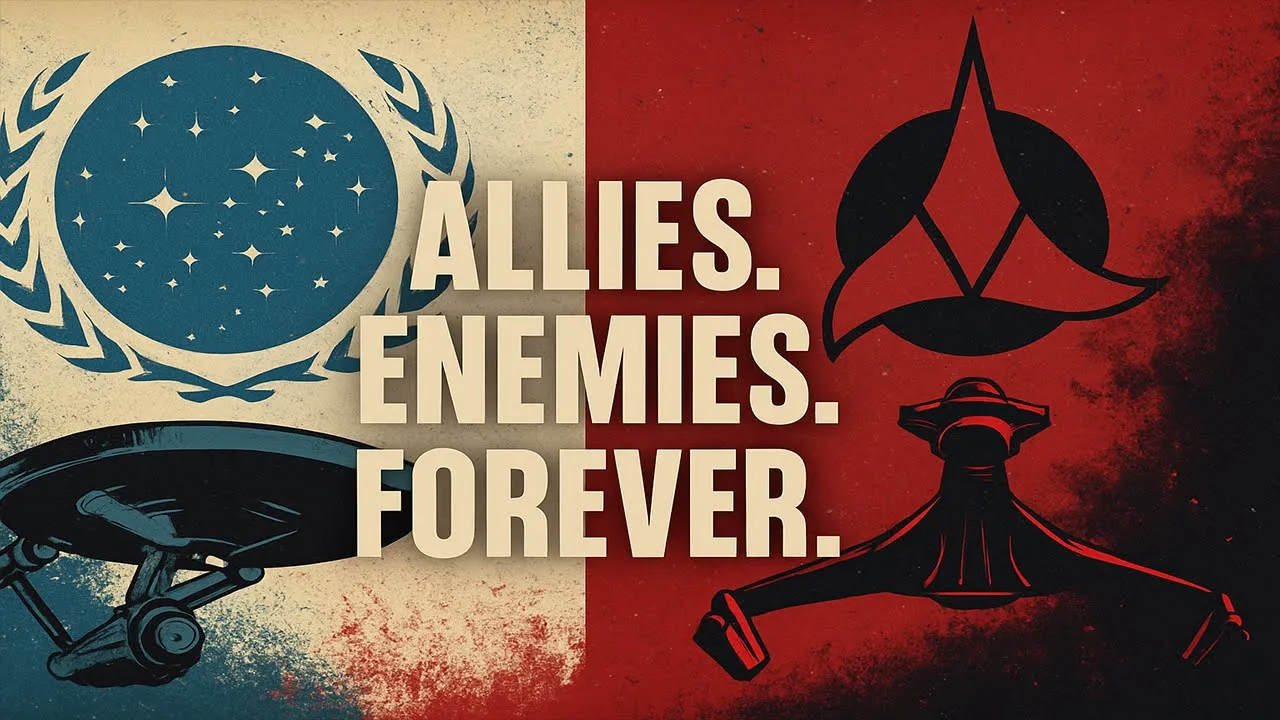
Adapted with AI from Lore Reloaded's video of 26 April 2025 and checked against the video before publication. Editorial standards · Corrections
More from @lorereloaded
All →


Make videos? Your next one could be an article here.
We turn your videos into articles under your name, linked back to the original. You keep 60% of what they earn, non-exclusive, and you can leave whenever you like.
Become a SubPlotter →