Enterprise-D: the Galaxy class flagship built for peace
From school classrooms to Wolf 359 and the Dominion War, the Galaxy class shows how Starfleet's expectations of the future changed

In 2364, the most advanced ship in the Federation carried schoolchildren into deep space. Three years later, 39 starships were destroyed at Wolf 359 in a single battle. Starfleet wasn't unprepared by accident. It had spent a century building a navy and calling it something else: ships that changed outcomes by arriving, ships built in numbers and built to be risked, each with an explanation of exploration, science or diplomacy, and none of them called a warship.
There is a difference between a ship built to endure hardship and a vessel built to assume comfort. When the Enterprise-D entered service in 2363, it did not arrive as a reaction to disaster. No recent invasion had forced a redesign, and no shattered fleet required rebuilding. It emerged during a period of expansion and relative stability, commissioned not to correct weakness but to extend presence.
The Enterprise-D was constructed for families from the keel up
Step aboard and that intention becomes tangible. The first impression is not defensive architecture. It is openness. Corridors are wide, lighting is warm, and carpet softens footsteps that might otherwise echo. The bridge favors visibility and conversation, with stations arranged so officers can see one another without turning away from their consoles. The room suggests discussion before confrontation.
Move deeper and the design reveals what Starfleet expected daily life to be. Ten Forward overlooks the stars as a social space rather than a tactical platform. An arboretum sustains living ecosystems from across the Federation. Classrooms operate because children reside aboard. Civilian quarters are integrated into the ship's structure instead of segregated behind reinforced bulkheads. This was not a vessel carrying families as an emergency measure. It was built for them.
Medical and scientific facilities reinforce the same expectation. Sickbay resembles a research hospital more than a battlefield aid station. Laboratories span entire decks, and equipment intended for long term study occupies volume that could have been converted to additional armor or weapons. The allocation of space signals priority without explanation. Scale amplifies the message: at over 600 meters in length, the Enterprise-D functions more like a mobile settlement than a patrol ship, with diplomats, botanists, teachers, engineers, security personnel and civilians all aboard at once.
Early Enterprise-D missions put restraint ahead of firepower
Mission profiles reflect that structure. In Encounter at Farpoint, the ship's first assignment centers on evaluating a potential Federation member world and resolving a misunderstanding with an alien intelligence. The challenge is moral and diplomatic before it is tactical. Early voyages involve negotiation, survey and first contact scenarios where language and restraint carry more weight than firepower.
Risk management follows the same logic. In The Arsenal of Freedom, the Enterprise answers a distress call near a remote planet and discovers an automated weapon system that attacks without warning. Rather than collapse into disorder, the crew initiates a controlled saucer separation. Families and nonessential personnel withdraw in the saucer, while the stardrive section stays behind to neutralize the planetary defenses. Commands are clear, systems disengage along predetermined lines, and what might appear extraordinary is executed as standard procedure. The architecture anticipates danger without centering it.
That hierarchy shapes command philosophy. When Riker later describes combat as a minor province of a captain's duties, it reflects life aboard a vessel where diplomacy and representation take up most of the time. In Symbiosis, one civilization supplies another with a substance presented as medicine but functioning as a narcotic. The ship could intervene, but Picard withholds Federation assistance and lets the truth surface without coercion. In Justice, a crew member inadvertently breaks a local law and faces execution. Extracting him by force is considered, but resolution comes through negotiation and moral argument.
Across these incidents, a pattern forms. Force is available, but it's not reflexive. Senior staff gather around a conference table designed for debate rather than command decrees, disagreements unfold openly, and urgency punctuates routine instead of defining it. On the Enterprise-D, the belief that the future would be guided through diplomacy, research and steady presence never needs to be stated. It is embedded in the space people call home.
The Galaxy class was designed in a period of optimism
By the late 2350s, the Federation had expanded farther than at any previous point in its history. Core worlds were stable. The Klingon Empire had shifted from adversary to uneasy partner after the Khitomer Accords. The Romulan Star Empire remained distant and watchful, but largely withdrawn behind its borders for decades. No major power was pressing against Federation space, so fleets were dispersed, interior patrol density was low, and ships were expected to operate independently for long periods.
The Galaxy class design process began in the 2340s, a period defined less by emergency than by optimism. Engineers weren't asked to solve a wartime problem. They were tasked with building a flagship for generations. Modular internal space allowed sections to be reconfigured for scientific disciplines that had not yet matured. Massive power reserves supported research installations as easily as shield grids, and diplomatic suites could host foreign delegations in comfort equal to the core worlds. Everything assumed time: time to study, negotiate and adapt.
Weapons were present and formidable. Phaser arrays ran along the dorsal surface, torpedo launchers were integrated into the hull, and the shield emitters were among the most advanced in service. Yet they sat in a frame designed for endurance and presence rather than rapid strike warfare, with power distribution favoring sustained operation over sudden escalation. Saucer separation illustrates the philosophy. Instead of a compact warship and a separate transport, Starfleet combined both in one vessel that could divide if required, assuming civilian life could carry on even if danger occasionally intruded.
When the Romulans reappear in The Neutral Zone after decades of absence, the Enterprise holds position, communicates and tests boundaries through dialogue. Before the Borg, engagement models assumed parity conflicts, border skirmishes or localized crises. Families stayed aboard, and command decisions weighed education schedules and diplomatic receptions alongside patrol routes. This was not negligence. It was a reading of the strategic environment, one in which conflicts would remain limited, containable and rational. The ship projected permanence, and permanence assumes the future will resemble the present.
Q Who showed the Borg could not be negotiated with
Confidence holds until something refuses to be impressed by it. In Q Who, the Enterprise-D is thrown across the galaxy without preparation and meets a species unlike any adversary Starfleet has faced. There are no boundaries to dispute, no ideology to debate and no leverage to negotiate. The Borg don't posture or threaten. They examine. Communication is ignored, weapons fire registers as data, and shield frequencies are analyzed and countered in real time. A section of the hull is carved away, and 18 crew members die in seconds.
Romulans calculate risk. Klingons respond to honor. Even hostile powers operate within a political structure that can be influenced. The Borg offered none. For the first time, the Galaxy class faces an opponent that doesn't care what it represents. Its scale, power reserves and diplomatic authority change nothing. The ship is not negotiated with. It is processed. The engagement ends only when Q returns the Enterprise to Federation space, so survival is granted rather than earned.
The larger problem is that the Borg invalidate the model the ship was built on, one where escalation would be measured, reinforcements could be called and time would exist between decision and consequence. The Borg eliminate time. Yet the fleet does not pivot. Families remain aboard, diplomatic missions continue, and tactical briefings are updated while the fleet's structure stays the same. That isn't incompetence. It's disbelief. The Federation absorbs the encounter as an anomaly, and the golden age has not ended, but it has been warned.
Wolf 359 turned the Borg warning into catastrophe
Warnings can be rationalized. Catastrophe cannot. In The Best of Both Worlds, the Borg advance directly toward Earth, and this time there is no Q to intervene. The Enterprise-D engages first. Shields fail, transporters are compromised, and Captain Picard is taken from the bridge and assimilated. Through him, the Borg acquire Federation defensive protocols, fleet deployment patterns and command decision logic. Knowledge guarded for decades becomes operational leverage in hours, and Starfleet's flagship becomes the delivery mechanism for the Borg's advantage.
Starfleet mobilizes 39 ships to intercept the cube at Wolf 359, and they are destroyed within minutes. Thousands die, and for the first time in over a century the Federation faces the possibility of planetary assimilation. Wolf 359 reveals that stability had depended on the absence of a superior adversary. The Enterprise-D survives only because its crew exploits a narrow vulnerability in the Borg control network through Picard's residual identity. That is a desperate, improvised maneuver, not a strategic triumph.
Afterward, nothing aboard looks different. The carpet remains, Ten Forward is still there, and families still run the decks, but the meaning of those spaces has changed. Children now live on a vessel that has been penetrated at its core, and officers attend briefings knowing 39 ships failed to slow a single cube. Confidence doesn't vanish overnight. It fractures. Starfleet begins designing something else: the Defiant class emerges from this trauma, the Sovereign class follows, and doctrine moves toward concentrated firepower and rapid response. The golden age ends because the universe proves faith is not enough.
The Dominion War pressed the Galaxy class into service as a battleship
The golden age lingers rather than ending in one engagement. After Wolf 359, the Enterprise-D resumes exploration, commendations are issued and public confidence holds. Beneath the surface, procurement shifts. Research into ablative armor and advanced shield harmonics accelerates, tactical simulations change parameters, and fleet doctrine plans for concentrated force projection rather than dispersed presence. The Galaxy class itself does not change, and when the Dominion War begins, it is deployed as a battleship.
In Sacrifice of Angels, Galaxy class vessels appear in formation alongside newer designs built with war in mind. There is no saucer separation and no evacuation of civilians mid engagement. The ships advance in line, trading sustained fire with Jem'Hadar battlecruisers. The silhouette is the same. The role is not. The Dominion doesn't posture across neutral zones or rely on psychological deterrents. It commits fleets, accepts losses and advances through attrition in prolonged, coordinated campaigns.
A vessel engineered to operate independently for years now fights inside fleet formations, where concentration matters more than independence. Phasers fire for sustained damage rather than calibrated deterrent shots, and hull plating absorbs impacts once considered catastrophic. The ship endures, but endurance is no longer dominance. Galaxy class ships in wartime represent capacity, tonnage, energy output and survivability. Their persistence is not evidence of failure but of transition: a ship designed for a confident civilization defending a cautious one, a relic pressed into service not because it was weak, but because the era that shaped it no longer exists.
The Enterprise-D ended quietly, and no flagship followed its template
The Enterprise-D does not fall in a grand battle. It is destroyed by a decades old Bird of Prey exploiting a temporary shield vulnerability, a Klingon vessel built long before the Galaxy class was conceived. The symbolism is difficult to ignore. The most advanced ship of its era is undone by circumstance and exposure. The saucer crashes on Veridian III, the civilians survive, and the stardrive section detonates in orbit. The flagship of the golden age ends quietly.
By then, Starfleet had already moved on. The Sovereign class had entered service, the Defiant class had proven its utility, and fleet formations were denser, reaction times shorter and strategic paranoia higher. Other Galaxy class ships kept serving in the Dominion War, fighting effectively and remaining formidable, but they were no longer aspirational. No future flagship resembles a flying city. The Enterprise-E is sleeker, harder and focused, with a more compressed interior, a more tactical bridge and a less ceremonial posture.
What changed was not Starfleet's capability but its expectation of the future. The Borg introduced existential threat, the Dominion normalized large scale fleet warfare, and Section 31 operated in shadows that golden age optimism preferred not to acknowledge. The Federation adapted, and the Galaxy class became a memory of confidence, of a civilization secure enough to send its children into deep space aboard its largest vessel. It remains one of the most powerful designs Starfleet ever produced. What it no longer represents is certainty.
Watch the original
@lorereloaded · YouTube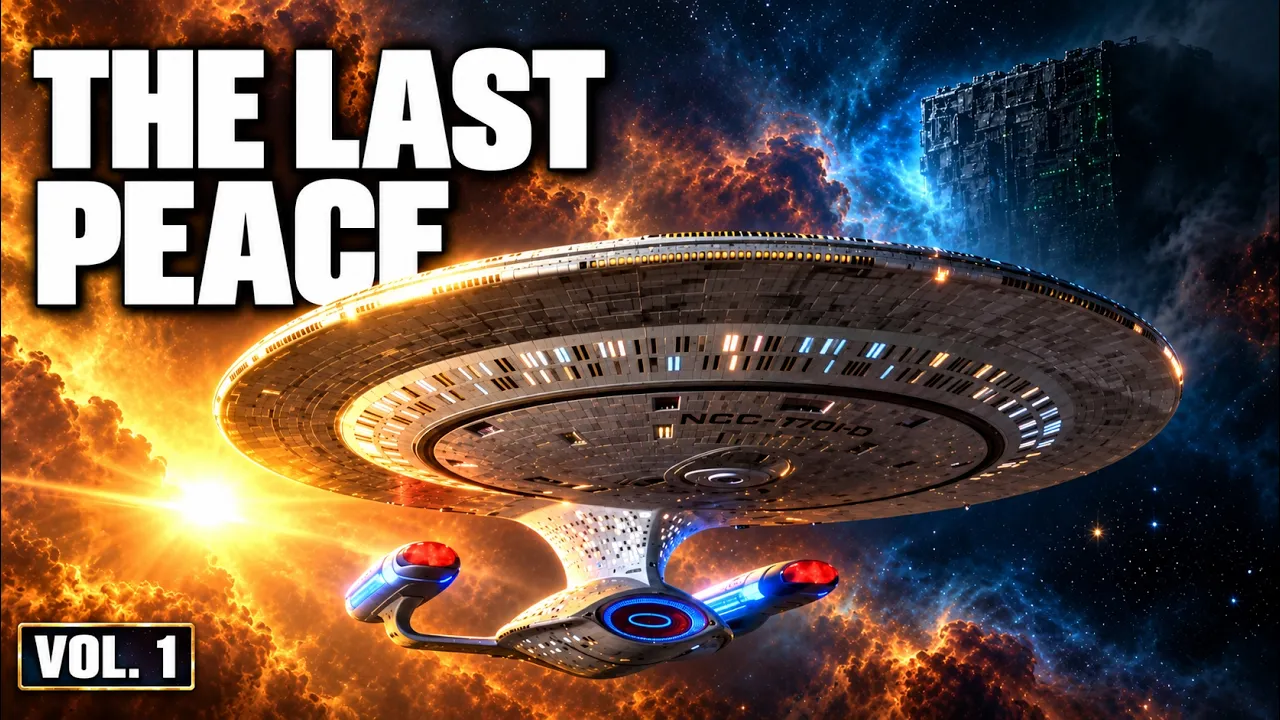
Adapted with AI from Lore Reloaded's video of 25 October 2026 and checked against the video before publication. Editorial standards · Corrections
Also on Star Trek
4 creators, 98 takes →


More from @lorereloaded
All →Make videos? Your next one could be an article here.
We turn your videos into articles under your name, linked back to the original. You keep 60% of what they earn, non-exclusive, and you can leave whenever you like.
Become a SubPlotter →