Marvel's Wolverine sales: 2.4 million in 50 days, how bad is it?
Sony's latest figures show Insomniac's Wolverine trailing Spider-Man 2 and Ghost of Yotei, and I could not verify credible reporting that Marvel is preparing to pull the license

Sony has released its latest financial results, and with them comes an official sales number for Marvel's Wolverine: 2.4 million copies. That sounds good until you realize Spider-Man 2 sold more than that in its first 24 hours, and Wolverine has been out for 50 days. That's a wide gap, and I think there's a bigger problem here than one game having a slower launch.
Marvel's Wolverine comes from Insomniac Games. When you're talking about an Insomniac game, a major Marvel character and the kind of money reportedly spent on it, you have to ask what happened. There has been plenty of drama and controversy around the game. There are memes, and there's talk about Marvel potentially pulling its license. But a sales figure in Sony's own report is different from a rumor that gets repeated until everybody assumes somebody verified it.
Sony lists Marvel's Wolverine at 2.4 million copies through November 4
Sony lists Wolverine at 2.4 million copies sold through November 4th. The game launched September 15th, which puts that milestone at 50 days. These numbers arrive with Sony's quarterly financial results, but the Wolverine update extends beyond the September 30 end of the quarter. So we're looking at considerably more than the first couple of weeks of sales.
Is 2.4 million copies terrible by itself? No. Some developers would celebrate that number in a big way, and entire franchises would love to have that audience. But every game carries its own expectations. Development costs, marketing costs, the deals involved in getting it made and the time it took to make all differ. "You could sell millions of copies and still have a very uncomfortable conversation when the bills come due."
How Wolverine sales compare with Spider-Man 2 and Ghost of Yotei
That's why the comparisons matter, even if they don't tell the whole story. Sony's own figures put Spider-Man 2 at 2.4 or 2.5 million copies on day one and 5 million in 11 days. Ghost of Yotei reached 3.3 million in 32 days. Wolverine is at 2.4 million after 50. It took longer to sell fewer copies than either of those games needed to reach their milestones.
Somebody could say Wolverine was never going to sell like Spider-Man. Fair enough. I don't think every Marvel character automatically has the same audience. Spider-Man 2 also had the benefit of continuing an established series, and it's Spider-Man. But Sony chose to make the game. It chose the scope and approved the investment. It put the game in a position where we're now asking whether millions of customers are enough. That's the part I keep coming back to: how many people have to buy one of these games before everybody involved can breathe?
Wolverine's reported $300 million budget comes with caveats
There has been reporting that puts Wolverine's development cost at roughly $300 million. To be clear, that's a reported figure. It isn't a final budget Sony has confirmed in the sales table we're discussing. We also don't have a complete public breakdown of the project's cost and returns. But if the cost is anywhere near that neighborhood, you can understand why 2.4 million copies isn't getting it done.
Don't take the number of copies, multiply it by the price on the box and call the answer profit. That doesn't tell us what Sony earned from each sale. We don't know what was spent on the project or how the licensing agreement with Marvel works. We don't have enough information to announce an exact loss. What we do have is a major release selling substantially behind some of the other big PlayStation launches. That's worth discussing without inventing a dollar amount to make it sound worse.
Wolverine's controversies and hand-holding design
For me, this raises a big question about how these games are being sold to us. It also raises a question about how they're being made, because the game was riddled with controversy. There were the flatulence trails. You could ride the bike without doing anything, and the quick time events didn't ask you to do anything either. I don't know who it was catered toward. There was so much going on.
When Wolverine was announced, it had my attention, and everybody's. We know who the character is and what the claws can do. When the early looks promised the game would be bloody and gory, the reaction was: let's go. I was imagining the combat, the atmosphere and the kind of story you could tell with Logan.
Logan gets people to the trailer, but the game has to close the deal
That initial excitement only carries you so far. Eventually you have to convince somebody that this particular game deserves their money right now. People have backlogs and bills, and they have games their friends are already playing. Being interested in something and buying it at launch are two different decisions. "A recognizable character gets people to watch the trailer. The game has to close the deal."
The reception hasn't given us a straightforward picture. One review gave Wolverine a seven out of 10. Other coverage has discussed a mixed critical response alongside a more enthusiastic response from some players. I don't know. You have to play it yourself and decide, and you can enjoy the game and still think the sales are concerning.
Did it give you the Wolverine experience you wanted? Many people are saying they dumbed down Logan and made him too sensitive, and that he wasn't the Wolverine they expected. Would you tell somebody to buy it at full price? That recommendation becomes valuable once the launch marketing fades, because then Sony relies on word of mouth and referrals to market the game. Trailers are meant to hook you and pull you in. That's what they're for.
Is frustration with PlayStation hurting Wolverine sales?
There are some angry PlayStation fans. My opinion is that when customers are unhappy with a company, they can become far less willing to give its next product the benefit of the doubt. It may not all be the fault of Insomniac or Wolverine. It's also PlayStation's fault at a bigger scale. We can't look at the sales number and prove that frustration with the PlayStation brand caused it, but I think we can all look at each other and say it has something to do with it.
Maybe somebody wasn't interested in Wolverine. Maybe they watched gameplay and decided it wasn't for them. Maybe they're happy with their PS5 and still don't want that particular game. We don't need to pretend every person who passed on it was making the exact same statement, because that's not the truth.
What Sony should want to know is why enough people didn't feel the urgency to buy this game. Was the pitch convincing? Did the game offer something people felt they needed to experience? Were the expectations realistic for the character and the audience? Were the story, the writing and the villains good? Or were we killing ninja after ninja, not having to drive our bike and having our hands held through the whole experience? So many factors go into it, especially for a single player game.
Those are useful questions. I don't think calling every customer who waited a hater gets anywhere. Neither does treating an established studio as if it's automatically owed another purchase, because it isn't. Gamers are realizing their money is the value and the power here. You're seeing games that missed the mark in multiple ways, and some of those end up dead on arrival. I go back to Concord over and over.
No credible reporting that Marvel will pull Sony's license
I could not verify credible reporting that Marvel is preparing to revoke Sony's or Insomniac's license because of Wolverine sales or PlayStation's public image. So I'm not going to say that's happening. A disappointing sales comparison doesn't establish that a licensing agreement is about to be terminated. It also doesn't tell us what rights anybody had under the agreement. We don't know.
It's easy to see how quickly a story can get away from the facts. Somebody says Marvel might be unhappy. Somebody else repeats that as Marvel considering its options. Three posts later, people are talking as if Spider-Man is already packing his bags. You can't do that.
What Wolverine could mean for Sony's next licensed games
I think the more interesting question is what this performance means for the way Sony approaches these projects moving forward. It's all speculation, because we don't have Sony's internal planning documents. But if you invest heavily in a licensed blockbuster and the audience comes in below what you hoped, which is what's happening here, you've got some explaining to do and some decisions to make.
Do you reduce the scope of the next one? Do you just make Spider-Man games? Do you change how you market it? Do you reconsider what you expect a particular character to sell? Do you maybe listen to the community more? They're all conversations to have.
What other creators are saying
More on Marvel's Wolverine →I loved the Nightmare Cabin memories and think the final Essex and Sentinel battle, clearly indebted to Shadow of the Colossus, is the best fight in the game. I also believe the Gambit card hints at a possible future X-Men RPG, and the motorcycle sections deserve their own Road Rash mode.
Marvel's Wolverine Easter eggs: is that Al Capone and Gambit? →
From Ryan Schneider's early development comment to Incredible Hulk #184 references, here is everything pointing to when Marvel's Wolverine arrives and what story it might tell
Both versions of Miles share the same powers, but the game version's feats against Rhino, Sandman and Venom give him the edge.
Achara Cook and Haley Seat kick off a nine-part watch-through of every Spider-Man PS5 cutscene, and the Peter Parker and Doc Ock dynamic already has them worried about how it ends.
Watch the original
@morechaosgaming · YouTube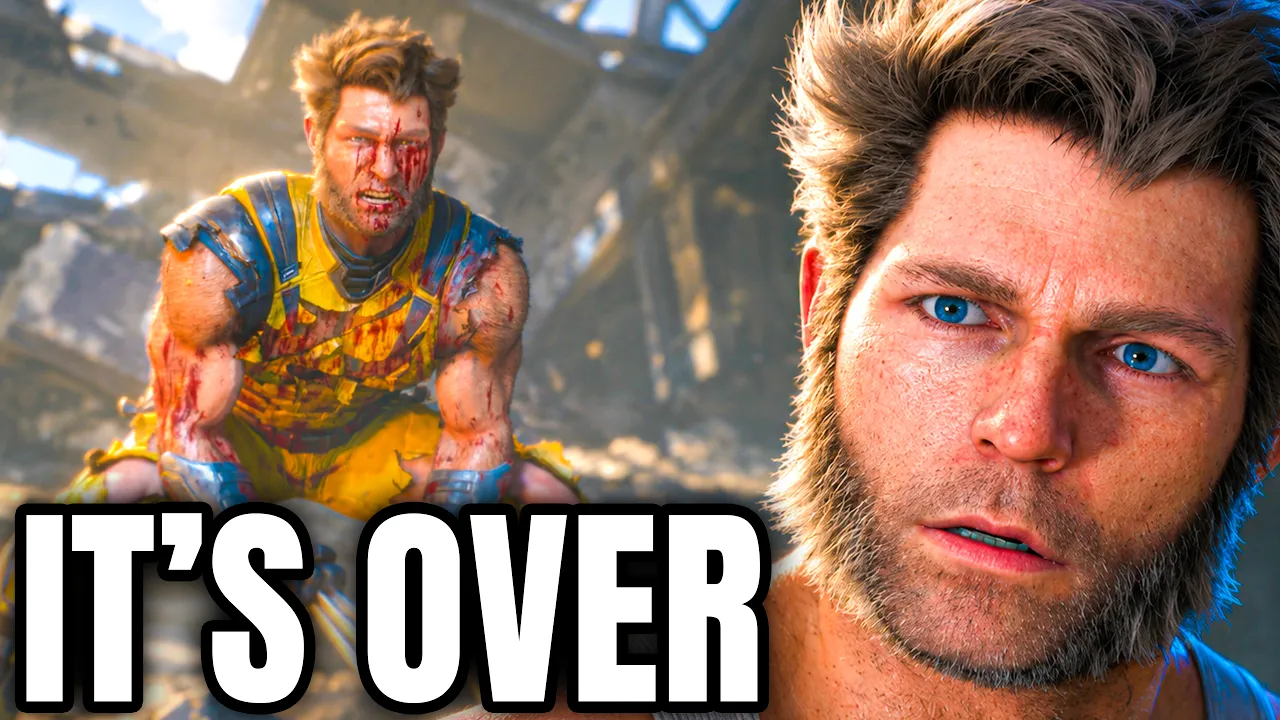
Adapted with AI from Chaos' video of 7 November 2026 and checked against the video before publication. Editorial standards · Corrections
More from @morechaosgaming
All →


Make videos? Your next one could be an article here.
We turn your videos into articles under your name, linked back to the original. You keep 60% of what they earn, non-exclusive, and you can leave whenever you like.
Become a SubPlotter →