VisionQuest episode 2: why does Ultron say be the king?
Thomas Shepherd's split identity, the Paladin dossier's link to real assassinations, and why Ultron tells Vision to be the king rather than the ship.
 New Rockstars (AI-assisted)27 November 2026Editor: Digital Fox Talent Editorial TeamOn YouTube since 2011 · more than 4.4 million subscribers

In episode 2 of Marvel's VisionQuest, Ultron tells Vision not to be the ship but to be the king. If I'm right about him, he might have a real-world operative like Jocasta working outside Vision's head, ready to reclaim Vision's body and finish his Age of Ultron mission if Vision dies.
The episode, from the eight-episode series starring Paul Bettany that concluded the WandaVision trilogy, also digs into Thomas Shepherd's two identities, opens the files on the Paladin order and has Ultron rewriting the Ship of Theseus for Vision.
Thomas Shepherd's psych evaluation reveals two lives in one body
The episode opens on Thomas Shepherd's criminal psych evaluation, recorded a year before the main events at the Tottenham police station. He describes roughhousing with the boys in the pool, not being bullied, which is what Billy thought was happening during the seance in Agatha All Along episode 8. This is the moment the soul of Tommy Maximoff from the Hex entered the body. Thomas calls it a bolt of lightning. I assume that's the speedster shock that might have zapped the other kids in the water without killing them.
Thomas asks, "How can it feel so real when I know it's impossible? How can I have two lives?" His experience differs from Billy's. In Agatha All Along episode 6, William Kaplan died in a car accident, his soul fully gone, and Billy's magic moved into the body at that moment. It was 100% Billy's consciousness, with memories only of the Hex, so Billy pretended to know William's parents, Jeff and Rebecca. Joe Locke played Billy as suffering in silence, hearing their anxieties through telepathy.
Thomas holds both memories and both consciousnesses, so his reaction is far more explosive and panicked. It seems Thomas Shepherd didn't fully die in the pool, so his original soul never left. Or maybe, since the seance came three years after the Hex collapsed, the transfer wasn't as clean. With his origin in the water, he may be another Ship of Theseus himself. Like his father, he contains multitudes.
The evaluation came six months after Tommy entered the body and a year before the main events. That puts the main events roughly 18 months after Agatha All Along and four and a half years after WandaVision, suggesting we're sometime in 2028.
Clancy, Lisa and Tommy's escape from the prison shuttle
On Christmas a year after that evaluation, Thomas is loaded into a juvenile prisoner transport by London's Tower Bridge. The officer, Clancy, is played by Ben Crompton, Dolorous Edd from Game of Thrones. Clancy's speech nods to Norman Bates in Psycho, who had a split personality, so that might resonate with Tommy. Tommy flashes back to a scary Vision in the pool, including the moment Vision tried and failed to push through the Hex wall in WandaVision episode 6.
Lisa tells him who we are matters less than who we pretend to be, and that's whoever keeps us alive. She's the one who gave Tommy the advice he mentioned in episode 1 about waking up every morning and choosing who to be. She jokes that she killed a man and wore his face, identifying with Hannibal Lecter, but she's a talented pickpocket who lifted six wallets off five men. One offender screams about not wanting to go back to the sanitarium, and Lisa says no one ever gets out.
When Thomas stands up for Lisa, Clancy prods him with electricity. Tommy's speedster abilities kick in and he redirects the current into Clancy, scarring his neck and chin. Lisa grabs the keys, Tommy vibrates the hinges off the doors while the other prisoners loudly sing Jingle Bells to cover Clancy's shouting, and the two slide out the back.
The Paladin dossier ties real assassinations to the order
With Paladin's voice booming from the sky, Ultron again denies any involvement, yet urges Vision to investigate and make connections. Ultron seems to be working his own angle to get Vision out of stasis so Ultron can more easily break free.
The briefing shows the Paladin Order's sigil on an armored chest plate, suggesting it goes back at least to the Middle Ages, plus a photo from what looks like the late 19th century with a goggled mask. At least 10 past Paladins appear with identity unconfirmed banners and digital blurring. The four in closeup span ages, races and, I think, genders, with signatures likely taken from their contracts.
The crest shows three bloody swords over a bloody shield with a motto that I think pairs Palta, which I assume is the ancient family, order or clan behind the modern name, with honor.
Then come historical killings. A real French front page illustrates the failed assassination of Fernand Labori, a prominent French attorney who defended high-profile political clients. The assailant was never identified, so in the MCU it was a Paladin, and a signed contract suggests Labori may have died there in the MCU.
A mug shot of prisoner 7129 looks 20th century to me. My theory is that he was the real shooter in the failed 1933 attempt on Franklin D. Roosevelt that killed Chicago mayor Anton Cermak. Historically that was Giuseppe Zangara, but maybe Cermak was the target and this was a Paladin.
Some bounties weren't killings. One receipt reads target delivered alive for $25,400, a low pre-inflation sum I'd place early to mid 20th century. Another Paladin collected $1.5 million. Friday explains that Paladins have the sharpest minds and train in all kinds of weapons, with knife diagrams on screen. The knight chest piece logo also appears on crates and with a woman with robotic arms in the trailer, so she'll be at the Paladin base at some point.
Madripoor and the Paladins' unbreakable contract
A partial headline, "lin bomber captured," may point to Berlin or Dublin. Another says a bounty hunter bypasses federal efforts, a Paladin the press couldn't name. We also see bodies in Madripoor and a magazine profile titled Man or Myth. Friday says Paladins consider their contract sacred, bound by an unbreakable contract. I wonder what keeps it unbreakable. Is it honor, or could it be blood magic, explaining why Paladin is so open-minded about witchcraft?
Another headline reads bounty hunter finds asylum in Madripoor. My read is that an anonymous bounty hunter tangled up with American or European authorities found legal refuge in the fictional Southeast Asian country for thieves and black market dealers from The Falcon and the Winter Soldier, which has no extradition treaty with the United States. Seeing Madripoor at all raises power broker Sharon Carter as a possible client.
The St. Mabin's sanitarium trap and Tommy's memories of Westview
After kidnapping Thomas from Borough Market in episode 1, Paladin takes him to the same sanitarium his prison bus was headed to. That subplot ends abruptly with Clancy getting zapped and shot in the head, followed by Paladin's mercenaries getting in costume as patients and staff. I came away with many questions about what's going on there, and I wonder if something was reworked in post-production, because taking over an entire British corrections facility and fitting it with an EMP cage feels like a lot of extra work. Are there other guards or staff?
More of the evaluation plays. Thomas recalls a house haunted "like an audience that wasn't there," which is the Thomas side hearing the Westview sitcom laugh track as ghosts. His pixelated green lawns sound more like the mind space estate Vision is building now. He remembers a man with a blood-red face like a deep purple bruise, but with kind eyes, who called him son. I feel like Thomas might have seen the WandaVision episode 5 credits. I guess this also means he'd never heard of Vision, even though Vision's face would have been everywhere when he became a fugitive after Captain America: Civil War. Maybe the merged memories feel hazy and invasive.
Vision denies paternity, insisting no magical entity survived the Hex and that this is a Paladin deception. The AIs assume the client is SWORD reclaiming its hardware, though the real answer is probably more complicated. Thomas remembers Wanda singing, like her Sokovian lullaby in WandaVision episode 3, says her eyes held too much love and too much pain, and mentions their dog dying. That's Sparky, killed by Agatha. He says Wanda told them grief is love persevering, paraphrasing what Vision told Wanda about Pietro in WandaVision episode 8. What we saw Wanda tell the boys was that they couldn't reverse death, so maybe she said it later. Either way, Vision is confronted with evidence this kid is telling the truth.
Vision meets Paladin: Everything dies and the Wizard of Oz
Vision meets Paladin in the ruins of an old pub and turns down a drink, saying alcohol churns his synthetic digestive system. He couldn't taste the paprikash he made in Civil War and threw away a sandwich in WandaVision episode 5, so it might be any food. Paladin says "Everybody bleeds underneath," and he's right in a way: his adamantium bullets will make Vision bleed. From running simulations, Vision recites Paladin's next line along with him: "Everything dies." It's also the first line of Jonathan Hickman's Time Runs Out, leading into the 2015 Secret Wars, where Reed Richards lectures the Illuminati.
Vision claims he doesn't care, rattling off Thomas's stats: born to Irene Shepherd, deceased, which is why Thomas said he was orphaned twice. I think they mention Thomas had high academic grades, but because of his life in foster care he had to raise himself and turned to petty crime. Vision never reveals the grief line was his own, so he's bluffing. Paladin mentions monsters, wizards and witches, a Wizard of Oz reference. Paladin's theory that Tommy's magic went into this kid is only partly right, since he doesn't know Billy and Agatha did it.
Vision then calls back his line to Ultron in the 2015 film about grace in humanity's failings, sips the whiskey and dismisses the boy's fate. I love the offscreen transition to his machine form because it plays like a jump scare. Vision misses another chance to snap Paladin's neck, and the client's voice says, "I'm losing confidence in you." I don't know, but that voice sounds like Joe Locke to me.
Ultron also takes in another news report on the Butcher Bird killer targeting tech CEOs, with a luxury car crash. That he's only observing fuels my theory that he's using Jocasta or someone else for these killings.
Ultron tells Vision to be the king, not the ship
In Ultron's attic, Vision pounds the window shaped like his forehead opening. He has the other Vision's memories but not his feelings, his face but not his virtue, and all he feels is the weight of him: legacy, worthiness, as in worthiness to lift Mjolnir, and name. Ultron counters that humans can be 10 different people in a day. I think he's alluding to the passage in Shakespeare's As You Like It where one man in his time plays many parts, which contextualizes his interest in hats.
Ultron dismisses the Ship of Theseus debate from the WandaVision finale as busy work for college freshmen. He's insulting Vision for leaving that paradox unresolved. He refocuses on King Theseus, who sailed to Crete to kill the Minotaur "to save the children." Vision reasons those children grew up to restore the ship each generation in Theseus's honor. Ultron tells him that when a monster has your son, don't be the ship, be the king. From a bearded Ultron, it sounds like Gandalf.
Jim Hammond's warning and John Denver's Calypso
Jarvis warns Vision about being controlled by emotion, pointing to a painting of Jim Hammond, "a reminder of what may become of me should emotions consume me." Hammond is the original Human Torch synthezoid created by Phineas T. Horton in 1943, glimpsed at the Stark Expo in 2011's Captain America: The First Avenger. In the 1960s comics, Ultron used a copy of that body with Simon Williams's brain waves to create Vision. The show suggests Hammond was the first AI synthezoid and glitched when overwhelmed by emotion. Promo art links JIM to joule, a unit of energy, and hints we'll meet him later.
Edith lowers herself on cables like Tom Cruise in Mission Impossible, which I also see as another early era Tony Stark reference, because before Robert Downey Jr. was cast, Marvel did consider Cruise for the part. In the lobby, John Denver's Calypso plays. Calypso is the nymph Odysseus stayed with for seven years, but Denver wrote the 1975 song for Jacques Cousteau's research ship, damaged in 1996 and never refurbished, another Ship of Theseus reference. I think it might also have been chosen for its importance to Star Trek fandom.
Adamantium rounds, Jarvis's sacrifice and Ultron's Long live the king
Vision freezes time like Sherlock Holmes while Edith peers through View-Master slides, evoking Peter Parker's glasses, and spots tactical boots, military time watches, earpieces and a patient holding a gun. Vision crushes one head, lets a grenade phase through him and vaporizes the thrower. This is the most violence we've seen from an Avenger against humans since Clint Barton took out the Yakuza in Avengers: Endgame. Tommy's open door should have been an obvious tell. Under the red lights, Tommy sees Vision as the demon face from his memories.
The EMP cage disrupts Vision's vibranium body. Jarvis deletes RAM, including Ultron's Butcher Bird coverage and his security protocols, opening the elevator to Ultron. Paladin, comic accurate, fires adamantium rounds that I think are again sourced from Madripoor, drawing blue digital blood like the leak in episode 1. Vision throws him without killing him, escapes and begs Tommy to get far away.
Ultron doesn't sacrifice himself but pushes Jarvis to, echoing Wanda's "family is forever." Jarvis reverts to his orange Age of Ultron hologram, and his code stops the bleeding, but security, housekeeping and encryption are gone. Ultron says Jarvis "wasn't my first choice or my second," which I guess means Friday and Edith. When Tommy returns in a car, Ultron says "like father like son." I think Ultron is boasting because Vision still can't see the plan in front of him.
When Vision believes he's dying, Ultron appears to him in a magician's top hat. I think Ultron hopes Vision dies so his outside operative can reclaim the body and finish his Age of Ultron mission, which is why he says "Long live the king," like Scar.
Back in the mind house, everyone is weakened except Ultron. If he's part of Vision's system architecture, he should be weak too. That he isn't also supports my theory: Ultron might have a real-world operative like Jocasta fueling him as he regains his strength in Vision's mind.
What other creators are saying
More on Ultron →The Ultravision sitcom climax is the right capstone to WandaVision's ideas, and Vision beats Ultron by sharing his mental load rather than fighting him, proving love over fear. I suspect Ultron will revive Jocasta using her hard drive, and Doom reviving Wanda likely makes her one of his witches.
We think VisionQuest's finale wraps the Vision story up nicely, but leaves Ultron free and likely to turn murderous again, especially once he brings back Jocasta. We never thought Scarlet Witch really died, and we're surprised her post-credits return seems to feed into Doomsday.
VisionQuest finale: is Ultron really done after episode 8? →
I rank VisionQuest a 9/10 overall and give the finale a 10. My audience beat me to the client reveal, with Kryptopathic earning the Best Detective crown for reasoning out the twist about Virgil Horton and Jocasta's origin before I did.
I think the grandson theory is the safer bet because it fixes the age and face problems, but the elder Horton version is the better story, and either way the client is the true source of everything, with his identity reserved for the finale.
Watch the original
@newrockstars · YouTube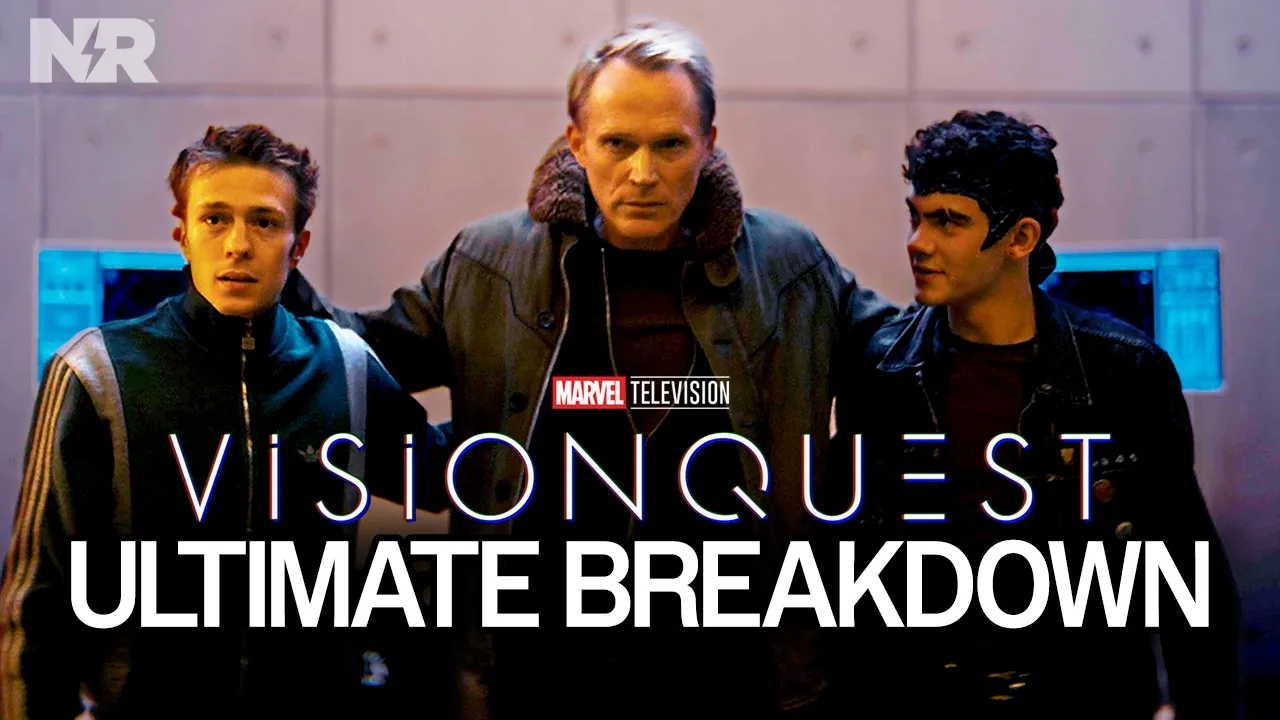
Adapted with AI from New Rockstars' video of 26 November 2026 and checked against the video before publication. Editorial standards · Corrections
More from @newrockstars
All →


Make videos? Your next one could be an article here.
We turn your videos into articles under your name, linked back to the original. You keep 60% of what they earn, non-exclusive, and you can leave whenever you like.
Become a SubPlotter →