How Sentry Could Have Revealed the Secret Ingredient in the MCU's Super Soldier Serum
With Lewis Pullman cast as Sentry in Thunderbolts, a look back at the theory that the serum's missing ingredient traces back to the Celestials
 New Rockstars (AI-assisted)23 October 2026 · Editor: Digital Fox Talent Editorial Team
Marvel Studios looked as if it could finally answer one of its longest running questions: what is the secret ingredient in the Super Soldier Serum? That formula gave us Steve Rogers, and by extension Wolverine, Hulk, Abomination, Bucky Barnes, Red Hulk, Isaiah Bradley, John Walker, Red Guardian and She-Hulk. My theory at the time was that Sentry, then set for Thunderbolts, could be the missing piece that explained where the serum came from. What I believed the truth to be was pretty horrifying.
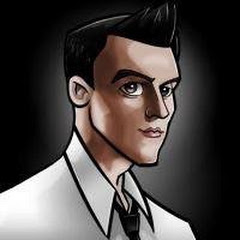
Thunderbolts* released on May 2, 2025, with Lewis Pullman as Bob, aka Sentry, settling those casting and plot questions. Before that, the film was on its way with Sentry, an absolutely bonkers character from more recent Marvel Comics, who seemed to be the villain or at least the antihero of the film. You may think of him as another Marvel Super Soldier with Superman powers and a mental health angle. That's part of it, but there's a lot more to this character and to what Marvel sees in him.
Lewis Pullman was reportedly considered for Sentry after Steven Yeun left the role
Sentry was originally cast as Steven Yeun, who was announced for the role before backing out. Yeun, by the way, had a whole segment with Conan about how his name is pronounced. After that, the role was reported to have been offered to Lewis Pullman, who you might remember as Bob from Top Gun: Maverick.
The news that Pullman was being considered for Sentry was first reported by scooper Daniel Richtman and was then confirmed by outlets like The Hollywood Reporter. There is a lot more to this character, and to what Marvel sees in him, that makes Bob from Top Gun: Maverick a very exciting Bob Reynolds, and the shared name was only the start of why it fit.
Sentry was created as Marvel's Superman with a past everyone forgot
Sentry was created by Paul Jenkins and Jae Lee and released in September 2000. The idea was to make Marvel's version of Superman, not in values, because Marvel already had that with Captain America, but in power set. In personality, they wanted an over the hill guy struggling with an addiction who had a tight relationship with his dog.
One of the character's co-developers had the idea of marketing Sentry's introduction as though he were a figure from 1940s Marvel Comics, a creation of Stan Lee and Jack Kirby. Versions of the character were drawn in that older art style with old school dialogue. The story was that, due to some cataclysmic event, everyone in the universe forgot that Sentry existed, including Bob Reynolds himself.
So Sentry #1 opens with Bob waking up in bed as an average overweight guy battling alcoholism and struggling with his mental health, trying to get through the process of taking his dog outside. The issue flashes back to memories of a whole other life in which Bob was a superhero named Sentry across past eras of history. In that life he had taken a Super Soldier Serum a thousand times more potent than the one given to Steve Rogers, giving him the power of a million exploding suns.
Sentry's power set ranks him among Marvel's deadliest, but he shares his mind with the Void
His power set is wild. Sentry can manipulate reality, use telepathy, fly, and has super strength and durability. He can go head to head with almost any Marvel character, from Hulk to Galactus's herald Terrax to Galactus himself. He's resistant to Rogue's energy absorption, and he could fight Doctor Doom. One of his most memorable kills is when Sentry rips Ares in half. He's considered one of the deadliest characters in Marvel Comics in terms of his power set.
The downside is that he has to share his consciousness with his archnemesis, the Void, which takes the persona of his dog in that first issue. The dog is even right there in the opening panel. The Void is a dark life force that takes many forms and is attributed to many sources: the Judeo Christian god, the angel of death according to Norman Osborn, a mind virus that Mastermind put in Sentry's mind, or even Bob's own subconscious. That last one is a metaphysical explanation in which all human beings have a dark side to their subconscious, and Bob's takes the form of the Void.
Why Steven Yeun and Lewis Pullman both fit Sentry
When Steven Yeun was announced to play Sentry in Thunderbolts, some people wondered why Marvel would cast Glenn from The Walking Dead, and what Sentry had to do with the Thunderbolts. It wasn't only The Walking Dead that got the attention of Marvel's casting directors. It was also Yeun's performance in Invincible, where he voices the half Viltrumite superhero tasked with protecting Earth from the merciless empire his father hails from. He's Earth's unwitting champion, and taking on that role leads to some extreme violence.
There was also Yeun's Emmy winning performance in the Netflix series Beef, in which he plays an extremely unhealthy contractor with severe anger issues. Watch Beef and you'll see that this is Sentry. While I would have loved seeing Yeun as Sentry, or in several other MCU roles, I also saw where Marvel was going with Lewis Pullman, an accomplished actor in his own right.
You don't have to look further than Pullman's very first line on screen in Top Gun: Maverick. Asked when he got in, his character answers, "I've been here the whole time." Beyond sharing the name Bob, that line gets at exactly why Sentry could be such a cool character in the context of the Thunderbolts story. The whole idea of Sentry is that he was here the whole time and no one remembers he existed. In the MCU, he needed to function as someone who had been in the background since the beginning, intertwined with the origins of all of these Super Soldiers.
Erskine's serum seems to read a person's soul, which points to the gods
In the MCU, especially Phase 1, the plan for most of the heroes who weren't androids, aliens or wizards was for them to be warriors juiced up with Super Soldier Serum. That was the name of Dr. Abraham Erskine's mystery formula given to Steve Rogers. An older version had been tested on Johann Schmidt in 1940, but it wasn't ready, and it turned Schmidt into Red Skull. The serum had been perfected by the time Steve received it.
We don't know everything that was in that serum, only that it was enhanced with vita rays from Howard Stark, and that Erskine cryptically said it "amplifies everything that is inside, so good becomes great, bad becomes worse." We know that line was meant to establish Steve's moral character. But from a chemical and biological standpoint, how would a serum amplify someone's moral and ethical instincts?
Morals and ethics don't come from DNA or anatomy. They come from nurture: external factors, the world in which someone grows up and the life path that person chooses. So the fact that a serum could read, interpret and respond to aspects of a subject's soul tells us there must be some divine quality to it. Whatever the secret ingredient is must come from a place in the MCU where morality can be measured, and where else could that be than the gods?
The heart-shaped herb, Odin and the Tesseract were all possible sources
In the past I've theorized that the secret ingredient could be Wakanda's heart-shaped herb, meaning the same thing that empowered Steve Rogers could be what empowers T'Challa. Season 2 of What If even confirmed that Howard Stark received the vibranium for the prototype shield as a gift from T'Chaka's father. Perhaps other Wakandan resources were shared with the Project Rebirth team.
Alternatively, we could look at Odin, who is known for his charms, and Hela in What If season 2. Schmidt was looking for godly power, like what he admired in Odin. We should also note that the serum and the Tesseract are the same blue color, and the Tesseract gave Kahhori a special power. What if this godly, magical cocktail was what years of Weapon Plus experimentation tried and failed to reproduce?
Weapon Plus ties the MCU's Super Soldiers into one lineage
Steve Rogers was Weapon I, and Wolverine of course was Weapon X. Isaiah Bradley, introduced in The Falcon and the Winter Soldier and, at the time, expected to return in Captain America: Brave New World, was also part of Weapon I. Weapon IV was Ted Sallis, aka Man-Thing, who we met in Werewolf by Night. Weapon VI is Luke Cage and Weapon VII is Frank Simpson, aka Nuke, both characters who are technically MCU canon through Marvel Studios' annexing of the Netflix series. The success with Wolverine spun off Deadpool, along with X-23 and X-24, who we meet in Logan.
Bucky Barnes received a different version of the serum from Hydra, and it was suggested that Red Guardian received a less effective version from the Russian government. Hydra scientists kept brewing their own version, which is what the Flag Smashers and John Walker took. Bruce Banner and Emil Blonsky were part of the same program, as Thaddeus Ross used Erskine's, aka Dr. Reinstein's, serum with Stark Industries vita rays. When Ross became Red Hulk in Captain America 4, as was expected at the time, he would join that lineage too, and She-Hulk is part of it through receiving Bruce Banner's blood.
Sentry would join all these Marvel heroes. I thought Marvel was going to introduce him in order to reveal the possible origin of the serum, what made all these characters so godly. I thought that was also why Val in Thunderbolts would put together this particular lineup of Super Soldiers: to stop Sentry.
The Celestials may be the source behind vibranium and the serum
In the comics, Sentry gets a special version of Steve's serum that is a thousand times stronger. But The Age of the Sentry miniseries suggested that the Sentry is an entity from another universe seeking a new home, using the serum as its conduit. That's what makes Sentry's serum so extreme, giving him cosmic level abilities and the ability to stop Galactus. For the MCU version, I thought the pieces were already in place, and this could have answered some of the more nagging questions of that era.
My theory was that Erskine's mystery ingredient, the heart-shaped herb and vibranium share an origin. They were all gifts from outer space, from the gods. The meteorite that struck Wakanda scattered vibranium and enriched the soil with minerals that allowed the heart-shaped herb to grow. But before that, something else struck Earth from space: the Celestial seed that grew into Tiamut inside Earth's core. I've speculated it could have been the same meteorite that hit the Yucatan Peninsula 65 million years ago and created the Gulf of Mexico. The MCU established Talokan off the Yucatan Peninsula, and that event could have given Namor's people their own version of the herb and the minerals in their tech.
So I believed vibranium's origin was the Celestials, whose bodies may even be made of a form of vibranium. The Celestials are Marvel's gods, and they gave Earth this advanced, unnatural mineral to expedite their eventual emergence. Earth wasn't meant to keep any of it, because Earth was going to be destroyed as part of a cleanup operation. The Eternals stopped that process and, from the Celestials' perspective, ruined everything. That's why I believed there were rumors and speculation that Tiamut's corpse might come back into the MCU and factor into the Thunderbolts plot, plus some speculation that the corpse might be a supply of adamantium, since adamantium is an alloy of vibranium and we would be talking about a mineral from the gods.
Sentry could have been the Celestials' human champion in Thunderbolts
I thought this mineral was a gift from the gods that found its way into the serum given to Steve Rogers, with a more concentrated dose given to Sentry. I thought we might learn that somewhere on Earth in the MCU was a deposit of a special mineral water, a kind of Celestial fountain of youth, and the one Erskine found is what let him perfect the serum. I didn't think it was crazy to say that all Super Soldiers, whether serum users or ones enhanced with vibranium or adamantium like Wolverine, are blessed with the powers of gods. That would explain why Steve Rogers could resist Thanos for a moment in Infinity War before Thanos used the Stones on him.
To inject Super Soldier Serum into your bloodstream is to harness the power of gods, to play God yourself, and to let that godly power puppet you after it deems your moral character worthy. So my theory was that Thunderbolts could reveal that the cataclysmic event that wiped the world's memory of Sentry was the emergence of Tiamut.
In that version, Sentry would be the Celestials' human champion on Earth, Arishem's avatar, the way Black Panther is the avatar of Bast and Moon Knight is the avatar of Khonshu. Sentry wouldn't be the guardian of Earth. He would be the guardian of the Celestials' authority, which would make him view Tiamut's corpse as his turf, leading to an adamantium turf war that Val would want to win at all costs.
Watch the original
@newrockstars · YouTube
Adapted with AI from New Rockstars' video of 29 January 2024 and checked against the video before publication. Editorial standards · Corrections
Also on Thunderbolts
4 creators, 4 takes →


More from @newrockstars
All →

Make videos? Your next one could be an article here.
We turn your videos into articles under your name, linked back to the original. You keep 60% of what they earn, non-exclusive, and you can leave whenever you like.
Become a SubPlotter →