Godzilla Minus Zero Breakdown: King Ghidorah, G-Cells and Easter Eggs
The sequel to Godzilla Minus One brings Ghidorah into postwar Japan, raises the stakes for Noriko and leaves several big questions for a third film
 New Rockstars (AI-assisted)7 November 2026Editor: Digital Fox Talent Editorial TeamOn YouTube since 2011 · more than 4.4 million subscribers

I think I liked Godzilla Minus Zero, director Takashi Yamazaki's sequel to 2023's Godzilla Minus One, even more than Minus One. This time Godzilla isn't alone: the film brings in another iconic Toho monster, King Ghidorah. Full spoilers follow for the whole film, including the Easter eggs, the return of the Shikishima family from Minus One and many strange new developments.
Ghidorah's attack on Matsumoto City echoes the 1964 original
The story opens in 1949, two years after Godzilla was defeated in Sagami Bay, with a sudden attack on Matsumoto City. That's Ghidorah, the first additional Toho monster in the new Godzilla Minus universe. It's a fun touch, because in his first appearance, in 1964's Ghidorah, the Three-Headed Monster, he also attacked Matsumoto City. Yamazaki's home is there too.
The film doesn't officially call him King Ghidorah until he evolves into the big three-headed winged monster we know. We meet a new scientist, Professor Koji Murakami, played by Min Tanaka, a biologist who survived Hiroshima and Godzilla's last attack. His assistant, Tanabe, dies, though not in vain: he had the camera that captured Ghidorah, which Professor Murakami and the other survivor of the attack bring back with them.
Ghidorah destroys the city and its people. We see him use small lightning bolts that will later become his full gravity beam. He will eventually have many of his iconic traits and powers, but at this point he's a small one-headed Ghidorah with limited abilities.
Noda, Sumiko and the returning cast of Godzilla Minus One
Postwar Japan is still recovering from the war and from Godzilla's last attack, though things are somewhat better than at the start of the first film. In Tokyo, Kenji Noda, whom we know from the last movie, has been promoted to chief of Japan's Special Disaster Response Bureau. He still works with and stays friends with many old colleagues, including Shiro Mizushima (Yuki Yamada), ship captain Akitsu (Kuranosuke Sasaki) and a former destroyer captain, along with plenty of new faces.
One of them is the bureau's meteorologist and forecaster, played by Masami Nagasawa. At first I wondered why she'd been added. Her importance becomes clear later, because storms follow Ghidorah wherever he goes.
Sumiko, played by Sakura Ando, is back, now running an orphanage for children left homeless by the war. That makes sense, since she lost her own children and cared so much for Akiko in the last film. Noriko, played by Minami Hamabe, is back too, helping Sumiko and the children. Shikishima, the pilot who helped defeat Godzilla in Minus One, and Noriko are raising Akiko, and she calls them mom and dad. There's love in this film, though it makes the other orphans jealous when they see Akiko with her parents. Every time the film shows the happy family and then cuts to the sad children, it's cruel.
Noriko's G-cells keep her alive, but may be killing her
Noriko spends much of the film in bandages, which ties directly to the end of the first film. After Godzilla's attack on Ginza, we learned she survived, but at a cost. The black mark spreading across her neck at the end of Minus One was made of Godzilla cells, or G-cells. The director confirmed that these cells helped Noriko survive the attack, giving her Godzilla's incredible regenerative ability, which we see in this film.
Godzilla cells have been a major plot device in other Toho films. In 1989's Godzilla vs. Biollante, they were used to create Biollante. In 1994's Godzilla vs. SpaceGodzilla, they were used to create SpaceGodzilla. Here, though, they carry a heavy burden. The G-cells are damaging Noriko's body, and the people exposed to them eventually die of infection.
It all plays out in a flashback with a doctor and Noriko, and the hospital scene feels like a direct mirror of the hospital scene in the original Godzilla: crowded, chaotic, everyone overwhelmed. We don't know whether Noriko will die like the others. The doctor explains she's an exception because she's lived longer with the condition than anyone, but that doesn't mean she'll live forever. That becomes a big part of her arc. She watches another G-cell victim die and becomes convinced her own death is coming. The mark on her neck has grown into small spikes, and her right eye is now yellow. It shapes her choices, because she's always ready to risk her life, believing she'll die anyway.
Godzilla Minus Zero makes Ghidorah an alien that grows by absorbing wildlife
Back at the bureau, Professor Murakami and the other survivor return from Matsumoto, and we get firm information on Ghidorah. It seems researchers had already been studying him inside a small cocoon, much as we saw in the 1964 film. They more or less confirm he's an alien that came to Earth on a meteorite. When found, he was a sticky, many-tentacled organism that could absorb anything that came too close. We see him catch a deer and snatch a bird in midflight, which suggests feeding on local wildlife helped him develop into his full form. The researchers note he's a mix of other creatures, like the chimera and the hydra of Greek mythology.
It's a nice reference, because Ghidorah's first appearance also had him arriving on Earth inside a meteorite. Even in the MonsterVerse's Godzilla: King of the Monsters, Ghidorah is described as an ancient creature from the stars that was later frozen in Antarctica. So Ghidorah being an alien isn't new. What's new is how this film uses his biology. Instead of arriving in his familiar three-headed form, this version starts as a jellylike creature that absorbs the wildlife around it and eventually turns into Ghidorah.
The US plays a bigger, more complicated role this time
The bureau gets a call from GHQ, the US-led occupation authority in Japan after World War II, and we're taken to Atsugi US Naval Air Base, a joint Japan-US base. America offers its services, and we all know there's an ulterior motive: the Americans want a share of the information on defeating another monster god. So they offer bombs to drop on Ghidorah, along with four planes.
The US has a much bigger role than in the first film, and the movie explores the relationship between the two countries after the war, particularly the tension around the American occupation. The director addressed this at a press conference at the New York Film Festival. Asked about America's almost villainous role, he explained he didn't deliberately set out to make the US the villain. Rather, in that era the relationship between Japan and America was still incredibly complicated. The wounds of the Hiroshima and Nagasaki bombings were still raw, and the relationship hadn't healed. Knowing that history, I would not expect anything good when people like that show up.
Shikishima returns to the fight as Operation Narukami fails
With the creature now dormant, the friends still hold hot pot nights at the Shikishima house, as they did in the first film. Noda updates them, and Shikishima immediately says he wants to be put to work. Since he helped beat Godzilla, he wants to help again. But Noriko and his friends know it isn't that simple. He has a child, a family and a good future, and throwing himself into another suicide mission isn't the best way to protect that. Noriko may be dying herself, so she won't let him back into a cockpit. Instead, Noda lets him advise the pilots who'll face Ghidorah.
The plan is to attack the dormant Ghidorah with a new kind of bomb, which didn't sit right with the professor, and not with me either. The US plus bombs plus Japan doesn't have a positive history. Eventually, after much tension, Shikishima volunteers to lead the attack.
At the anti-Ghidorah command post in the Matsumoto mountains, Ghidorah lies unconscious. Option one is the American bombs. If that fails, a more advanced US-supplied plane can drop huge metal rods called Narukami rods, meaning thunder god, which is also the operation's name. When the storm hits, lightning will strike the rods and send electricity straight into Ghidorah, electrocuting him. Electricity does make Ghidorah stronger, but the characters don't know that yet, and as a Godzilla fan I immediately thought it wouldn't work.
Three pilots go in. One bomb doesn't explode. Two others seem to work but only enrage Ghidorah, who kills the other two volunteer pilots. We should have listened to the professor. Shikishima distracts Ghidorah while the bomber with the lightning rods moves in. The first rod misses, but the second lodges in Ghidorah's back, and the storm's electricity hits him. He seems beaten.
Ghidorah evolves into the classic golden King Ghidorah
That hope lasts until Ghidorah wakes up and evolves. He does more than grow: he becomes the classic King Ghidorah, the golden dragon. He grows two more heads, twin tails and huge wings, and the way he sheds his first layer of skin makes it an amazing scene.
Now furious, he unleashes far greater destruction. In his new form he can create hurricane winds and control gravity, lifting and slamming everything in his path. With hurricane winds, zero gravity and the gravity beam, he's a true terror. He also has Ghidorah's familiar chirping cry. Near the end of the rampage, he perches on Matsumoto Castle and screams at the sky, just as in the 1964 film.
Godzilla returns, and Noriko becomes the lure
To make things worse, Godzilla resurfaces off the coast of an island. First we see whales fleeing, another scene from Ghidorah, the Three-Headed Monster. Then Godzilla rises from the water with his iconic music, fully healed and bigger than before. The defeated team returns to the bureau and learns that Godzilla, whom everyone thought was dead, is back.
The professor's plan is to set a trap where Ghidorah and Godzilla fight, so the team can overpower the weakened winner. Luring Godzilla to Ghidorah is a longtime favorite tactic in Godzilla lore. Ghidorah follows the storms, so they need a way to lure Godzilla. The professor has built a device called the Resonance Wave Amplifier, which sends a signal to attract him. Given Noriko's condition, they discover Godzilla's living cells can be used with the resonance wave to draw him in, and as the only person carrying those cells, Noriko becomes central to the mission. The device reminds me of Project T from Godzilla vs. SpaceGodzilla, and of the Orca from 2019's Godzilla: King of the Monsters, which mimicked monsters' frequencies to attract and repel them.
At first the family decides to flee. After everything Shikishima has endured as a former kamikaze pilot, he doesn't want Noriko to become another pawn of war. But on the way they see Matsumoto destroyed, and Noriko, who has always shown she can't stand by while people suffer, helps as a nurse. She realizes she can't walk away. Shikishima isn't happy, but it's her decision. Noriko will lure Godzilla with the resonance wave while Shikishima flies to draw him toward Ghidorah, which means leaving Akiko at the orphanage.
Professor Murakami's Hiroshima trauma recalls Dr. Serizawa
We spend time with the professor in his lab, where the trauma of losing his entire family in Hiroshima eats at him. At one point he imagines unleashing Godzilla as a weapon on New York City, vaporizing it, much like what happened to the people of Hiroshima. It's a terrifying scene, and I love it. It's a great scene.
He reminds me of Dr. Serizawa from the original 1954 Godzilla. Both men create something extraordinary for the fight, but realize it could be more terrible than the monsters they're fighting. Serizawa takes the Oxygen Destroyer to his grave, and the professor destroys his research papers.
The Ginza trap and the Godzilla vs. Ghidorah fight
The meteorologist finally pinpoints where Ghidorah is going: Ginza, the first film's final battleground. That's where the backup plan comes in. The storm will draw Ghidorah to Ginza, where generators will attract him with electricity. Liquid nitrogen tanks will freeze him, and fuel spread around him will, once lit, hopefully make him explode. To buy time, the team deploys blimps that absorb the storm's lightning instead of letting it reach Ghidorah. He destroys them one after another, and they keep releasing more. I loved that scene. It feels much like the operation against Godzilla in the first film, which used Shikishima's plane to lead Godzilla into open water and then a series of traps to subdue him. Both plans relied heavily on balloons and inflatables.
Meanwhile, the seaplane uses Noriko's G-cells and the resonance wave to bring Godzilla to Ginza. That reminds me of Miki Saegusa from older Godzilla films, a psychic who could sense Godzilla and eventually communicate with him. In Godzilla vs. SpaceGodzilla, her powers were used with Project T to try to control him. Noriko's connection is biological rather than psychic, but the idea of one person being the key to understanding or controlling Godzilla is the same.
Then we finally get the fight we were waiting for. My face hurt by the end from smiling the whole time. Godzilla slices off one of Ghidorah's heads with his tail, but before it hits the ground, the head bites Godzilla's arm and tears it off. Godzilla regrows the arm and charges back in. My favorite thing about Ghidorah, besides one head always being the dumb one, is how well he exploits the situation. With three heads he always overpowers Godzilla early, and I love when he wraps his heads around Godzilla like snakes, as he did in 1991. He can also fly. He gains the upper hand by slamming Godzilla down with his gravity beam.
Noda's death and how Godzilla Minus Zero ends
On the ground, the trap's fuel line is cut, so Noda goes to release the fuel by hand. He succeeds, but Ghidorah's attack flips his truck and traps him beneath it. Shikishima is supposed to fire a rocket into the spilled fuel to ignite it, but Noda is still pinned under the truck. Before going for the fuel, Noda had put the meteorologist in charge, so the call falls to her. Noda dies when the fuel ignites, which is awful. In her report, the meteorologist deliberately hides the truth from Shikishima and lets him believe Ghidorah killed Noda, sparing him the guilt. It breaks my heart.
The fight isn't over. With Godzilla left down by Ghidorah's gravity beam, the team uses the resonance wave with Noriko's G-cells to revive him, or at least wake him and bring him back to the battlefield. Ghidorah's severed head reattaches, but through contact with Godzilla's G-cells it takes on Godzilla traits: head shape, scales, dorsal spikes and even some atomic breath. The regrowth resembles the head regeneration in Godzilla: King of the Monsters. Both monsters charge their beams, Ghidorah struggles, and Godzilla's atomic breath destroys him.
Then the US military arrives to attack Godzilla, but an order to stand down comes, and Godzilla returns to the sea in peace. Murakami realizes the resonance wave could turn Godzilla into a weapon and doesn't want his research in American hands. He burns his notes and tries to flee, but he's caught and taken into US custody. Shikishima has realized the US military could weaponize Noriko's G-cells too, so he hides her and decides Akiko must come with them. The film ends with them driving toward the horizon. Another monster will come, and I hope it's Mothra.
The unanswered questions left for a third film
The film leaves many unanswered questions that are clearly being saved for a third movie. Can Noriko survive with those G-cells? They gave her Godzilla's regeneration, but we've seen what happens to others: they die. Will she turn into Godzilla? The professor is in American custody, and the US has shown a clear interest in weaponizing these monsters. Will he let them have the research? Godzilla is still out there, having survived another major battle and regrown an entire limb.
The biggest question is what happens to the family. They built a good life together, and now they're on the run again, and they're being hunted. Where are they going? Will Japan get its chance to rebuild, or will people make the same mistakes again?
Why I think I liked Godzilla Minus Zero even more than Godzilla Minus One
I love this movie, and I think I liked it more than Minus One. I've seen it twice, I'm hooked, I'll probably watch it a third time, and I even bought the expensive popcorn bucket. Naoki Sato, who also scored the first film, wrote "Eclipse," the music that plays before the film begins, and his incredible score carries over beautifully here.
What other creators are saying
More on King Ghidorah →Godzilla survives and returns to the ocean after defeating a mutated King Ghidorah in Tokyo, with the Americans standing down from bombing him. Murakami abandons his revenge plan, burns his research, and is arrested, while Shikishima, Noriko and Akiko flee into hiding to protect Noriko's G cells from being exploited.
Godzilla Minus Zero ending: does Godzilla survive King Ghidorah? →
I think Godzilla Minus One was my favorite movie of the year it came out, and I believe Godzilla Minus Zero is just as good, with some people saying it's even better.
Godzilla Minus One: do the subtitles ruin it for skeptics? →
We both loved Godzilla Minus Zero as a bigger, more spectacle driven sequel, best seen in IMAX, even though it leans into melodrama and didn't build quite the same character connection as Minus One. It is a great Godzilla film, cheesy but definitely worth seeing in theaters.
Godzilla Minus Zero review: is Ghidorah worth the IMAX ticket? →
Three theatrical viewings convinced me this Godzilla film transcends the monster movie genre
Godzilla Minus One review: a monster film that hits like a drama →
Watch the original
@newrockstars · YouTube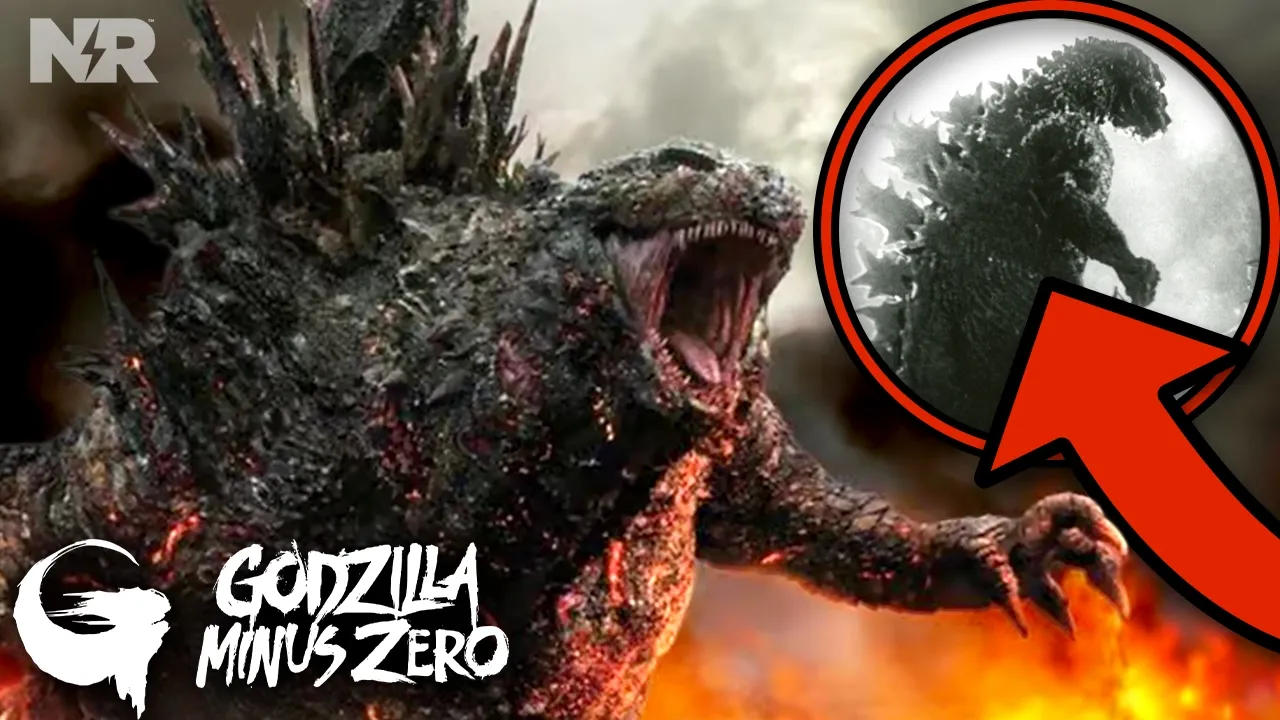
Adapted with AI from New Rockstars' video of 6 November 2026 and checked against the video before publication. Editorial standards · Corrections
More from @newrockstars
All →

Make videos? Your next one could be an article here.
We turn your videos into articles under your name, linked back to the original. You keep 60% of what they earn, non-exclusive, and you can leave whenever you like.
Become a SubPlotter →