Star Trek TNG: how does Sela exist after the timeline reset?
Tasha Yar's Romulan daughter survived a timeline that was supposed to be erased, and her existence suggests the restoration of history was never complete.

In Star Trek: The Next Generation's 1990 episode Yesterday's Enterprise, starring Patrick Stewart, Denise Crosby and Whoopi Goldberg, the timeline shatters and Starfleet calls the fix a restoration. Sela, the Romulan commander born to a Tasha Yar who should never have lived long enough to have her, is the evidence that the restoration was never complete.
She came from a reality that was supposed to vanish. Yet she went on to shape some of the biggest political events of the series. That leaves a hard question about whether the prime timeline ever truly came back at all.
Yesterday's Enterprise makes history itself the villain
In the episode, the crew of the Enterprise-D encounters a spatial rift, a glowing tear in the galaxy's skin. Out of it comes a ship lost to time, the USS Enterprise-C, last seen in 2344 during a desperate stand at Narendra III. This is no mere accident of physics. The moment the Enterprise-C appears in the future, reality changes. The lighting shifts, the uniforms change and the bridge darkens. Starfleet, once a vessel of peaceful exploration, is now a hardened military force in the middle of a long and bloody war with the Klingon Empire.
Tactical officers replace scientists. Casualties are reported without ceremony. And most notably, Tasha Yar is alive. This is more than a time travel episode. It's a rare moment where Star Trek fully commits to the terror of a broken timeline. There's no time travel adventure and no external villain to confront. The villain is history itself: rewritten, brutal and wrong.
The only person who seems to feel that wrongness is Guinan. She doesn't know the cause and can't explain it in technical terms. But she knows Tasha Yar isn't supposed to be alive, and she knows this isn't how the Federation is meant to be. Her unease is more than intuition. It's temporal memory, a metaphysical ache that something precious has been lost. That gives the episode its moral center.
Sending the Enterprise-C back to Narendra III restores peace but not Tasha Yar's fate
Picard, a hardened version of the man we know, listens. When the truth surfaces that the Enterprise-C was pulled into the future during its final battle, the solution becomes clear. Send it back. Let it complete its mission. Let it die. It's not an easy decision. In this timeline, the ship's destruction is the only thing that can restore peace. In the original history, its sacrifice at Narendra III is remembered as a turning point in Federation and Klingon relations. Without it, the conflict never ends.
Picard orders the ship to return, and he even sends crew to assist it. The battle escalates. Klingon ships hammer the Enterprise-D, the lights flicker and phasers erupt. As the Enterprise-C slips back through the rift, time reasserts itself. The war timeline vanishes and peace returns. The original crew is back on the bridge, unaware of what they've avoided.
Here's the problem: Tasha Yar didn't vanish. In the alternate timeline she chooses to go with the Enterprise-C, seeking purpose, redemption, or maybe just a meaningful death. She's captured by the Romulans, and eventually she gives birth to a daughter, Sela. That's the paradox at the heart of Star Trek's most consequential time travel story. If the timeline was truly restored, if the past was put back in place, how does Sela still exist?
Guinan's quiet final scene leaves Sela as a scar on the timeline
The episode ends quietly. The crew cruises through space, and Guinan, the only one with any sense that something has changed, sits with Geordi in Ten Forward. She asks about Tasha Yar, a woman who, to everyone else, died long ago. Guinan doesn't remember the details, but she knows the official version of history doesn't feel right. There's no big twist and no dramatic sting, only a subtle suggestion that the price of fixing time may have been higher than anyone realizes.
What's left unsaid is that the damage wasn't undone, because Sela is real. She's not from the past and she's not from the future. She is a fixed point from a timeline that should not exist, and yet she walks through the corridors of the restored Federation like she belongs there. Her presence is a scar, a fracture, a contradiction. It forces a dangerous question. If someone from an erased history can still exist, did the prime timeline ever truly come back? Or was it rewritten, forever changed, and simply presented to us as prime, because no one left remembered the difference?
Why Sela shouldn't exist in the prime timeline
Sela shouldn't exist. Not because she's Romulan, and not because she's half human, but because her mother only lived long enough to conceive her in a timeline that was never meant to happen. After Yesterday's Enterprise, Star Trek never directly revisits the mechanics of what happened to Tasha Yar in the restored timeline. There, Yar is dead, killed by the entity known as Armus on Vagra II, as shown in Skin of Evil. But because of Guinan's intervention, the alternate Yar chooses to return to the past with the Enterprise-C. She disappears from history at Narendra III, believed to have died in a historic last stand.
She didn't die. She was captured. The Romulans took her as a prisoner of war, and at some point during her captivity she became the consort of a Romulan general. Whether that was voluntary or coerced is never clearly stated, a discomforting ambiguity the show never fully explores. What matters for the timeline is that she gave birth to a daughter. That daughter grew up in the Romulan Empire, raised with suspicion and bitterness and taught to hate the Federation, but bearing the unmistakable face of her human mother.
That daughter became Commander Sela, a high ranking Romulan operative who would go on to manipulate the Klingon civil war, attempt an invasion of Vulcan and alter the course of Alpha Quadrant history. All of that came from a timeline that should have vanished, and yet no one questions it. When Sela first appears in Redemption, she claims her identity without fanfare. Data and the crew are understandably shocked by her resemblance to Yar, but the mechanics of how she exists are left vague. It isn't until Unification that we receive a full explanation, and even then it raises more questions than answers.
Two explanations for Sela, and neither means the prime timeline was restored
If the timeline was restored by the Enterprise-C's return, if everything snapped back to how it was supposed to be, then the version of Tasha Yar who lived long enough to give birth should no longer exist. In temporal logic, a closed loop paradox is one where a future event causes a past event to happen, which in turn causes the future event. In Sela's case, the loop isn't closed. The altered timeline collapsed, and the restored timeline should have overwritten her entirely. It didn't. That means one of two things happened, and neither supports the idea that the prime timeline was truly restored.
The first option is that the timeline wasn't restored. The version of history we follow after Yesterday's Enterprise is subtly different: close enough to feel familiar, but altered in key ways. Sela is the evidence. Her presence is a sign that this prime timeline isn't a return to the original, but a merged branch that absorbed elements of both realities.
The second option is that time isn't self correcting but accumulative. In this model, Star Trek's timeline behaves more like a river with debris. It flows forward, but disruptions leave behind traces. The ripples from the Enterprise-C's arrival didn't vanish when the ship returned. They echoed forward, leaving fragments behind, and Sela is one of those fragments. That may be the more terrifying possibility, because it means every time travel event in Star Trek, no matter how neatly resolved, leaves behind consequences. It means history is fragile and never really heals.
This interpretation is supported by later series like Star Trek: Picard and Voyager, where time travel often creates unstable echoes. But Sela is unique. She isn't a memory, a vision or a temporal anomaly. She's real and she's permanent. She commands ships and manipulates galactic powers. And her mother, the Tasha Yar who gave her life, only existed in a timeline that's no longer here.
How Sela reshaped The Next Generation in Redemption and Unification
Sela didn't just survive the collapse of an alternate timeline. She shaped the future that followed. If the timeline after Yesterday's Enterprise is supposed to be a restoration of prime continuity, then the ripple effects she caused raise a difficult question: how much of that future still belonged to the original? Without Sela, some of the most consequential political and military events in The Next Generation likely wouldn't have unfolded the way they did, if at all.
In the two part episode Redemption, the Klingon Empire is on the brink of collapse. Gowron's ascension is challenged by the Duras family, whose claim to the chancellorship is bolstered by secret Romulan support, and orchestrating it all is Sela. She becomes the face of the Romulan agenda: bold, strategic and deeply personal. Her knowledge of Federation tactics, her understanding of human psychology and her obsession with legacy all play into the manipulation. Without her, the Romulan campaign might never have taken such a risky, high profile approach. A different operative, perhaps more traditional and less emotionally driven, may not have pursued Klingon destabilization with such boldness.
That matters because the war nearly turns the Klingon Empire into a Romulan client state. Only with Federation intervention does Gowron retain control. Had Sela succeeded, the political map of the Alpha and Beta Quadrants would have changed drastically long before the Dominion War ever began.
Later, in Unification, Sela attempts one of the most daring operations in Romulan history: an invasion of Vulcan disguised as a reunification mission. Romulan ships are to land troops on Vulcan and establish a foothold before the Federation can respond. She uses Spock's unification initiative and the idealism of Romulan dissidents as a smoke screen for conquest. Again, this is more than standard Romulan espionage. It's personal. Sela confronts Picard directly, mocking his principles. Her vendetta is against the legacy of Tasha Yar, the mother she believes chose duty over family. It's psychology as much as politics, and it nearly works. Had it succeeded, the Romulans would have gained a permanent presence on Vulcan, destabilizing the heart of the Federation with a blow no other villain in The Next Generation ever came close to.
It doesn't stop there. Before Sela's introduction, the Romulans were shadowy and secretive, always looming but rarely acting. After her arrival, they became bold, aggressive and willing to challenge the Federation head on. She becomes the first recurring Romulan antagonist with a personal stake in the Federation's downfall and the authority to act on it. The Federation, whether it realizes it or not, is responding to events born from a timeline that shouldn't exist. No one but Guinan ever suspects that history has been rewritten, and yet officers die, wars nearly break out and the course of galactic diplomacy is altered. Star Trek still calls this the prime timeline, but the presence of Sela and the events she sets into motion suggest otherwise. It might be prime in name, but it's not untouched. It's a continuity rewritten under the guise of restoration, and the Federation may have saved its future by letting a piece of another reality bleed through.
Guinan senses the broken timeline, and she lets it happen
When the timeline is restored at the end of Yesterday's Enterprise, the crew of the Enterprise-D returns to a world of peace. The war is gone, the sacrifice is forgotten and Tasha Yar is dead again. History resumes, untroubled, for everyone except Guinan. Her memory doesn't follow linear paths, and she doesn't recall specific events like a log entry. But she does feel time. In the war timeline she doesn't look at Yar as if she's recalling fond memories. She studies her and watches her move, with the quiet weight of someone who already knows how the story ends. With complete clarity, Guinan tells Picard she shouldn't be here. It's not a guess. It's a truth she can feel.
This isn't new for her. Guinan has always existed slightly outside of time. In Time's Arrow, she meets Picard in the 19th century, creating a paradox she never forgets. In Generations, she senses the Nexus across dimensions and somehow stays a part of it. In Yesterday's Enterprise, her awareness pierces through an entire alternate timeline. She doesn't know the mechanics, or at least doesn't give us any indication she does, but she knows the version of Tasha Yar she's looking at isn't the one who died on Vagra II. This one survived in a war that never should have been, and her presence is a wound in the fabric of time.
What makes Guinan's role more unsettling is that she lets it happen. She doesn't try to stop Tasha from going with the Enterprise-C. She all but encourages it, because she knows the only way to restore what's been lost is through sacrifice. I almost question whether, on some level, she already knows Sela exists, and that the only way to continue in the timeline she remembers is to let Tasha go. She doesn't ultimately forget. Even in the restored timeline, she asks Geordi about Yar not with confusion but with emotional weight. Across the rest of The Next Generation, she doesn't seem to regret Sela's existence, not even when Picard is staring into the face of Tasha Yar's daughter.
That's not forgetfulness. It's restraint. Maybe she knows that revealing too much would tear things open again, or maybe she's the only one wise enough to live with the burden that this timeline isn't what it claims to be. In most time travel stories, Star Trek presents two options: either time is repaired or the damage is contained. Guinan fits neither. She's the residue, what's left behind when time fails to fully reset. She may not consciously know who Sela is, but she knows someone like Sela is possible, and I question whether that doesn't terrify her to a degree. If someone from an erased future can still exist, maybe that future wasn't erased at all.
The prime timeline may be a consensus, not the original
Star Trek told us the timeline was fixed. The Enterprise-C returned to the past, the war timeline collapsed and history snapped back into place. Except it didn't, because Tasha Yar survived in the alternate reality and her daughter now exists in the so called restored timeline. Sela commands warships. She nearly toppled the Klingon Empire. She almost invaded Vulcan. You can't have a fixed timeline and a daughter born of its failure. If something survived from a reality that was erased, was it ever truly erased? Or did we just rename the broken timeline and call it prime?
For decades, Star Trek fans have treated the prime timeline as sacred: the original, the foundation, the untouchable canon. But in universe, the word has historically meant nothing. No character refers to their reality as prime. To them, it's just history. When the timeline fractures, they don't debate branches or labels. They try to survive and restore what was lost. But what if that restoration is only partial? What if every major time travel event, from the Guardian of Forever to the Nexus to the Temporal Cold War, left behind something permanent, something small, something broken?
Maybe the timeline feels restored because it mostly looks the same: same ships, same characters, same history books. Look closer and cracks start to appear. Sela exists. Guinan remembers. Events change in ways no one notices, and the consequences ripple outward. The new version of history fits, works and holds, and that's what makes it dangerous. If history can be rewritten that easily, prime isn't a constant. It's a consensus, the version of the timeline that wins. Not the original or the purest, just the one that survives.
That's why Sela matters so much. She isn't a plot twist or a footnote. She's proof that the timeline didn't return to what it was, but became something new, a branch that still calls itself prime. Maybe that's the quiet truth of Star Trek: history isn't about what happened, but about what we agree happened. And the further away you get from the fracture, the easier it is to forget the break was ever there.
What other creators are saying
More on Star Trek: The Next Generation →The actor behind Jean-Luc Picard and Charles Xavier died at his Los Angeles home following Alzheimer's disease and Lewy body dementia, his longtime spokesperson announced
A rival actor, a forgotten middle name, a Q ancestor and a development idea to kill off Will Riker and keep Thomas
One card plays artifacts from the top of your library, and the other rewards facing a dilemma with free spells
Zefram Cochrane and the Caretaker among Magic: The Gathering Star Trek preview cards →
A Romulan War buildup, a Mirror Universe miniseries, the Borg Queen's origin and a refitted NX-01 were all part of the plans for a season that never got made
Watch the original
@lorereloaded · YouTube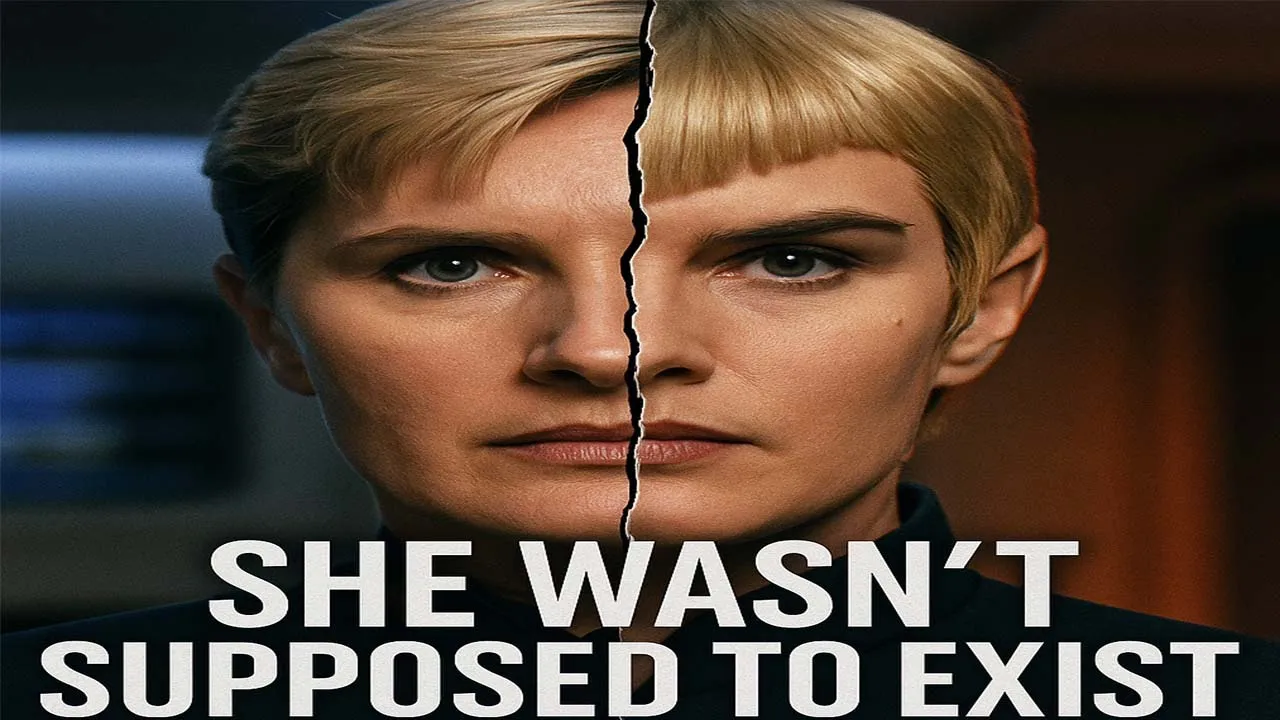
Adapted with AI from Lore Reloaded's video of 9 May 2025 and checked against the video before publication. Editorial standards · Corrections
More from @lorereloaded
All →


Make videos? Your next one could be an article here.
We turn your videos into articles under your name, linked back to the original. You keep 60% of what they earn, non-exclusive, and you can leave whenever you like.
Become a SubPlotter →