Star Trek: First Contact: could the USS Cerritos survive it?
Swap the Enterprise-E for a California class support ship and the Borg get a far worse plan, but Freeman's crew is built for that kind of mess

Could the USS Cerritos survive the events of Star Trek: First Contact? My answer is yes. Barely. Messily. And in the most Cerritos way possible. It wouldn't be by replacing the Enterprise-E or outgunning the Borg. It would be because a support ship full of people who know how systems fail is suited to a version of the crisis the flagship never had to face.
First Contact (1996), starring Patrick Stewart, Jonathan Frakes and Brent Spiner, has the Borg attacking more than the Federation. They attack the idea that the Federation ever had a chance to exist. That's what makes the plan so dangerous. It isn't only a military strike. It's historical surgery.
How the Cerritos ends up in 2063 instead of the Enterprise-E
The original sequence runs like this. The Borg hit Earth and Starfleet engages. The Enterprise-E arrives late, but decisively. Picard identifies the weak point and the cube is destroyed. The sphere escapes, and the Enterprise follows it into the past. From there, the future depends on three things. The Phoenix has to launch. Zefram Cochrane has to survive. And the Borg can't be allowed to turn 2063 Earth into the first branch office of the collective.
Now change one thing. Not the Borg plan, not the temporal vortex, not the stakes. Only the ship. Picard orders the Enterprise-E into pursuit, and the Sovereign class flagship begins to enter the temporal wake. Then, from several years deeper in Starfleet's future, the USS Cerritos gets pulled into the same disturbance at the worst possible angle. It's not a clean transition or a heroic arrival. The Cerritos drops into the corridor sideways, knocks the Enterprise-E out of the pursuit path, and becomes the ship that follows the Borg sphere into 2063. History ordered the flagship. The universe delivered a support vessel.
First Contact is four problems for a California class support ship
The Enterprise-E comes from a version of Starfleet that has been forced to rethink danger. The Borg, the Dominion, the Cardassians, the Klingons and the Romulans all pushed Starfleet toward ships that could take a hit and hit back harder. The Cerritos is not that ship. It's a California class support vessel. Its job is second contact, repair work, follow-up diplomacy, logistical cleanup, and the necessary work Starfleet still needs after the heroics fade out. The Enterprise flies into history like a legend. The Cerritos flies into history like somebody assigned the wrong work order.
That matters because First Contact is four problems pretending to be one. There's the orbital problem, the Borg sphere. There's the planetary problem: Cochrane, the Phoenix and the launch site. There's the shipboard problem, with drones infiltrating and assimilating the vessel from within. And there's the historical problem, where one wrong move can erase centuries of Federation history. The Enterprise-E has the prestige crew for that. Picard understands the Borg because they violated him personally. Data becomes central because the Queen can't easily categorize him. Worf gives the defense a tactical spine, Crusher holds medical triage together, and Geordi La Forge can look at duct tape hardware and see a path forward.
The Cerritos doesn't have those pieces. It has different ones. It isn't a warship pretending to be a support ship; it's a support ship, full of people who know what happens when systems fail in stupid, cascading, humiliating ways. Against most enemies, that's not much. Against the Borg, it might be the reason they last longer than 20 minutes. The crew understands the danger very quickly. They know this is the wrong ship, that the Enterprise was supposed to be there, and that the Borg aren't a normal enemy. Sometimes Starfleet survives because the wrong ship arrives, panics professionally, and starts solving the problem anyway.
The Borg would rather assimilate the Cerritos than stop the Phoenix
In the original film, the Borg need to stop the Phoenix. No warp flight means no Vulcan contact. No Vulcan contact means no Federation. That's the clean version of the plan. The Cerritos changes the equation because it comes from a later Starfleet period than the Enterprise. That gives the Borg a better option. They can assimilate the Cerritos and turn it into a 2063 orbital beachhead.
That is so much worse. If the Borg seize the ship, they have 24th century Starfleet technology above a broken postwar Earth with no meaningful defense against it. They don't have to stop Cochrane anymore. They can assimilate Earth directly and become humanity's first contact instead of the Vulcans. The Phoenix is still vital, but now the ship itself is the bomb.
So Captain Freeman's mission changes. It's no longer about getting back to the right time, or protecting the temporal prime directive as an abstract rule. It's containment. The Cerritos has to keep the Borg from taking the ship, preserve the Phoenix launch, and avoid saving the timeline so aggressively that the Federation never happens. That's not a normal Starfleet mission. That's a nightmare with a mission patch.
The Cerritos can't win by copying the Enterprise-E
The lazy version would have the crew reenact the Enterprise-E's greatest hits: Freeman becomes Picard, Rutherford becomes Data, Mariner becomes Worf, and Boimler becomes screaming. Boimler probably does keep screaming, but that version doesn't work. The Enterprise-E survives because it has power, prestige, and a crew whose personal histories line up almost perfectly with the crisis. The Cerritos survives, if it survives, because it is decentralized, scrappy, and deeply familiar with operational embarrassment.
The lower deckers know the ship at a physical level. They know which turbolift doors stick, which conduits are temperamental, and which secondary systems should never be allowed to talk to each other. Against most threats, that's workplace knowledge. Against the Borg, it becomes tactical knowledge, because once drones board, the battlefield is infrastructure: corridors, junctions, manual overrides, Jefferies tubes and access nodes. The Borg still need pathways and systems to corrupt. The crew knows where those systems are, how they fail, and how to keep them limping forward. They don't need the cleanest solution. They need the one that works for six more minutes, and sometimes history only needs six more minutes.
Freeman quarantines the Cerritos deck by deck as the Borg spread
A direct attack on the bridge would be dramatic but not especially interesting, and the Borg are smarter than that. Once they recognize the Cerritos as a resource, they assimilate it the way they assimilate civilizations, system by system. They need the computer, propulsion, communications and control pathways. The first real battle isn't a phaser fight. It's a systems map turning green one deck at a time. Engineering loses a secondary junction, then a cargo transporter. Internal sensors report crew members where none should be. Replicators start producing components nobody requested. The Borg aren't only making drones; they're making the ship participate.
The threat doesn't get smaller. It gets less glamorous. The Borg are in the access tunnels, in waste reclamation, inside the replicator grid, rerouting cargo systems. On the Enterprise-E, the invasion is a nightmare inside a warship. On the Cerritos, it's an infestation inside a workplace, and that might be worse. Still, a support ship has redundancy, manual access, and ugly backups no flagship captain would ever put in a speech.
So Freeman makes the hard call. She stops defending the ship as if it has to remain whole and starts quarantining it, giving up territory to preserve function. That's not glamorous command. It's correct. She protects the main computer, the Phoenix launch, and any system that lets the Borg contact, seed or assimilate Earth. Everything else becomes negotiable. That's the first real reason the Cerritos survives: it doesn't win cleanly, it loses intelligently.
Mariner, Boimler, Billups and Tendi handle Zefram Cochrane and the Phoenix
Picard's relationship with Cochrane is built around mythology. He has lived inside the civilization that grows from that one flight, so he's meeting a foundational myth with a hangover. Boimler would see the myth too: to him, Cochrane is a statue, a school lesson, a historical marker and an exam question wearing the same face. Mariner sees the man faster. Cochrane isn't ready to be a legend. He's drunk, traumatized, opportunistic and terrified, so he doesn't need worship. He needs handling.
Picard eventually has to stop treating Cochrane like a statue, and Mariner would start there. She wouldn't promise him the perfect future. Cochrane doesn't have to become the man history says he is, or believe humanity will grow past war, poverty and greed. He has to get in the cockpit and fly the ship. If nobility won't move him, spite might. Billups becomes essential because the Phoenix isn't junk to him. A primitive warp ship built from a missile in the ruins of World War III shouldn't work, but it does, and he'd see it as proof that engineering is about making the impossible function.
Tendi's job is just as important. If even a small amount of assimilation technology contaminates 2063 Earth, the timeline is compromised, so she has to manage medical containment in a damaged century unprepared for Borg nanoprobes. This planetside story is the moral center. The crew has to save history without improving it too much. They can't fix Earth, warn humanity, or give Cochrane cleaner technology. They have to preserve the broken path that leads to the Federation, knowing paradise is coming and that they can't take a shortcut to it.
The Borg tempt Rutherford with efficiency, not humanity
In First Contact, the Queen tempts Data with sensation, flesh, and belonging he has always been denied. Rutherford needs a different temptation. He's a person with a cybernetic implant who loves systems, loves when machines work, and loves solving the impossible problem with the right relay or bypass. So the Borg tempt him with efficiency: no broken systems, no anxiety, no uncertainty, only function, connection and optimization.
The story is stronger if the Queen doesn't appear physically at first. The Cerritos should face her as a systems infection: a diagnostic that knows too much, a repair suggestion that's too perfect, a calm answer inside Rutherford's implant. The danger isn't that he secretly wants to betray anyone. It's that the Borg know how to weaponize his best instincts. The Cerritos is messy, his friends are messy, Starfleet is messy, but that mess is alive. The Borg are offering silence with better cable management. Rutherford chooses the mess, and he defeats them because he understands systems are supposed to serve people, not perfection or control.
Shaxs finally gets to eject something as the Phoenix nears launch
Eventually cleverness stops being enough. The Borg have partial computer access, the drones are adapting, and Freeman has burned through backups and turned the ship into a flying quarantine zone. Throughout the crisis, Shaxs would want to eject something: the warp core, the drones, the infected decks, possibly an officer or two. Usually everyone would be right to stop him. But here, the infected systems can't be cleansed or retaken in time, so Freeman authorizes a physical severance. Not a heroic self destruct, but a brutal amputation of a compromised cluster, maybe a modular support section, a cargo assembly or an infected engineering pathway, with the ship surviving on manual backups. It probably violates six design recommendations and one very angry safety bulletin, but it works. It's the Cerritos version of the Enterprise deflector dish sequence.
The final act has three countdowns: the Phoenix launch, the assimilation clock, and the arrival of the Vulcans. Planetside, Boimler's trying to preserve the exact historical sequence, Mariner's trying to keep Cochrane from running or drinking, and Tendi is managing contamination risk. Aboard, Freeman holds the ship together with command authority and spite, Ransom leads security teams through a ship turning hostile to its crew, T'Ana treats assimilation injuries with the bedside manner of a chainsaw, and Rutherford fights the Borg inside his own systems. Then the Phoenix launches, the Vulcans detect the warp signature, and the Borg are out of time. They needed to stop the launch, take the ship and contaminate Earth, and they fail all three because the Cerritos denies them every clean win condition.
Why the Cerritos beats the Borg like the Cerritos
The Cerritos is crippled but alive, and it can't be part of the record. Maybe the temporal wake pulls it back, maybe it attempts a desperate slingshot return, maybe Starfleet temporal cleanup handles the rest. The mechanism matters less than the result: the crew saves the future and nobody can know they were there. The flagship gets the legend. The support ship gets the maintenance log.
None of this means the Cerritos is secretly better than the Enterprise-E, which is the right ship for the First Contact we know. The Cerritos survives a different crisis, one fought in the ship's guts: relays, replicators, cargo systems, backup controls and manual overrides nobody puts on a recruitment poster. Freeman wins by understanding the actual win condition. Boimler wins because panic plus historical knowledge is still historical knowledge. Mariner gets Cochrane moving by treating him like a person. Tendi contains the damage long enough. And Shaxs, against all odds, is eventually correct.
Starfleet was never built only by the people on the bridge of the flagship. Sometimes the Federation survives because someone on the wrong ship at the wrong time knows which relay to kick. The Cerritos ends badly damaged, deeply stressed, technically victorious, and with at least one classified report that probably begins, "This is not as bad as it looks." That might be the most Starfleet thing the Cerritos has ever done.
What other creators are saying
More on Star Trek →I rank William Riker as Star Trek's best first officer, edging out Spock for the top spot because he handles nearly every part of the job, from routine crew management to challenging Picard when necessary. Spock comes close but his struggles leading emotional crews cost him the edge.
Star Trek first officers ranked: is Riker better than Spock? →
One card plays artifacts from the top of your library, and the other rewards facing a dilemma with free spells
Zefram Cochrane and the Caretaker among Magic: The Gathering Star Trek preview cards →
A Romulan War buildup, a Mirror Universe miniseries, the Borg Queen's origin and a refitted NX-01 were all part of the plans for a season that never got made
Tomorrow's Enterprise plays less like classic Kirk and Spock and more like Next Generation's All Good Things, and the people who made it are calling the future we saw continuity.
Strange New Worlds finale: the original series' lost ending →
Watch the original
@lorereloaded · YouTube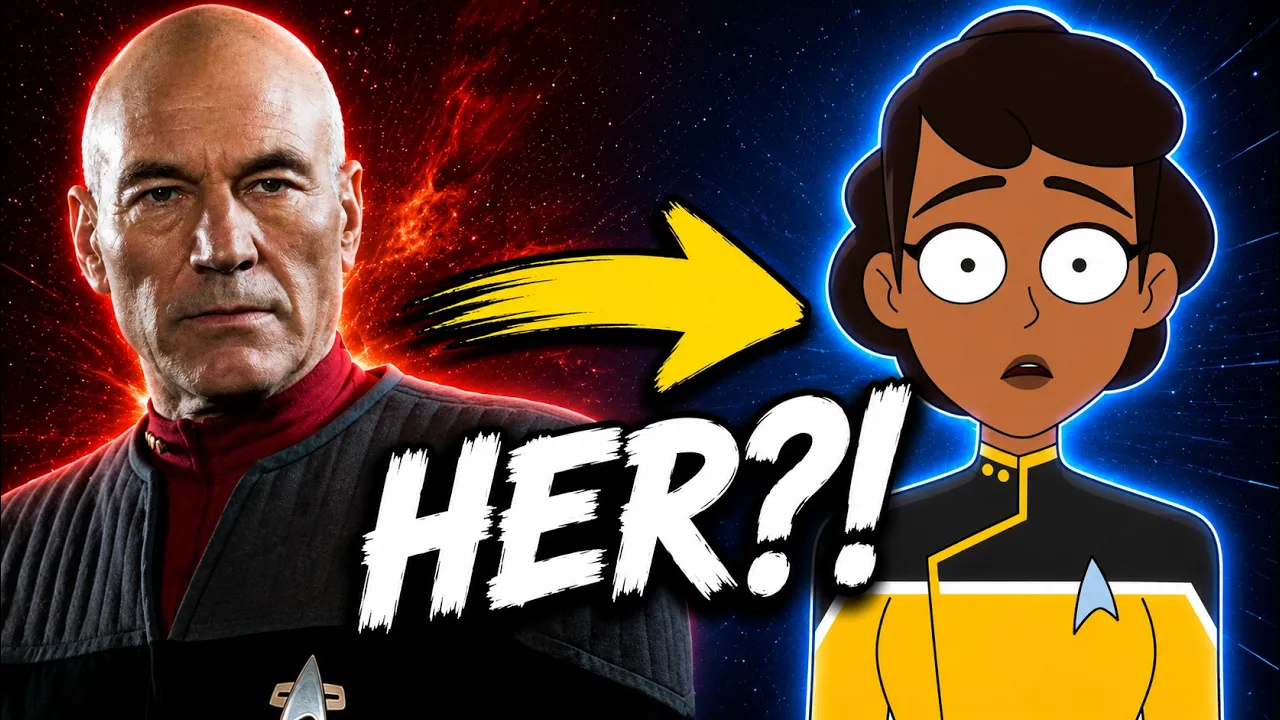
Adapted with AI from Lore Reloaded's video of 19 June 2026 and checked against the video before publication. Editorial standards · Corrections
More from @lorereloaded
All →


Make videos? Your next one could be an article here.
We turn your videos into articles under your name, linked back to the original. You keep 60% of what they earn, non-exclusive, and you can leave whenever you like.
Become a SubPlotter →