Stargate Atlantis theory: did the Ancients create the Wraith?
The hologram in Atlantis blames a monster the Ancients found. The series' own evidence points to an enemy they caused, a second one they built, and a galaxy they walked away from.

Before the Ancients left the Pegasus galaxy, they left their own account of what happened there in Atlantis, for whoever came after them. In that account, a great civilization was ambushed by a monster. The Ancients didn't lose Pegasus to an enemy they found there. Based on the series' own evidence, they lost it to an enemy they caused. Then they made a second one trying to fix the problem, and then they left both behind.
Here I'm comparing the Ancients' story with what Stargate Atlantis (2004), starring Joe Flanigan and Torri Higginson, actually shows on screen. Where something is a character's theory or my own reading, I'll say so. For anyone new to Stargate, as I am, the Ancients built the Stargates. Millions of years ago they left our galaxy for Pegasus and built Atlantis there.
The Ancients' hologram in Atlantis tells a story of overconfidence
In the Ancients' telling, their people one day set foot on a dark world where a terrible enemy was sleeping. Because of their overconfidence, they were unprepared and outnumbered. That's their version of events. Later in the same season, the expedition that found that message sits down to review what it knows about the Wraith, and someone asks the question the Ancients never had time to answer: did the Ancients create the Wraith?
The first episode is about the expedition from Earth finding the city at the bottom of the ocean, with the hologram playing on a loop. They arrive partway through, so the first thing they hear is the Ancients explaining why they came. They hoped to seed new life in a galaxy that didn't seem to have any. Over time, a thousand worlds bore life in this form, the form of people like the ones standing there listening.
Nobody in the room reacts to that line, which makes sense. They've just discovered the city is underwater. Even so, that line ends up mattering more than anything else in the message. Credit where it's due: the Ancients admit their overconfidence. My reading is that the hologram still sounds a bit arrogant. It has the feel of a company statement after a data breach, apologizing for the inconvenience while pointing out how advanced it is.
"Our kind" in the Atlantis hologram means the Ancients
Look at what happens to those thousand worlds in the same message. They start out as the Ancients' great project. A few sentences later, they're helpless human worlds the enemy fed on, and then they vanish from the story. The city was sunk to save what remained of our kind, and left in the hope that our kind would one day return.
That's the phrase "our kind" twice in about 30 seconds, and both times it means the Ancients. Those two words are worth listening for, because they come up again and again. The expedition takes the message seriously. In part two, Weir says one of the few things they know is that the Wraith are the enemy that defeated the Ancients. That's the official version, and everyone passes it along. So the question is what the message left out.
In The Gift, Beckett theorizes the Ancients created the Wraith
The answer starts in The Gift. Early in that episode, Teyla tells an old story about villagers who came back from the Wraith hearing voices, and Weir says it doesn't sound like the Ancients were responsible. That's a very confident thing to say in the first act of an episode. The team then digs through a lab of Wraith research, and in the briefing afterward Weir notes that the Wraith language appears to be derived from the Ancient language.
That seems to point to the Wraith having evolved after the Ancients arrived in Pegasus. Think about what that does to the hologram. If the Wraith speak a language built on the Ancients' own, there's no way they were asleep on that dark world before the Ancients got there. This is where Beckett offers his theory. The Ancients unintentionally allowed humans to evolve on a planet that held a species of insect. At some point those insects fed on humans and somehow incorporated human DNA, and the Wraith are what that mix evolved into.
Ford then asks the question from the start of this piece: is Beckett saying the Ancients actually created the Wraith? "By accident," says Beckett. "Or negligence," comes the reply. To be precise, Beckett calls it his theory, and a minute later McKay says the Ancients may have created them. There are side accounts in which the Ancients create the Wraith on purpose, but they aren't part of the official story, so I'm leaving them out. What the series gives us is a scientist's inference from the evidence in front of him, and not a single Ancient disputes it.
Conversion shows the bug, and the Ancient database knew about it
In Conversion, Sheppard is infected with a retrovirus from the bug, and Beckett warns that if it continues, he'll turn into a creature like the one another character had already become. Seeing a human body change toward the insect is the closest the series can come to showing the origin of the Wraith.
There's a detail that's easy to miss. When the team needs to find the bugs, McKay says the Ancient database holds a lot of information on this insect, and that they know which planet it lives on. So somewhere in Atlantis, the Ancients wrote a full encyclopedia entry on this bug, then left it out of their welcome message. We never learn when that entry was written, before the Wraith or after them, so I won't read too much into the timing.
Accident or negligence: why the difference matters
Back in The Gift, Weir's answer to the accident or negligence question is that either way, it doesn't matter. For a team trying to build a weapon that week, maybe it didn't. For me, it's the heart of the question. An accident is something you couldn't have expected. Negligence is something you should have.
The Wraith queen calls Pegasus a feeding ground
Before the series explains where the Wraith came from, the pilot shows what it means to live beside them. On a Wraith world, the Wraith queen tells Colonel Sumner that he has trespassed on their feeding ground. That's what Pegasus is to the Wraith, and the humans the Ancients seeded are what's on the menu. She then goes into Sumner's mind looking for something better, asks how many of his kind remain, and says their feeding ground hasn't been this rich in 10,000 years.
Ten thousand years is roughly how long the Ancients have been gone, so the last time the Wraith ate this well lines up with the galaxy the Ancients left behind. That connection is my own inference. The series doesn't spell it out.
The people living under all this don't fool themselves about it. In the first episode, Teyla explains to Sheppard that the Wraith let her kind grow in number, and when that number reaches a certain point, they return to harvest their human herds. She says she doesn't know anyone the Wraith haven't touched. She uses the same two words the Ancients used, our kind, but when Teyla says it, she means her people. Imagine growing up knowing they'll come back for your town one day, because they did it five generations ago and nobody stopped them.
Progeny: the Asurans were the Ancients' weapon against the Wraith
If the Wraith were a mistake, Progeny is the story of the Ancients trying to fix it. In season three, the team finds a planet called Asuras full of people who look and talk like the Ancients. Their leader, Oberoth, sounds like a critic of the real ones, saying their Ancient brethren were arrogant and badly underestimated the Wraith. After the hologram's overconfidence, this is the second time Ancient pride shows up, and this time it comes from their own family. Sort of.
The irony is that the Asurans aren't Ancients. Through a mind link, one of them, Niam, shows how they were made. The Ancients were desperate for a better way to fight the Wraith, so they built microscopic machines designed to infiltrate and destroy from within. These were nanites, and the Ancients gave them an aggression that exceeded even their enemy's. So the plan to beat the monster was to build something angrier than the monster. The Asurans begged to have that violent nature removed from their programming, but the Ancients wanted a weapon, and so they chose to destroy them.
Taking that slowly: the Asurans asked for the aggression to be removed. The Ancients refused because they wanted a weapon, along with a built-in rule preventing the Asurans from harming them, which is the kind of safety feature you only add when you already suspect what you're building. So the experiment continued. When it became clear the weapon wouldn't work as planned, they bombarded the planet.
That's the Asurans' side of it, and they aren't neutral witnesses. But the series backs them in a quieter way. By the end of the episode, there's no record of Asuras anywhere in the Ancient database. McKay thinks the Ancients either hid all the records or simply deleted them. Sheppard offers the other possibility: they didn't want anyone to know they'd failed. That's an understandable motive when the failure is a group project. It's much less understandable when it's a race of deadly nanites. It also sits beside a hologram about the war that never mentions where the enemy came from.
Before I Sleep makes the real case for the Ancients
I've been hard on the Ancients so far, so let's give them a chance, because there's a real point in their favor. It comes in Before I Sleep, where an older Elizabeth Weir from another timeline tells the expedition what she saw 10,000 years ago. In her account, the Ancients held out a long time. They were under siege for many years. They sent a delegation protected by their strongest warships, on a faint hope of negotiating a truce.
Then comes the line that sums up the war: ship for ship, the Atlantis vessels were more powerful, but the Wraith were simply too many. That's a real argument. They tried diplomacy, they fought, and an ever growing enemy outnumbered them. The episode makes sure you feel what it cost. There were only 300 people on one ship, and those 300 were Ancients trying to get home, and the Wraith showed them no mercy. Whatever you think of the Ancients by the end of this, the war was real, and they bled in it.
The Ancients planned for themselves, Earth and the city
The point I hold to is who they were planning for. Melia tells Weir they're returning to Earth and that she's welcome to join them. Janus describes the expedition as the second evolution of their kind. So our kind stretches all the way to Earth. Melia even offers to shut down the Stargate after they leave to keep Weir's expedition safe, and Janus tells her he has blocked every address leading to the gate except Earth's. Then, in the older Weir's words, they all left for Earth through the Stargate.
To be clear, nobody in that episode refuses to take the people of Pegasus. There's no line like that. They're simply never mentioned. The Ancients planned for themselves, for Earth and for the city, and the thousand worlds from the hologram aren't part of the conversation.
Helia reclaims Atlantis and doesn't deny the Wraith charge
In season three, some of them come home. An Ancient warship arrives with survivors of the war, led by a captain named Helia. She thanks Weir for preserving their city, which is a very polite way of saying thanks for house sitting. Then she pulls out a control panel no one from Earth knew existed and locks down Atlantis with one hand, telling them their stewardship of the city is no longer needed because the city is now under her control. That may be the most owner-like moment in all of Stargate.
Even her backstory fits. When she lost her ship to Wraith cruisers and heard the evacuation had begun, she decided to head for Earth and join the evacuees. She then sits down with Woolsey and General O'Neill, and when O'Neill points to how much blood has been spilled for this city, she has a reply ready: by their own admission, they're responsible for waking the Wraith. The answer comes back that by her own people's admission, they're responsible for the Wraith existing as a species.
That's an Ancient being told to her face that her people are responsible for the Wraith existing, and she doesn't argue. She doesn't confirm it either, so I won't claim the series settled it there. She moves on, and in response to the request to stay, she says a day will come when their people find a place here again. But not today.
Teyla and the Athosians get even less from the Ancients' return
The people of Pegasus get less than that. The Athosians had been living on the mainland, and Teyla tells Sheppard the Ancients found a suitable planet for them to move to. Then she says quietly that this wasn't the return of the Ancients her people had imagined. Later she puts it more simply: the Ancestors don't need their help and didn't ask for it.
Ten thousand years after that message, our kind finally came back, and they came back for the city. When the expedition prepares to leave, it's Teyla who says what the hologram never did: "You have been good friends to all the peoples of this galaxy."
So what do you call all of that? The series never settled it, and I won't either. Beckett said by accident. McKay said negligence. Weir said it doesn't matter.
Watch the original
@lorereloaded · YouTube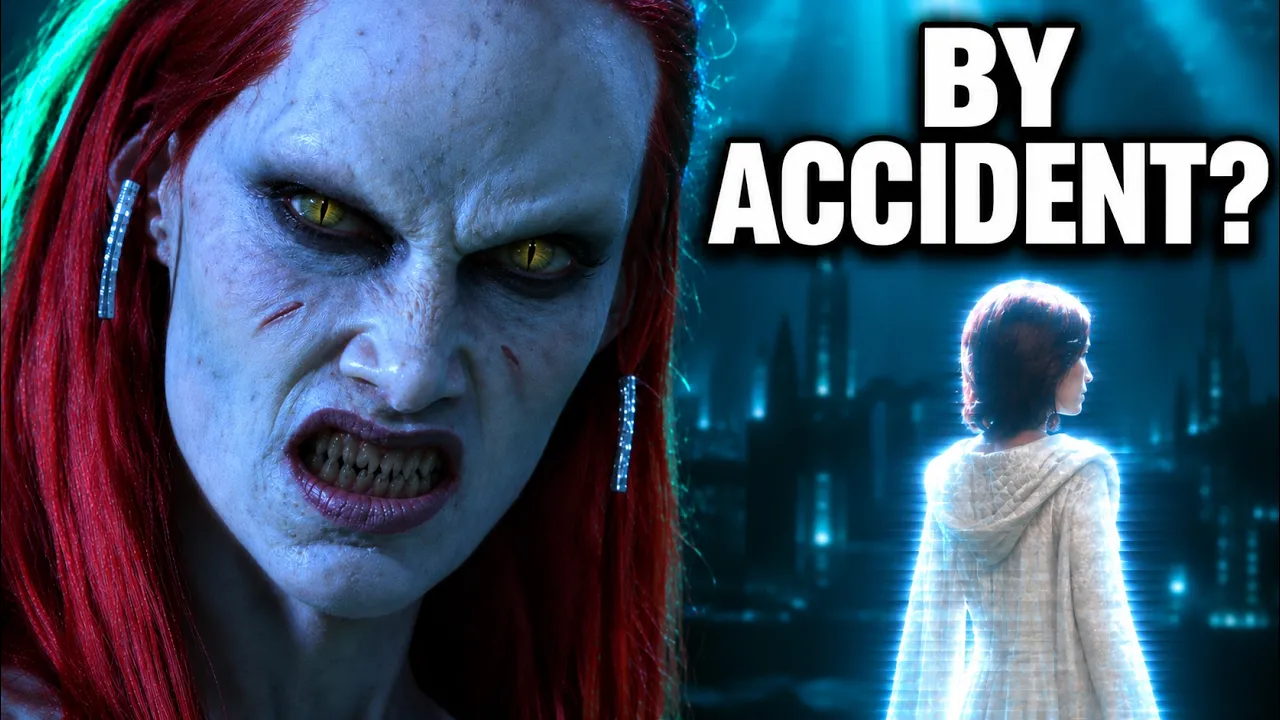
Adapted with AI from Lore Reloaded's video of 2 November 2026 and checked against the video before publication. Editorial standards · Corrections
More from @lorereloaded
All →


Make videos? Your next one could be an article here.
We turn your videos into articles under your name, linked back to the original. You keep 60% of what they earn, non-exclusive, and you can leave whenever you like.
Become a SubPlotter →