Prisoner of Azkaban review: is it the best Harry Potter film?
Alfonso Cuarón's darker take is the series at its highest level of filmmaking, though leaving out the Marauders backstory was a missed opportunity
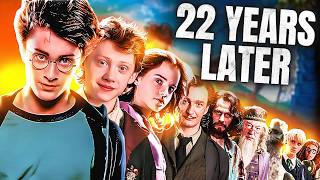
Harry Potter and the Prisoner of Azkaban came out about 22 years ago, and many people see it as one of the best films in the series. I think there's a reason for that: it has the highest quality of filmmaking of any of them. It's also widely seen as the moment the franchise turned toward a darker, more serious tone that reflects its characters growing up.
The 2004 film, starring Daniel Radcliffe, Rupert Grint and Emma Watson, is still a great piece of work. I do have one real criticism, and it has to do with what was left out of the book. Here's how the film came together behind the scenes, how it differs from the first two, and how it holds up.
Chris Columbus Steps Away and Alfonso Cuarón Takes Over Prisoner of Azkaban
With Chamber of Secrets released in November 2002, work on the third film, based on the third book, started immediately. Changes were already being made before Chamber even came out. The biggest and most immediate was that Chris Columbus, director of Philosopher's Stone and Chamber of Secrets, would not return to direct. Columbus stayed on as one of the main producers, but he never directed another film in the series.
The search for a director wasn't as wide as it was for the first film, but several names were considered. Guillermo del Toro was the first choice, but he turned it down because he didn't like the tone of the first two films. Marc Forster was also offered the job and passed. So did M. Night Shyamalan, who worked on The Village instead.
Columbus put forward a shortlist of three directors he thought should replace him: Callie Khouri, Kenneth Branagh, who played Gilderoy Lockhart, and Alfonso Cuarón. Cuarón was hesitant because he hadn't read any of the books or seen either film. After he was advised to read the books, he fell in love with them and changed his mind. In July 2002, four months before Chamber of Secrets was released, Cuarón signed on to direct. J.K. Rowling was very happy with the choice too.
Michael Gambon Replaces Richard Harris as Dumbledore
The next big change involved Dumbledore. Sadly, just three weeks before Chamber of Secrets was released, Richard Harris died, so the role had to be recast. It was originally offered to Ian McKellen, who declined because he felt it was too similar to Gandalf in The Lord of the Rings. Christopher Lee and Peter O'Toole were also considered, but the part eventually went to Michael Gambon, who reportedly shot all of his scenes in under three weeks.
The production schedule also had to change. Chamber of Secrets came out only one year after Philosopher's Stone. That quick turnaround benefited Chamber in several ways, but it was simply impossible to keep that pace for the rest of the series. Producer David Heyman thought it was best to move from a 12 month production cycle to an 18 month one. That would give the team enough time to make the films without feeling rushed, while staying fast enough that the lead actors wouldn't be hitting 30 by the time Deathly Hallows arrived. I'm sure Warner Bros. wanted to avoid a Stranger Things situation as much as possible.
Eventually production was in full swing and new characters were cast. Gary Oldman was cast as Sirius Black, David Thewlis as Professor Lupin, Timothy Spall as Peter Pettigrew and Emma Thompson as Professor Trelawney.
Cuarón's Darker Look, New Locations and Muggle Clothes at Hogwarts
During preproduction it was clear Cuarón wanted to set a more serious tone, and that showed up in many ways. The cinematography is noticeably different from the first two films: darker and far less colorful. New locations and sets were chosen. While many earlier sets were reused, some places we had already visited, such as Hagrid's hut and the Whomping Willow, were moved.
Perhaps the most controversial change was the costume design. This is the first film to have Hogwarts students wearing Muggle clothes. There's debate over how much witches and wizards wear ordinary clothes, but many agree that from Prisoner of Azkaban on, the films did it a lot. Cuarón made the change hoping to give each student a personal style and to reflect the characters moving into their teenage years.
Principal photography began in February 2003 and wrapped in November 2003. Overall, the production seemed to go wonderfully, and Cuarón described the experience as the best two years of his life. The Knight Bus scene reportedly took several weeks to film. To make the bus look as if it was going incredibly fast, the drivers and extras on the street were asked to move very slowly, which I thought was a fun detail.
When Cuarón signed on, many speculated that Patrick Doyle would score the film, given their long history together. Instead, Cuarón kept John Williams, who announced this would be the last film in the series he would score.
Prisoner of Azkaban Was the First Film to Cut Major Pieces of the Book
Prisoner of Azkaban is much shorter than the last four books but much longer than the first two. Once you pass 400 pages, it becomes very hard to fit everything into a single film of two and a half hours. This is the first time many details and story threads from the book were cut from the adaptation. Cuarón had to choose what made it in and what was left out, and fortunately he was able to consult Rowling about what could be removed or changed.
What this series often does, rather than changing book events for lack of time to explain them, is keep them in the films while choosing not to explain them. That keeps the films consistent with the books, but it leaves non readers with some questions. Since this was the first film that had to drop details, Cuarón set a standard the rest of the films followed. This is something I'll dig into later.
Being the third entry, and following the success of the first two, there was a lot of anticipation. Harry Potter and the Prisoner of Azkaban was released in theaters on May 31, 2004.
The Atmosphere Around Hogwarts and Why Hagrid's Hut and the Whomping Willow Moved
Most film critics and video essayists focus entirely on story. They'll say plot holes are why a film is bad, but they often ignore the other elements that make a film great, and I'm guilty of that too. With this film, the filmmaking deserves as much attention as the story, and I don't just mean the good cinematography, which it definitely has.
I'd say Prisoner of Azkaban is the most atmospheric Harry Potter film. Philosopher's Stone and Chamber of Secrets captured the feel of Hogwarts, but this one also captures the world around it. The film feels cold and damp. Part of that is all the rain, but it's more about small details: how soaked the grounds look, the frost effect from the Dementors, the deep shadows when the characters are outside. You can feel what the characters are probably feeling. Harry throws snowballs, Hermione watches his footprints, and the Whomping Willow is shown several times to mark the changing seasons.
So why did Cuarón move Hagrid's hut and the Whomping Willow? Did they not care about continuity? No. The geography of those locations was changed to suit this story's climax. You can map the final scenes in your head: the characters go down the hill toward Hagrid's hut, then climb a different part of the hill to reach the Whomping Willow, and just outside is the forest where Harry goes to fight the Dementors. Having the characters look up the hill and see who's coming is an important part of that sequence. With the Whomping Willow, I'm sure one reason for moving it was simply to get one particular shot. That's skilled filmmaking: something was changed to make the film and specific scenes better.
Cuarón Pushes Prisoner of Azkaban Toward Horror
Perhaps the best known part of this film is its big shift in tone. Chamber of Secrets is largely a children's fantasy film that leans toward adventure. Prisoner of Azkaban leans more toward horror. It isn't a horror film in the literal sense, but it's scarier and uses many horror techniques.
The Dementors were clearly described in the books, but Cuarón brought them to life here, and their design was executed perfectly. I don't think this was in the books, but the idea of water freezing whenever Dementors approach was brilliant. Because we know frost is part of the Dementors, when it appears later it's a visual cue that they're near without showing them directly. The effect showing a Dementor drawing out someone's soul was also effective. This film nails the Dementors.
Beyond that, the animals are shot to be frightening. Sirius is a scary looking dog, and of course the werewolf looks scary. Lupin transforming into a werewolf is a shot that's burned into my memory. The orange tints are gone, replaced with a much bluer tint that feels colder and more unsettling, and even the way things like the Boggart are filmed is creepy. These are all directing choices Cuarón got right.
People love to highlight the long takes, which give the film its own character. Cuarón also does an excellent job filling backgrounds with small details. Keeping Sirius's mugshot in view throughout the long take of Arthur Weasley's conversation with Harry was effective, and I've seen another creator's breakdown of all the great detail in the paintings around Hogwarts. It adds life to the film even if you don't notice it.
Gary Oldman, David Thewlis and the Young Cast Raise the Level
The last element that takes this film to another level is the cast. Alan Rickman gets more room to work here. David Thewlis is a great actor, and casting Gary Oldman as Sirius is a one of a kind choice.
Even the kids are much better. In these early films, I'm very impressed by Rupert Grint and Emma Watson. They're clearly capable of more than what's asked of them, especially Grint. I'm not saying Daniel Radcliffe is bad in any way, but the scene in the forest stood out as one of the film's weakest moments.
A Personal Story About Harry, Sirius, Lupin and His Father
What makes the story work is how personal and intimate it is. This book is known as the only one in the series with almost nothing to do with Voldemort, and in a way I find that refreshing. It allows for much smaller stakes and lets other characters develop. In the wider series, it does two main things: it builds Harry's relationship with Sirius and introduces Harry's father and the Marauders. That isn't much, but it's told in a way that makes those relationships captivating.
The film is also surprisingly focused. The first two films worked hard to show many different things about Hogwarts, but here 90 percent of the film is about the mystery of who Sirius Black is and why he supposedly wants to kill Harry. The Buckbeak storyline is a subplot, but even it ties back to Sirius in the end.
The film opens by reminding us how Harry feels about his parents. When Vernon's sister talks about them, he becomes furious, a quick reminder of how sensitive he is about them. We then meet Sirius at the Leaky Cauldron: he has escaped Azkaban and wants to kill Harry, and the question is why. We learn he was James Potter's best friend, allegedly betrayed James and Lily and caused their deaths, and is still Harry's godfather. That makes Harry angrier than he has ever been, which makes sense given how protective of their memory the film has shown him to be.
In the first two films, the plots aren't necessarily about Harry; he gets caught up in them. Here he has no choice but to be part of it, and that gives the story many more reflective moments. A big part of that is his bond with Lupin. Harry seems desperate for father figures and eager to know anyone who knew his parents. Dumbledore is his mentor, but he wants someone closer. Lupin trains Harry and can also be the fatherly presence he never had. Apart from Dumbledore and maybe Hagrid, Harry hadn't formed a meaningful relationship with an adult, so it's nice to see that here.
The Shrieking Shack and a Film With Two Climaxes
The first two acts are almost entirely reflective, and by the third act everything comes together in one of the most exciting endings in the series. The biggest reason is that the film has two climaxes. Before Harry goes back in time, he and his friends try to save Buckbeak and fail. Then Ron is dragged into the Shrieking Shack, where much is revealed: Sirius didn't betray Harry's parents, Peter Pettigrew did. Lupin and Sirius are best friends. Snape shows up, and we see why he might get involved, because they all bullied him when they were younger.
One thing I didn't like is how Lupin and Sirius act at first. The scene plays as if Lupin is betraying Harry, which is sad because we like Lupin. Instead of telling Harry what's going on, Sirius and Lupin just shout that they have to kill him now. It feels like they're deliberately confusing Harry and the audience, and the dialogue feels very contrived once you realize the writers wanted us to feel betrayed a little longer before the truth comes out. But that's minor, and the rest of the scene is excellent.
The clever part is that there's no real villain. You could argue Pettigrew is one, but he isn't the one after Harry. He betrayed Harry's father 12 years earlier, and Sirius is after him. Events come down to circumstance more than a villain, and those circumstances are well set up: a full moon turns Lupin into a werewolf, which leads to Pettigrew escaping, Sirius being captured and Harry needing to be rescued. Aside from small hints at time travel, this could have been an ending on its own. A rather bleak one, but it would have worked.
The Time Travel Works Because Harry Finally Saves Himself
The film gets new energy because we relive everything. Harry and Hermione go back in time to make sure events play out the same way and to save some innocent lives. I don't like time travel stories, especially in a film series, because they raise questions like why it isn't used again or why it wasn't used in a particular moment.
But here it plays less like a time travel story and more like Vantage Point, a film about an assassination attempt where each new perspective reveals something different. Harry and Hermione don't change anything; we just see events from a different angle, and that angle matters. For the first time, Harry has to save himself. One of my biggest complaints about the first two films is that something magical happens so Harry can stop the villain. Here he waits for his father to save him, realizes he has to do it himself, and does. It's a good moment of growth.
That leads to a bittersweet ending. Harry has just formed meaningful bonds with Sirius and Lupin, and now both are gone. He had a chance to escape the Dursleys and live with someone who truly loves him, and that was taken away, as was a teacher he finally connected with. There's nothing revolutionary about this story, but the way it digs into Harry and develops the people around him makes it one of the most moving entries in the series.
Leaving Out the Marauders Backstory Was a Missed Opportunity
My one criticism concerns the changes from the book. Not every change was bad; I think some were very good. The book focuses much more on Quidditch and Harry getting his new broom. That was interesting, but I think it was smart to cut it to make room for more important things.
What I think was a mistake is that the film leaves out so much of the Marauders backstory. Since so much of the film is about Harry's father and his friends forming bonds with Harry, that matters. The film never explains who Moony, Wormtail, Padfoot and Prongs are. It never explains that they made the Marauder's Map, that they became unregistered Animagi to be with Lupin during the full moon, or why Harry's Patronus is a stag. Most surprisingly, it never explains how Sirius escaped Azkaban or got onto the Hogwarts grounds.
The film is already very personal, but including those details would have taken it to another level and deepened Harry's understanding of his father and his bond with Lupin and Sirius. You could say the film still works without the book, so is it fair to call this a flaw? When something could clearly and easily have been done to make the story better, it's fair to point it out. Cutting those parts was a big missed opportunity, but it's really my only criticism.
Three More Reasons Hogwarts Isn't Safe
I've been keeping a running count of reasons Hogwarts is dangerous, and after the first two films it stood at eight.
Number nine: Dementors were brought onto school grounds. It doesn't matter that they were there to protect students. Harry was attacked by Dementors three times, and two of those times they had no reason to be near him. The first was on the Hogwarts Express. Imagine first years, before even arriving, watching Dementors attack students. The other was in the middle of a Quidditch match, where he nearly fell to his death. Even attacking one student is reason enough to call Hogwarts unsafe.
Number ten, tied to nine: the Dementors failed to protect Hogwarts. It doesn't matter that Sirius had good intentions; he still reached Harry, and he clearly got inside the castle. If Sirius had been one of Voldemort's followers, Harry could easily have been killed. Number eleven: Hogwarts hires werewolves as teachers. Lupin is a good man who can't help being a werewolf, but when children's safety is the main concern, feelings don't matter. He transformed in front of three students and could have killed them. The series wants you to believe that because its heroes keep surviving, Hogwarts isn't dangerous, but that's not how it works. A student could die eventually, maybe even the next year. In Prisoner of Azkaban, Hogwarts fails to protect its students at almost every turn.
Reception, Box Office and Where Prisoner of Azkaban Ranks
Harry Potter and the Prisoner of Azkaban holds a 91 percent score on Rotten Tomatoes and an 86 percent audience score. On IMDb it has an eight out of 10, the highest rated of the first three films. It made 795 million dollars at the box office, another success for Warner Bros., though lower than the first two films, and it ended up the second highest grossing film of 2004.
Ranking it is hard for me, because in a way it's the opposite of Chamber of Secrets. Chamber is a lot of fun and a sillier film, while Prisoner of Azkaban is simply a better and more carefully made film. In my personal ranking, I put Prisoner of Azkaban second, behind Chamber of Secrets but ahead of Philosopher's Stone.
What other creators are saying
More on Harry Potter →With the show and The Game Awards both arriving in December, a sequel reveal then makes sense, and if that happens a 2027 release would too, though the Paramount takeover raises questions.
A breakdown of why raw spellcasting is not the full story in this wizard duel
Watch the original
@thegoldman25 · YouTube
Adapted with AI from The Gold Man's video of 1 November 2026 and checked against the video before publication. Editorial standards · Corrections
More from @thegoldman25
All →


Make videos? Your next one could be an article here.
We turn your videos into articles under your name, linked back to the original. You keep 60% of what they earn, non-exclusive, and you can leave whenever you like.
Become a SubPlotter →