Where Winds Meet: can you really learn kung fu from a bear?
A free open world kung fu game set in tenth century China, where you can learn Tai Chi from a bear and steal techniques from a monk

Where Winds Meet might be the closest experience we've had to living out a real wuxia film, and I'm not saying that to exaggerate. This is a game where you can steal a martial art from a monk, learn Tai Chi from a bear, and run across water to catch a duel, all in the same afternoon. I think many people don't realize how deep the wuxia side of it goes.
Where Winds Meet (2025) is developed by Everstone Studio. It is free to play on PC, PS5 and mobile. With Chinese culture spreading online lately, from the "becoming Chinese" trend on TikTok to growing interest in wuxia games, I think there has never been a better time to talk about what makes this genre special. With the game's first anniversary approaching, its latest trailer is a reminder of how rich and deep it is. Below I cover the history behind the story, the world you explore, the freedom to learn any martial art you want, and the bosses.
Where Winds Meet is set in the Five Dynasties and Ten Kingdoms era of tenth century China
The setting is what makes Where Winds Meet feel so different from other open world role playing games. It takes place during the Five Dynasties and Ten Kingdoms period of tenth century China. That was a time of political turmoil. Dynasties rose and fell, warlords fought to fill a power vacuum, and nobody knew who would take charge next. The game blends that real history with wuxia legend.
You start in a rural region, raised by an aunt and uncle, dreaming of becoming a wanderer. Then, on the day of a local festival, a mysterious figure steals the jade pendant you have worn since childhood, and that sparks the whole journey. From there you are pulled into a mystery about something called the gold making vessel, a supposedly miraculous treasure that may hide something darker. Along the way you face off against a strategist in a direct battle of wits.
The Where Winds Meet story is about patriotism, destiny and your choices
This is the part I love. When you strip the story down, it is about patriotism and a sense of destiny in a chaotic era. You are one person trying to decide where you stand while the whole country collapses around you, and your choices carry weight. Depending on how you play, you can help unite the Ten Kingdoms or push them toward more chaos. NPCs will look at you differently based on what you do.
Beyond the main story, there is a hidden narrative thread told through fragments you find while exploring, such as a passing remark from a beggar or a book left in a room. That is a classic literary way of telling stories in wuxia novels.
The Where Winds Meet map, from quiet villages to the city of Kaifeng
The map is one of the most beautiful parts of this game. It stretches across multiple regions inspired by tenth century China. There are cities, villages, mountains, lakes, temples, ruins and hidden areas, and all of them tie into the story. Your starting point is a wide rural region with open plains, quiet villages and caves that hide martial arts secrets. There are haunted ruins and a mountain peak, and there is even a local rumor about a troublemaker who burns wasp nests and steals horses. That troublemaker is the player. That is us.
Then there is Kaifeng, which is the complete opposite. It is a huge ancient city that the developers call the heart of civilization, with a ceremonial hall, bustling markets and a ghost market. Its scale is wild. Kaifeng alone holds more than 10,000 NPCs and more than 1,200 collectible cultural relics. So you are not wandering through a pretty backdrop. You are walking through a city full of real cultural detail from that era.
Traversal, art direction and music make Where Winds Meet feel like a martial arts film
How you move through the world is half the fun. You can jump off cliffs without taking damage, climb rock faces, run across water, run along walls, and even open a glider to fly over the map. That is the wuxia fantasy itself. Every time I see someone running across a lake, it looks like a scene taken straight from a martial arts film.
The art direction ties it all together. When it comes to Eastern aesthetics, this game commits completely. You run through bamboo forests, green fields, mountain temples and camps scarred by battle. The architecture, clothing and landmarks all follow that tenth century look. Even the newest region keeps it going with seaside sunsets, fields of red flowers and mysterious statues in the mountains.
The music plays a big part too. It changes depending on what you are doing: calm while you explore, light during cinematics, then tense and fast as soon as a fight breaks out. It is all built around instruments and arrangements inspired by classical Eastern music. So when you glide off a cliff at sunset as the soundtrack starts, you feel like you are in the opening of a wuxia film.
The Where Winds Meet open world reacts to you
The open world here does not simply wait for you. Dynamic events happen naturally as you explore, so you will run into duels, ambushes and traveling performers on the road. Soldiers may be openly hostile, while travelers will point you toward new clues. The weather changes, day turns to night, and if you are reckless, parts of the environment can be destroyed as well.
Because the world changes based on your decisions, no two players' maps will look exactly alike. You are essentially growing your own version of the jianghu. I've seen people describe random encounters that hit them with morally gray choices, which changed how characters treated them later. That is what makes an open world feel inhabited rather than a to do list simulator.
In Where Winds Meet you can learn martial arts from anyone, even a bear
This is where it gets exciting, because this is what makes it feel like a true wuxia story. In many games you pick a class at the start and stay locked into it. Where Winds Meet does not do that at all. There are sects in this world, each with its own fighting style, but you are not bound to any of them. You are a wanderer, so you can learn from everyone.
Some of the mystic arts come from the strangest places. You can learn Tai Chi by giving a bear a piece of jade early in the game. You can use a stealing technique to take a skill book from a young monk at a temple, which is how you get a technique called Golden Body. There is a technique you learn by buying lots of wine and drinking until you master it. Another one you get after finding a goose bullying a bear. I'm not making this up. Even the Lion's Roar is tied to a side story where you have to swing four bronze bells, so almost every technique comes with its own little legend.
This is exactly how wuxia stories work. The hero does not level up in a menu. He stumbles on a hidden master, watches a technique, steals a manual, and suddenly learns something new. This game turns all of that into an actual gameplay loop, and I think it is one of the smartest things it does.
Where Winds Meet combat was shaped by action director Stephen Tung Wai
All that freedom feeds into the combat. At launch the game had 12 fighting styles and 23 mystic techniques, and you could fight with swords, spears, the mo blade, the rope dart, the umbrella and the fan. The rope dart is a great example of the philosophy here: the developers designed it around the idea that softness can overcome strength, using flexibility and an enemy's weak points to bring down stronger opponents, just like in the movies.
The animations were developed with Stephen Tung Wai, a four time winner of the Hong Kong Film Award for Best Action Choreography, who served as action director on selected weapons and fight sequences. So when parts of the combat look like a film, that is because they were designed by someone who does this work for films.
You have light and heavy attacks, special abilities, dodges and parries, and your choice of weapon changes your whole fighting style. The newest example is a ribbon weapon where one hand beats a drum while the other waves a ribbon. When you hit the rhythm, you unleash a wide attack that buffs your allies. They built a rhythm game inside a wuxia combat system, based on ribbon dance, the folding fan and music. That is Eastern aesthetics in combat taken as far as it goes.
Bandits, rivals and wildlife in Where Winds Meet
The people and creatures you fight make the world feel real too. You will meet bandits, rival martial artists, soldiers and wildlife. Some animals are hostile, some are just part of the environment, and some you can hunt for crafting and trading. And of course, you can even go fishing.
There are moments where wildlife is the heart of the story. Remember the bear I mentioned above? People came across it venting its frustration on a tree, and that turns into a Tai Chi lesson and a skill for throwing large objects as projectiles. That is another wuxia moment, and it is a major reason the world feels unpredictable.
Where Winds Meet bosses test everything and reward you with new techniques
All of this leads to the bosses, because that is where everything gets tested. Boss fights are a serious challenge across the world. They test your timing, your qi and your skill with your weapon, usually in a unique arena that suits the character. Some players compare the hardest ones to Dark Souls encounters, which makes sense.
Some bosses even reward you with new techniques. One makes you parry attacks to fill a meter, and if you pull it off you can unlock a mystic art. That is the classic wuxia loop: you defeat the master, then leave carrying a piece of their fighting style.
The newer bosses keep getting more creative. In one fight you duel in 2D on a raft racing down a river. Another will stomp on your head until it finishes you off if you are not careful. Another drags you underground with bloody, ghostly hands. Each one has a completely different look and fighting style, and that variety keeps the combat fresh.
Where Winds Meet takes everything people love about wuxia and history, the wandering hero, the hidden masters, the impossible martial arts, and turns it into an experience you can play yourself.
Watch the original
@wesnemo · YouTube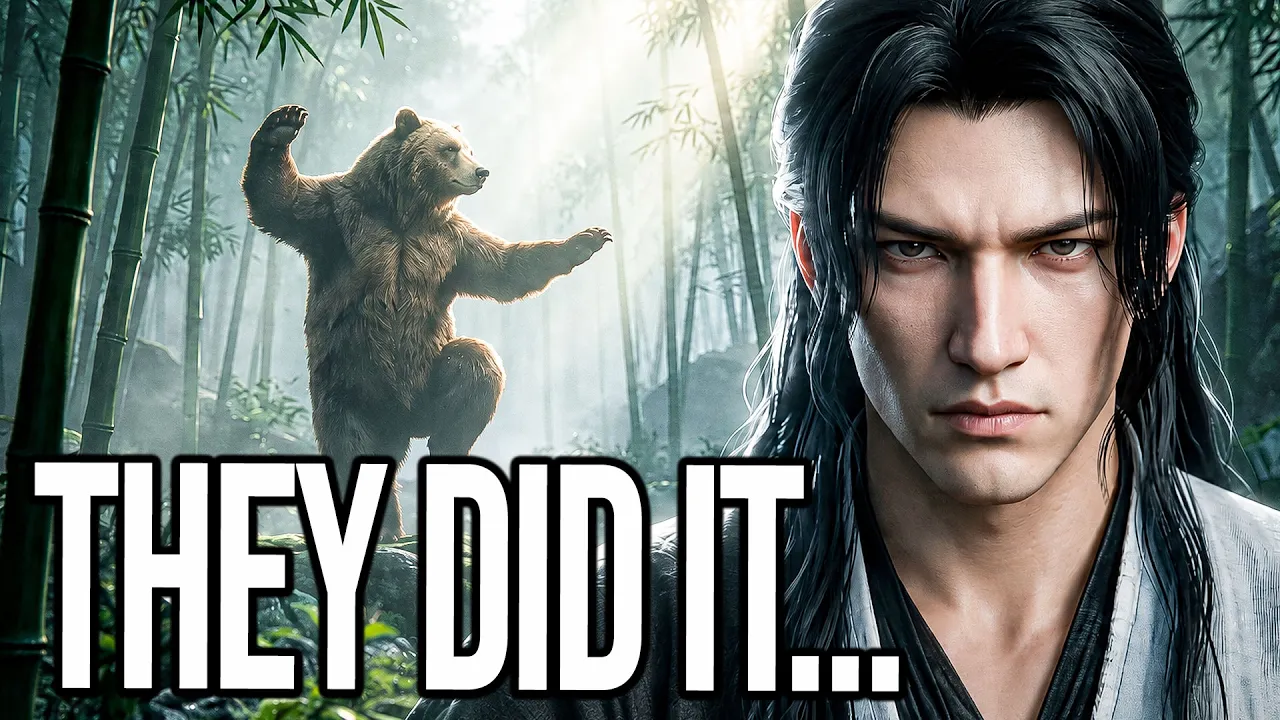
Adapted with AI from WesNemo's video of 2 November 2026 and checked against the video before publication. Editorial standards · Corrections
More from @wesnemo
All →


Make videos? Your next one could be an article here.
We turn your videos into articles under your name, linked back to the original. You keep 60% of what they earn, non-exclusive, and you can leave whenever you like.
Become a SubPlotter →