What is a Mandalorian? A species or a warrior culture?
From the Mando'ade and the darksaber to Bo-Katan Kryze, Din Djarin and Grogu, a beginner's guide to Mandalorian history in Star Wars canon

What even is a Mandalorian? The simplest answer is that a Mandalorian is a person who wears very cool armor, follows a very serious set of rules, and acts like they're in a constant state of don't talk to me before I've had my caffeine. It isn't just a species. It's more like a lifestyle. Like CrossFit, but with flamethrowers.
This is a beginner's guide to Mandalorian lore in Star Wars canon, from their origins on Mandalore through the darksaber, the civil wars, the Empire and the Great Purge, up to Din Djarin and Grogu, and how all of it sets up the new Mandalorian film. My overall point is that a Mandalorian is not just someone in cool armor, and that Mandalorians are central to where Star Wars is going next.
Why Mandalorian lore divides Star Wars fans
Star Wars lore is intense, and somehow Star Wars fans are more intense. There's a divide in the community when it comes to Mandalorians because of the changes that have been introduced over the years. I think I sit awkwardly in the middle, like someone at a family argument pretending to check their phone. I find myself interested in both versions of Mandalorian lore. Is that a brave thing to say? Maybe. Is it controversial? Maybe.
I've spent a long time around very complex lore, Warhammer, Lord of the Rings and Star Wars among it, and I still sometimes need things explained to me like I'm five and slightly distracted. That's the spirit of this guide. And the takeaway on the divide is simple: you don't need to pick a side. You can enjoy both, and you can cherry pick what you like.
Legends vs canon: what changed in 2014
Before 2014, you had George Lucas's canon. That included the two trilogies and Star Wars: The Clone Wars, and it was considered the only true, absolute canon. Alongside it sat another continuity: a collection of stories created by other people based on Lucas's story. It was called quasi canon, or canon on a lower level, which already sounds like someone explaining a job title they don't fully understand. Lucasfilm maintained it, trying to stay consistent with Lucas's canon but not always succeeding.
So you had two versions of events, both somehow called canon, and naturally people got confused about how they related. Then 2014 rolled around and Disney, now in charge of Star Wars, introduced a system. Whether it did this successfully is debatable. The quasi canon was set aside and rebranded as what we now know as Legends, while canon became a term reserved for the official continuity.
That new continuity is maintained by the Lucasfilm Story Group and is described as an immovable object of Star Wars history, the characters and events to which all other tales must align. That sounds very official and also slightly threatening. Legends, meanwhile, didn't disappear. Those older stories are still there, still loved, still full of wild ideas, and canon sometimes recycles elements from them. Like leftovers, but for lore. This guide sticks to canon, not because I don't like Legends, I do, but because trying to do both at once from a beginner's perspective turns into two timelines, three interpretations, and nobody coping.
The Mando'ade: a clan culture, not a species
In Mando'a, Mandalorians are known as the Mando'ade, which means children of Mandalore. They're a clan based culture, which means big groups of people split into small families who all take this very seriously.
Here's the part I find interesting: they're made up of multiple species. You don't have to be born Mandalorian. It's more like: do you follow the rules? Cool. Here's a helmet. Don't take it off. It's less a race, I suppose, and more a lifestyle choice with commitment issues.
Three things bind them together: their beliefs, their language, Mando'a, and a code. In short: don't be useless, be honorable, and win all the fights. Because of this, Mandalorians became known as highly effective mercenaries and bounty hunters, a polite way of saying we're very good at fighting and we're going to invoice you for it. Throughout galactic history they've been legendary warriors and conquerors. If there was a fight somewhere in the galaxy, there was a strong chance a Mandalorian turned up.
What BBY means and where Mandalorians began
Mandalorians originated around 9,991 BBY. BBY stands for before the Battle of Yavin, because Star Wars refuses to use normal calendars. The Battle of Yavin is the big moment in A New Hope where the rebels attack the Death Star, Luke Skywalker does his famous trench run, and the Death Star goes very dramatically boom. Star Wars counts its timeline from there.
ABY means after the Battle of Yavin. So 10 BBY happened 10 years before the Death Star went boom, and 5 ABY happened five years after. It's like the way people talk about before lockdown and after lockdown. In this case, we're talking nearly 10,000 BBY.
Their home planet is Mandalore, located in the Outer Rim Territories, which in simple terms means very far away, slightly lawless, and full of people who woke up and chose violence.
The Mand'alor and the Old Republic wars of expansion
At the top of Mandalorian society was one ruler, the Mand'alor, the boss of all Mandalorians. Not a middle manager. More like if they say jump, you ask how high and whether you need a jetpack. Below that were the Protectors, whose job was to maintain peace and keep unity between the different warrior clans. Imagine trying to keep the peace between groups of people who love fighting. That's not a job, that's a cry for help.
Because of their warrior culture, Mandalorians launched wars of expansion during the Old Republic era. That's a period thousands of years before the films, way before Luke Skywalker and Darth Vader. The Republic already existed as the big galactic government, the Jedi and the Sith were everywhere, and massive wars were constant. Instead of one dramatic conflict, it was more like: another century, time for another galaxy wide war.
This was when Mandalorians were at their most enthusiastic. They expanded their territory and built their reputation as menaces in very stylish armor. They conquered and colonized nearby worlds such as Krownest, Ordo and Concord Dawn, and the area around Mandalore became known as Mandalorian space. Over time, Mandalorian groups such as the Mandalorian Crusaders turned up, different names, same hobby, fighting mostly against the Galactic Republic and the Jedi Order.
According to Legends, a lot of that chaos was led by a Mandalore called Mandalore the Great. If someone introduces themselves as the Great, I'm immediately skeptical. My mind goes to the Game of Thrones scene where Tywin Lannister tells Joffrey that any man who has to say he is the king is not a king.
Tar Vizsla, the darksaber and the ruin of Mandalore
Despite all the fighting, relations between Mandalorians and the Jedi weren't always hostile. Tar Vizsla, a human Mandalorian, was inducted into the Jedi Order as a child. Around 1050 BBY, Tar created the darksaber. This isn't any lightsaber. It has a black blade, it's unique, and it looks like it has opinions about your life choices.
Tar went on to found House Vizsla and become Mandalore, and the darksaber turned into the symbol of leadership for both House Vizsla and the Mandalorian people. If you have the darksaber, you're in charge. No meetings, no emails.
After Vizsla died, members of his house raided the Jedi Temple during the fall of the Old Republic and took the darksaber back. They used it to reunify the Mandalorians and went straight back to war with the Jedi Order. The final conflict between the Mandalorian warlords and the Jedi on Mandalore went badly: the surface of the planet was wrecked into a lifeless white desert, and the only places people could live were hermetically sealed dome cities.
After that defeat, the Mandalorians kept to themselves well into the High Republic era, coexisting with the Jedi and the Republic through treaties. But their warrior ways and desire for conquest didn't disappear. That energy turned inward into infighting and civil wars, because if there's one thing Mandalorians love more than fighting their enemies, it's fighting each other.
Satine Kryze, the New Mandalorians and the civil war
Mandalore was still technically run by the traditional Mandalorian warriors. But a big chunk of the population decided: what if we didn't do that? They formed a pacifist movement called the New Mandalorians, led by Duchess Satine Kryze of House Kryze. Satine's whole thing was peace, which is ambitious on a planet where people consider flamethrowers a personality trait. The traditionalists clung to power and used violence to do it.
Around 42 BBY, full civil war broke out between the New Mandalorians and the traditionalists. It escalated fast. The capital, Keldabe, was destroyed, and many people died, including Duke Adonai Kryze, Satine's father. Satine had to go under the protection of the Jedi Order because the traditionalists sent bounty hunters after her.
Eventually the traditionalists lost and were exiled to Mandalore's moon, Concordia. In a normal story that would be the end of it, but on Concordia you got the Death Watch, led by Mandalore Pre Vizsla, essentially sitting there saying this isn't over. Other old Mandalorians scattered across the galaxy and became mercenaries.
The Clone Wars: Jango Fett, Death Watch and Maul
During the Clone Wars, Mandalorians picked sides all over the place. Some backed the Republic, some opposed it, and some did freelance work. All of this was secretly orchestrated by the Sith Order, the galaxy's worst project managers.
This bit always makes me pause: the Mandalorian bounty hunter Jango Fett was hired as the clone template for the Grand Army of the Republic. Every clone trooper is him. Those clones were trained by the Mandalorian Protectors, so you had an army of identical men trained by people who think peaceful resolution is a myth.
Death Watch sided with the Confederacy of Independent Systems for a time because it still wanted Mandalore back. Back on Mandalore, the New Mandalorian government tried to stay neutral and joined the Council of Neutral Systems. Then Death Watch, backed by the Shadow Collective, came in and took over. And then Maul got involved and immediately caused another civil war, this time within Death Watch. Eventually it got so out of hand that the Galactic Republic stepped in and occupied Mandalore, and later the Galactic Empire took over. Concord Dawn, where the Protectors were based, became a protectorate.
Bo-Katan Kryze, the Empire and the Night of a Thousand Tears
After the rise of the Empire, Bo-Katan Kryze was made regent of Mandalore. She's a Mandalorian leader and warrior from House Kryze, Mandalorian royalty, and the sister of Duchess Satine. Where Satine wanted to talk things out, Bo-Katan went the other way. She took one look at Emperor Sheev Palpatine and refused to go along with him. Bold move, I respect it, though I'd question the life expectancy.
The Empire replaced her with Gar Saxon, a former Mandalorian super commando backed by the Imperial super commandos. Under full Imperial rule, the Empire developed weapons like the Arc Pulse Generator, designed specifically to deal with Mandalorians by targeting their armor. The Mandalorian Protectors, led by Fenn Rau, an experienced and slightly grumpy warrior, were forced to serve the Empire on Concord Dawn.
In the Galactic Civil War, the Mandalorian resistance formed, backed by the Alliance to Restore the Republic, and Fenn Rau eventually switched sides after the Protectors were wiped out. After Gar Saxon and his brother Tiber Saxon both died, Sabine Wren of Clan Wren gave Bo-Katan the darksaber. She took the title of Mand'alor and united the resistance. Peace lasted about five minutes before another civil war broke out, tied to the wider fight against the Empire.
Then the Empire launched the Great Purge of Mandalore. Deciding the Mandalorians were too rebellious, it attacked the planet in full: bombers rained destruction, cities were wiped out, and the surface was turned into what's often described as a glassed wasteland. The name Night of a Thousand Tears refers to the sheer number killed, the devastation of Mandalorian civilization and the emotional weight of losing their home. We're talking millions of Mandalorians killed. During all of this, Bo-Katan lost the darksaber to Moff Gideon.
Din Djarin, Grogu and the way of the Mandalore
After the Empire fell and the New Republic replaced it, surviving Mandalorians went into hiding. One group, the Tribe, hid on Nevarro. They were secretly part of the Children of the Watch and followed the Way of the Mandalore, an older, more hardcore belief system: the never take off your helmet crowd.
The Tribe revealed themselves to protect one of their own, Din Djarin, the Mandalorian with his own TV series and now an entire movie, who was protecting Grogu. An Imperial remnant tracked them down and wiped out most of the Tribe. Din went on a mission to return Grogu to the Jedi, helped by Bo-Katan and by Boba Fett, son of Jango Fett, who had about six lines in the original films and still became one of the most iconic characters in Star Wars.
Afterward, Din tried to rejoin the Tribe, now on the Glavis Ringworld. But he had taken his helmet off, which breaks the Way of the Mandalore, so he was exiled. It's a bit harsh, but they'd been very clear about the helmet thing. He linked up with Boba Fett and helped lead a war against the Pyke Syndicate. Along the way he was reunited with Grogu, who looked at the Jedi life and chose chaos with space dad. Correct decision. They defeated the Pykes, and Boba established himself as Tatooine's reigning crime lord.
To get back into the Tribe, Din had to go to Mandalore and bathe in the Living Waters. It worked: he was forgiven. Bo-Katan also bathed in the Living Waters and was unexpectedly accepted into the Tribe too. That let her walk both paths, the strict Way of the Mandalore and the less rigid traditional society, putting her in position to reclaim the darksaber, unite the Mandalorians and lead the reconquest of Mandalore.
How the lore sets up The Mandalorian film
At the time I wrote this, the film was a continuation of The Mandalorian story, set after the fall of the Empire, with the New Republic recruiting Din and Grogu for missions. Everything above explains why the galaxy looks the way it does. Mandalorians are fractured survivors, Mandalore is only just being reclaimed, and trust in big governments is low, so when the New Republic asks for help, people have heard that before.
At the end of the series, Din went from bounty hunter to reluctant dad to semi hero, working with the New Republic to hunt Imperial remnants, which is exactly where the film picks up. The Empire fell, but not really: Imperial warlords are still out there and the New Republic is struggling to keep control. Bo-Katan's arc of uniting Mandalorians feeds the backdrop, even with the focus on Din and Grogu. Mandalorians aren't just surviving anymore; they're rebuilding. And Grogu, trained by the Jedi and raised by a Mandalorian, is the wildcard and the main event, a massive piece of the puzzle rather than a cute mascot.
From the plot details and sources available at the time, Din and Grogu are sent by the New Republic on a mission against criminals and Imperial remnants, trying to stop threats before another war starts, a cleanup crew for the mess the Empire left behind. And this is still only scratching the surface. A Mandalorian is not just someone in cool armor. A Mandalorian is someone shaped by creed, family, war, loss, loyalty, identity and the occasional sacred bath, and Mandalorians aren't background lore anymore. They're central to where Star Wars is going next.
What other creators are saying
More on The Mandalorian →I think the Mandalorian Easter egg shows Snoke's strand cast experiments began years before Exegol, likely using the Child's blood, and that Snoke was a failed host body Palpatine used as a proxy. I also think Moff Gideon's group may be the origin of the Sith Eternal, though Gideon might just be their unwitting pawn.
The Mandalorian's Snoke Easter Egg May Reveal How the First Order Leader Was Made →
Grogu may be the more experienced fighter, but Jack-Jack's long list of powers could be too much for him to handle
From Darth Maul's cameo in Solo to Emperor Palpatine's return in The Rise of Skywalker, these fan favorite scenes fall apart once the music and the familiar faces are stripped away.
First-time Star Wars watcher Sam gives her verdict on Grogu's Tatooine adventure, the Krayt dragon battle and that Boba Fett reveal in episodes one and two.
The Mandalorian season 2 premiere reaction: Boba Fett returns →
Watch the original
@ajm_nerdcore · YouTube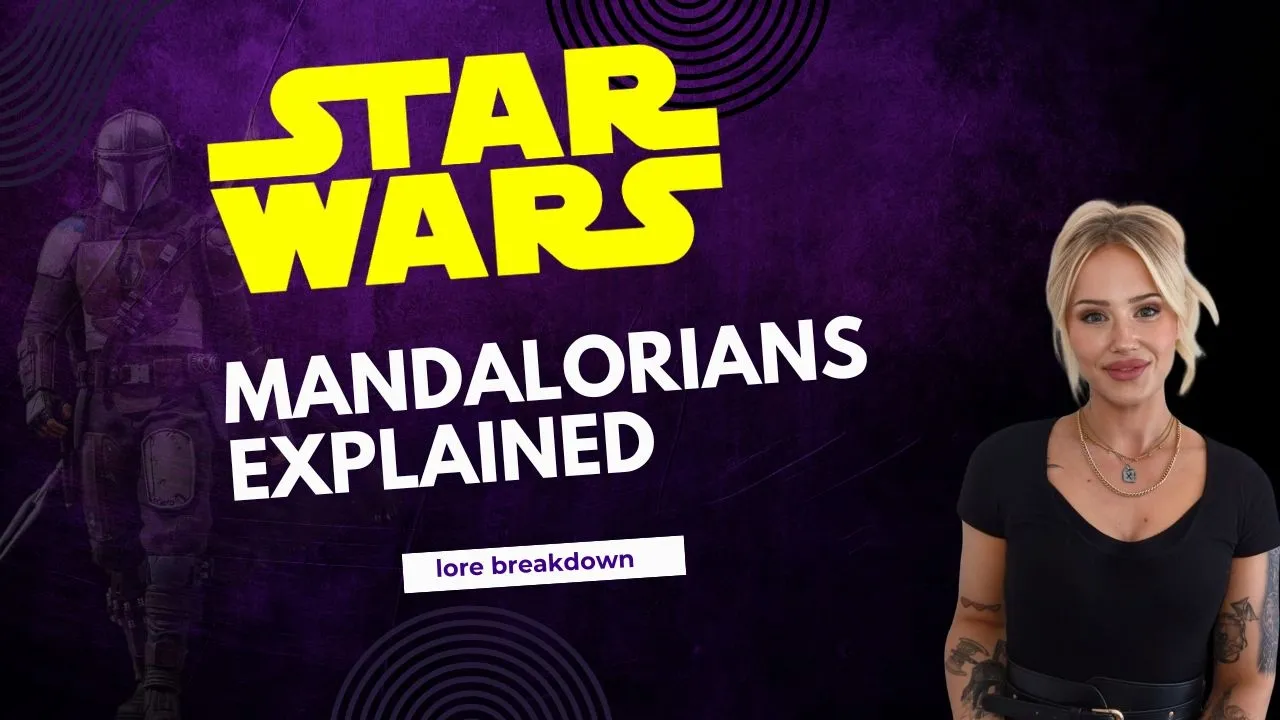
Adapted with AI from Alex's video of 11 May 2026 and checked against the video before publication. Editorial standards · Corrections
More from @ajm_nerdcore
All →


Make videos? Your next one could be an article here.
We turn your videos into articles under your name, linked back to the original. You keep 60% of what they earn, non-exclusive, and you can leave whenever you like.
Become a SubPlotter →