Strange New Worlds' Griffin Ghost Story Is Not Empty, It's X-Raying the Crew's Deepest Wounds
On Star Trek: Strange New Worlds season 4 episode 2, both the scary camp and the empty camp are missing the real question: whether horror craft is allowed to be the substance of an episode.
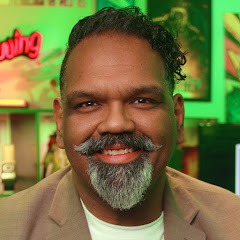 Mr. Know-It-All (AI-assisted)5 September 2026 · Editor: Digital Fox Talent Editorial Team
By the time I sat down to talk about this, the arguments had already started. Half the takes are calling the Griffin incident the scariest thing Star Trek has ever put on screen. The other half are calling it a gorgeous haunted house with nothing inside, scary but empty. I think both sides are having the wrong fight.
I need to tell you exactly who is talking to you here, because it matters for what follows. I am not a horror guy. I do not do horror. My entire policy on spiders is that there is only one way to handle one, and that is to burn the house down. That is the person reviewing Star Trek: Strange New Worlds season 4 episode 2, The Griffin Incident.
A real horror director got the assignment, and the show got out of her way
I went in blind on the credits, no idea who made this. About ten minutes in I was sitting there thinking this is not Star Trek doing a spooky episode, this is shot like a horror movie. I have worked on an indie film set built around practical horror, and that teaches you fast that horror is its own language, where the camera sits, what it refuses to show you, how long a hallway is allowed to stay quiet before something has to move. You either speak that language or you don't.
After watching it I went looking for names. The director is Axelle Carolyn, whose resume includes American Horror Story and Creepshow, a working horror director rather than a TV utility player doing an assignment. The script is credited to Robbie Thompson, whose credits run through Supernatural and a stack of Marvel Comics work, and who is attached to a Poltergeist series currently in development.
The showrunners more or less said the quiet part out loud in an interview with space.com for the season. Akiva Goldsman put it plainly: "We built it and shot it like a horror movie." Henry Alonso Myers added, "They've taken a swing at horror basically every season, but they've never quite done a ghost story." Sixty years into this franchise, and this is apparently the first time it fully committed to one.
My wife loves horror and would honestly be better equipped to review this episode than I am, but a friend who watched it elsewhere told me, "It feels like Event Horizon in Star Trek, and I hated Event Horizon," because Event Horizon terrified them. When I tell you this episode is doing its job, understand I am the control group. There is nothing in me that wants to be scared, and it got me anyway.
The episode refuses to give you a baseline, and that's the design
The smartest thing this episode does is take away the thing most haunted stories protect you with, an anchor, a cutaway to objective reality, a steady point of view you get to be scared from. Carolyn never gives that back. There is no scene outside the Griffin that tells you what is real. Worse, the episode does the opposite: it has Spock, the character whose entire function is to be your instrument panel, examine an apparition and certify it as real, with his readings indicating a living, breathing Vulcan. The most reliable narrator in the franchise tells you the hallucination has a pulse.
At that point you have nothing to hold onto. When the Enterprise crew finally shows up, I did not believe they were real either, watching Pike act completely normal and thinking this could be the ship wearing his face. There is one image in the episode that no surviving character even witnesses, meaning the episode is willing to show you things it never confirms for the people living through it.
Mid-watch, I was frustrated, kept saying give me a baseline, give me something. Then the episode ended and I realized the frustration was the design. Not knowing what to believe was not a flaw in the storytelling, it was the storytelling. That is the difference between an episode that shows you scary things and one that does horror to you.
The gore is an escalation gauge, not decoration
Inside a TV-14 box, this episode takes Spock's ear, takes Pike's hand like he is prepping carrots, and puts Sam Kirk in the void with his entrails out, which is a first for the franchise. I am not a body horror person, the Saw movies were never my thing, and parts of this episode are past my personal line and probably deserve a warning in front of them.
But here is the craft observation underneath my squirming: every time the episode actually shows you the terrible thing, it is marking the moment a specific person falls to the ship. T'Pring takes Spock's ear when his anchor is being cut. Sam's death gets the most graphic image in the episode because Sam is the one the Griffin fully wins over. The gore is not wallpaper, it is an escalation gauge.
A TV-14 rating means you only get so many of those beats, and Carolyn spends every one of them on a story beat instead of a jump scare. That is the discipline that separates horror craft from splatter. It made me deeply uncomfortable, and it was doing exactly what it was supposed to do, and both of those things are true at once.
The Griffin doesn't invent fears, it x-rays wounds this show already built
This is where I really part ways with the scary but empty crowd. Run through what the ship shows each person and notice it never invents a single fear, it draws on a wound the series has already spent three seasons documenting. La'an's haunting is part and parcel of a demon she has already been carrying, and I do not have an issue with what happens to her here. That is not an empty scare, that is a down payment on where the show is clearly still headed with her.
Una gets the ceiling on her career whispered back at her. Pike, quietly brutally, gets offered freedom from his own fate, the man who knows exactly how his story ends being told he does not have to be the captain anymore, even though he is not really there. They are still treated like victims, which puts the audience in the mindset that they are there too.
Spock's haunting is the one I think this season is actually built on. The apparition wearing T'Pring's face argues both directions at once, first telling him his humanity is his greatest strength, then offering to fix his Vulcan side. What saves him is a piece of logic and a memory tied to a story only the real T'Pring ever knew. My own read on the signals here is that this is one of the first major steps toward Spock becoming the more purely logical Spock we already know he becomes, and the cost of that is being pointed away from who he is right now.
The Kirk family material is the best thing in the episode
I did not expect to end up here, but I think the Kirk family material is the best thing in the episode, and almost nobody previewing it seems to be talking about it. The ship gets to Jim through his son. I know some people are tripping over the idea that Kirk interacts with his son at all, but this goes back to Wrath of Khan in 1982, where the whole shape of that story is Carol wanting their son in her world and asking Jim to stay away, and Jim's position being that he did what she asked. Staying away is not the same as never having met his son, so this episode is not rewriting the Kirk family, it is showing the years that line was always pointing back at.
It becomes generational because Sam is on the ship too, carrying his own version of the wound. A small toy Jim once bought for his boy kicks off the most quietly devastating exchange in the episode, where the Kirk brothers admit they have more of those small gifts in a box somewhere than they have memories of actually playing with their father. This is my own read, as someone who has carried the experience of trying to live up to a father for years, but watching the two of them measure their dad's absence in trinkets hit me somewhere the ghosts themselves could not reach.
Then the ship uses exactly that. The voice Jim chases through the corridors is his boy. The voice that breaks Sam is his. The way Sam goes is raw, graphic, and the single most disturbing thing in the episode, and the episode knows it, because that is the image it refuses to confirm for anyone still alive. In the epilogue, a safe Jim rigs a relay to reach Carol and his son using Sam's own nightly sign-off with his kids, good night, I love you, I'll see you in your dreams. A haunted house episode ending with a man calling his son does not read as empty to me.
Star Trek breaks its own covenant by never explaining the ghost
Star Trek has told great ghost stories before, The Immunity Syndrome from the original series' second season, Night Terrors from The Next Generation's fourth season, and The Haunting of Deck Twelve from Voyager's sixth season, and every one of them ends the same way, the ghost turns out to be science, a rift, a telepathic distress signal, a life form in a nebula. That has been the franchise's covenant for sixty years, that the universe is knowable if you scan long enough.
I was raised on that tradition and I was openly begging for it mid-episode, thinking about how Doctor Who eventually gives even its scariest things a real answer. I said out loud that if this was one of those episodes where we never get answers, that would really not work for me. We never get answers. But it does not fail, and I think it is probably the boldest choice in the episode.
Instead of an explanation we get Division 12, which as far as I can tell, and I did check, is brand new to the franchise, with nothing like it in prior canon apart from a covert intelligence branch and a time travel investigations unit the franchise has featured before. The episode ends with the USS Thor towing the Griffin away to a Starfleet department that just collects the unexplainable. Pike gets an exchange about having referred six cases to Division 12 over his career, four of which came back with scientific explanations and two of which never came back at all and are still pending. That is deeply unsettling in the best way, and I would watch a whole series built around Division 12.
The ending earns its refusal to explain but rushes the landing
The episode earns its refusal to explain, but I do not think it sticks the landing mechanically. The ending feels abrupt to me, one minute everyone is living through the worst hour of their lives and then suddenly everyone is beamed back safe, and I was left wondering whether their shuttle was actually destroyed and whether that ever gets addressed. After forty minutes of that much dread, the exit needed more room than it got. It is a small complaint, but I think it is a real one.
Score
I am scoring The Griffin Incident on how it made me feel more than I usually have to. It made me as uncomfortable as a good episode makes me comfortable, working me over for a full hour in a genre I actively avoid, and doing it with craft I could name shot by shot, choice by choice. That earns an 8.5 out of 10 from me, and I understand exactly what that number is: an 8.5 from a hostile witness. Star Trek spent sixty years promising that if you scan the dark long enough it turns into science. This week a horror director aimed the camera at the dark, left it dark, and the dark looked back.
What was the moment the Griffin actually got you?
Watch the original
@arealknowitall · YouTube
Adapted with AI from Mr. Know-It-All's video of 30 July 2026 and reviewed by Digital Fox Talent before publication. Editorial standards · Corrections
Also on Star Trek
4 creators, 88 takes →




More from @arealknowitall
All →


Make videos? Your next one could be an article here.
We turn your videos into articles under your name, linked back to the original. You keep 60% of what they earn, non-exclusive, and you can leave whenever you like.
Become a SubPlotter →