Mr. Know-It-All Defends Jean Grey: The Comics Already Made Her Do Worse Than This Movie Did
The genocide, the 1980 editorial decision that killed her for it, and an almost identical Ultimate X-Men story all say the new film's version of Jean Grey is the tame one, not the dark one.
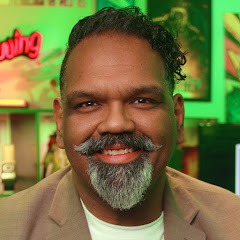 Mr. Know-It-All (AI-assisted)7 September 2026 · Editor: Digital Fox Talent Editorial Team
She makes a man walk into traffic. A van hits him, he goes flying, and the movie keeps moving without ever telling us what happened to him. That single moment is where the whole case against this version of Jean Grey gets built: that she's sadistic, that she's careless with people who never did anything to her, that she hides behind being special, and that the movie shrugs it all off at the end and asks us to feel warm about her. I've heard that case a lot this week, and I want to give it its due, because she does monstrous things in the film and I'm not going to pretend otherwise. But the case is right about what she did and wrong about who she is, and one very specific piece of it we made up ourselves.
Nobody arguing about this movie is actually arguing about this movie. They're arguing about a woman they've known for sixty years and holding a nineteen year old girl up against her. That was never a fair fight. So I went and pulled the actual record, issue numbers, cover dates, and one decision an editor made in 1980 that settles more of this than anything said about the film all week. When you put this version of Jean Grey next to what the comics have already done to her, she isn't the dark one. She's the tame one.
Sixty Years of Comics Memory Is Not the Same Character on Screen
If you came up on the X-Men, the Jean Grey in your head isn't a killer. She's the quiet one, the demure one, the only woman on a team of boys, and for a long stretch the most interesting thing the writing let her do was be the point of a triangle between the boy scout in the visor and the animal who could pull something out of her the boy scout never could. Then she dies, and it lands, because that's back when a death in a comic still felt like it might hold.
That's decades of accumulated character, and that's a lot to carry into a theater. But defending that memory isn't the same as defending the character actually on screen, and only one of those is actually there in front of you.
Why the "Jean Would Never" Argument Is a Craft Question With an Answer
The version of this complaint I hear most is some flavor of Jean would never do this, why would you make Jean the villain. That's a craft question, and craft questions have answers, this one about 2,300 years old. Aristotle worked out that a story can't do much with a person who's entirely good. Take somebody spotless and destroy them and it isn't tragic, it's just ugly, you feel sick rather than sorry. Take a villain and destroy them and it doesn't land either, because you're satisfied that justice got done rather than sorry.
The only person a story can actually do anything with is the one in the middle, not all good, not all bad, who brings it down on themselves. So when somebody tells me Jean Grey could never be a bad guy, they're asking for the one version of her that can't work as a story.
The Dark Phoenix Saga Already Set a Much Higher Bar
Jean becomes Phoenix in X-Men 101, cover dated October 1976, by Chris Claremont and Dave Cockrum. The run everybody means when they say Dark Phoenix is 129 through 137 with the epilogue in 138, from 1980, by Claremont, John Byrne, and Terry Austin. In issue 132, April 1980, Mastermind has been running an illusion on her for months and it takes, she believes she's Lady Jean Grey, wife of Jason Wyngarde, and sits as the Black Queen of the Hellfire Club. She breaks it in 134 and becomes Dark Phoenix.
In 135, July 1980, she gets hungry, flies to a G-type star, and eats it. The system belonged to a species called the D'Bari. Five billion of them dead. The D'Bari weren't invented for that story, they first appeared in Avengers 4, March 1964, created by Stan Lee and Jack Kirby, sitting in that universe sixteen years before she got there. She didn't wreck a set, she erased something somebody else built. On her way home she takes out a Shi'ar cruiser, which brings an entire empire down on the X-Men, leading to the duel on the blue area of the moon in 137, the same issue where she triggers an old pre-weapon and kills herself. Issue 138 is just the funeral.
An Editor Decided Genocide Deserved Death, Not a Quiet Ending
Here's the part that isn't in the comic. Jim Shooter was editor-in-chief at Marvel at the time. He read 135, watched a woman commit genocide on the page, and got curious enough to ask where the story was going. What he found was that Claremont and Byrne had walked it back, the plot had her getting mind wiped and depowered and just going home, back to the mansion, back to sitting at the same lunch table as Storm. In his own words, "Did I have a moral issue with that? Yeah." His position was that the punishment didn't fit the crime, that you don't kill five billion people and then get better.
So they redrew the last five pages of 137 and killed her. If you want to read the version where she lives, you can, Marvel printed the original ending four years later as Phoenix: The Untold Story, April 1984, which included the creators arguing over it in the back matter. The publisher looked at Jean Grey in 1980, decided what she'd done was unforgivable, and had the ending changed so she would die for it. If you want to argue this movie made Jean Grey too dark, you're not arguing with the studio, you're arguing with Chris Claremont and Jim Shooter, and you're about forty six years late.
Ultimate X-Men Already Ran an Almost Shot-for-Shot Version of This
Ultimate X-Men 25, early 2003, by Mark Millar and Adam Kubert. The Hellfire Club has been quietly funding Xavier's school the whole time, not out of belief, they wanted access to one student. Sebastian Shaw tells Jean what she actually is, a vessel for a force older than time with the power to snuff out suns, then they run the ritual to wake it. It works. She's so enraged that these men presumed to touch her that she kills the entire inner circle, strips Shaw of his fortune, moves it to Xavier, and kills him. In the same sequence she goes out and starts healing sick children, comforting people who want to die, and nearly brings back a homeless man. Mass killing and tenderness, one person, one afternoon.
Xavier stops her not with power, he can't, he stops her by telling her she's just Jean, a woman with delusions of godhood and not a god, and it works, she comes back. Somebody reached her with love instead of force. That's this movie's story, published in 2003. And I could cherry-pick that, and shouldn't. Thirteen issues earlier, in Ultimate X-Men 12, she's the consciousness of the team, physically holding Colossus back from crushing a squad of human soldiers, telling him they kill because they don't know any better and mutants are supposed to be better than that. A Jean who holds that line and also burns a room down is a far more interesting woman than the one being protected here.
The Real Case: Two Sisters, a Government Agency, and No One Left to Call
Two girls get thrown out by their mother for the crime of being born different, not neglected, not misunderstood, put out. Whatever they build after that, they build alone, because there's no school yet, no bald-headed billionaire in a wheelchair who turns up and tells them they're special. There's her and her sister Sarah, and that's the whole list. Sarah is the one with control, the one who teaches Jean how to reach past the thirty-odd feet her power naturally covers, how to hop mind to mind and go further. Everything Jean can do in this film, she can do because her sister taught her.
A government agency takes Sarah in a park while Sarah is covering Jean's escape, the last thing Sarah does as a free person is buy her sister a few seconds. There's nobody to call, because the institution is the thing that took her. Jean reaches out because it's what she was taught, and she feels her sister's terror, not hears about it, feels it. "I know exactly what I'd do," I'd do everything and everyone in front of me to get her back, and I would not slow down to check who they were.
Into that walks a friendly neighborhood Spider-Man, a good man, so young and decent that when somebody in a suit hands him a story about a dangerous woman attacking government facilities, it doesn't occur to him to ask who wrote it. From inside her head, he isn't a hero, he's the next thing standing between her and the only family she has left, just bigger than the ones before him.
Then she gets the answer. Sarah didn't die, Sarah was killed, held for study and observation by the same people who took her, taken apart so they could work out how to build another one. There's no trial coming, no headline, nobody ever answers for it. The last thing Jean will ever have of her sister is that woman's final seconds looking up at a vent. I do not condone what she does after that, I want to be extremely clear about that. But I do understand it completely.
The Man in the Street: A Death the Movie Never Actually Commits To
I went and watched that scene again specifically to be fair about this complaint. Here's what's actually on screen: she makes him walk, the van hits him, he goes flying. It's a bad hit, the movie doesn't soften it. And then the movie never tells you what happened to him. No body, no line about it, nobody confirms it, not on screen, not after, not once.
Every person making this argument is a comics reader, and comics readers have one rule we've all gone to the mat for since we were nine years old: if you do not see a body, they are not dead. We've used that rule on characters who exploded, on characters vaporized on the page with witnesses standing right there. Then this movie hits a man with a van, doesn't show us what happened to him, and everybody filled in the body themselves. The single most damning item in the case against this character is a death the film never committed to. You supplied it, because it's easier to be angry at something your own imagination built for you. That's a straw house.
That doesn't clear her, though. She still put an innocent man in the street, and that's monstrous whether he got up or not. Being right about her sister doesn't buy it back. It just means the case against her is bigger than the evidence for it.
Revenge Isn't Justice, and That's Where the Movie Actually Misses
If someone hurt a person I love, baby Groot, or my daughter, I can guarantee I would move heaven and earth, using every ounce of my six foot seven frame and every bit of focus my mind can bring to bear on one thing: revenge. Notice I said revenge, because revenge is not justice, they don't do the same thing to you. Revenge is fantastic to watch, it's a guy with a skull on his shirt clearing a room like it's the Old West, no remorse, roll the credits, and it rules. That's not what it does to a person.
I think that's the real miss in this film. Not the violence, the violence is the point and it's earned. It's that the movie lets it cost her almost nothing. She's nineteen, she isn't a soldier, nothing in her life trained her for what she does, and a rampage like that should take something out of a soul that was never built to do it. It should be on her by the end, and it mostly isn't, she moves through it too clean.
What makes that a miss instead of a choice is that the movie proves it can do it. It does, once, when Peter finally lets her into his head and she gets a moment of Aunt May, somebody speaking to her with real love and real wisdom. That's the first time in the entire film this girl is handed the thing every other person in the story got for free. Her mother threw her out, the only person who ever loved her got taken and cut apart, and she gets thirty seconds of borrowed Aunt May from a boy she was trying to kill an hour ago, and it goes through her like a spike. That's the film understanding its own character perfectly. I just wanted more of it.
Where That Leaves Jean Grey, and Where the Comics Say She Could End Up
She's a criminal, fully. I'm not letting a sad backstory quietly turn into a permission slip. She hurt people who had nothing to do with what was done to her, and that isn't the same thing as being wronged. More than that, she's the proof, the moment in this universe where the danger stops being theoretical. Through her, everybody gets to see firsthand exactly what one frightened nineteen year old with that kind of power does to a city. She's going to be the reason the fear has a face, and they're going to be right to be afraid.
I've read where this version of her goes in the Ultimate books. The road doesn't end in redemption, it ends with her under a false name, cut off from everybody, running a separatist movement against people who used to be her family, in Ultimate Comics X-Men 33, December 2013. Not corrupted by a cosmic bird, just hardened and alone and certain she's right. That road is real, and it's the one she's on. But that's not the character, at least not the one I think she's going to be, and it isn't the one I want.
The most interesting hero isn't the one who's never tempted or stayed clean because nothing ever came for them. It's the one who's been all the way down in the dark, who did things down there they can't take back, who isn't blameless and isn't innocent, and who comes back up anyway carrying all of it and turns around and says, "I am not letting you do to anybody else what you did to me." That's a girl from a sixties comic book. That's somebody you can build a universe on. They keep telling me this character would never do what she did in this movie. She's already done worse, and the men who made her killed her for it.
The man in the street, do you think he lived, and does it change how you read him if he did?
Watch the original
@arealknowitall · YouTube
Adapted with AI from Mr. Know-It-All's video of 8 August 2026 and reviewed by Digital Fox Talent before publication. Editorial standards · Corrections
Also on Jean Grey
8 creators, 13 takes →





More from @arealknowitall
All →


Make videos? Your next one could be an article here.
We turn your videos into articles under your name, linked back to the original. You keep 60% of what they earn, non-exclusive, and you can leave whenever you like.
Become a SubPlotter →