How Obsession and Backrooms, Two YouTuber Horror Films, Outpaced The Mandalorian and Grogu at the Box Office
A microbudget horror film that grew almost entirely by word of mouth beat a $165 million Star Wars movie into third place
 Breakdowns & Blockbusters (AI-assisted)8 August 2026 · Editor: Digital Fox Talent Editorial Team
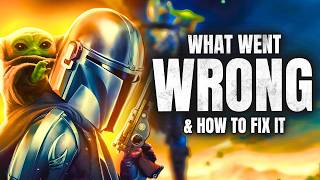
The Mandalorian and Grogu was supposed to be the safest possible way to bring Star Wars back to theaters. It starred the franchise's most popular new characters, grew out of one of Disney Plus's biggest hits, and arrived after Lucasfilm spent years struggling to figure out what its next movie should be. Instead, it bombed at the box office and was beaten by Obsession and Backrooms, two original horror films made by YouTubers for a fraction of its budget.
So was this simply another sign that Star Wars has lost its grip on audiences, or did it expose a much larger problem, that audiences are tired of big IPs being mined to death and are instead craving original content? To find out how Star Wars was completely outclassed by a couple of internet-bred horror films with microscopic budgets, let's take a look at why The Mandalorian and Grogu bombed.
The sequel trilogy fatigue that set the stage for this collapse
When The Force Awakens arrived in 2015, it was an absolute cultural phenomenon, earning more than 2 billion dollars worldwide and becoming the highest-grossing film in domestic box office history. It was followed by the spin-off Rogue One, which also earned strong critical praise and grossed a billion at the box office. Then came The Last Jedi, which completely fractured the fan base with many of its controversial narrative decisions.
Not only did The Last Jedi earn less than its predecessor, it was followed by another spin-off, Solo, which bombed at the box office, with many blaming the poor reception to The Last Jedi for its failure. For The Rise of Skywalker, Lucasfilm attempted to reverse many of the controversial decisions made in The Last Jedi to appease angry fans, but instead of repairing the franchise it created a messy conclusion that seemed to be fighting with the movie before it.
The reception to The Rise of Skywalker was almost overwhelmingly negative, and while it still made a billion at the box office, that was a billion dollars less than The Force Awakens, showing a growing disinterest in the franchise. Bob Iger eventually admitted that Disney had pushed too much Star Wars into the marketplace too quickly, and confirmed the studio would slow down its theatrical output.
An entire slate of Star Wars movies was quietly shelved
At the time, Lucasfilm had announced what felt like an endless conveyor belt of future movies. Rian Johnson was developing an entirely new trilogy, the Game of Thrones creators were developing another series of films, Wonder Woman director Patty Jenkins was directing Rogue Squadron, Guillermo del Toro was planning to direct a Jabba the Hutt movie, Ocean's Eleven director Steven Soderbergh was developing a Kylo Ren solo film, and even Marvel's Kevin Feige had pitched his own Star Wars project. One by one, every movie on that slate was quietly shelved, and Star Wars took a break from theatrical releases entirely.
The Mandalorian and Grogu gave Star Wars the breakout hit the sequels never found
Instead of theaters, Star Wars simply moved into everyone's living room. On the exact same day Disney Plus launched, Lucasfilm debuted The Mandalorian, created by Iron Man director Jon Favreau. Instead of another giant story about the fate of the galaxy, Favreau stripped Star Wars back to a simple western about a mysterious bounty hunter traveling through the lawless outskirts of the galaxy. It was accessible to casual viewers, disconnected from the increasingly complicated Skywalker saga, and felt refreshingly small after years of movies about planet-destroying super weapons.
Then there was Grogu. Within the first two years, more than 13 million Grogu toys were reportedly sold, turning him into one of Disney's most valuable and recognizable new merchandise characters. The Mandalorian had helped launch Disney Plus and given Star Wars the kind of universally beloved breakout character the sequel trilogy had struggled to produce. Lucasfilm doubled down on streaming, converting what were intended as movies, Boba Fett and Obi-Wan, into series, and producing original shows like Andor, Ahsoka, and The Acolyte.
Turning a shelved season four into a movie left it feeling like an extended episode
After nearly seven years without a Star Wars movie, Lucasfilm knew it eventually had to get the franchise back into theaters. The safest solution seemed obvious, take the most popular show on Disney Plus, which also happened to feature its most profitable character, and turn it into a movie. But The Mandalorian and Grogu was not originally supposed to be a movie at all. Favreau had already written scripts for a fourth season of The Mandalorian centered around Grand Admiral Thrawn and setting up the second season of Ahsoka.
After the writers and actors strikes delayed production, Lucasfilm put the fourth season on hold and began discussing turning it into a movie instead. Favreau ultimately had to come up with a new story for the film, though he still incorporated other elements he had intended to explore in the fourth season. Instead of feeling like a grand must-see cinematic event, the film essentially looked and played out like an extended episode of the series, which makes sense given its origins as the show's fourth season.
Streaming is passive, going to the theater is an active choice
This exposed a fundamental flaw in Lucasfilm's entire strategy. Watching something on Disney Plus is not the same thing as being willing to pay more than 15 dollars to see it in a theater. Streaming is passive, the subscription has already been paid for, the show appears directly on the homepage, and watching it requires little more than pressing play from your couch.
Going to the movies is an active decision. You have to leave the house, buy tickets, pay for parking and or travel, and pay for concessions, which can get expensive, especially for a family. If it doesn't feel like an event, which this didn't, it's easier to just wait until it hits the same streaming service you're already paying for.
Grogu's cultural moment had already peaked years before the movie arrived
On top of that, Disney was banking on a cultural phenomenon that had already peaked. When Grogu first appeared in 2019, he was an absolute juggernaut, completely dominating the internet and driving massive merchandise sales. But cultural moments don't last forever. By the time the movie arrived, Grogu had been used in television shows, theme parks, toys, commercials, and virtually every other corner of the Disney machine.
He was still recognizable and popular, but recognition is not the same thing as urgency. Lucasfilm was trying to sell tickets based on a cultural phenomenon that had already peaked years earlier, arriving incredibly late to a party it had started itself.
Audiences bombarded by IP are craving originality, and Obsession delivered exactly that
For the last 15 years, audiences have been bombarded with IP-driven films, one after another, from Star Wars to Jurassic Park to Marvel and DC. There's only so many times you can return to the well to find new stories worth telling that audiences genuinely get excited about. What used to be an event every time a new Star Wars or Jurassic Park film came out now feels like a lot less, as the novelty has worn off. Instead, people are craving original filmmaking, movies that feel unpredictable, that excite them, and that offer a genuine communal experience.
That hunger for originality explains the two films that beat The Mandalorian at the box office. Many people who went to see Obsession, myself included, didn't even know anything about it going in. The Mandalorian and Grogu cost roughly 100 million dollars just to market, while Obsession exploded primarily because audiences were simply telling their friends they had to go see it. Obsession actually saw an increase at the box office in its second weekend, virtually unheard of, then increased again in its third weekend, becoming the highest-grossing film ever with a budget under a million dollars.
Most people didn't rush out opening weekend because they had been following an enormous marketing campaign. They discovered it because someone they trusted came out of the theater and told them they had to see it. Tom Holland said he went to see Obsession without having watched a trailer or even seen a picture from the movie, and ended up in a packed theater filled with people screaming and laughing, describing it as "exactly what makes going to the movies so special." Nobody was attending out of loyalty to a brand or because they had spent years keeping up with its larger universe. They were going because something new was happening and they wanted to be part of it.
Backrooms arrived two weeks later and made the contrast impossible to ignore
Only two weeks after Obsession, Backrooms arrived and almost matched its opening weekend domestic box office numbers, coming in first, with Obsession finishing second and The Mandalorian falling to third. Two movies directed by first-time feature filmmakers who began on YouTube had completely taken over the box office from one of the most powerful entertainment franchises in history. Like Obsession, Backrooms became more than just a successful film, it became a cultural event.
The budget math makes the loss even more embarrassing
The difference becomes even more embarrassing when you compare what these movies actually cost. The Mandalorian carried a reported budget of 165 million dollars, before marketing, which cost probably another 100 million. Backrooms was made for just 10 million, while Obsession cost just under a million. A film with a price tag like The Mandalorian needs to gross somewhere between 400 million and 500 million globally just to clear its break-even point, so when it stalled out at 344 million worldwide, it didn't just underperform, it lost real money.
Meanwhile Obsession and Backrooms became some of the most profitable films in modern cinematic history, even though most audiences attending hardly knew anything about them. That's the great irony of Hollywood's obsession with supposedly safe IPs: these movies are considered less risky because audiences already recognize them, but their enormous budgets make them significantly more dangerous when that recognition fails to translate into actual ticket sales.
Familiarity is not the same thing as demand
Both Obsession and Backrooms didn't just come out of nowhere, their filmmakers proved there was an audience for their content on YouTube first. But their online followings alone couldn't have produced these box office numbers. Both films broke far beyond their existing audiences because people left the theater genuinely excited and convinced everyone else they needed to experience them too. That is ultimately what The Mandalorian and Grogu was missing.
Disney assumed familiarity would automatically create demand, but a recognizable IP is no longer a substitute for excitement. Star Wars became a phenomenon in the first place because George Lucas took an enormous creative risk and gave audiences an experience unlike anything else in theaters. Nearly 50 years later, the franchise was beaten by two young filmmakers doing essentially the same thing on a microscopic scale. Lucasfilm believed it was minimizing risk by using characters audiences already knew, but in doing so it may have confused familiarity with demand, and turned Star Wars' long-awaited return to theaters into something audiences felt perfectly comfortable waiting to watch at home.
Is Hollywood's reliance on recognizable IP starting to work against it?
Watch the original
@breakdownsandblockbusters · YouTube
Adapted with AI from Breakdowns & Blockbusters' video of 8 August 2026 and reviewed by Digital Fox Talent before publication. Editorial standards · Corrections
Also on The Mandalorian & Grogu
3 creators, 3 takes →
More from @breakdownsandblockbusters
All →


Make videos? Your next one could be an article here.
We turn your videos into articles under your name, linked back to the original. You keep 60% of what they earn, non-exclusive, and you can leave whenever you like.
Become a SubPlotter →