11 Times Star Wars Pushed Things Too Far, From Anakin's Massacre to Andor's Torture Weapon
A countdown through the franchise's darkest and most uncomfortable moments, from a slave outfit turned into merchandise to a torture device built from the screams of dying children.
Star Wars is technically a franchise for the entire family, and it also contains murder, slavery, genocide, and torture. Apparently the entire family is doing some heavy lifting here. These are 11 times Star Wars pushed things a little too far, not necessarily because every moment was bad, but because somebody at Lucasfilm looked at the line, stepped over it, and just kept walking. The number one entry on this list is even darker than Anakin walking into a room full of younglings.
11. Rey and Kylo Ren's kiss undercuts everything he did to her
The sequel trilogy spent three movies building a connection between Rey and Kylo Ren, but most of that connection involved Kylo kidnapping her, invading her mind, attacking her friends, trying to recruit her into a galactic dictatorship, and repeatedly trying to kill everyone she cared about. Then Ben Solo returns to the light, saves Rey, revives her, and she passionately kisses him.
I understand what the movie wanted. Ben had finally rejected the dark side, Rey recognized the man he could have been, and the kiss was supposed to provide emotional payoff before he died. But this relationship had been so aggressive and so manipulative that turning it romantic felt like crossing a line the story hadn't earned. You can redeem Ben, you can show Rey forgiving him. Did she have to kiss the guy who tortured her? Apparently, yes, and then he immediately dies, probably because the movie had no idea what to do the morning after.
10. Slave Leia became one of the most heavily marketed images in the franchise
Return of the Jedi puts Leia in the gold outfit after Jabba has captured, enslaved, and humiliated her. Within the story, Leia eventually uses the chain around her neck to strangle Jabba, which is a fantastic reversal. The uncomfortable part came afterward, when Star Wars took an outfit representing Leia's captivity and turned it into one of the most heavily marketed images in the entire franchise, with posters, statues, action figures, and convention costumes.
Carrie Fisher looked incredible, and Leia killed the slug who put her in it, but Star Wars pushed the sexualization of that moment as far as it possibly could, probably several miles beyond that. The franchise eventually moved away from calling it "Slave Leia," but it took a very long time for everybody to acknowledge how weird the entire marketing machine had become.
9. Luke and Leia's kiss became a retroactive incest problem
The Empire Strikes Back had Leia kiss Luke directly on the mouth to make Han jealous. At the time, Luke and Leia had not been established as siblings. Return of the Jedi revealed they were twins, and one of the most iconic moments in the franchise suddenly had a retroactive incest problem. Leia even tells Luke she somehow always knew they were related, though the medical bay footage from Empire strongly suggests otherwise.
The kiss was originally just part of the Han, Luke, and Leia love triangle. Once George Lucas decided Leia was "the other one" Yoda mentioned, the scene got pushed into a completely different category, and the franchise spent decades pretending it was just an innocent moment. It wasn't. Han's expression afterward looks less like jealousy and more like he's the only person in the room who realizes something has gone terribly wrong.
8. The Phantom Menace's aliens drew comparisons to real-world ethnic stereotypes
The Phantom Menace introduced an entire galaxy of new aliens, and several were immediately accused of resembling exaggerated real-world ethnic stereotypes. The Trade Federation leaders had heavily accented speech that many viewers interpreted as playing on Asian stereotypes. Watto's voice, mannerisms, and obsession with money drew comparisons to antisemitic stereotypes, and Jar Jar Binks and the Gungans were criticized for resembling racial characters from old American entertainment.
Whether every one of those similarities was intentional is a different conversation. I don't believe George Lucas consciously decided to build a galaxy around racist characters, but once multiple groups of people immediately recognized the same stereotypes, you can't just wave your hand and say nobody saw anything. Star Wars has always borrowed from real cultures, religions, and historical imagery. This was one of the times that borrowing moved uncomfortably closer to what everybody said it was.
7. Padme married Anakin days after he confessed to massacring children
Anakin returns from finding his mother dead and tells Padme exactly what happened. He killed the Tusken Raiders, not just the men, but the women and children too. He looks Padme in the eyes, admits to slaughtering an entire village, and tells her he hates them. Padme responds by comforting him, then marries him a few days later.
I understand Anakin was grieving after his mother was kidnapped, tortured, and died in his arms, and that the Tusken Raiders responsible deserved to be stopped. But Anakin specifically admits to murdering children, which should be a bigger relationship red flag than complaining about sand. The movie needed Padme to see the good in Anakin, but it pushed her compassion so far that she basically became an accessory to a confession of mass murder. She never contacts the Jedi or questions whether he's dangerous. Spoiler alert: she could not fix him.
6. The Acolyte gave Star Wars a second immaculate Force conception
The Acolyte revealed that Mae and Osha were created through manipulation of the Force by Mother and her coven, which immediately became one of the most controversial ideas in modern Star Wars. Anakin Skywalker's unexplained birth, with no father, was central to his identity as the supposed chosen one. Then The Acolyte introduced twins also created without a father roughly a century earlier.
The show did not technically say they were chosen ones, and their creation may have involved a very different process, but that distinction didn't stop the reveal from feeling like it was playing dangerously close to one of the most important elements of Anakin's story. The franchise did not need another miraculous Force pregnancy, and it definitely did not need two children resulting from one. You could expand the mythology without handing out variations of Anakin's origin story like free samples at a warehouse store.
5. The clone army was basically a slave army fighting for the Republic
The Jedi discovered that someone secretly created millions of human beings, genetically altered them for obedience, accelerated their aging, and raised them from birth for one purpose: fight and die for the Republic. The Jedi's response was essentially good timing, since they needed an army. The clones can't freely leave, they don't control their own lives, and they were purchased by a government and sent into battles where they were treated as replaceable equipment.
The Clone Wars did an incredible job humanizing clones like Rex, Fives, and Echo, proving each one had an individual personality and deserved a future. That also made the situation darker. The more human the clones became, the more obvious it was that the Republic and the Jedi were commanding a massive slave army. Some Jedi treated them with respect, but almost nobody seriously questioned whether the clones should be fighting at all. Star Wars built an entire heroic war story around soldiers who never had the freedom to say no.
4. Anakin murdered Tusken Raider children, not just adults
Star Wars spent years hinting that Anakin Skywalker would become Darth Vader. Attack of the Clones stopped hinting. After his mother dies, Anakin massacres the entire Tusken camp, including the children. It wasn't an accident during battle and it wasn't Anakin losing control for a few seconds and immediately stopping. He deliberately moves through the settlement and kills everybody. The movie doesn't show it, but Anakin confirms it.
That means Darth Vader's first major step toward darkness was child murder. Revenge of the Sith later treats the youngling massacre as the moment Anakin crosses the ultimate line, but he had already crossed it. The difference is that the Tusken children were faceless and living in the desert, so the story almost expects us to move past them. That's genuinely disturbing if you actually think about it.
3. Obi-Wan Kenobi's Jedi tomb displayed a dead child as a trophy
When Obi-Wan infiltrates the Fortress Inquisitorius, he discovers a hidden corridor filled with dead Jedi preserved inside amber-like containment cells. Then he sees a child, a youngling displayed alongside the adults, still wearing the training helmet used at the Jedi Temple. To me, this was one of the darkest visual reveals in live-action Star Wars, because it removed all the distance surrounding Order 66.
We already know children died at the temple and that the Empire hunted surviving Jedi, but showing the child preserved as a trophy hit differently. Why was the Empire keeping the bodies? Why were they being studied? Were they trophies for Vader and the Inquisitors? The series never explained it, which somehow made the hallway even more disturbing. Star Wars usually cuts away before showing the consequences of violence against children. This time it made us stop and stare directly at it.
2. Anakin walked into the Jedi Council chamber to kill the younglings
Revenge of the Sith could have shown Anakin killing adult Jedi during Operation Knightfall and still made his fall completely clear. Instead, George Lucas sent him to the council chamber, where younglings come out of hiding because they recognize Anakin and believe he's arrived to save them. One of them calls him "Master Skywalker" and asks what they're going to do. Anakin ignites his lightsaber, and the movie cuts away.
It doesn't need to show anything. This was the moment Anakin Skywalker was truly gone. Killing Jedi in battle could have been explained through anger, manipulation, or warped loyalty to Palpatine. Murdering frightened children who trusted him is different. This is an incredibly effective scene, and it's also George Lucas putting that kind of thing in a PG-13 space fantasy sold alongside action figures. Star Wars pushed it about as far as a mainstream blockbuster possibly could, but Disney somehow found a way to go darker still.
1. Andor weaponized the recorded screams of dying children
Dr. Gorst's interrogation method in Andor might be the most disturbing concept Star Wars has ever done. The Empire massacred an alien species called the Dizonites, and during that genocide, Imperial forces recorded the sounds of the population dying. Gorst discovered that the screams of the children caused an especially severe psychological reaction, so the Empire converted those recordings into a torture device.
Think about what that means. The Empire committed genocide, somebody recorded it, scientists analyzed the screams, they identified the cries of dying children as the most psychologically damaging part, and then they turned those screams into a weapon used to torture prisoners. We never hear the full recordings and never see what happened to them; we only watch the reaction, and that's enough.
Andor understood that sometimes the most horrifying thing isn't showing the violence, it's explaining exactly what happened and forcing your imagination to complete it. This wasn't a lightsaber cutting someone in half or a planet exploding from a safe distance. It was calculated, industrialized cruelty built from the final moments of children. That is Star Wars pushing past its normal limits, and unlike several other entries here, it worked because the story understood exactly how evil it was.
Star Wars has always been darker than people remember. Underneath the droids, the spaceships, and the lightsabers, this franchise has dealt with all kinds of things. Sometimes it crossed the line because the story needed to show us how horrifying the galaxy could actually be, and sometimes it crossed the line because nobody involved stopped to think about what they were actually putting on the screen. And sometimes Luke just kisses his sister.
Which moment do you think pushed it the furthest, or do you think none of them actually did?
Watch the original
@chaoscinemayt · YouTube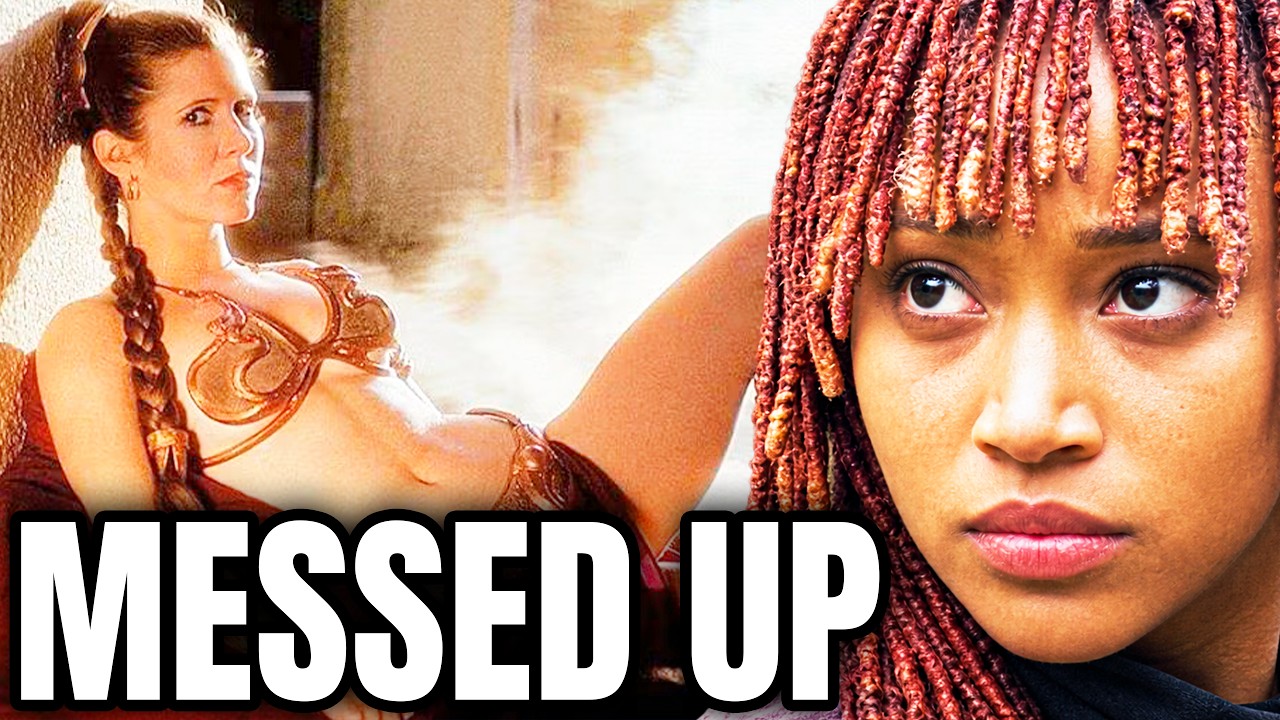
Adapted with AI from Chaos' video of 18 September 2026 and reviewed by Digital Fox Talent before publication. Editorial standards · Corrections
More from @chaoscinemayt
All →

Make videos? Your next one could be an article here.
We turn your videos into articles under your name, linked back to the original. You keep 60% of what they earn, non-exclusive, and you can leave whenever you like.
Become a SubPlotter →