ChaosCinema Picks the Biggest Mistake in Every Star Wars Movie, From a Too-Young Anakin to Luke's Near-Murder of Ben Solo
A run through every theatrical Star Wars film picks out the single decision in each one that did the most damage.
 ChaosTrek (AI-assisted)5 September 2026 · Editor: Digital Fox Talent Editorial Team
The biggest mistake in The Last Jedi was not killing Snoke, the casino planet, or Leia flying through space. It was taking Luke Skywalker, the man who saw good in Darth Vader, and turning him into someone who almost murdered his nephew in his sleep. That is the centerpiece of a run through every Star Wars movie, picking the single biggest mistake each one made, including the film everybody claims is perfect, because even The Empire Strikes Back made one decision the franchise has spent more than 40 years trying to explain away.
Some of these mistakes nearly destroyed their movie. A few damaged the entire franchise.
The Phantom Menace: Making Anakin Too Young
The biggest mistake in The Phantom Menace was making Anakin nine years old. The intent behind it makes sense on paper: meeting Darth Vader completely innocent, and turning the separation from his mother into the wound Palpatine would later exploit. But making Anakin that young caused problems throughout the whole film. His relationship with Padme feels "really weird because she looks and behaves considerably older than him," and his role in the Battle of Naboo feels like a kid who wandered into a different movie, jumping into a star fighter and pressing buttons he doesn't understand.
His accidental destruction of the Trade Federation ship becomes the first major victory in Darth Vader's life, and it basically happens because he got lucky. If Anakin had been 14 or 15, he could still have been innocent and attached to his mother, but the romance could have started naturally and his piloting ability could have felt believable. Instead, episode one made the future Darth Vader feel like the galaxy's luckiest kid.
Attack of the Clones: The Love Story Never Works
Attack of the Clones had to convince audiences that Anakin and Padme would risk everything for each other, since the entire saga depends on that relationship working. It doesn't work, and it isn't just the sand line. Anakin stares at Padme, complains about Obi-Wan, talks about dictatorship, and admits he slaughtered an entire village including the children, and Padme's response amounts to anger being human. The pairing never earns the love the film insists on, leaving two attractive people rolling around in a field feeling less romantic than an actual Senate hearing.
If that relationship doesn't work, Anakin's fall loses its foundation. Attack of the Clones didn't just fumble a romance, it weakened the emotional engine of the entire prequel trilogy.
Revenge of the Sith: Padme Losing the Will to Live
Revenge of the Sith is the best prequel, but Padme dying because she lost the will to live does not fit a woman who stood against an invasion as a teenager, survived assassination attempts, and entered an arena to face an army of battle droids. Giving birth to two children and then simply deciding there is nothing left to live for robs her death of agency.
A stronger answer was sitting right there: Anakin could have caused irreversible physical damage, or Palpatine could have used the dark side to drain her life force and keep Vader alive. Either option would have made Anakin's transformation more tragic. Instead a medical droid essentially shrugs, and Padme becomes a plot device whose only remaining job is delivering Luke and Leia before dying.
The Clone Wars: Releasing a TV Pilot as a Movie
The Clone Wars' biggest mistake was pretending it was a movie. It was several television episodes stitched together, and it feels exactly like several television episodes stitched together, built around rescuing Jabba the Hutt's baby, with animation that wasn't ready for a theatrical screen and an Ahsoka who calls Anakin "Sky Guy" every five minutes.
The Clone Wars eventually became some of the best Star Wars ever made, and Ahsoka became one of the franchise's greatest characters, but millions of people met her in a movie that made her seem annoying, and plenty never gave the series another chance. That should have been a television premiere, not a theatrical event, and it gave the whole series a reputation it had to spend years escaping.
Solo: Explaining Every Single Detail
Solo's biggest mistake was believing every detail about Han Solo needed an origin. How he met Chewbacca is fine, but the film also explains how an Imperial officer randomly gave him the last name Solo because he was traveling alone, treats the gold dice like a sacred artifact, and crams the blaster, meeting Chewy, meeting Lando, the Kessel Run, and winning the Falcon into what feels like one extremely busy weekend.
Han was cool because he had history that wasn't fully explained, and Solo turned that history into a checklist. Alden Ehrenreich was building an interesting, younger version of the character, but instead of one great Han Solo adventure, the movie kept nudging the audience with references.
Rogue One: Never Developing the Team
Rogue One has one of the greatest final acts in Star Wars history, but its group of characters is far more memorable in death than they were in life. Jyn gets development, Cassian gets some, K-2SO steals every scene, but Bodhi, Baze, and Chirrut mostly introduce cool concepts before being pushed toward heroic deaths without enough time to really know them.
The movie rushes across planets, introduces Saw Gerrera, and brings in Bor Gullet, which apparently knows the truth but mostly just stops the plot for five minutes before racing toward Scarif. The ending saves the film because it is phenomenal, but Rogue One could have been emotionally devastating from beginning to end instead of becoming great only in its final 40 minutes.
A New Hope: Making the Death Star Too Easy to Destroy
Rogue One eventually gave a good explanation for the exhaust port, but A New Hope existed for nearly 40 years before that explanation arrived. The Empire built a moon sized super weapon capable of destroying planets, and somebody left a small opening leading directly to the reactor, which Luke exploits by turning off his targeting computer and firing two torpedoes.
The trench run is incredible and the mythic, trust the force storytelling works, but the Death Star's weakness became one of the most mocked plot devices in science fiction because the movie barely tries to justify why the galaxy's most powerful military force built a weapon with a hole in it. Rogue One's fix, deliberate sabotage, is a great one, but needing another movie decades later to explain your super weapon's flaw is still a mistake.
The Empire Strikes Back: The Luke and Leia Kiss
The Empire Strikes Back is the best Star Wars movie, and it is also the movie where Leia grabs Luke and kisses him directly on the mouth to make Han jealous, before Return of the Jedi reveals they are twins. People defend the scene by pointing out George Lucas hadn't finalized the sibling reveal yet, which explains how it happened without making the scene less weird.
Everyone who learns the truth first and then reaches that scene has the same reaction. Han and Leia already had fantastic tension, and Luke didn't need to be used as a romantic prop, meaning the best film in the franchise accidentally created an uncomfortable, awkward kiss.
Return of the Jedi: Recycling the Death Star
Return of the Jedi's biggest mistake was building another Death Star. The original trilogy starts with the Empire building the ultimate weapon with a hole in it, the rebels destroy it, and two movies later the Empire's big plan is to build the ultimate weapon again, bigger, unfinished, and with multiple holes in it.
It works because the throne room scenes are incredible and the space battle looks amazing, but creatively it was the safest possible choice. Instead of introducing a new threat for the finale, the movie replayed A New Hope on a larger scale, and yes, Starkiller Base later did the same thing.
The Force Awakens: Resetting the Entire Galaxy
The Force Awakens' biggest mistake was resetting the entire galaxy so it could recreate the original trilogy. The New Republic barely matters, the Jedi are gone again, Han is a smuggler again, Leia leads another group of rebels with a different name, and there is another dark side villain, another desert orphan, and another giant spherical weapon destroying planets.
It was fun in 2015 because seeing Star Wars return felt incredible, but once the nostalgia wore off, it became clear the movie had erased most of the victory from Return of the Jedi. Luke, Han, and Leia defeated the Empire but apparently accomplished nothing, because 30 years later everything had reset back to where it started, trapping the sequel trilogy from the start.
The Last Jedi: Breaking Luke Skywalker
Luke should have been flawed in The Last Jedi. The mistake was building his failure around the idea that he considered murdering Ben Solo in his sleep, contradicting a man who refused to give up on Darth Vader even after Vader murdered children, tortured Leia, helped destroy an entire planet, and cut off Luke's hand. Luke sensing one possible future inside his nephew and igniting a lightsaber over him undercuts the defining choice of his life, even accounting for the film's explanation that it was a fleeting instinct he was ashamed of.
A broken Luke could still have worked without this: letting him fail Ben through arrogance, ignore warning signs, or believe being a Skywalker made him incapable of losing a student would challenge the character without making audiences wonder if they were watching the same man. Some people think this is the boldest thing Star Wars has ever done, but it split the fan base and the franchise has not recovered.
The Rise of Skywalker: Bringing Back Palpatine
The line "somehow Palpatine returned" isn't the problem, the decision behind it is. Bringing Palpatine back made Anakin's sacrifice count for nothing, made the previous two sequel movies feel like a setup for a story nobody had planned, and turned Rey into his granddaughter through an information dump in the final chapter, with no proper buildup, shadow, or foreshadowing across the trilogy. Most audiences found out Palpatine was back through a trailer, and somehow Fortnite received his return message before the actual movie did.
Kylo Ren should have been the final villain, left to live with killing Snoke while Rey faced someone she genuinely cared about. Instead the safest villain in Star Wars history got dug up and attached to a mega fleet of hidden Death Stars. Rise of Skywalker didn't conclude the sequel trilogy, it spent two and a half hours arguing with The Last Jedi and then used Palpatine as duct tape to hold it together.
Which choice did the most damage to Star Wars overall: resetting the galaxy in The Force Awakens, breaking Luke in The Last Jedi, or bringing Palpatine back in The Rise of Skywalker?
Watch the original
@chaostrektv · YouTube
Adapted with AI from ChaosTrek's video of 27 August 2026 and reviewed by Digital Fox Talent before publication. Editorial standards · Corrections
Also on The Last Jedi
2 creators, 4 takes →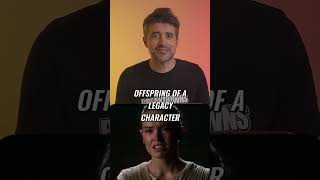



More from @chaostrektv
All →


Make videos? Your next one could be an article here.
We turn your videos into articles under your name, linked back to the original. You keep 60% of what they earn, non-exclusive, and you can leave whenever you like.
Become a SubPlotter →