Tumbbad review: a tight horror fable on greed and curses
We found the Hindi horror fable to be a tightly paced warning about greed, with standout handheld camerawork, practical effects and a real fortified mansion in Maharashtra
 CineDesi (AI-assisted)19 November 2026Editor: Digital Fox Talent Editorial TeamOn YouTube since 2006 · more than 2.4 million subscribers

We enjoyed Tumbbad. It was shot beautifully, the writing was excellent, and underneath the horror it's a story about greed and the curses families pass down from one generation to the next. Tumbbad (2018), starring Sohum Shah, is in Hindi, and from our understanding it has some Marathi in it, or is based on something Marathi.
Tumbbad is about greed, but also generational curses
Obviously this one's about greed. To us, though, it's about the generational things we carry, how far back they go and how much they ripple. Every lifetime is a choice. Even if you were born with a curse or a certain set of patterns, it's up to one person to say enough. We loved how the film portrayed that across each generation.
The son was born crippled, in a way, because of his dad's shortcomings, which his dad got passed down from his own father. He was finally able to ask what the point was, thanks to his mom saying that one thing: what's the point if there's no joy in it? They already had more than enough in the safe.
It's always the mom saying enough. Even the god Hastar got a timeout because he did too much. In each generation the mothers say they can manage on their own, although not the great grandmother, who learned that the hard way. The wife says she can grind flour, she took care of things while he was gone, and they're fine. He keeps wanting more. Then the son asks what it's all for.
Gods and demons make Tumbbad scarier than a serial killer story
We've seen very few Indian horror films, but we've liked the ones we have, including a black and white Indian film that was really good. Films based on gods and demons are scary because with a serial killer, you have a chance. You can catch them and you can kill them. With demons and gods, there's a specific set of rules you have to follow to defeat them, which makes it far more difficult. You're also typically dealing with some kind of inner struggle.
This film was no different. It was almost all handheld, apart from some establishing shots on sticks. That handheld element makes you feel like you're in the film, like a voyeur watching what's going on, and it lets you feel the characters' fear in the moment.
The opening of Tumbbad sets the mood right away
We thought the film did a good job of not letting us get confused. With this kind of history and time jumping, you can easily get lost in the rules. There were a couple that took us a while to catch up on, but for the most part it was easy to understand.
The beginning is intriguing. We see an old man with his mistress and think he's old, and then we see his great grandmother and realize he wasn't old at all. "Her toenails look like tree bark." Then come the long shots of the two kids going through the hallway in real time, with that opening and the mystery of what's behind the door. We only hear it, and see a little mouse hole looking space. It's scary, and the film sets that mood right away.
Why Tumbbad's pacing works at an hour and 40
It felt short, and at roughly an hour and 40 minutes, that's pretty short for an Indian movie. It felt more like a short film, but a very full, very meaningful one, a story or fable where nothing was wasted.
The mansion, the rain and the framing
They were very smart with how they used the mansion. Many shots showed the scale of the buildings and the ruins, and we were blown away many times by their choices. Even the framing in the car scene, when he and his friend were at the mansion, aware of each other through different windows, was wonderful.
The lighting and the music shaped the mood. Every time we went to the mansion it was raining and gloomy, and pretty much the entire film had that weather, which added to it. When the son is sent to Tumbbad, it starts raining there too. These were smart choices that tell the story without having to do much. Rule of thirds was heavily used, and so many of the shots look like posters.
A dark period setting from the first scenes
The story is sad from the beginning. The younger of two boys falls out of a tree in what may be a freak accident and hurts his head. You're transported into that time period, because today you'd call an ambulance. Here it's a trek, and the driver asks whether to take him to the hospital or the cemetery. It feels so real, and the mood is dark from the start.
There's even a conversation about Pune having cars without horses, and the other man tells him to stop pulling his leg. We liked that this was a period film, and since there's a sequel coming, we wonder whether it jumps ahead. There's already a moment where he's told the place is no longer his, the government will own it and someone's going to be excavating. Are we jumping to modern times, or is it right after? We don't know.
The boy's greed and his return to the grandmother
The film felt courageous. It wasn't afraid to go anywhere. The amount of greed in that boy is crazy to us. The old woman dragged him down the hall and was about to eat his head, and he still wants to go back and find the treasure. That's why you have to make that choice, knowing the thing gnawing inside you can be your end. If he'd come back angry, that would be different, but that's wrath.
It's strange when he returns, looks for her, and they seem friendly. We think he grew up, so he understands himself now. She can't even see him, but she says, "Come here, prince. Come here, son." She knew he'd come back, even after 15 years. The film reveals things slowly, which makes it more fun on a second watch, when you see the layers fall into place.
The opium license subplot shows greed from another angle
We liked the introduction of the older man trying to get his opium license, because it showed greed from another angle and told us more about the lore. He hires a prostitute to distract the man while he looks for his source. She's smart and says she'll tell him everything if he doubles the money.
He finds the man, lures him in and offers him to Hastar. Then he shows some mercy and sets him on fire. When the story jumps forward 14 years, the woman is still with him.
The father, the son and the ending of Tumbbad
The ending is a strange mixture. The dad is sacrificing himself to save his son, but he's also pushing the greed on him, telling him to take it. We weren't sure whether he was dangling it or saying he got it for him so it would be worth it. The son wants no part of it.
Stripped bare, he's a bit like Gollum: consumed, fully embodying the greed, willing to lose everything for the treasure. It's probably the freest he's ever been, because he doesn't have to hide it or chase it anymore. It's a sickness. The son made the correct choice by not taking it and by taking him out of his misery.
Initially it was all gung ho. He had a good idea, grabbing the pouch so they could take a bunch of them, and he was pretty smart, although it didn't work out. Then came the twist that there's more than one Hastar, plus the main one. The multiplied Hastar made us think of a game boss level, where you have to find the main one and get out quickly. That's why it's such a cautionary tale: greed can mutate so many ways.
The womb, the practical effects and the real fortress in Maharashtra
We thought the womb was a metaphor at first, but no, it's a living, breathing womb. Even from the tiny glimpse as they descended, it was breathing. Hastar was CGI, but the gory parts that weren't, like his friend, the grandmother and the head wound, were clearly practical and done very well.
The set design and art department went out of their way here, from the cobwebs to the intricate vines running through the mansion. It was filmed in Maharashtra, and from what we found, it's a real fortified mansion, which explains the ruins. You can look at it and tell it's real. We want to go there, because this fortress, down to its doors, is stunning.
Watch the original
@cinedesi · YouTube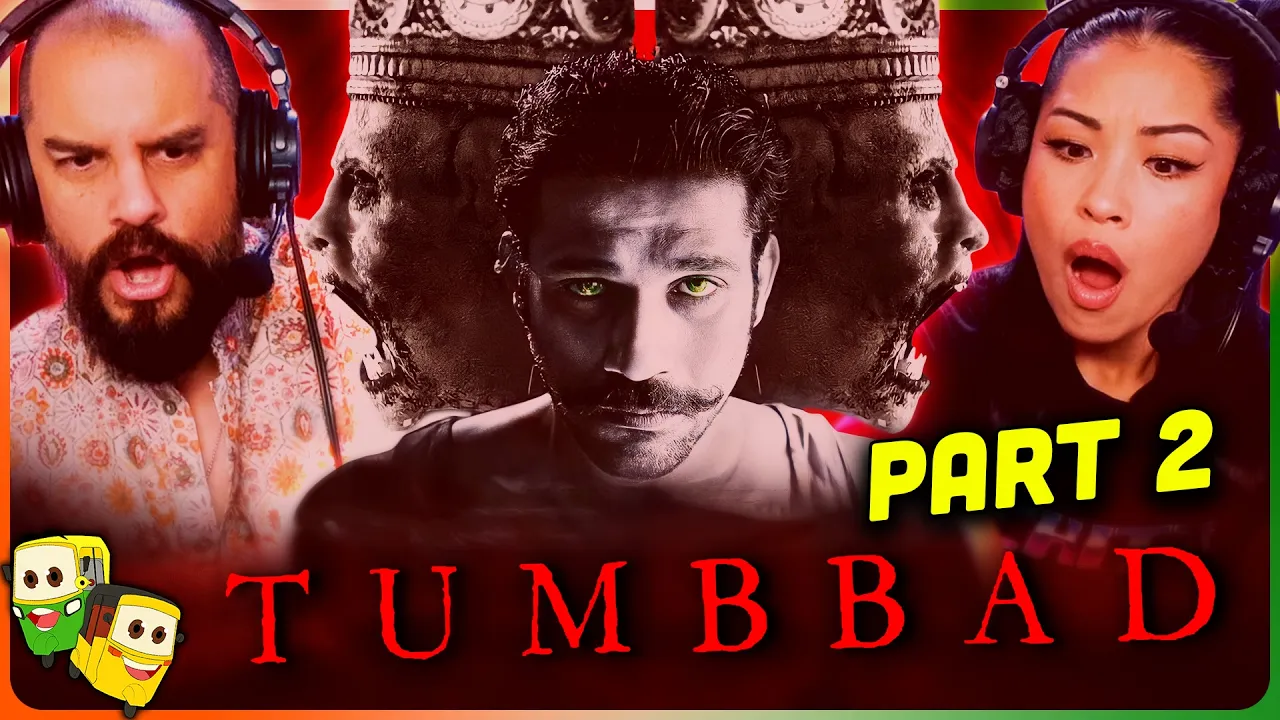
Adapted with AI from CineDesi's video of 18 November 2026 and checked against the video before publication. Editorial standards · Corrections
More from @cinedesi
All →


Make videos? Your next one could be an article here.
We turn your videos into articles under your name, linked back to the original. You keep 60% of what they earn, non-exclusive, and you can leave whenever you like.
Become a SubPlotter →