Blade II review: is Wesley Snipes' nastier sequel better?
Wesley Snipes' flashes of charisma, a surprise traitor, a divisive death for Reinhardt and some memorable practical effects
 CinePals (AI-assisted)16 November 2026Editor: Digital Fox Talent Editorial TeamOn YouTube since 2017 · more than 880,000 subscribers

Blade II (2002), starring Wesley Snipes, Kris Kristofferson and Ron Perlman, won us over. We think it's an amazing sequel, with solid villains, better sword fights and impressive practical effects, even if a few choices left us wanting more.
It opens the classic vampire way, with everything blood red, before moving to Prague, Czech Republic. From there, it ups the nastiness of the first film.
Wesley Snipes plays Blade as stone cold, with flashes of charisma
We enjoy the way Wesley Snipes plays Blade. For most of the film, he's stone cold, "almost Terminatoresque": no feeling, no emotion and intense. Then come brief moments where Snipes' charisma breaks through. That happens more in this sequel, and those flashes of personality feel refreshing. They're short, but they hit hard because the rest of the time he's so stone.
Snipes still makes Blade emotive, though. He's a character you can project yourself onto and get feelings from. It isn't deadpan, wet fish acting. Snipes brings character depth and life to Blade, even though Blade is one note for about 90% of the movie. He's one of those tough guys who is hard to read, yet you can see he's putting up a front.
Blade II trades seductive vampires for straight up nasty ones
This film was so nasty that we wondered whether anyone needed to up the gross factor from the first one. There were points where it pushed how weird and creepy vampires can be.
The first Blade was gross too, but it was a seductive kind of gross. It was almost "bedroom dirty." This one has no sex appeal at all. It's "Straight up nasty," the kind of gross designed to make your stomach turn. We hated the new strain of vampirism. There was a lot that was messed up about that idea.
Blade teaming up with the vampires, and why we suspected Whistler
We liked that Blade teamed up with the vampires. The moment it happened, it felt like it was going to be exciting. We also like the idea that nobody is safe and everybody is an enemy. The villains are 100% solid quality.
Whistler, though, drew suspicion. The film set it up heavily that he might be the traitor. Somebody doesn't escape the thirst that easily. He ditches his post at one point. Blade also has a moment that essentially says he's watching him. Given how long the vampires had Whistler, it seemed possible they had tweaked him. Sorry, Whistler.
Our small disappointment is that those moments felt isolated. They didn't affect the wider character interactions. Instead of Whistler and Scud trading lines like "You're all right, kid" and making grenades together, we would have liked Whistler off his game or doing suspicious things, with Scud stepping in to fix them. Then the Scud reveal would have been a bigger gut punch. It would also have given Blade and Whistler a more meaningful moment once they moved past the distrust. We don't know how much room the film had with all its other character development, though, and it still worked.
Scud as the mole was a genuine surprise
We never suspected Scud for a second. The film keeps mentioning that someone on the inside is feeding information to the enemy, but we hadn't considered that it might be someone in Blade's inner circle. Our guess was Reinhardt, Ron Perlman's character, or somebody else. The reveal was well done and came out of nowhere.
At first, we didn't like Scud. Then we liked him, and then he betrayed us. That arc mirrored Whistler's. Whistler hated him, and once Whistler started liking him, we did too. The film put us so firmly on Whistler's side that his opinion meant something. After Scud's death, Whistler says, "Oh man, I was just starting to like that kid," which was a delightful moment.
We split on Reinhardt's death
Reinhardt's death divided us. One view is that the film got lazy with it. Reinhardt was so hateable that Blade deserved a solid fight with him, not one lost among all the pawns. It didn't have to be intense, it could have been pitiful. Blade could have toyed with him and humiliated him, like he does early on. That would have delivered a cheering, boxing match kind of payoff. Instead, it was over too quickly. By comparison, the film's other villain, who was more of an overarching presence, wasn't as infuriating.
The other view is that the death fit the character. Reinhardt acted like the big man in charge, but he was all bark and no bite. He was humbled when he swung his sword and Blade caught it, proved he was the stronger of the two and ended him in one move. The film also seemed to be saving its big spectacle fight for Jared Nomak at the end.
Blade saves two vampires, and we missed the hematologist
We loved that Blade technically saves two vampires. That's out of character for him, and it plays to his human side and his empathy. The vampire woman Blade grows close to also tells him that the difference between them is that she has made terms with who she is and accepted it. That hit hard.
We did miss the hematologist from the first film. Maybe she was written out so Blade could have that moment with the vampire woman. Given her work with blood, it seemed like there could have been more on cures. Blade's serum looks different this time, though. It's blue and doesn't affect him in quite the same way, so maybe that's a quiet clue she helped him for a while. There's still a possibility she's in the loop. Michael's take was harsher. He compared it to the early Mission Impossible films: "No female lead makes it past one film."
Better sword fights and impressive practical effects in Blade II
The fights were phenomenal. It's as if the filmmakers knew Michael would be disappointed with the sword fights in the first film and made sure the sequel's were better. You can tell much more work went into the choreography. The practical effects on the vampires' jaw pieces were cool, and the art department and set design did a phenomenal job.
We think the film outdid itself. The special effects in the first one were a bit funky, and this one improved on them. Our one small complaint is that when the vampires start disappearing during a fight, it looked like fireworks. That was briefly distracting. It was so pretty that it was easy to forget for a second that people were dying. It's a minor note, though. Overall, we loved Blade II.
What other creators are saying
More on Blade II →I think Guillermo del Toro does a phenomenal job with Blade II, deliberately modeling the Reapers on leeches to make vampires feel animalistic and disgusting again rather than romanticized, and I love how these layered Easter eggs, practical effects and Prague production details enrich the film.
I rewatched Blade (1998) and found a treasure trove the now-scrapped MCU reboot should have borrowed, from Karen Jenson and her vampire cure to a comics-accurate, truly menacing Deacon Frost, plus nods to Varnae, House of Chthon and the Darkhold demons.
I think Mephisto will probably be the Midnight Sons villain, recasting Blade would be disrespectful to Ali, and Doctor Strange should fill that gap instead, but I still want Marvel to eventually make a Blade movie regardless.
Marvel's Midnight Sons: is Mephisto the villain without Blade? →
Edward's mind reading, stone hard skin and immunity to classic vampire weaknesses make him dangerous, but Blade's experience tips the fight.
Watch the original
@cinepals · YouTube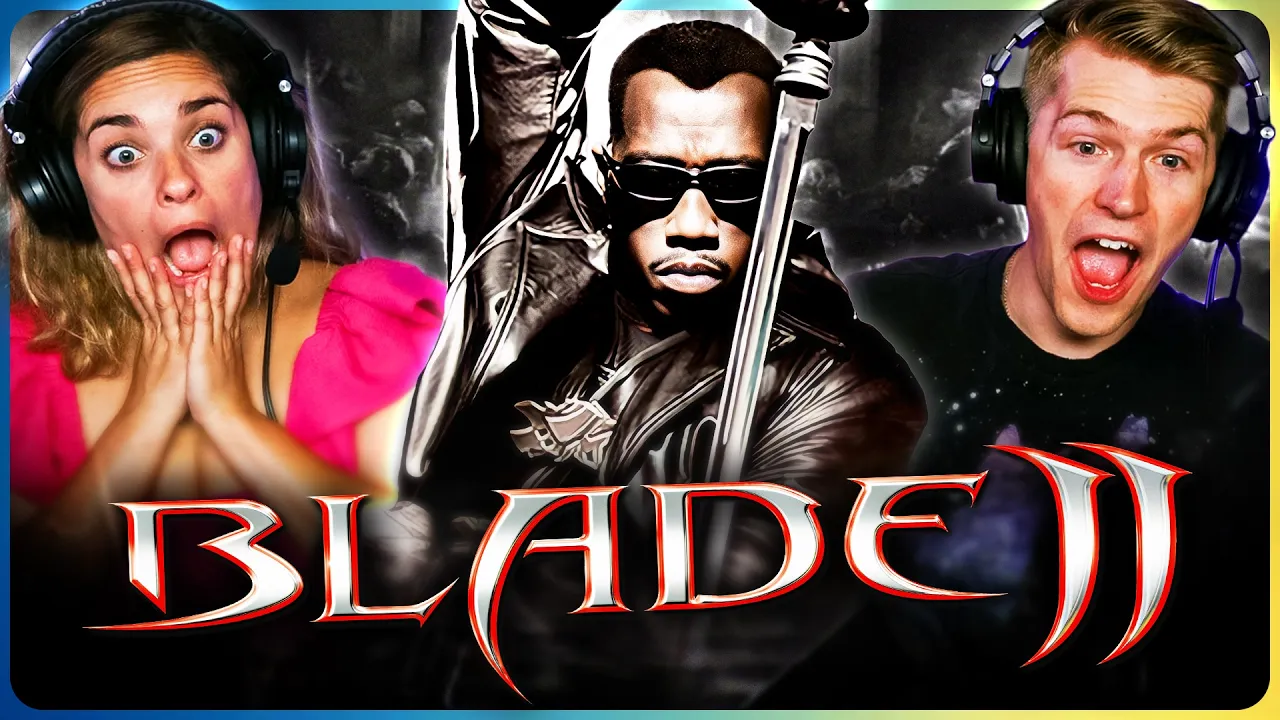
Adapted with AI from CinePals' video of 23 August 2024 and checked against the video before publication. Editorial standards · Corrections
More from @cinepals
All →


Make videos? Your next one could be an article here.
We turn your videos into articles under your name, linked back to the original. You keep 60% of what they earn, non-exclusive, and you can leave whenever you like.
Become a SubPlotter →