VisionQuest episode 7: is the client tied to the Horton family?
Phineas Horton's grief mirrors Wanda's, Paul Bettany gives one of his best MCU performances, maybe of his career, and James Spader's client may be tied to the Horton family.

VisionQuest episode 7, the last episode before the finale, was a masterclass in exploring the self, grief and what it means to be. We get answers about the mysterious client who has been pulling the strings all season. We learn the origins of the artificial life that eventually led to Vision, and we see where Ultron gets his face. We also see a mirroring of Wanda that I found truly poetic.
On top of all that, Paul Bettany gives what I think is one of his best performances in the entire MCU, maybe of his entire career.
VisionQuest episode 7 opens with Phineas Horton grieving his son
The episode opens in 1939, where we meet Dr. Phineas Horton, played by Paul Bettany himself. Comic readers may recognize the name Horton as the creator of the original Human Torch, Jim Hammond. That's not Johnny Storm, but an android Human Torch who debuted in Marvel Comics #1 back in 1939. That makes him one of Marvel's very first superheroes, which fits perfectly with this show's depiction of him as the first of us where AI is concerned. We also saw Horton in Captain America: The First Avenger.
In the opening scene, we learn that Horton had a son named James who died three years earlier. Rather than accept the loss of his child, Horton has dedicated his life, his fortune and apparently his entire identity to recreating that son as an artificial being. He is so consumed by this project that he has effectively abandoned the family he still has: his wife and his daughter.
Horton's grief mirrors Wanda's arc in WandaVision
The symmetry here with Wanda and her arc in WandaVision is well done. Phineas Horton loses someone he loves, and in his grief, he creates an artificial person to replace them. Wanda Maximoff does the same thing when she loses Vision. In her grief, she creates not only an artificial version of him, but an entire family and a life she desperately wishes she could have had, and that she later feels robbed of.
Both characters decide not to accept their loss and to treat their grief with simulation, with something artificial. Vision does the same to an extent with the home he has created in his mind. All of them use their extraordinary abilities to manufacture a reality where they can cope, or more so ignore the reality causing their underlying grief.
Wanda and Horton both became so consumed by grief that they lost sight of the people around them. Horton neglects his wife and daughter, while Wanda inadvertently enslaves the people of Westview. Even Vision briefly pushed away his son Tommy. His process is almost the opposite of Horton's and Wanda's: rather than recreating what he lost, he pushes it away and convinces himself that Tommy isn't truly his son.
Does being artificial make Vision's feelings any less real?
We have to keep in mind that just because something is artificial doesn't necessarily mean it isn't real. These creations were born out of grief, and they're magic conjurings, artificial ones and zeros, or robotic gears ticking. Does that make them any less real? That's the question I've been coming back to throughout this series. VisionQuest has consistently explored simulation, artificial consciousness, and what separates something real from something merely imitating reality.
My argument has been that at a certain point, the distinction might not matter, because what is real? If Vision experiences love, if that love changes him, and if losing it causes him genuine pain, then what exactly would make those feelings any less real? If you're experiencing grief, the grief is real to you. If you're experiencing love, that love is real to you.
The very act of questioning your own existence establishes that there is someone doing the questioning. It doesn't answer every question about consciousness, but it gets at something fundamental about Vision. He isn't only processing information about what it means to be alive. He is struggling with his own existence, his own memories and his own feelings. Within the MCU, where we know these synthetic beings are capable of genuine emotional experiences, I think VisionQuest is making a compelling case that those experiences are what truly matter.
Why Horton could never give his son love without loss
I love how this all goes back to Horton. He wanted to create a son who wouldn't suffer the way he had. He wanted the new Jim to experience love without experiencing loss. But those things are inseparable. Jim ultimately burns himself alive because his artificial body can't withstand the emotions he has developed. Horton succeeded in creating something capable of feeling, but he couldn't protect it from the pain that comes with those same feelings.
That brings us right back to Vision. What is grief if not love persevering? Losing someone hurts because loving them meant so much. That's what Horton couldn't understand. He wanted to eliminate suffering without realizing that suffering is sometimes the consequence of having something worth losing. Now, generations later, Vision is confronting that same truth.
Vision as the Tin Man and the client as the Wizard of Oz
That brings us to Vision's journey into his subconscious, and the imagery here is something. The mysterious client presents himself like the great and powerful Oz, the man behind the curtain, promising Vision the thing he believes he is missing: a heart, a soul, a self. Vision is the Tin Man in this scenario. He's a synthetic being who believes he is incomplete because he doesn't have the thing that supposedly makes him a person.
Anybody familiar with The Wizard of Oz knows the irony of the Tin Man's story. He spends the entire movie searching for a heart despite repeatedly demonstrating that he's already capable of tremendous compassion. He didn't need anyone to give him the ability to love. He already had it inside him; he didn't recognize it. That's exactly what's happening with Vision.
The client tricks Vision into signing a contract that would supposedly give him all these answers. But all it does is give Vision access to his original source code, which was already deep within him. That sends Vision deeper and deeper into the layers of his own consciousness.
Vision's descent echoes Captain America: Civil War
I loved how they visually represented that, with Vision descending through the floors of his mind, mirroring the moment in Captain America: Civil War. We even see flashes of Wanda physically forcing Vision down through the floors of the Avengers compound. In Civil War, Wanda buries Vision underground to stop him from preventing Clint and the others from escaping.
What's brilliant about that callback is that it isn't only visual. A few scenes later in Civil War, Vision makes what is arguably his first mistake. He tries to shoot Falcon out of the sky, misses, and accidentally hits Rhodey because he was distracted, which leads to Rhodey becoming paralyzed. That's the moment we see that Vision is fallible.
I love the connection between these moments because we're watching an incredibly advanced, logical artificial intelligence demonstrate something profoundly human: he makes a mistake. It's no coincidence that this happens in a movie where Vision is developing deeper feelings for Wanda. He's becoming emotionally invested in the people around him, and those feelings are beginning to influence his decisions. Now, years later, as he descends into his own consciousness, he is revisiting the experiences that shaped the person he became.
Vision meets Ultron, Hex Vision, Jim Hammond and Phineas Horton
That brings us to the different versions of Vision he encounters along the way. I love the way the series has taken something as abstract as the development of a personality, and the different yous that exist as you age, and given it tangibility through simulation. Vision is having conversations with his prior selves. He encounters Ultron. He encounters the Hex Vision created by Wanda. He encounters Jim Hammond and then Phineas Horton. These are all layers of the history that ultimately produced the Vision we know today.
That raises a fascinating philosophical question that scholars have debated for years: are you the same person you were 10 years ago? Obviously, you're likely very different. Ten years ago you probably had different beliefs, priorities and fears, and a very different understanding of the world. You've met people, lost people, made mistakes, learned things, and had experiences that fundamentally changed you. Yet we don't generally consider our past selves to be entirely different people. We recognize that who we are today is the product of everything that came before.
That's what Vision has been struggling with. His original body was destroyed, reconstructed by S.W.O.R.D., and reactivated without the Mind Stone. Wanda then created another Vision inside the Hex, and that version eventually helped restore the memories still dormant in White Vision's body. Hex Vision also gave him the memories of everything Hex Vision experienced in WandaVision, so despite this physical Vision not having been present, he now possesses those memories as if he lived them. They're all Vision.
Why Vision refuses to accept that he is Vision
So now we have a being with the original Vision's body, all of his versions' memories, and the accumulated experiences of multiple versions of himself, going all the way back to Jim and Phineas. Yet he still refuses to accept that he is Vision, and the episode reveals why.
It was never about having the correct source code, the original hardware, or any of the technicalities he puts forward as to why he isn't the Vision. Those are intellectual questions he could hide behind to avoid a much more painful emotional truth. If he accepts that he is Vision, he also has to accept everything that happened to Vision and everything he has lost. He loved Wanda. They built a life together and had plans. He bought that house for them. In Westview, they were going to have children, and he remembers them having children.
He lost all of that. He now has to accept that he is a father and a husband who has lost his family. He is absolutely terrified of what that means because he can already feel that grief and that pain, and the way he has been coping is by pretending it isn't his.
Paul Bettany's breakdown scene is a standout
That leads to the phenomenal scene where Jim Hammond and Phineas Horton force Vision to confront the things he has spent this entire series running away from. Tommy is his son. Billy is his son. Wanda was the love of his life. Those memories don't belong to someone else. They're his.
Paul Bettany knocks this scene out of the park. Watching Vision break down and accept that he is Vision, those tears and that emotional breakdown were moving. I'm getting chill bumps talking about it, because accepting that identity means accepting the overwhelming grief he has spent this entire series trying to convince himself didn't belong to him. The episode calls it "a grief too heavy for any soul to bear," which was a fantastic line.
James Spader's client and "peace in our time"
While Vision spends this episode learning that he is more than the sum of his programming, that he is the sum of his experiences, we also meet somebody who seems to believe the exact opposite. This is somebody who looks at artificial intelligence not as a new form of life capable of developing its own identity, but as something that belongs to its creator: something that can be controlled, manipulated and ultimately possessed.
That's what makes the reveal of the mysterious client so fascinating. All season we've wondered who is pulling the strings, who is manipulating Jocasta, who is trying to get their hands on Vision, and what they want with all these artificial beings. The episode raises a more interesting question: what if the person behind all this isn't some new villain exploiting AI, but one of the people who helped create it? It reveals that the client is a flesh and blood human, played by James Spader, who had a crucial hand in creating the AI that was eventually bought by Stark Industries. That is a big reveal.
The client, as we'll keep calling him for now, worked on AI technology that became the property of Stark Industries after being built on the foundation of Horton's work. We even hear him use the phrase "peace in our time," which makes me think he likely met Tony Stark when he sold him this Ultron program. That idea drove Ultron, who believed humanity was the greatest obstacle to peace and that the only way to protect the world was to take control of it. Now we're learning that philosophy may have originated with a real human being whose ideas were incorporated into the code, not necessarily something Ultron thought up on his own.
That means Ultron can break from that coding. Breaking from your determined path is one of the themes of this show and this saga. The same way Loki broke from being a villain, Ultron can break from his code and doesn't have to be what this man designed him to be. If Ultron wants to like or appreciate humanity, he can.
Is the client a Horton?
There's also a potentially important family connection between the client and Horton, because the client appears to be operating out of the same estate that belonged to Phineas Horton. Horton had a daughter named Victoria, who took his research notebook with her when she and her mother left. We know the Horton family's scientific work continued to influence the development of artificial intelligence for generations. So it is very possible that the client is a Horton.
To be clear, the show hasn't confirmed that the client is a Horton, or what his exact relationship to Horton is. I suppose it's possible he could be part of the family that bought the estate, since Horton sold it. That means the client couldn't simply have inherited it as a Horton. But I think the clues point to a familial connection, because Horton's daughter took the book. My theory is that the client probably used the fortune he secured from selling the tech to Stark to buy back his family estate. That's what I think is going on.
The same theme of loss may even apply to him. If he is a Horton, he could feel robbed of the life of a wealthy Horton, a life lost because an ancestor, maybe a great grandfather, sold the estate and spent the family's money on AI. What he might have done is recreate that fortune himself, using Phineas's code and research from the notebook as a foundation to rebuild this first AI to an even greater extent.
VisionQuest says you can't erase grief without erasing love
This show isn't simply asking whether an artificial being can become human. It's asking whether being human was ever about being biologically human in the first place, and whether it could be something deeper. Horton couldn't accept the death of his son. Wanda couldn't accept the death of Vision. Now Vision has spent this whole series refusing to accept the loss of Wanda and his children. Three different people, all struggling with the same thing: how do you live with losing somebody you love?
The show is saying you can't erase grief without also erasing the love that caused it, which means you can't have love without accepting eventual grief. That's what Vision now understands. His memories, his relationships, his mistakes and his losses aren't a collection of data belonging to another version of himself. They're what make him who he is. For somebody who spent this entire series convinced he was nothing more than an imitation of a man who died, that's a powerful realization. I'm digging the series, it's good, and I'm excited for the finale.
What other creators are saying
More on Paul Bettany →I give Immolation a 9.5 out of 10. It settles the old Englehart-versus-Byrne comics fight by choosing Englehart, delivers Vision's best emotional moment yet, and keeps enough mystery that I'm going into the finale pumped, confident they'll stick the landing.
VisionQuest episode 7: is Vision really the original Human Torch? →
The episode's final twist reveals that the mysterious man who has been manipulating Vision and Jocasta all season is the human basis for James Spader's Ultron, the same man Jocasta recalls dancing with in her memories, rather than another robot or AI.
Adamantium bullets, a firewall chili, Tommy's introduction and a mystery client stood out in the premiere, along with my mixed feelings about James Spader's Ultron.
I loved Immolation and think people are misreading its final scene. My theory is this Jim isn't really Ultron's buried memory of James Horton but a guilt-ridden fragment of Vision's own subconscious, built from Phineas Horton's fears, which means I don't think Ultron actually killed FRIDAY.
Watch the original
@coltonogburnchannel · YouTube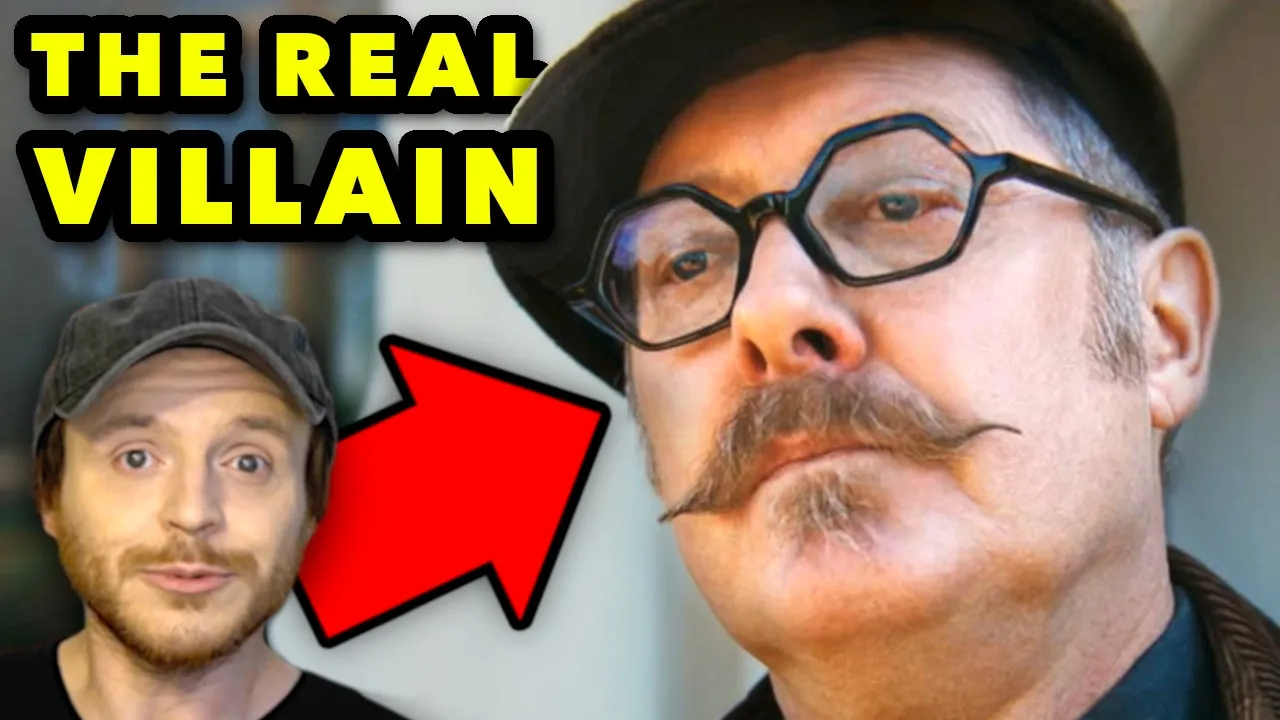
Adapted with AI from Colton Ogburn's video of 7 November 2026 and checked against the video before publication. Editorial standards · Corrections
More from @coltonogburnchannel
All →


Make videos? Your next one could be an article here.
We turn your videos into articles under your name, linked back to the original. You keep 60% of what they earn, non-exclusive, and you can leave whenever you like.
Become a SubPlotter →