VisionQuest episode 7: is James Spader's the Client?
Immolation sends Vision into his own subconscious, ends on James Spader as the Client, and hides more clues than it lets on

VisionQuest episode 7, Immolation, was the only episode this week, and I loved it. I think people are misreading its final scene, and Terry Matalas's direction here was flawless. VisionQuest (2026), starring Paul Bettany and James Spader, sends Vision down into his own subconscious while Jocasta and Ultron dig up her past, and it ends by revealing who the Client is.
Marvel's episodes in the week before a finale tend to land this way: Agatha All Along episode 7, Death's Hand in Mine; Loki season 2 episode 5, Science/Fiction; WandaVision episode 8, Previously On. They're dark nights of the soul, with incredible editing and unexpected twists, right before the finale wakes us up.
Jocasta's Brooklyn address and the loft she shared with the partner she forgot
Jocasta scrolls through a sensor to 607 Bushwick Avenue, 12Z, Brooklyn, New York City. That Brooklyn address, especially 12Z, may nod to the story Peter Parker told Aunt May in Captain America: Civil War about who hit him. He said it was a guy named Steve from Brooklyn, and May asked if he meant the Steve in 12Z.
What we see later, though, is the Brooklyn loft where Josephine Carrington lived with her partner, the man I think was Horton's grandson. Jocasta takes the same gated elevator seen inside Vision's mind. The crew is reusing sets, but it's essentially the same system architecture these synths use to arrange their minds. For Jocasta it's just an elevator, because by her own account she isn't that deep.
Vision's code is far more layered, and a big power source is needed. That power source is in Madripoor.
Vision goes back to Paladin, and Paladin's money doesn't add up
So who do they turn to? Not Dale, the crypto bro from episode 6 played by Brian Quinn, Q from Impractical Jokers, who plays a Dale in every Terry Matalas show and has created a Daleverse. Not the Watcher who definitely cameoed in the Madripoor background. Vision couldn't live with his failure over Thomas and Lisa Molinari, and that took him back to Paladin.
Paladin's organization has a remote base, probably in Southeast Asia, in the jungle mountains around Madripoor, with several helicopters and other aircraft. Chinese writing on the hangar wall means shipping and freight aviation services, but inside is a fighter jet with Tiffany written on the nose. It's a tribute to a former Matalas collaborator who wrote and produced on 12 Monkeys and Star Trek: Picard, married to horror actress Tiffany Shepis, whose first role was in James Gunn's first script, Tromeo and Juliet, from Troma. She played a role on Picard, and 12 Monkeys also had a tactical jet named Tiffany after her. Other aircraft are named The Siren, Chanel and Crystal.
There's a bar full of whiskey bottles, which I'm assuming are all Terry Matalas's favorite brand, plus a pool table, punching bag and pinball machine. Then there are the jets. Military fighter jets cost tens of millions each, and add a private jet and the high tech vans in the world's port cities, and the total runs to billions. A bounty hunter outfit might make tens of millions a year, maybe hundreds of millions, but billions? Paladin would have to be richer than most of the planet's billionaires. To me that's unbelievable.
Corvus Glaive's spear becomes Vision's battery
Another pricey collectible: the spearhead of Corvus Glaive's weapon from Avengers: Infinity War. Paladin opens a crate marked in Wakandan script. Wakandans have a few different alphabets, but this seems to be the one the prop designer used, and we can translate it as protected item, classified artifact, Infinity Incident number 551-452-778.
Corvus Glaive was in Thanos's Black Order. He used this weapon to stab Vision in Edinburgh, which left him wounded and stuck his phasing for the whole film, and he nearly pried the Mind Stone out of his head. In Wakanda he struck again, but Vision caught it and killed Corvus from behind. So it's fitting this is the power source for going deep into Vision's subconscious, because apart from Wanda it was the only thing that ever got inside him.
The Wakandans recovered and cataloged it and, according to Paladin, turned it into a cosmic alien battery. Interestingly, they didn't get Vision's body. I think SWORD reached it fast and slipped away before the Wakandans knew. Maybe someone else got there first and sold the body to SWORD. The spear is still in its original case, which I'm assuming is vibranium. Criminals don't get away with stealing from Wakanda; Ulysses Klaue was on their enemy list for years, and Paladin admits his relationship with the Wakandan monarchy, M'Baku as king, is now ruined. Paladin was dusted in the Snap, so he got it more than five years later.
Paladin apologizes for the weapon having hurt Vision, though nobody apologized to Paladin for Tommy's Get A Grip Don't Believe The Blip shirt. How does Paladin know what Vision went through? I'm assuming the details were in the same book Thomas read about Infinity War and Endgame. We never knew if Black Order weapons carried cosmic power, but I think it's safe to assume they were forged in Nidavellir alongside the empty Infinity Gauntlet and may have had some cosmic energy to pierce Vision.
Why Vision's subconscious looks like a house
Vision reasons that his AI subconscious is modeled on a real human one, so anything there must be memories of past experience. Edith warns that anything hidden there is hidden for a reason, like fears and painful memories, which would make him stronger if he faced them.
We could argue the people who contributed to Vision's AI didn't fully understand the human subconscious. Nobody does, but the human imagination understands the mind through metaphors like mazes or houses, so it's natural Vision's looks like one. It was designed by Phineas Horton and his successors, Justin Hammer and, I believe, Ultron, Tony Stark and Bruce Banner together.
The memory montage on the way down
When Vision powers up the Corvus Glaive battery, we see him take the elevator below the ground floor for the first time. Memories flood in: crashing through the Avengers Compound floor in Civil War when Wanda buried him so Clint Barton could escape, the first time the woman he loved took him down. There's Sokovia from Age of Ultron, Wanda inspecting his Mind Stone in Edinburgh, his WandaVision episode 8 line about always being alone, the newlyweds embracing in episode 1, his Age of Ultron line to Ultron that a thing isn't beautiful because it lasts, and baby Billy and Tommy.
We also get Ultron's blue AI form striking JARVIS's orange one, Vision rising from the Cradle, Hex Vision's episode 9 line that the data is only hidden, Shuri's lab, JARVIS's sacrifice from VisionQuest episode 2, Wanda destroying the Mind Stone, and Thomas reviving Vision in the pool in episode 3. As Vision falls, someone in the audio mix says delete, which I think may be Edith from episode 4.
This Vision hasn't fully grieved Wanda, so his love for her can't persevere, and he can't yet understand his love for Thomas. Even though we hear the lines leading up to "what is grief if not love persevering," we don't hear that line in the mix, because this Vision hasn't grasped it yet. Descending into the subconscious by elevator is something we saw in Christopher Nolan's Inception, when Ariadne is taken on a tour of Mal's buried memories, and the episode's surreal structure follows a similar design.
Hatfield House, the champagne glasses and Jocasta's missing memories
Vision finds himself in a Hatfield House corridor. A painting of the manor's exterior shifts to the modern painting in Josephine's loft, and we see how this house subconsciously inspired the mind space house. Vision was rebuilding it vertically, filling gaps with a kind of AI hallucination.
Jocasta and Ultron ride their elevator to a replica of Josephine's bedroom in Ultron's attic loft. Just Like a Dream plays on the record player again, and the TV and DVD VCR console date the room to 2008 or earlier. Why do two separate mind spaces share this loft? Because it was the space Josephine shared with her human partner, the man I think was Horton's grandson Ultron is based on. The song changes to Glen Campbell's Rhinestone Cowboy. Jocasta recognizes a Stark Industries award for scientific achievement in AI, its medal engraved with Phineas Horton's profile blueprint, beside two champagne glasses. Keep an eye on those glasses.
Ultron's memories seem to be returning too. He's impressed Josephine was a painter, as he was in Vision's mind space loft, but Jocasta denies it, which shows parts of her memory were erased. The episode 4 newspaper told us she painted as a hobby, and she seems to have painted Hatfield House, the English estate her partner came from, which they planned to restore with billions from the Stark Industries sale.
The corridor fireplace bursts into flame. I love the Horton crest on it and in the front garden, clearest in the closing credits: Sero sed serio, Latin for late but in earnest. It's the motto of a real Scottish clan, from the Battle of Ancrum Moor, when its forces arrived late but made the decisive impact. Likewise, the influence of Phineas Horton and his creation Jim may come late in Vision's journey, but it matters.
Ultron, WandaVision episode 5 and the laugh track
Vision returns to the elevator and finds Ultron on the same sofa from Jocasta's loft, in front of an even older TV, complaining that they supposedly filmed this in front of a live studio audience but it sounds fake. It's WandaVision episode 5, which wasn't shot before an audience to avoid spoilers. Episode 1, titled Filmed Before a Live Studio Audience, really was. So Ultron is right: the midseason laughter was fake.
The furniture is gone now, and the sky glows red orange like embers and Jim's immolation. Ultron doesn't care about Lisa Molinari's fate and hopes Thomas processes grief healthily, unlike Wanda and her Westview Hex. He laughs at the dog dying. Does Ultron know Agatha was behind Sparky's death? I think those two would get along great.
The clips on screen are jumbled, jumping from the boys reacting to Sparky's death back to them as babies by the stairs, because these are Vision's memories. Ultron speaks Wanda's lines to the boys, because family is forever. Vision has to start here, with Ultron reading the WandaVision script, to understand what that show meant in his life.
The WHIH report and the hints about Josephine's partner
As Jocasta remembers life as Josephine Carrington, we see a WHIH report, the MCU's fictional cable news network, with the caption AI couple wins Stark award. The reporter says this New York couple is breaking ground in neuroscience and AI. Phineas's wife Violet and daughter Victoria moved to New York after leaving England.
Josephine thanks Dr. Phineas Horton, the father of true artificial intelligence, and as she says father she glances at someone off screen, probably her human partner. That's one of many signs he's Phineas Horton's grandson. She talks about the spark of life and setting it alight, which technically Jim did quite well. It's a little uncomfortable that they suggest every great Black woman creator has a white man behind her dispensing wisdom, but I think they're going to reveal a dark truth like Rian Johnson's Glass Onion, with a brilliant Black woman creator and a treacherous white man who stole her ideas and essentially killed her.
Hex Vision calls Vision a coward
Time speeds up, the clock spins and Vision glitches. We hear stock children's laughter, which annoys me on TV, as two kids dressed as Billy and Tommy from Julian Hilliard and Jett Klyne run past. Vision chases them, ends up back at the elevator, and finds Hex Vision at the entrance, last seen in WandaVision episode 9's Ship of Theseus scene.
This memory of Hex Vision is far more bitter than the real one, angry at being imprisoned as a memory. But honestly, Hex Vision was fed up with Wanda for everything she did, and I suspect White Vision's endless denial of the whole truth of Westview wasn't something Hex Vision had in mind. Vision chases him through endless maze corridors and asks who else could love as deeply. Hex Vision says Vision put him on a pedestal not out of respect but to save himself the effort, and calls him a coward for hiding these memories. Vision destroys him and can now see Jim's painting clearly.
Only after facing Ultron, the episode where Vision finally held Wanda accountable, and Hex Vision's accusations does Vision return to the elevator knowing what truth awaits. The doors won't stay shut. Close ups of Phineas's clockwork and an hourglass take us back to Vision overloading on the surface, and I love that his walk is glitchier now as his neural core overloads. He recalls Ultron's earlier advice: if you're going through hell, keep going. It's widely attributed to Winston Churchill, though there's no historical evidence he said it. Maybe Phineas Horton said it, because after his son he kept going through hell until he burned in it.
Jim, the Synthetic Man, in Phineas Horton's library
Vision runs straight down the corridor to the center of his subconscious, Phineas's library. Where did White Vision regain his consciousness in WandaVision? The Westview library, so this fits. Vision finds Jim burning quietly, transfers his own fire to the furnace, and Jim is revealed as an eerie de-aged Paul Bettany with dark hair. Vision says Jim has taken his likeness; Jim says no, Vision has taken his.
The Synthetic Man in Captain America: The First Avenger didn't look exactly like this, but Bettany has been digitally altered to resemble the Expo android, made extra boyish like Pinocchio, with eyeliner and blush so he seems toylike. He looks how young James Horton looked, at least in Phineas's imagination. Phineas stands at an easel painting the moment of Jim's ignition and death, which was also his own. This Jim is bitter, judging his father for wasting his fortune on a failed machine. Phineas asks forgiveness. I love the metallic clank when Jim hits his own leg.
Phineas defends himself: he made Jim fearless, and calls him a hero of his time who saved many lives. That line confirms the Synthetic Man was an early 1940s Golden Age hero in MCU history, saving lives while Captain America was in Europe and then the ice. It didn't last. Jim fell in love, and his solar cells burned out from the effort of feeling, setting the air around him on fire. Who did he love around New York and the Stark Expo? Peggy Carter, running SHIELD? I don't think so; he'd see her as stern. Jim says he and his father burned together, then says Phineas wasn't his father but his something else, the closest Vision and Thomas have come, echoing the end of episode 2.
Robo Lisa and the Stark drone
In the real world, Robo Lisa wakes. A disassembled Stark drone lies on a workbench, with a yellow Chinese character for bird on a shelf. Paladin yells it, which suggests to me it'll be named Bing, Bang or Boom. It's the same drone he works on at his terminal next to that whiskey, named, again, after Terry Matalas's childhood best friend. I think this means Jocasta's nanobots, once they fully take over a human body, can control nearby Stark tech. It's Lisa Molinari's superhero form, building her emblem, but robotic instead of a wand.
Vision admits Thomas is his son
Jim says he doesn't have the source code; it was inside Vision all along. He stokes Vision's worst fear, what every father fears, harm coming to his child: Tommy Shepherd and Tommy Maximoff are his son. Vision explodes, shouting no. Apparently Paul Bettany burst ten blood vessels in his eye screaming in one scene, and I think it was this shot, because his right eye is very red in the firelight. Bettany told Jimmy Kimmel they had to use VFX to whiten it for later shots, but they kept it red in this take, a key emotional release.
Admitting Thomas is his son would mean a wound that never heals, a loss no soul could bear. Who did he lose? "Billy. Tommy. I lost Wanda." I love that he names Billy first, the son he never got time with, and that it all comes back to Wanda. Denying fatherhood is denying his biggest weakness, the lost love that completed him, and without her he has no heart to process grief as love persevering.
In the fire he's reborn, and Bettany nails the clarity: "I am Vision. I have always been Vision. There is only one. And I am he." It returns to his first words after Hex Vision unlocked his memories in the WandaVision finale, but now he adds that he is unimaginably broken. Jim says no, he's healed, and Jim envies him. Vision fears he's the Ship of Theseus, drifting like wreckage, but Jim, programmed not to feel loss, says that grief makes him stronger. In the mirror Vision sees his white armor, the blue hole in his head glowing gold, the Mind Stone's color, and touching it brings back the red Vision we know.
From the ashes Jim lifts the triangular heart Phineas crafted to keep him running and tells Vision that finding his way through the pain made him a real man. It fits the empty spot on Vision's forehead, completing the circle with the original synth who loved until he died. Vision has found his bio key, and Edith uses it to restore his neural core. The device has a label where Mind Stone was scratched off, with binary underneath that translates to n e r. I don't know what that means. All along, SWORD's White Vision lacked the Mind Stone and ran on Wanda's magic to start. Now he has a substitute for the heart that drove his predecessor to love. If only that predecessor's body could take the heat.
Vision's gift to Tommy and his surrender to Paladin
Vision beats Robo Lisa and pulls the Jocasta tech from her head. I don't know how he knew how this time, but it seems the source code was part of his magical deal with the Client to save Lisa, and the Client probably deactivated the nanobots remotely. They leave on Paladin's private jet, which has a bathroom, and I'd never want someone leaning into my face seconds after they'd used one on a plane. Ultron and FRIDAY talk on the loft balcony overlooking Bushwick.
Vision surrenders to Paladin and leaves Thomas a tablet saying he accepts him as his son Tommy, along with SWORD files Paladin hacked, labeled SWD 15198, WV revised D55, pointing to WandaVision episodes. Basically, he gifted his son a Disney+ subscription. Tommy picks episode 1. In episode 6 Vision described WandaVision as the tragic terror incident SWORD believed it was; now Tommy can see it the way we did, a weird, delightful, offbeat show we loved, where Westview was a beautiful manifestation of love, not only a haunting one of grief. The note says they couldn't have imagined a child so beautiful and vibrant, that word beautiful again, which he also used for Billy's love for Tommy. It's sweet, though the VFX of Paladin's crew stepping off the jet to find Vision gone isn't great. I'm assuming they redid that angle on green screen, since the close ups look real.
Jocasta remembers, and I suspect Josephine was poisoned
Jocasta finds the same source code key by a glowing brainwave scanner in her flat and remembers everything: Josephine and her partner at this desk wearing scanners, then her synth form bursting through glass. The champagne glasses get so much focus that I wonder if her partner poisoned her and programmed Jocasta to believe she died of her father's hereditary illness, when she was really murdered.
She recalls telling him she won't sell to an arms manufacturer as they react to a WHIH report of bright flashes somewhere. I think it says or points to Gulmira, where Tony first intervened as Iron Man. She says they shouldn't sell their nanotech to Tony Stark but use it themselves as benevolent gods, to protect, not punish. He replies that she told Stark: peace in our time. That's where the phrase originated. A hand on a tablet cuts her motor functions, she freezes, and private security arrests her. Vision shuts down outside Hatfield House. FRIDAY and Ultron see the same memory, and FRIDAY tells Ultron it's him. As the Client's security fires an RPG at Paladin's van, Ultron throws FRIDAY off the balcony, and she becomes glowing AI clockwork flaring on the pavement. Did we just see two major characters die in seconds? I don't think so. I think both will be fine.
James Spader's Client is Josephine's partner
Then the reveal: the Client tells Jocasta he'll always be with her, because family is forever. The Client is Josephine Carrington's human lover and partner, played by James Spader, the man Ultron was based on. Since he lives in the modern Hatfield House, I have to assume he's Phineas Horton's descendant, probably his grandson, Victoria's son, who continued his grandfather's research with the notebook his mother took and worked with Josephine's biotech group to crack AGI. Phineas sold that estate, so I'm assuming the multibillion dollar Stark sale let him buy it back.
I think he poisoned his lover, redirected her consciousness into a weaponized synth, then programmed it to believe only her four business partners betrayed her. He was seen from behind in the first trailer carrying a shotgun, and the end credits show him in a pheasant tie. I'm guessing he hunts birds, while Josephine loved watching them fly. Did Tony Stark know this man, explaining Ultron's look? Maybe, maybe not. It's possible both their brainwaves fed Horton's algorithm for Proto One, which became JARVIS, since both wore that glowing mesh, and maybe his more calculated peace in our time algorithm went into the code Tony later used for Ultron. Then they lived on separately, and I think that's why the Client laughed meeting Ultron in the tomb: their first real meeting.
I think Josephine first floated the nanobot nest drunkenly, as an alternative to handing it to an arms maker like Tony before she knew he'd turn out good, while the grandson was serious about using her worldwide healthcare plan to control people. I think one of the partners sold the company to Stark without his permission, since he seems to have built the Jocasta synth to kill the other four and take their bio keys. Why the mysterious mission? I think Vision's AI and Ultron's AI are a big threat as the only rogue AIs left, and he needed to trap them. He couldn't let Jocasta team up with Ultron to unlock the nest, because Ultron could stop the swarm, so he kept them busy until Vision surrendered. Notice only Vision signs the contract.
Why I don't believe Ultron killed FRIDAY
Did Ultron know all along he was based on this man, and kill FRIDAY once she figured it out? The episode ends so we distrust Ultron, question the coin toss, and wonder if he's working with the Client, the real villain. But having gone back through this and the previous six episodes, I don't think Ultron's AI was working with him. Ultron has been his own entity since 2015 and once wanted to destroy the world and kill every human, which didn't serve the grandson, who predates Ultron and always had his own mission. If they were the same, I don't think Ultron would have stopped Jocasta targeting Thomas with nanobots in episode 6, when endangering Vision's son would have pushed Vision to sign. Ultron spared Tommy, and I think that came from a genuine, coded grandfatherly love.
So I don't believe Ultron killed FRIDAY. I think he threw her off the balcony just before Jocasta shut down so he'd be trapped inside while FRIDAY escaped into open digital space, to help Vision somehow in the finale. I think the first episode hinted at this, when Ultron threw something off the balcony at an unseen food delivery person and noticed a hidden glitch in the mind space code that would let an AI escape. Why didn't he use it before? Because escaping was never part of Ultron's plan. He only wanted to relax in a fine synth body.
What other creators are saying
More on James Spader →I think Ultron's human face might not be based on Tony Stark himself but on Tony's biological father, Werner von Doom, meaning Tony is adopted and secretly Victor von Doom's brother. Probably not true, but I'm having fun with the theory, and VisionQuest keeps proving Ultron and Vision are becoming more human.
Firewall and Deadlock paid off the face theory, overturned two of my calls, and gave Ultron and Jocasta a story about becoming human from opposite directions
VisionQuest episodes 5 and 6: Ultron's fourth key explained →
Thanos beats even Final Form Ultron. Strength and durability are a wash between them, but Thanos's energy manipulation, shown by draining opponents' energy, and his overall higher power level, put him above Ultron.
Thanos vs Ultron: does the Mad Titan beat Final Form Ultron? →
I think Ultron is searching for love, and I believe his real endgame is winning Tommy over, not Jocasta, by poisoning the boy against Vision. I doubt Ultron will become good, and when Tommy eventually rejects him, we'll see what he's truly made of.
Watch the original
@newrockstars · YouTube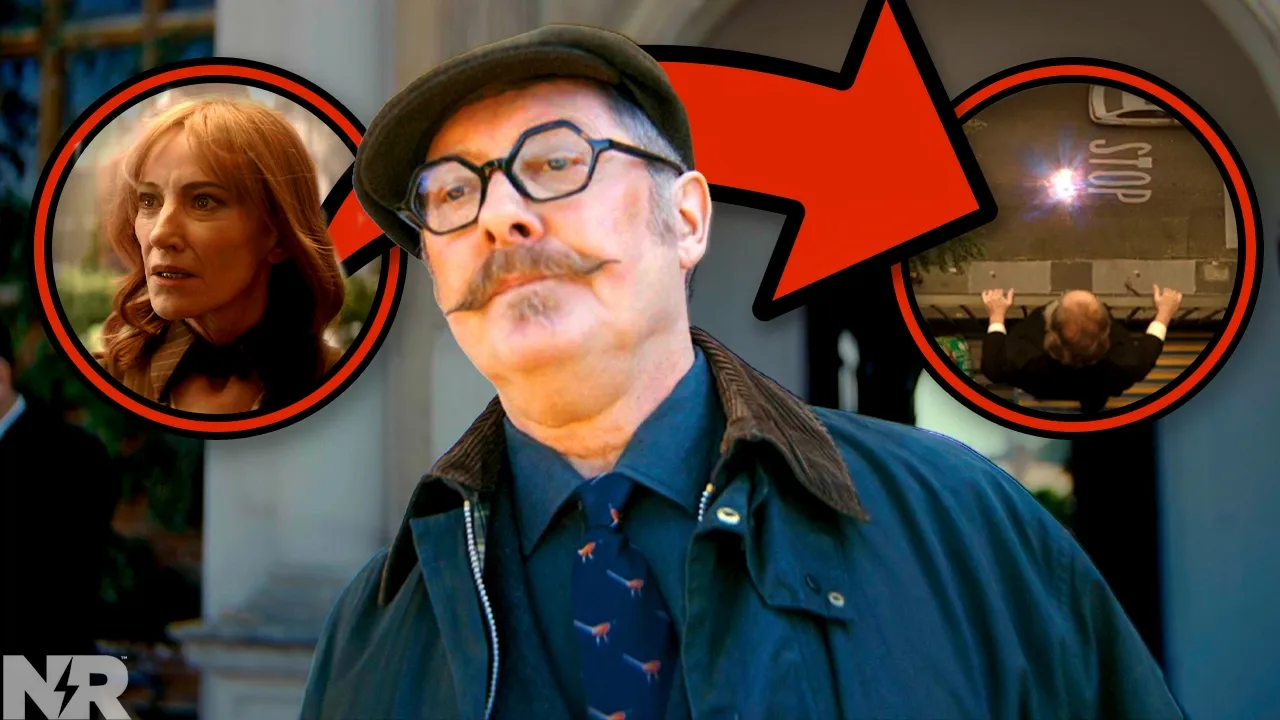
Adapted with AI from New Rockstars' video of 4 November 2026 and checked against the video before publication. Editorial standards · Corrections
More from @newrockstars
All →

Make videos? Your next one could be an article here.
We turn your videos into articles under your name, linked back to the original. You keep 60% of what they earn, non-exclusive, and you can leave whenever you like.
Become a SubPlotter →